

Comics News
Tripwire’s 101 Greatest Comic Artists Of All Time: No.3: Neal Adams


No.3: Neal Adams
Neal Adams arrived at DC Comics at a time when the publisher was at its lowest ebb. With Marvel attracting what would eventually become the majority share of comics’ readership, the company desperately needed a shot in the arm, although they were unaware when they hired Adams in 1967 what he would bring to the table. Effectively Adams was, despite his relatively brief tenure at DC and Marvel, the pivotal and essential artist who would not just raise the bar but change the language and stylisation of the medium permanently. Bringing a unique perspective, filmic photorealism and a type of dynamism borrowed from commercial art and newspaper strips, Adams took the industry by storm, becoming the superstar comic artist of the 1970s. One could say that artists such as Jack Kirby had already brought such widescreen cadences to the four colour page, but Adams revolutionised comics by removing certain old-fashioned tropes and in the process dragged DC out of its 1960s torpor…… Words: Andrew Colman

photo courtesy of Gage Skidmore
Adams’ trajectory was somewhat different to his contemporaries, with the young artist certainly having no pretensions about creating an impact in an industry that wasn’t the focus of his ambitions. Graduating from the School of Industrial Art in Manhattan in 1959, Adams attempted to get work at DC before finding a position at Archie and after that moved into commercial illustration. By 1962 he was also working on newspaper strips such as Ben Casey, a spin-off of a TV medical drama. His work on this strip already had strong elements of what would become his classic art style, invoking an uncompromising and direct feel to what was a progressive project. Despite this early and quite lucrative success he left due to monetary and creative reasons.


By 1967 Adams had reached a crossroads in his career – his style of art wasn’t generating a great deal of income in the commercial sector, and even though he had ghosted a few strips he hadn’t considered taking up comics on a full time basis. The sea change was his move to Warren Magazines, where he worked with legendary writer / editor Archie Goodwin on various stories for horror titles Creepy and Eerie. From there, Adams opted to pitch for work at DC, even though they had baulked at his efforts seven years earlier. This time however things had changed, although even then Adams had to be patient before he found his niche at the publisher. Distinctly unimpressed with DC’s output at this juncture, Adams nevertheless initially worked on the Big 5 war books, such as Our Army at War, which at least had some gravitas attached. However, after that he was assigned generally lightweight stories and titles, such as the Elongated Man back up in Detective Comics, as well as the Bob Hope and Jerry Lewis movie spin off books. It seemed that DC was missing the point regarding Adams’s talents, but within a few months he found his metier, first of all on superhero titles Brave and the Bold and Lois Lane, and then the Deadman series in Strange Adventures.
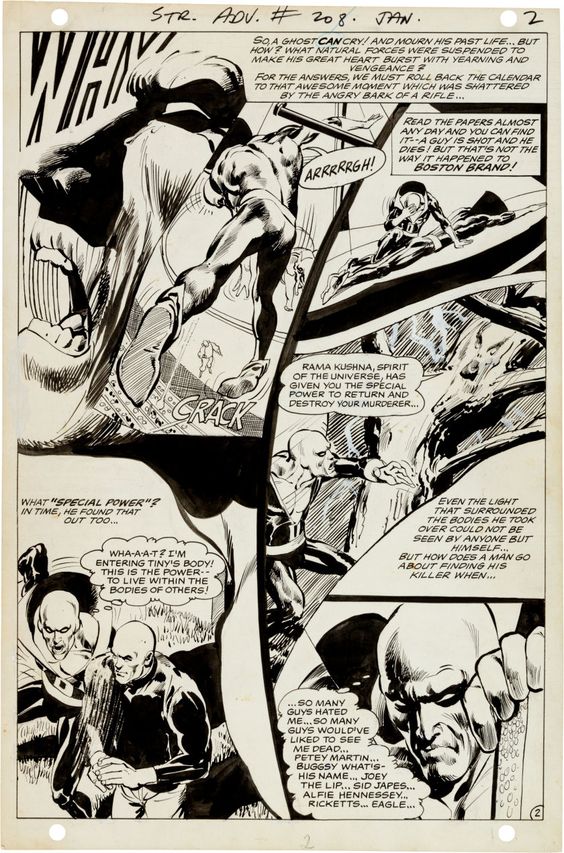


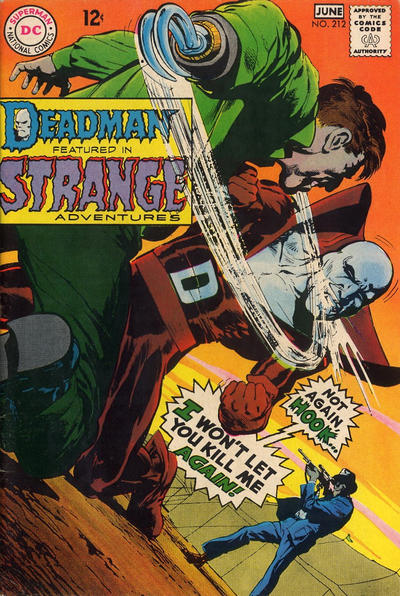
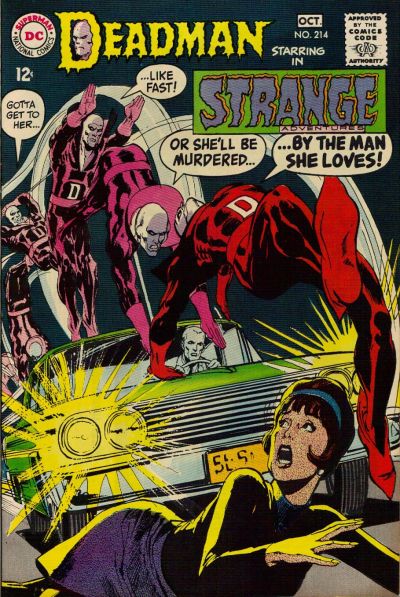
Strange Adventures was the turning point, when fandom finally noticed Adams’s modernist artwork, as did Carmine Infantino, who was soon to become publisher at DC. The story of circus acrobat Boston Brand, murdered by the mob but allowed to return to earth by an entity called Rama Kushna (very 60s) and given the power to temporarily inhabit people, was a noirish tour de force which despite Adams’s dramatic pencils, was a fairly understated, low key affair. Nevertheless, as a character study Adams’s atmospheric, visceral and deliberately off-kilter art made it a compulsive, excellent read. From there, he worked on The Spectre for four issues while tasked with drawing many of DC’s covers, which manifestly revamped the company’s look and identity on the newsstand. And after being initially rejected by Julie Schwartz on the character, Adams finally got to work on Batman’s key titles in 1969.


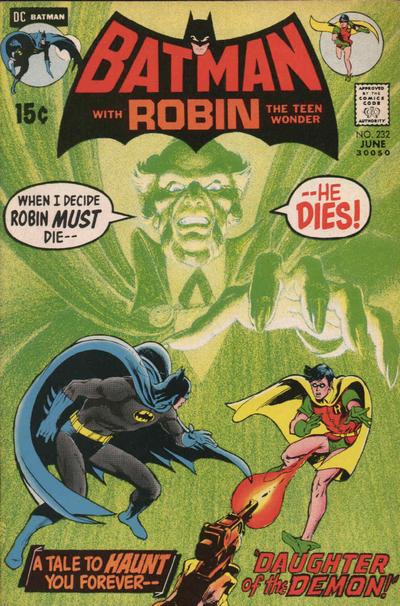


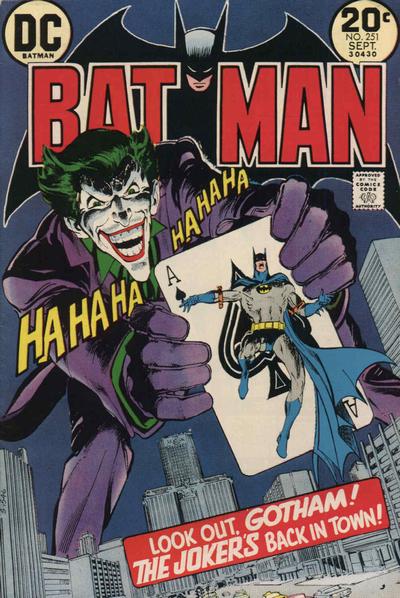


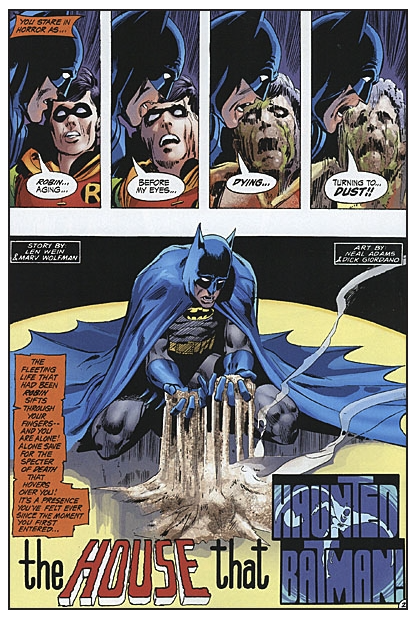
As everyone in fandom knows, Adams’s definitive take on the Dark Knight also ushered in a new era at DC, with Infantino allowing its key properties (except Superman!) to be radically updated, in a concerted effort to shift the mood and tone of such books. Working with writer Denny O’Neil, Adams gave the character depth, and even an enigmatic feel. The look was gothic and threatening, reminiscent of the pre-Robin Batman from the late 1930s. Suddenly he was a hardened creature of the night, living in a benighted world of isolation and psychosis with villains and anti-heroes, such as Man-Bat and Ra’s Al Ghul, to match. All Batman artists to this day follow, at least to a moderate extent, the Adams template. Needless to say, every issue he produced was a masterclass in storytelling, the mood, clarity and sophistication of his art providing the space for the return of the refitted and far more psychopathic Two Face and The Joker. As Adams defined Batman, so did the character define his career in comics. His work here was his pinnacle.
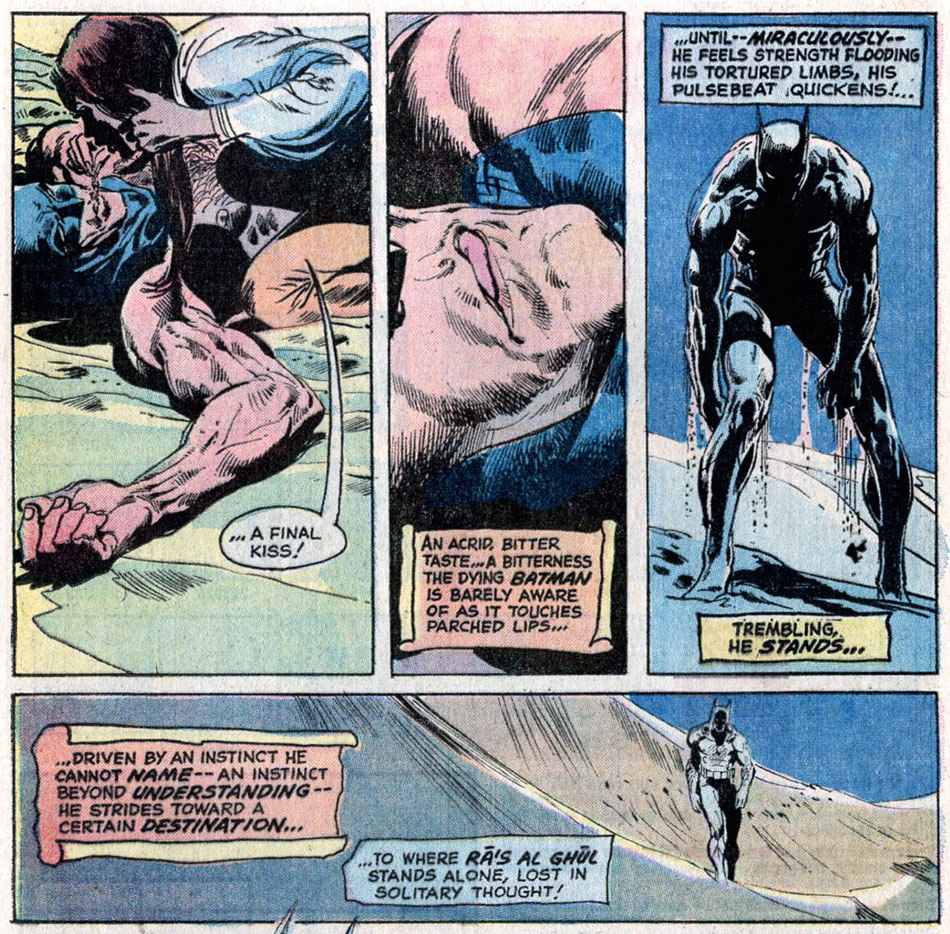
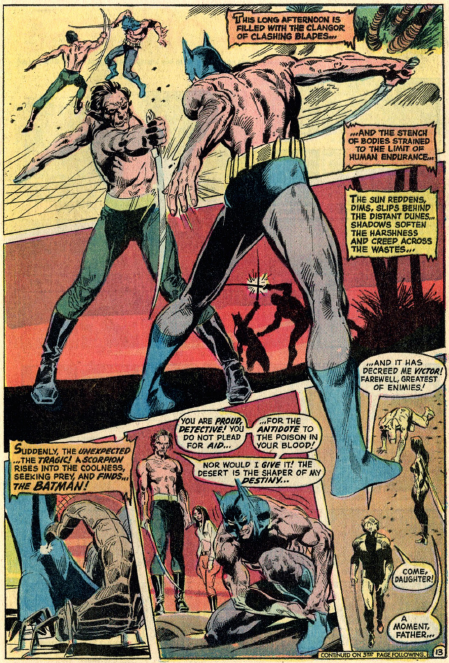

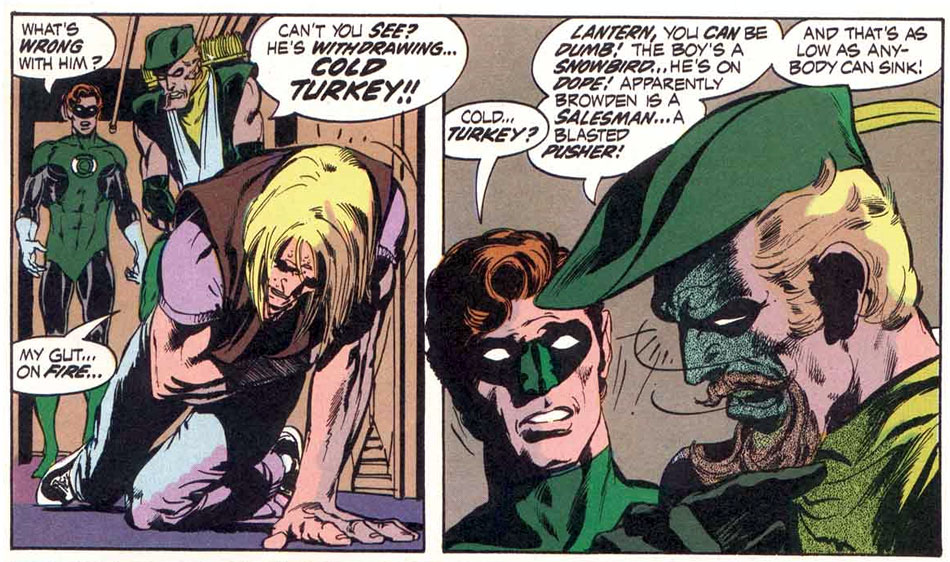
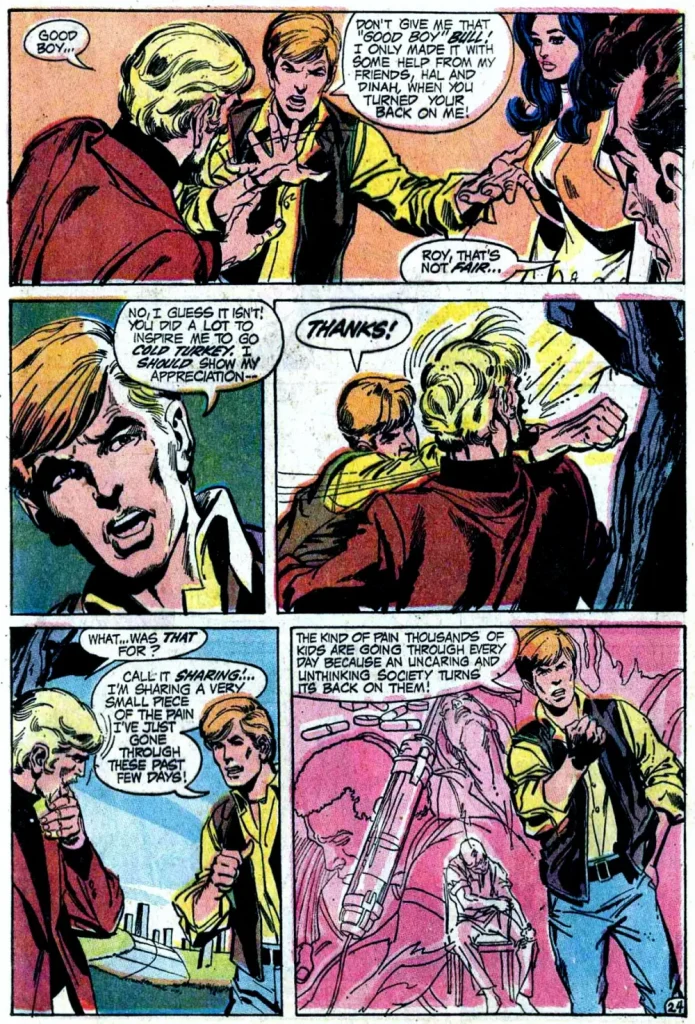
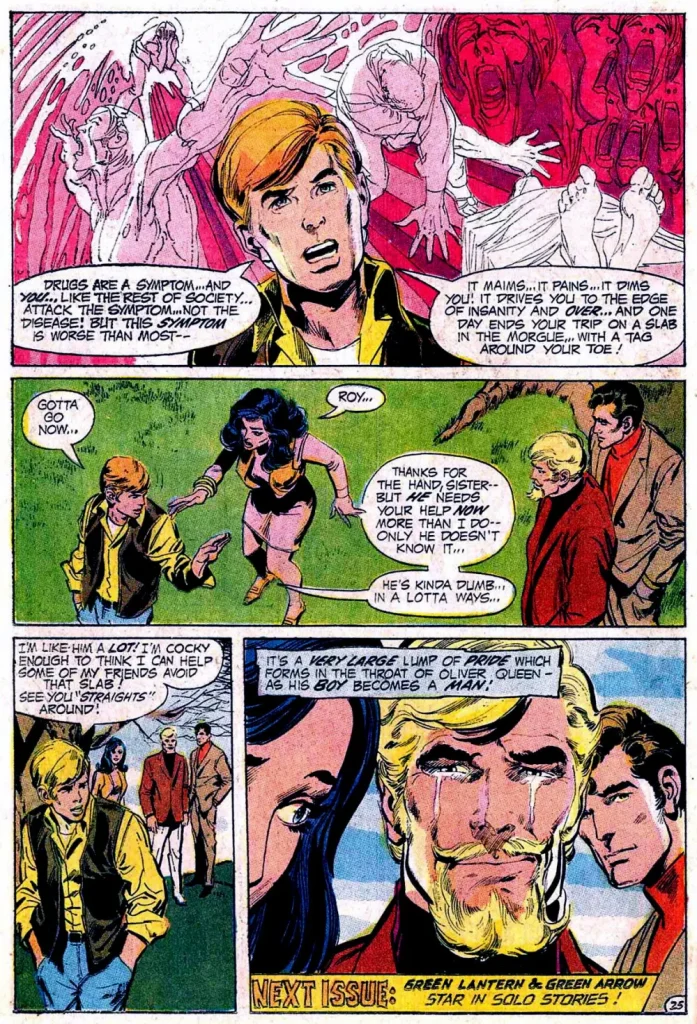
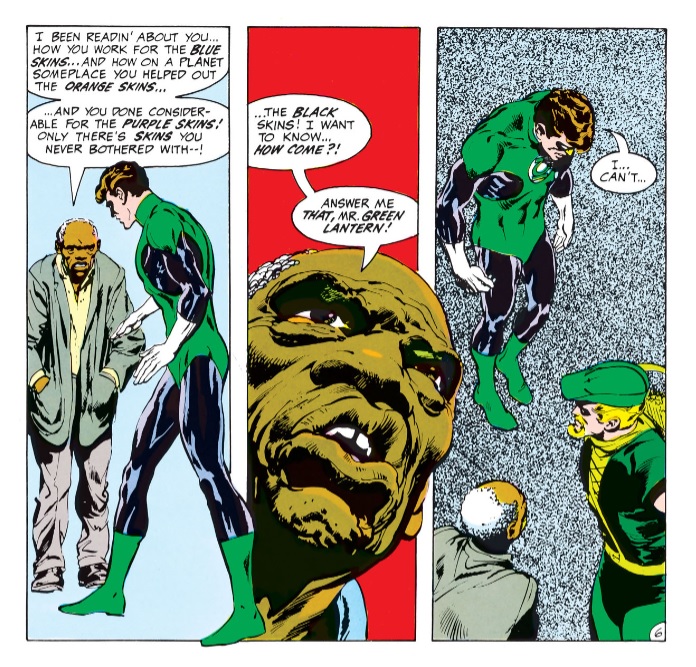
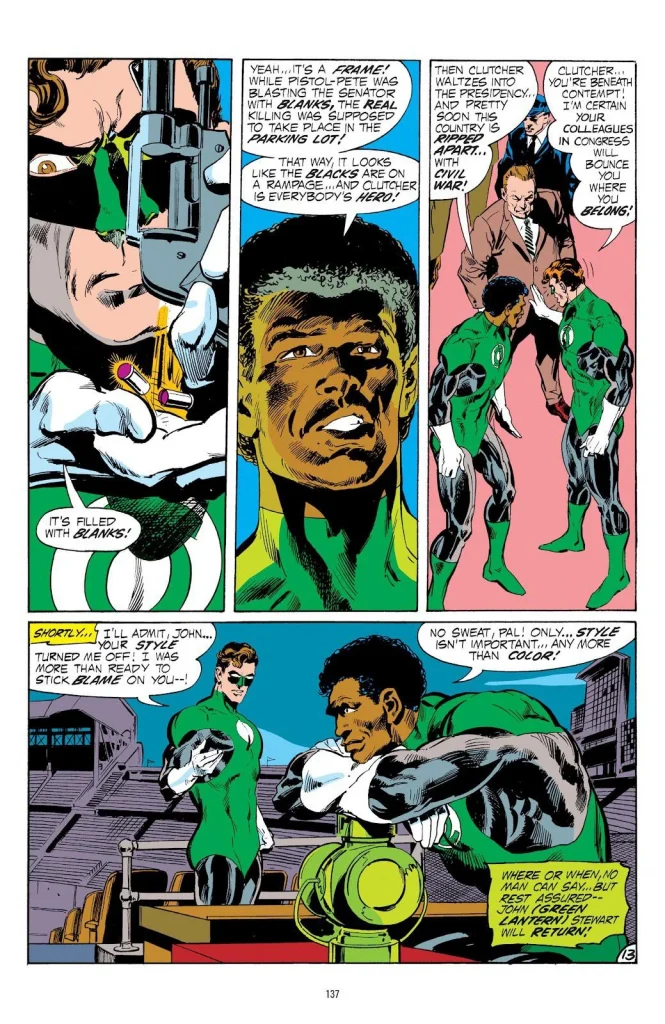
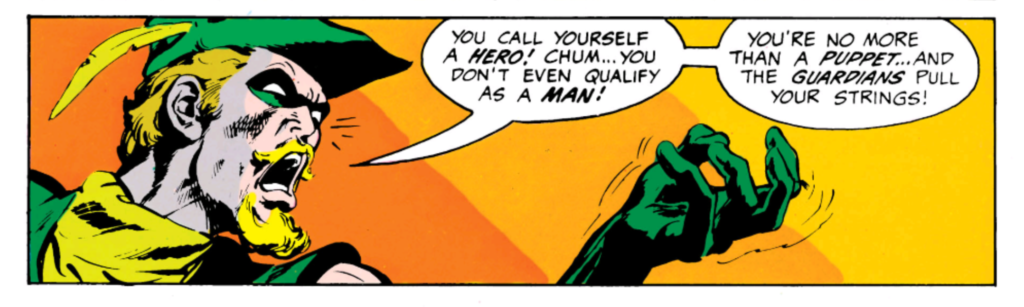
And then of course there was 1970’s Green Lantern / Green Arrow, also scripted by Denny O’Neil. Its importance has essentially been due to it being fanfared by historians as the “series that brought relevance to comics” (actually it brought a hitherto unheard of non-allegorical political component to mainstream comics) but what carried it was Adams’s artwork. Regardless of whether the odyssey across America of two refitted super-hero characters going incognito has dated, only Adams could’ve made the series work, his energetic, emotive art breathing the necessary immediacy into what was an overly earnest, direct yet powerful run. It proved to be a caustic antidote to DC’s 60s silliness, with both protagonists rebooted with developed, broad characterisation – Green Lantern being old-fashioned, unreconstructed and angry, and Green Arrow being liberal, progressive and even more angry. Such histrionics and pontificating could only have been successfully framed by Adams’s intense pencils. Despite the high quality of the art, the series was patchy and inevitably ran out of steam, although the first issue (“No Evil Shall Escape My Sight”), the introduction of John Stewart (DC’s first African-American superhero) and sidekick Speedy’s descent into drug addiction were seminal, iconic episodes.

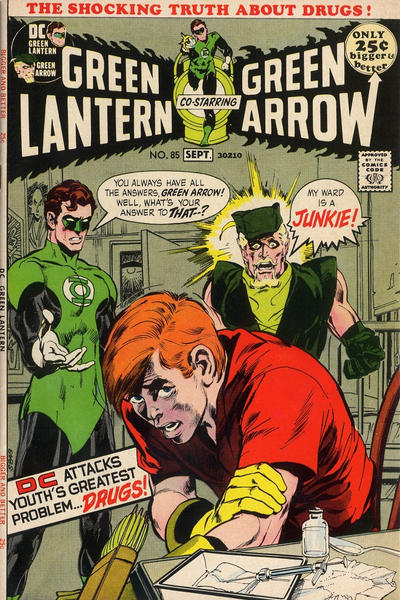
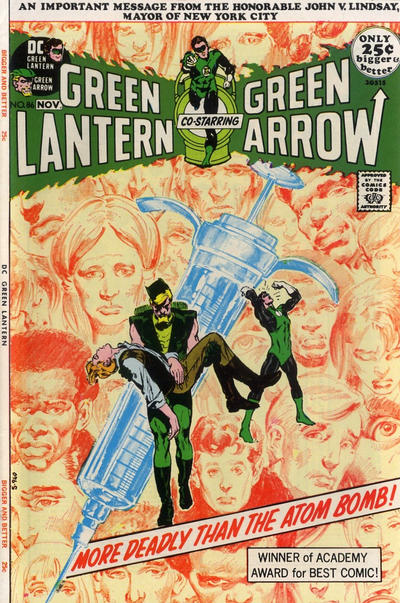
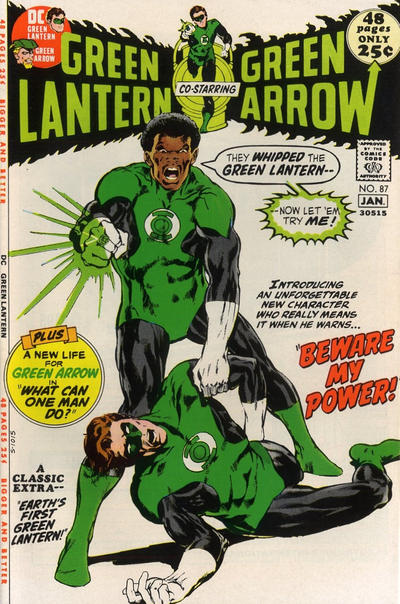



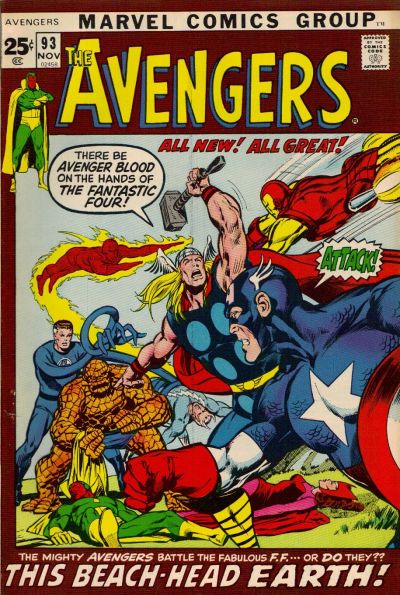
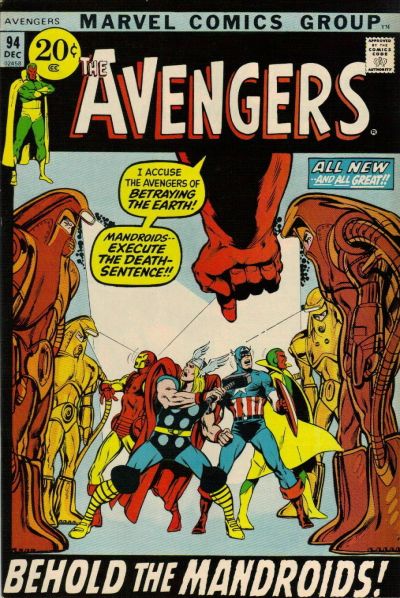
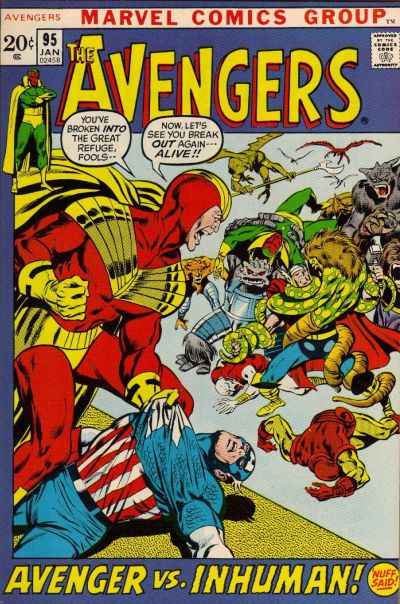
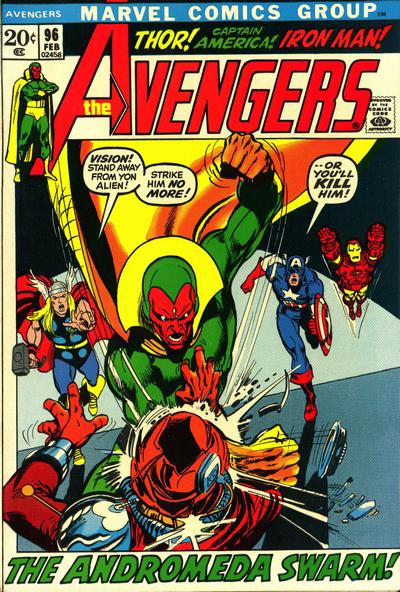
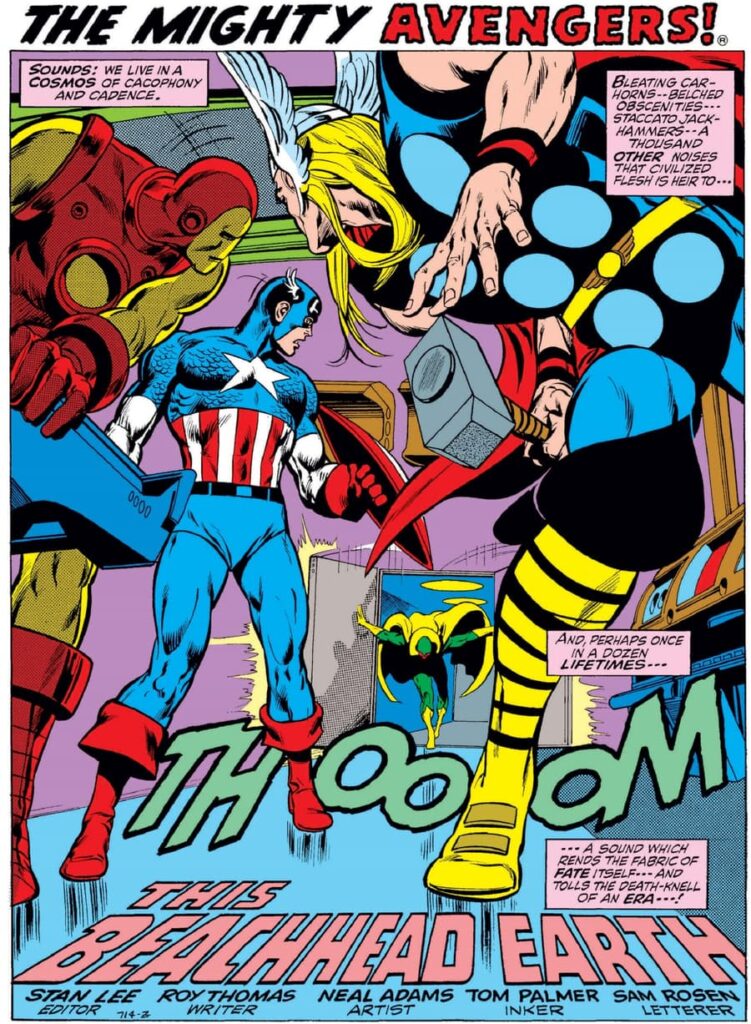
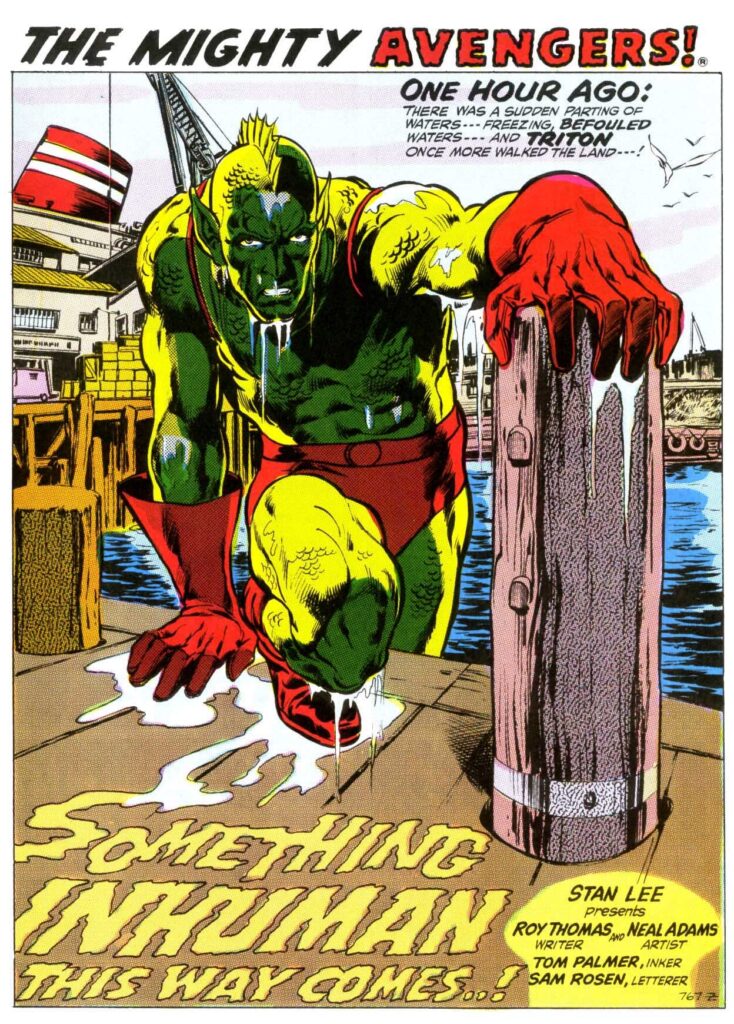
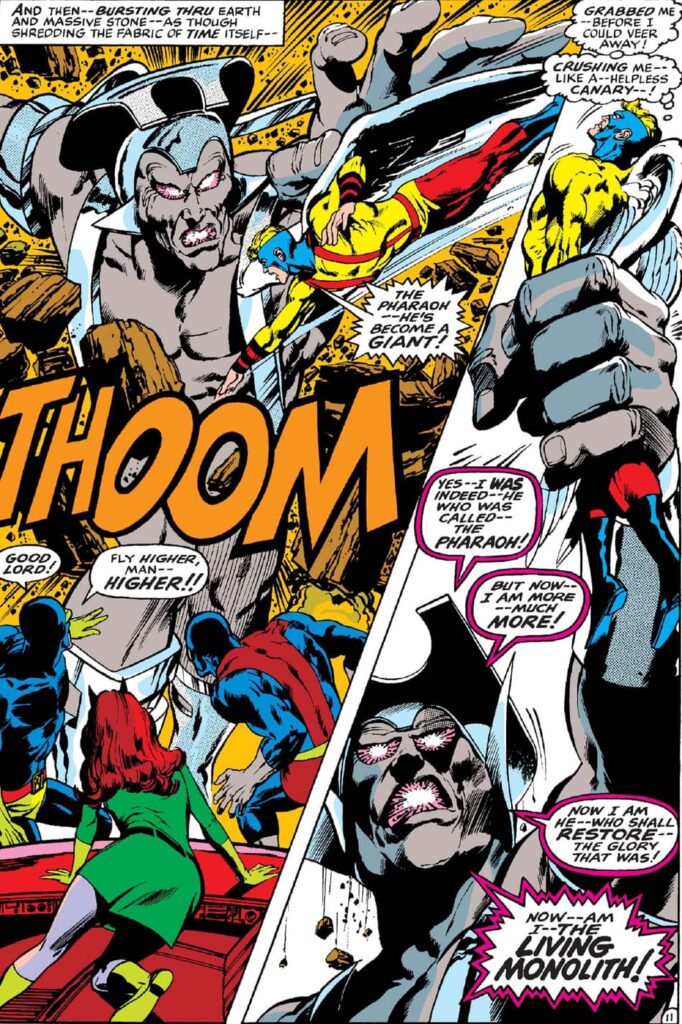
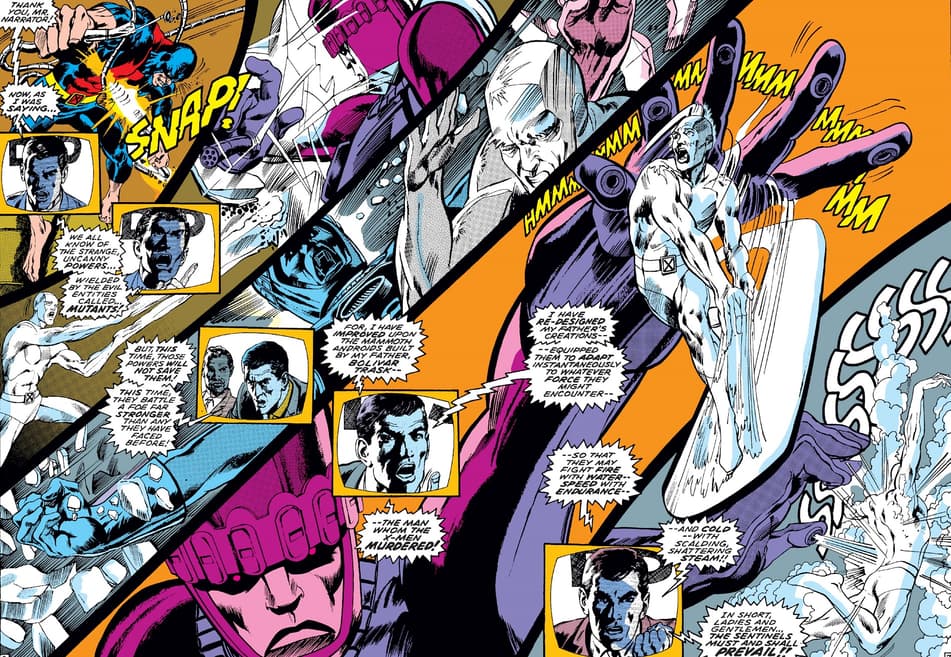
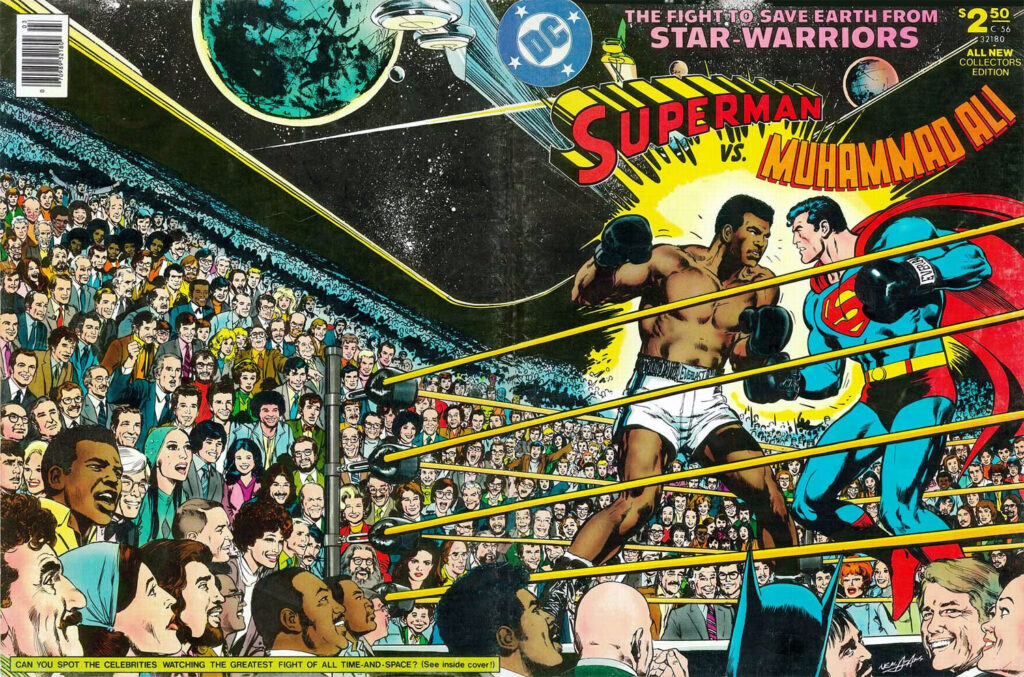
Adams also freelanced at Marvel when working at both companies at the same time was practically verboten, but then such was his maverick manner. During his brief period at the House of Ideas he did some sterling work on the X-Men, along with his four-issue effort in The Avengers, the Kree / Skrull War story arc, the latter a fan favourite and a high point for the title. By the mid-70s, Adams’s interest in mainstream comics began to wane, as he switched his focus to his own comic company, Continuity Associates. His last major work for DC was Superman v Muhammad Ali in 1978, a treasury-sized extravaganza that pitted the world’s greatest sportsman against the Man of Steel.




So what else is there to say about Neal Adams that hasn’t been said before? As with his equally mercurial contemporary Jim Steranko, Adams had no planned designs on the medium that made his name, he casually drifted into the industry, drew a moderate amount of comics in a relatively short time and then left the building, but his impact nevertheless was massive. And like Steranko he was a constant fixture at comic conventions, earning his crust from the legacy of those key years. There was of course his advocacy for creators’ rights, which again had a considerable effect on the business side of the industry. What has counted of course, is his innovative, iconoclastic attitude to the medium, sweeping away old canards and tropes with alacrity, while reminding fandom of what comics were capable of. Nothing quite leapt off the page as Adams’s kinetic, visionary work, that successfully blended various strands of cinema – the boldly hyperreal, the noirish, the epic. Like his forebears such as Will Eisner, and his protégés like Frank Miller, he pushed the envelope in terms of what could work on the page. Always an outsider who never concerned himself with rules or conventions, Adams was never a company man, something he shares with a few other distinguished names on this list. And at his best his work epitomised comic art.
Here’s the rest of our 101 Greatest Comic Artists list so far
Tripwire’s 101 Greatest Comic Artists Of All Time: No.4: Bernie Wrightson
Tripwire’s 101 Greatest Comic Artists Of All Time: No.5: John Buscema
Tripwire’s 101 Greatest Comic Artists Of All Time: No.6: Steve Ditko
Tripwire’s 101 Greatest Comic Artists Of All Time: No.7: Frank Miller
Tripwire’s 101 Greatest Comic Artists Of All Time: No.8: Will Eisner
Tripwire’s 101 Greatest Comic Artists Of All Time: No.9: Lou Fine
Tripwire’s 101 Greatest Comic Artists Of All Time: No.10: Alex Schomburg
Tripwire’s 101 Greatest Comic Artists Of All Time: No.11: Joe Kubert
Tripwire’s 101 Greatest Comic Artists Of All Time: No.12: Wally Wood
Tripwire’s 101 Greatest Comic Artists Of All Time: No.13: Jim Steranko
Tripwire’s 101 Greatest Comic Artists Of All Time: No.14: Alex Raymond
Tripwire’s 101 Greatest Comic Artists Of All Time: No.15: Harvey Kurtzman
Tripwire’s 101 Greatest Comic Artists Of All Time: No.16: Walter Simonson
Tripwire’s 101 Greatest Comic Artists Of All Time: No.17: Russ Heath
Tripwire’s 101 Greatest Comic Artists Of All Time: No.18: Bill Sienkiewicz
Tripwire’s 101 Greatest Comic Artists Of All Time: No.19: Jack Cole
Tripwire’s 101 Greatest Comic Artists Of All Time: No.20: Bernie Krigstein
Tripwire’s 101 Greatest Comic Artists Of All Time: No.21: Graham Ingels
Tripwire’s 101 Greatest Comic Artists Of All Time: No.22: Al Williamson
Tripwire’s 101 Greatest Comic Artists Of All Time: No.23: Barry Windsor-Smith
Tripwire’s 101 Greatest Comic Artists Of All Time: No.24: Alex Ross
Tripwire’s 101 Greatest Comic Artists Of All Time: No.25: John Byrne
Tripwire’s 101 Greatest Comic Artists Of All Time: No.26: Mike Mignola
Tripwire’s 101 Greatest Comic Artists Of All Time: No.27: Basil Wolverton
Tripwire’s 101 Greatest Comic Artists Of All Time: No.28: Howard Chaykin
Tripwire’s 101 Greatest Comic Artists Of All Time: No.29: Moebius
Tripwire’s 101 Greatest Comic Artists Of All Time: No.30: Dave Gibbons
Tripwire’s 101 Greatest Comic Artists Of All Time: No.31: Creig Flessel
Tripwire’s 101 Greatest Comic Artists Of All Time: No.32: Milt Caniff
Tripwire’s 101 Greatest Comic Artists Of All Time: No.34: Burne Hogarth
Tripwire’s 101 Greatest Comic Artists Of All Time: No.35: LB Cole
Tripwire’s 101 Greatest Comic Artists Of All Time: No.37: Bill Everett
Tripwire’s 101 Greatest Comic Artists Of All Time: No.38: Robert Crumb
Tripwire’s 101 Greatest Comic Artists Of All Time: No.39: Mac Raboy
Tripwire’s 101 Greatest Comic Artists Of All Time: No.41: Jim Starlin
Tripwire’s 101 Greatest Comic Artists Of All Time: No.42: Mike Zeck
Tripwire’s 101 Greatest Comic Artists Of All Time: No.43: Adam Hughes
Tripwire’s 101 Greatest Comic Artists Of All Time: No.44: Daniel Clowes
Tripwire’s 101 Greatest Comic Artists Of All Time: No.45: Gene Colan
Tripwire’s 101 Greatest Comic Artists Of All Time: No.46: George Perez
Tripwire’s 101 Greatest Comic Artists Of All Time: No.47: Michael William Kaluta
Tripwire’s 101 Greatest Comic Artists Of All Time: No.48: Cary Nord
Tripwire’s 101 Greatest Comic Artists Of All Time: No.49: Frank Quitely
Tripwire’s 101 Greatest Comic Artists Of All Time: No.50: Mike Ploog
Tripwire’s 101 Greatest Comic Artists Of All Time: No.51: Johnny Craig
Tripwire’s 101 Greatest Comic Artists Of All Time: No.52: Darwyn Cooke
Tripwire’s 101 Greatest Comic Artists Of All Time: No.53: Steve Dillon
Tripwire’s 101 Greatest Comic Artists Of All Time: No.54: Gil Kane
Tripwire’s 101 Greatest Comic Artists Of All Time: No.55: Michael Zulli
Tripwire’s 101 Greatest Comic Artists Of All Time: No.56: John Romita
Tripwire’s 101 Greatest Comic Artists Of All Time: No.57: Joe Maneely
Tripwire’s 101 Greatest Comic Artists Of All Time: No.58: Marshall Rogers
Tripwire’s 101 Greatest Comic Artists Of All Time: No.59: John Severin
Tripwire’s 101 Greatest Comic Artists Of All Time: No.60: Alex Toth
Tripwire’s 101 Greatest Comic Artists Of All Time: No.61: Brian Bolland
Tripwire’s 101 Greatest Comic Artists Of All Time: No.62: David Mazzuchelli
Tripwire’s 101 Greatest Comic Artists Of All Time: No.63 Reed Crandall
Tripwire’s 101 Greatest Comic Artists Of All Time: No.64 Harry Anderson
Tripwire’s 101 Greatest Comic Artists Of All Time: No.65 Nick Cardy
Tripwire’s 101 Greatest Comic Artists Of All Time: No.66 Matt Wagner
Tripwire’s 101 Greatest Comic Artists Of All Time: No.67 Bryan Hitch
Tripwire’s 101 Greatest Comic Artists Of All Time: No.68 Shawn Martinbrough
Tripwire’s 101 Greatest Comic Artists Of All Time: No.69 Al Feldstein
Tripwire’s 101 Greatest Comic Artists Of All Time: No.70 Nestor Redondo
Tripwire’s 101 Greatest Comic Artists Of All Time: No.71 Tarpe Mills
Tripwire’s 101 Greatest Comic Artists Of All Time: No.72 Eduardo Risso
Tripwire’s 101 Greatest Comic Artists Of All Time: No.73 JH Williams III
Tripwire’s 101 Greatest Comic Artists Of All Time: No.74 Irv Novick
Tripwire’s 101 Greatest Comic Artists Of All Time: No.75 Dan Zolnerowich
Tripwire’s 101 Greatest Comic Artists Of All Time: No.76 Gilbert Shelton
Tripwire’s 101 Greatest Comic Artists Of All Time: No.77 Tommy Lee Edwards
Tripwire’s 101 Greatest Comic Artists Of All Time: No.78: Sean Phillips
Tripwire’s 101 Greatest Comic Artists Of All Time: No.79: Jose Luis Garcia-Lopez
Tripwire’s 101 Greatest Comic Artists Of All Time: No.80: Dan DeCarlo
Tripwire’s 101 Greatest Comic Artists Of All Time: No.81: Marie Severin
Tripwire’s 101 Greatest Comic Artists Of All Time: No.82: John Paul Leon
Tripwire’s 101 Greatest Comic Artists Of All Time: No.83: Jim Lee
Tripwire’s 101 Greatest Comic Artists Of All Time: No.84: Denys Cowan
Tripwire’s 101 Greatest Comic Artists Of All Time: No.85: Ross Andru
Tripwire’s 101 Greatest Comic Artists Of All Time: No.86: Paul Gustavson
Tripwire’s 101 Greatest Comic Artists Of All Time: No.87: George Evans
Tripwire’s 101 Greatest Comic Artists Of All Time: No.88: Michael Golden
Tripwire’s 101 Greatest Comic Artists Of All Time: No.89: Matt Baker
Tripwire’s 101 Greatest Comic Artists Of All Time: No.90: Todd McFarlane
Tripwire’s 101 Greatest Comic Artists Of All Time: No.91: Fiona Staples
Tripwire’s 101 Greatest Comic Artists Of All Time: No.92: Carl Barks
Tripwire’s 101 Greatest Comic Artists Of All Time: No.93: Carmine Infantino
Tripwire’s 101 Greatest Comic Artists Of All Time: No.94: Alan Davis
Tripwire’s 101 Greatest Comic Artists Of All Time: No.95: CC Beck
Tripwire’s 101 Greatest Comic Artists Of All Time: No.96: Syd Shores
Tripwire’s 101 Greatest Comic Artists Of All Time: No.97: Bob Fujitani
Tripwire’s 101 Greatest Comic Artists Of All Time: No.98: Tim Sale
Tripwire’s 101 Greatest Comic Artists Of All Time: No.99: Jim Aparo
https://tripwiremagazine.co.uk/headlines/tripwires-101-greatest-comic-artists-of-all-time-no-100/
https://tripwiremagazine.co.uk/headlines/tripwires-101-greatest-comic-artists-of-all-time-no-101/










You must be logged in to post a comment Login