

Comics News
Tripwire’s 101 Greatest Comic Artists Of All Time: No.7: Frank Miller


No.7: Frank Miller
Frank Miller is an American writer-artist whose work was heavily influenced by the likes of Johnny Craig, Will Eisner and Hugo Pratt as well as Japanese strips like Koike and Kojima’s Lone Wolf And Cub plus the language of cinema. His career began in the 1970s working as a fill-in artist at places like DC, Marvel and Gold Key but it was his innovative run on Marvel’s Daredevil which really brought him to the fore… Words: Joel Meadows…

Miller explained how he was first exposed to EC back when he was just a kid in an interview he did as part of his chapter in the book Studio Space (Image, 2008), an interview I conducted: “I was first introduced to EC Comics, believe it or not, when I was in boy scout camp. My father was a scout master and he got me in underage to be in the Boy Scouts. So I was at boy scout camp and there was a copy of a paperback called Tales Of The Incredible running around. I remember opening it up and seeing my first Wallace Wood woman and feeling all kinds of hormones explode all over my body.”
Miller’s comics debut was in DC’s Weird War Tales #64 in June 1978 and it didn’t take him long to get his first Marvel job, pencilling their John Carter Warlord Of Mars#18 published the same year. This led to Miller drawing two issues of the company’s Spectacular Spider-man the following year, a story which included Daredevil as its guest star. Miller felt an immediate affinity for Marvel’s blind lawyer superhero and he spoke to the company’s editor and staff writer Jo Duffy who recommended Miller to Marvel’s editor-in-chief at the time Jim Shooter. Shooter was impressed and let him come onto the book, which was suffering from flagging sales.

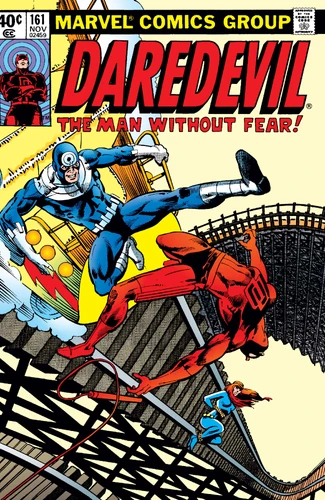
Miller teamed up with the book’s regular writer, Roger McKenzie but it wasn’t an instant hit. Daredevil still didn’t engage with readers initially and Miller almost walked from the series. But with the introduction of Denny O’Neil as editor, who of course was also a renowned writer too, the book’s fortunes changed. O’Neil took McKenzie off as writer and let Miller guide the character’s destiny as its writer-penciller with #168 and everything came together to create the acclaimed book that still casts a huge shadow over forty years later.
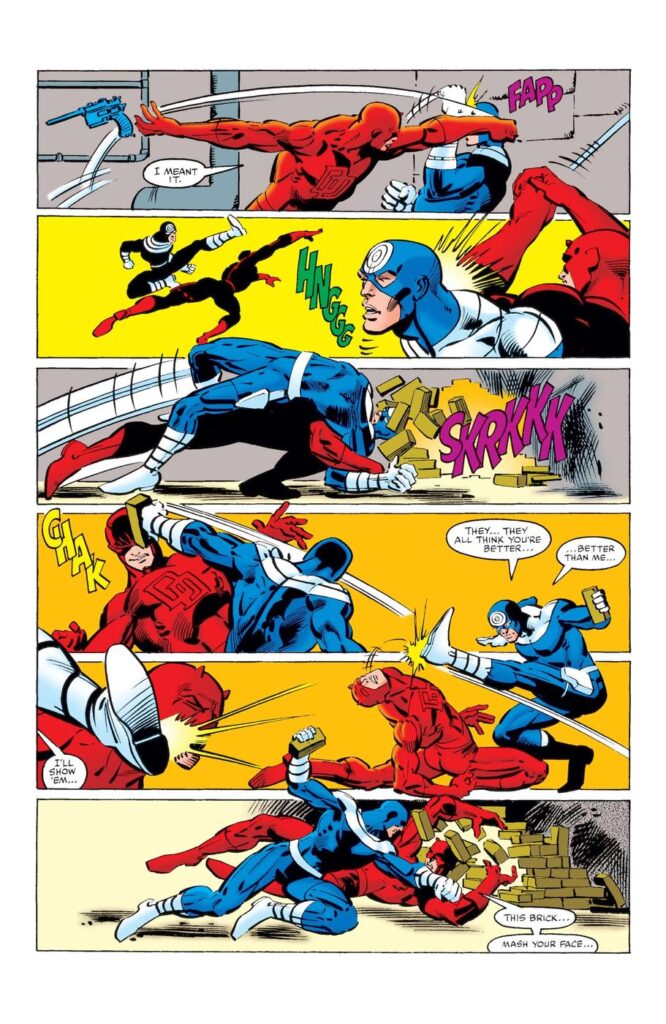

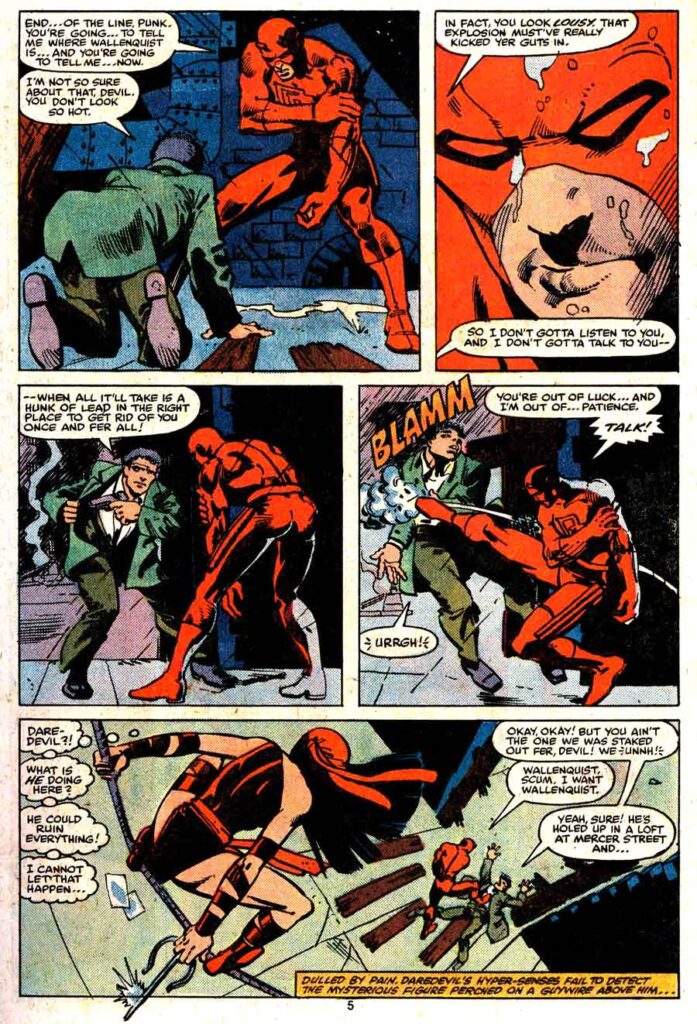
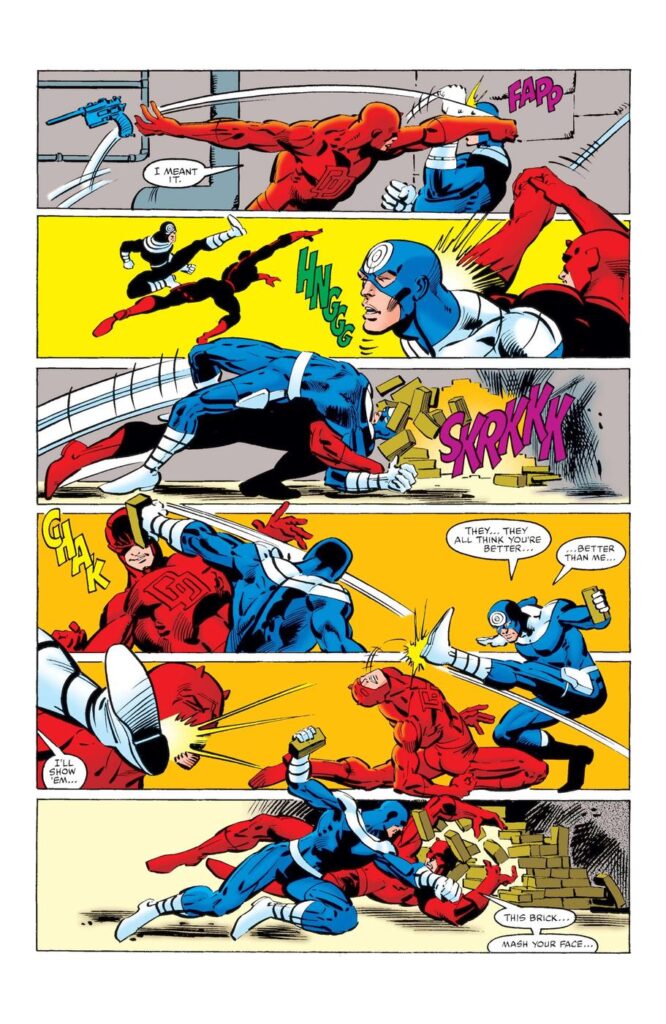

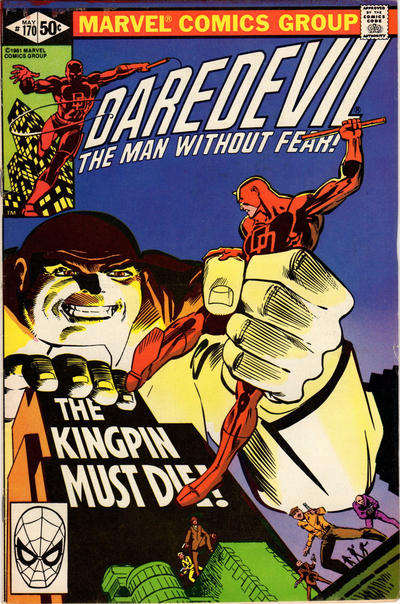

Miller really made the book his own, turning a second tier Marvel no mark into one of its most memorable figures. Bringing Spider-man villain the Kingpin and female adversary and occasional lover Elektra into the mix, Miller, later with artist Klaus Janson who eventually took over the art chores, showed himself to be one of the finest practitioners of the modern comics idiom.
When his run ended with #191, he had become one of the most in-demand comics creators of the time. During Daredevil, he also drew Wolverine with writer Chris Claremont and a Christmas story featuring a character who would prove to offer the next major stepping stone in his career: Batman.

Once he left Daredevil, Miller wrote and drew Ronin, a creator-owned sci-fi epic for DC. Ronin brought Japanese culture into the mix as well as cinematic influences from the likes of Ridley Scott and Akira Kurosawa plus the work of legendary French comics illustrator Moebius. It was a bold and dramatic effort which showed off his range and versatility as a comics creator.
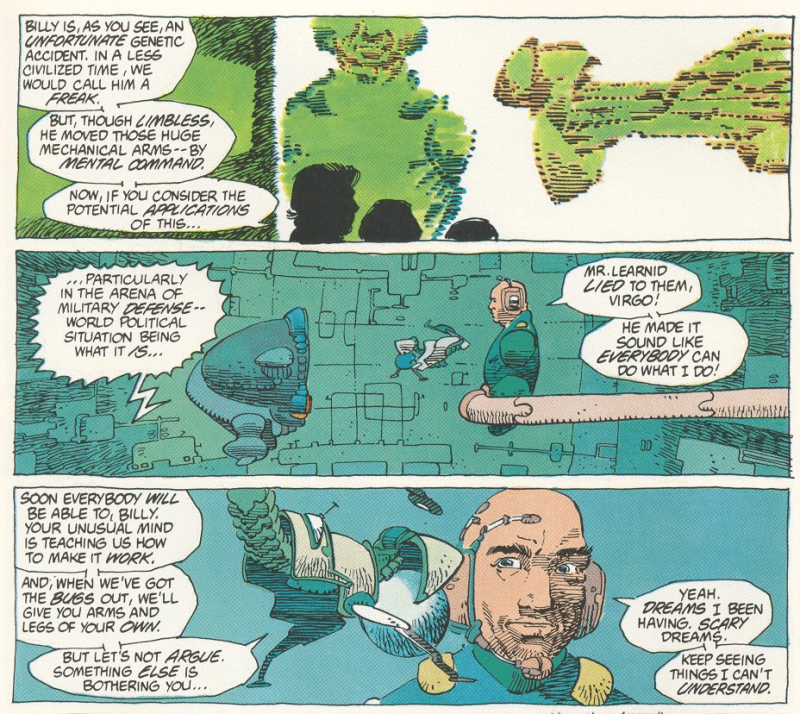

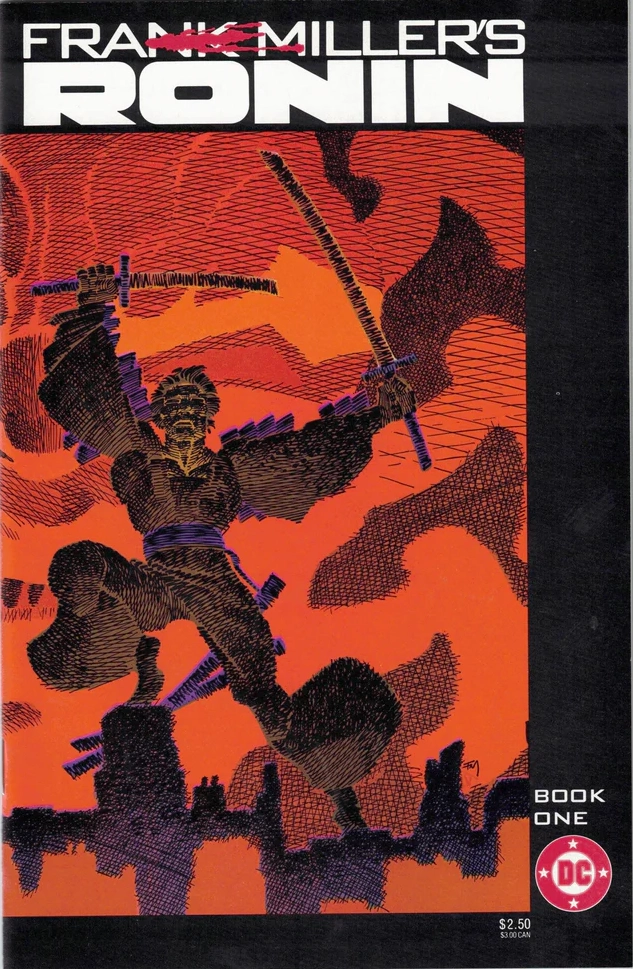
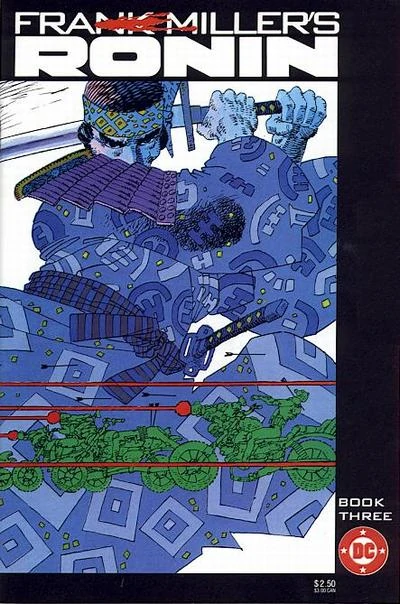
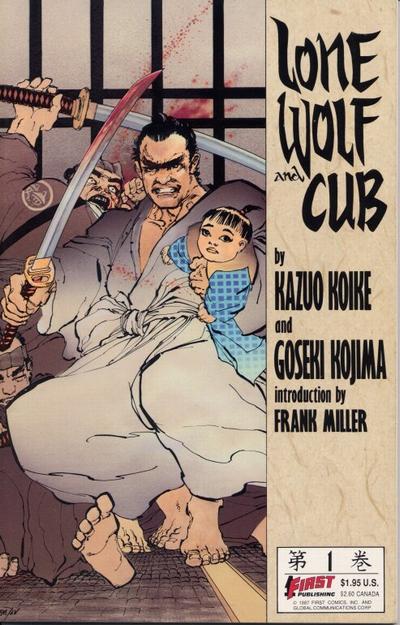
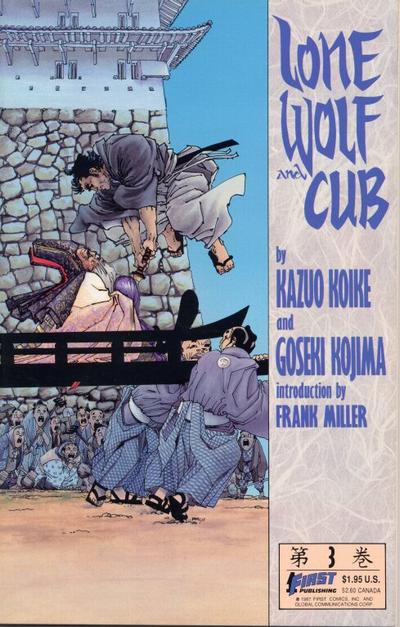
In the Studio Space interview, Miller discussed his connection with Japan: “Japanese culture and art is something that’s always had an influence on me too. I love the way the Japanese so unabashedly combine sex and violence in a way that Westerners shy away from and they create an exaggerated mystical approach that in many ways seems truer than the real world. I first discovered Lone Wolf And Cub when I was first starting out and felt that it ripped away all this flummery that had covered up comic books.”
After Ronin, Miller pitched a proposal to redefine DC’s three iconic figures (Superman, Batman and Wonder Woman) with writer Steve Gerber which wasn’t accepted. However his next work would redefine his position in the industry forever.
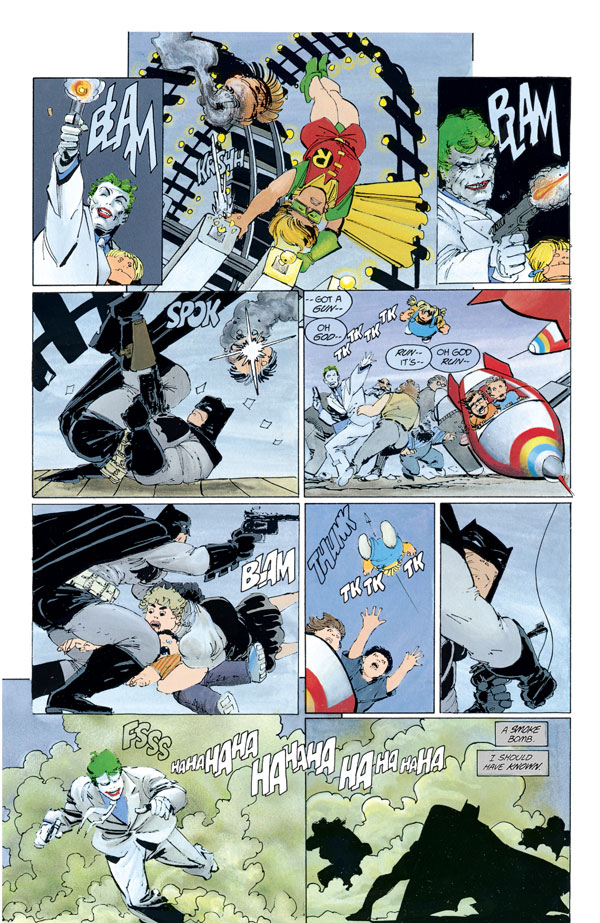
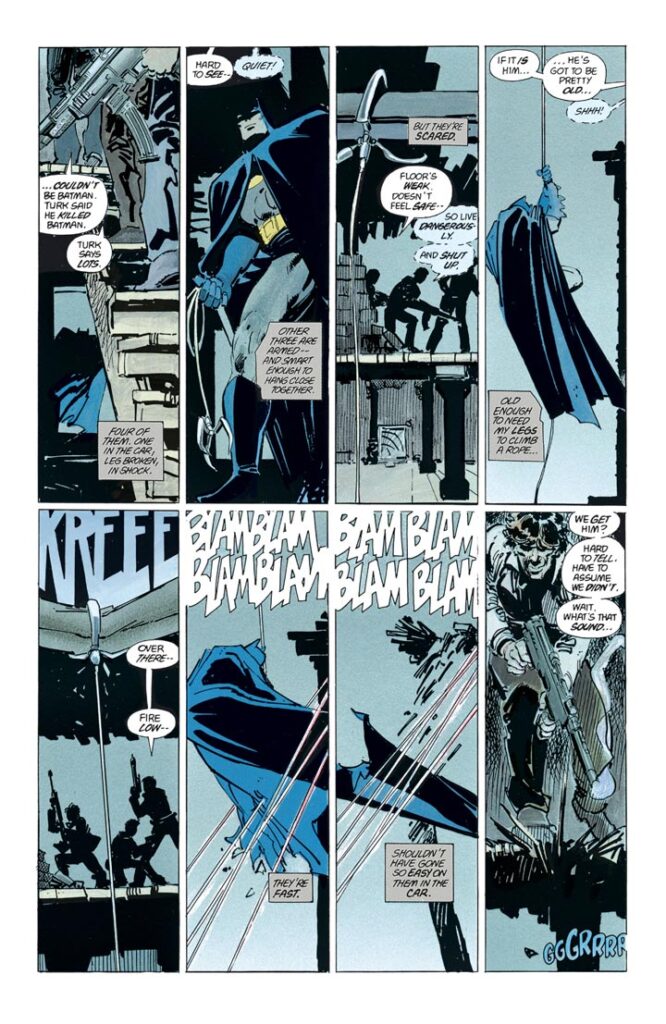
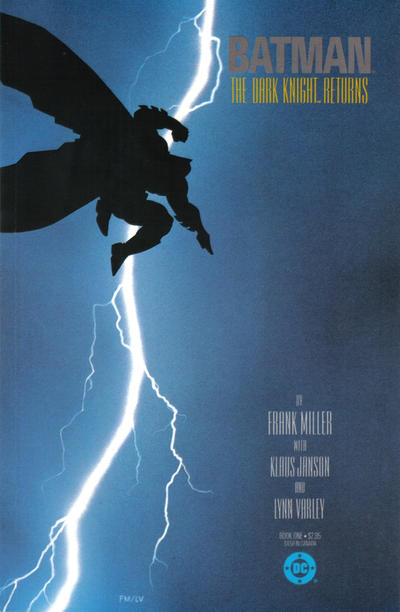
Batman: The Dark Knight Returns was a four issue Batman tale in a new format for DC, offering a hard hitting story of an older Dark Knight coming back to save Gotham City one more time. Reteaming with Klaus Janson and colourist Lyn Varley, The Dark Knight Returns was a massive hit, a story that continues to be one of DC’s biggest backlist sellers 36 years after its debut.


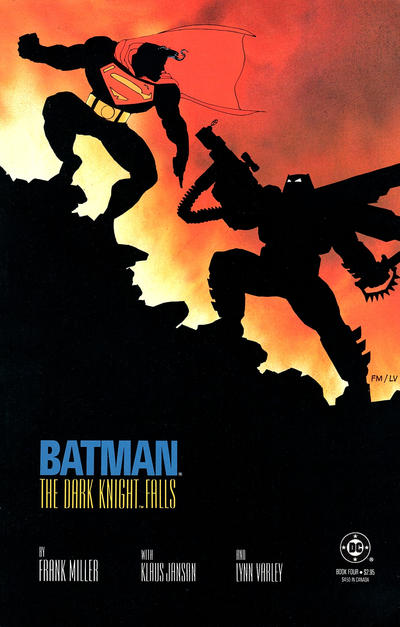
After Dark Knight, Miller returned to Daredevil this time to collaborate with David Mazzuchelli on a new ambitious story, Born Again, which sees the man without fear forced to rethink his life after Kingpin takes it upon himself to crush his foe. The seven issue tale showcased Miller’s wonderfully taut, cerebral writing which was a perfect foil for Mazzuchelli’s iconic art.
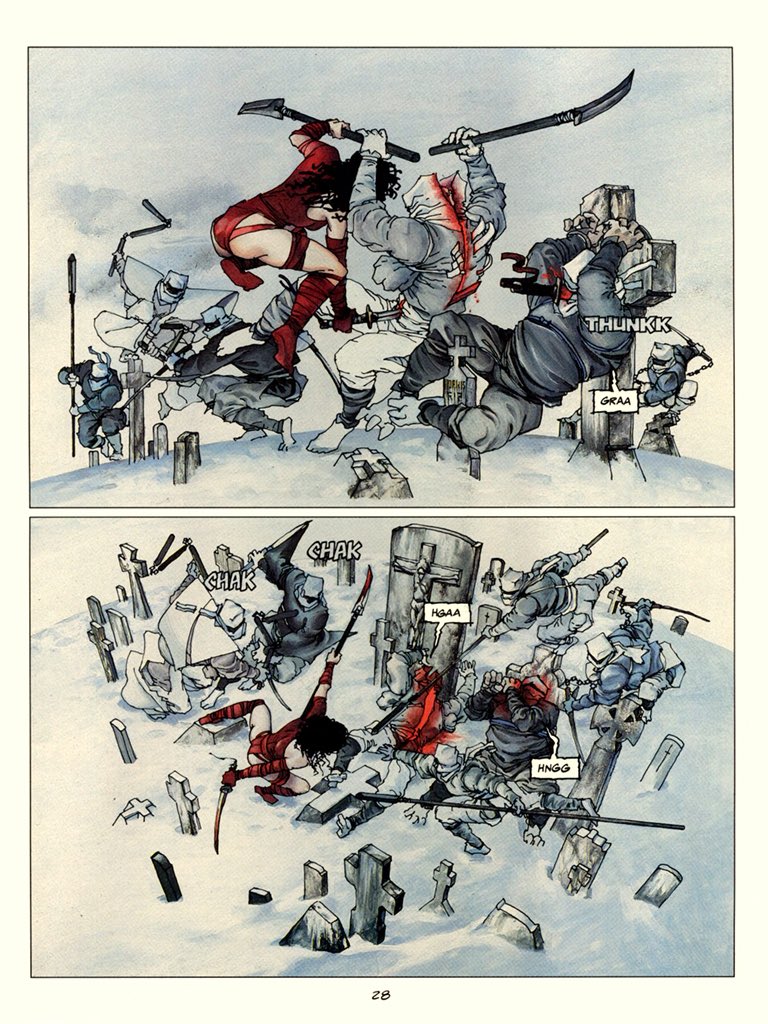
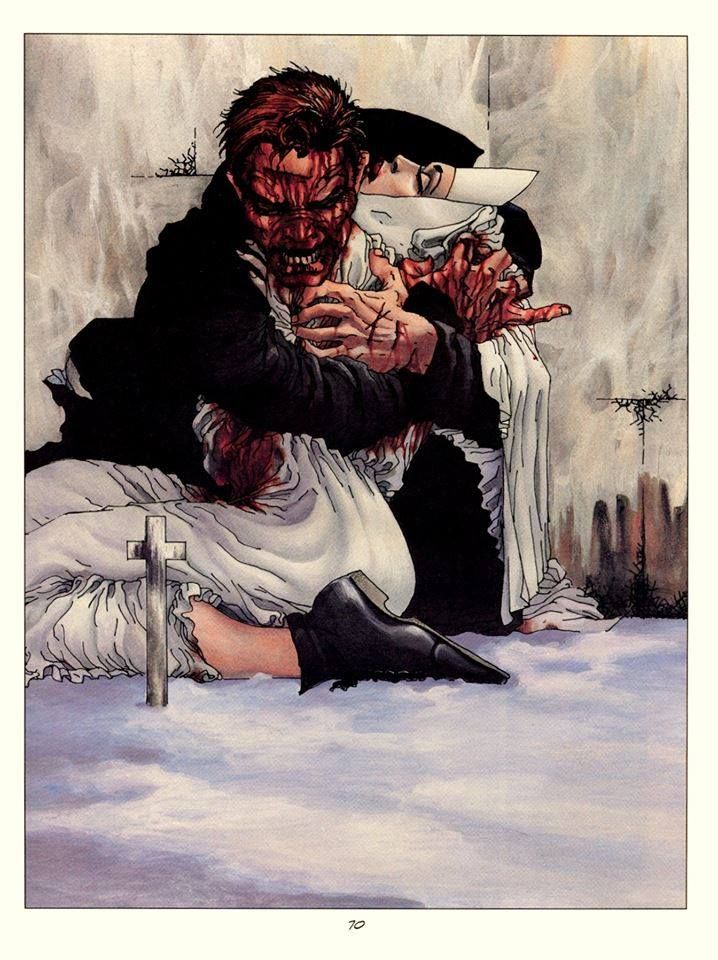
Miller continued as writer on Daredevil: Love and War, a graphic novel focused on the Kingpin and his wife Vanessa, and Elektra: Assassin, both drawn by his friend and groundbreaking illustrator Bill Sienkiewicz.
Miller also returned to team up with Mazzuchelli one more time on Batman: Year One, which ran in issues 404-407. It was a stripped-back retelling of the Dark Knight’s early days and it has been used as a template for Christopher Nolan’s Batman films as well as a number of animated features. As with Daredevil: Born Again, Batman: Year One helped to increase his already burgeoning profile as a superstar comics creator.
In the 1990s, Miller came back to Elektra to write and paint Elektra Lives Again, an experimental and ambitious tale of how Daredevil’s former lover came back from the dead.

The artist also created the covers for the first year of First Comics’ English-language reprints of Koike and Kojima’s Lone Wolf and Cub, tipping his hat to a series which had such a profound influence on Miller as a creative force.
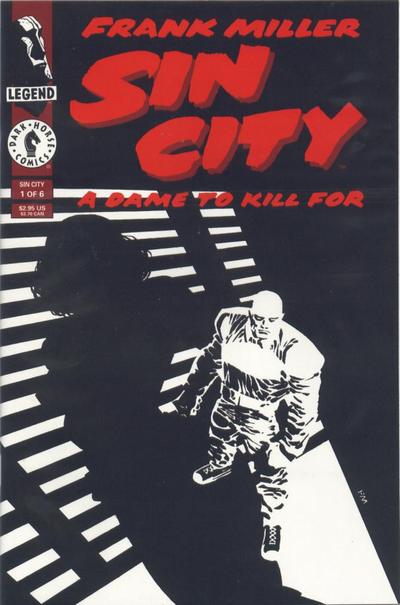
In 1991, Miller turned his hand to a new series, Sin City, which was a black and white crime noir series featuring a different set of characters in each volume. Sin City would dominate his work in the 1990s and displayed a new approach to his work. Miller employed a heavily silhouetted and graphic style for this series which was published by independent house Dark Horse Comics. Sin City was adapted twice for the big screen as well.
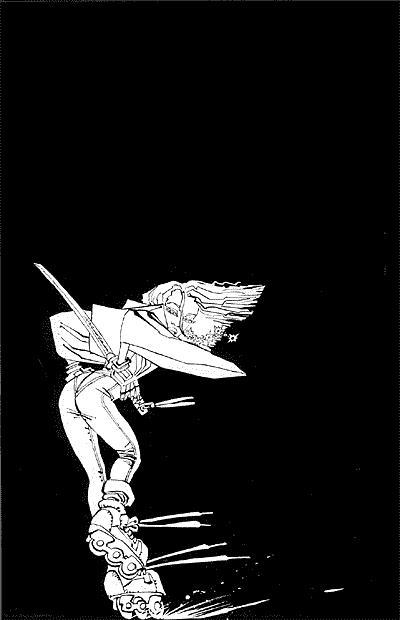

Miller talked about his approach to drawing in Studio Space back in 2008: “My style has changed many times, but my methods have stayed more or less the same. On tracing vellum, I lay out a dozen or so pages at a time, tightening up the drawing with marker. At this stage, I draw the characters, nude in black, then apply the drapery in red, so that I won’t lose the underlying anatomical structure. Next, on a fluorescent light table, I trace the drawings onto a board. And finally, the inking.”
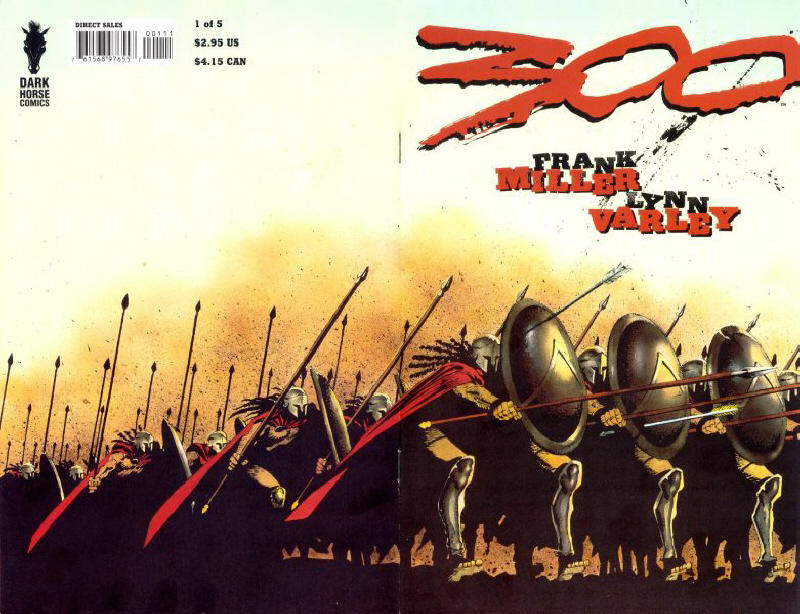
In 1998, Miller wrote and drew 300, a historical adventure comic published by Dark Horse, which was turned into a film by director Zach Snyder in 2003.

In 2001, Miller returned to Batman to write and draw Batman: The Dark Knight Strikes Again, a series which wasn’t quite as well received as its progenitor.
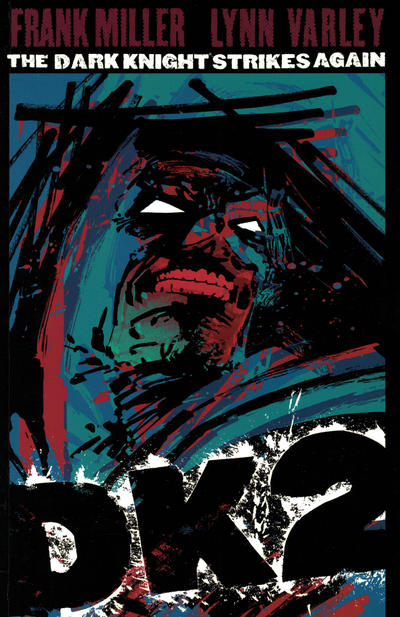
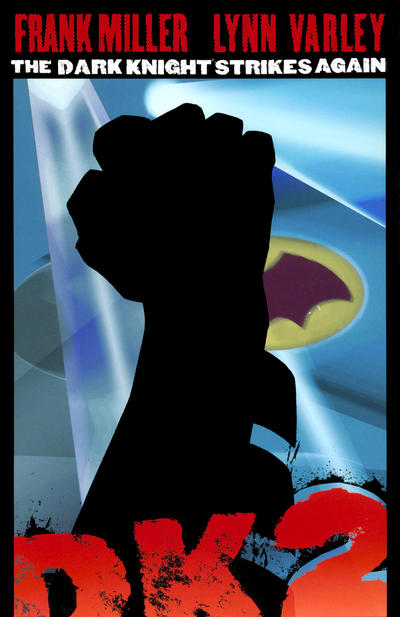
Miller came back to Batman again as writer on DC’s All-Star Batman And Robin back in 2005 and one more time as co-writer with Brian Azzarello on The Dark Knight III: The Master Race in 2015.
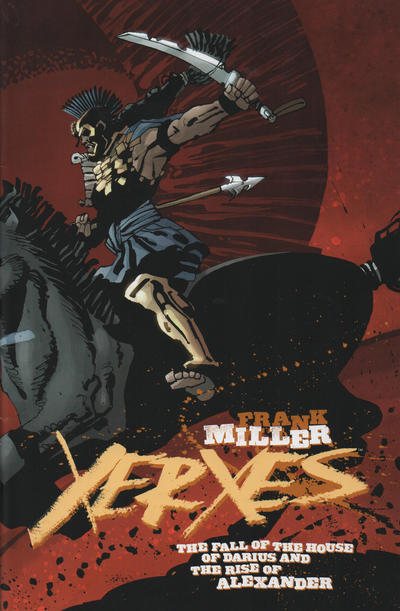
He also wrote and drew a 300 follow-up, Xerxes: The Fall Of The House Of Darius and The Rise Of Alexander.

In spring of this year, it was announced that Miller would be launching his own publishing company, Frank Miller Presents, which would publish follow ups to series like Ronin and Sin City.
Frank Miller is an artist who brought something bold and new to his work from the beginning of his career, creating images and stories imbued with the beating heat of comics. His love of the four colour medium continues to burn as brightly as it did at the start of his career. His dynamic use of abstract shapes and simple but effective storytelling that draws on such a range of cultural touchstones from cinema to novels, comics to newspaper strips has meant that he set the groundwork for so many huge talents who came in his wake.
Here’s the rest of our 101 Greatest Comic Artists list so far
Tripwire’s 101 Greatest Comic Artists Of All Time: No.8: Will Eisner
Tripwire’s 101 Greatest Comic Artists Of All Time: No.9: Lou Fine
Tripwire’s 101 Greatest Comic Artists Of All Time: No.10: Alex Schomburg
Tripwire’s 101 Greatest Comic Artists Of All Time: No.11: Joe Kubert
Tripwire’s 101 Greatest Comic Artists Of All Time: No.12: Wally Wood
Tripwire’s 101 Greatest Comic Artists Of All Time: No.13: Jim Steranko
Tripwire’s 101 Greatest Comic Artists Of All Time: No.14: Alex Raymond
Tripwire’s 101 Greatest Comic Artists Of All Time: No.15: Harvey Kurtzman
Tripwire’s 101 Greatest Comic Artists Of All Time: No.16: Walter Simonson
Tripwire’s 101 Greatest Comic Artists Of All Time: No.17: Russ Heath
Tripwire’s 101 Greatest Comic Artists Of All Time: No.18: Bill Sienkiewicz
Tripwire’s 101 Greatest Comic Artists Of All Time: No.19: Jack Cole
Tripwire’s 101 Greatest Comic Artists Of All Time: No.20: Bernie Krigstein
Tripwire’s 101 Greatest Comic Artists Of All Time: No.21: Graham Ingels
Tripwire’s 101 Greatest Comic Artists Of All Time: No.22: Al Williamson
Tripwire’s 101 Greatest Comic Artists Of All Time: No.23: Barry Windsor-Smith
Tripwire’s 101 Greatest Comic Artists Of All Time: No.24: Alex Ross
Tripwire’s 101 Greatest Comic Artists Of All Time: No.25: John Byrne
Tripwire’s 101 Greatest Comic Artists Of All Time: No.26: Mike Mignola
Tripwire’s 101 Greatest Comic Artists Of All Time: No.27: Basil Wolverton
Tripwire’s 101 Greatest Comic Artists Of All Time: No.28: Howard Chaykin
Tripwire’s 101 Greatest Comic Artists Of All Time: No.29: Moebius
Tripwire’s 101 Greatest Comic Artists Of All Time: No.30: Dave Gibbons
Tripwire’s 101 Greatest Comic Artists Of All Time: No.31: Creig Flessel
Tripwire’s 101 Greatest Comic Artists Of All Time: No.32: Milt Caniff
Tripwire’s 101 Greatest Comic Artists Of All Time: No.34: Burne Hogarth
Tripwire’s 101 Greatest Comic Artists Of All Time: No.35: LB Cole
Tripwire’s 101 Greatest Comic Artists Of All Time: No.37: Bill Everett
Tripwire’s 101 Greatest Comic Artists Of All Time: No.38: Robert Crumb
Tripwire’s 101 Greatest Comic Artists Of All Time: No.39: Mac Raboy
Tripwire’s 101 Greatest Comic Artists Of All Time: No.41: Jim Starlin
Tripwire’s 101 Greatest Comic Artists Of All Time: No.42: Mike Zeck
Tripwire’s 101 Greatest Comic Artists Of All Time: No.43: Adam Hughes
Tripwire’s 101 Greatest Comic Artists Of All Time: No.44: Daniel Clowes
Tripwire’s 101 Greatest Comic Artists Of All Time: No.45: Gene Colan
Tripwire’s 101 Greatest Comic Artists Of All Time: No.46: George Perez
Tripwire’s 101 Greatest Comic Artists Of All Time: No.47: Michael William Kaluta
Tripwire’s 101 Greatest Comic Artists Of All Time: No.48: Cary Nord
Tripwire’s 101 Greatest Comic Artists Of All Time: No.49: Frank Quitely
Tripwire’s 101 Greatest Comic Artists Of All Time: No.50: Mike Ploog
Tripwire’s 101 Greatest Comic Artists Of All Time: No.51: Johnny Craig
Tripwire’s 101 Greatest Comic Artists Of All Time: No.52: Darwyn Cooke
Tripwire’s 101 Greatest Comic Artists Of All Time: No.53: Steve Dillon
Tripwire’s 101 Greatest Comic Artists Of All Time: No.54: Gil Kane
Tripwire’s 101 Greatest Comic Artists Of All Time: No.55: Michael Zulli
Tripwire’s 101 Greatest Comic Artists Of All Time: No.56: John Romita
Tripwire’s 101 Greatest Comic Artists Of All Time: No.57: Joe Maneely
Tripwire’s 101 Greatest Comic Artists Of All Time: No.58: Marshall Rogers
Tripwire’s 101 Greatest Comic Artists Of All Time: No.59: John Severin
Tripwire’s 101 Greatest Comic Artists Of All Time: No.60: Alex Toth
Tripwire’s 101 Greatest Comic Artists Of All Time: No.61: Brian Bolland
Tripwire’s 101 Greatest Comic Artists Of All Time: No.62: David Mazzuchelli
Tripwire’s 101 Greatest Comic Artists Of All Time: No.63 Reed Crandall
Tripwire’s 101 Greatest Comic Artists Of All Time: No.64 Harry Anderson
Tripwire’s 101 Greatest Comic Artists Of All Time: No.65 Nick Cardy
Tripwire’s 101 Greatest Comic Artists Of All Time: No.66 Matt Wagner
Tripwire’s 101 Greatest Comic Artists Of All Time: No.67 Bryan Hitch
Tripwire’s 101 Greatest Comic Artists Of All Time: No.68 Shawn Martinbrough
Tripwire’s 101 Greatest Comic Artists Of All Time: No.69 Al Feldstein
Tripwire’s 101 Greatest Comic Artists Of All Time: No.70 Nestor Redondo
Tripwire’s 101 Greatest Comic Artists Of All Time: No.71 Tarpe Mills
Tripwire’s 101 Greatest Comic Artists Of All Time: No.72 Eduardo Risso
Tripwire’s 101 Greatest Comic Artists Of All Time: No.73 JH Williams III
Tripwire’s 101 Greatest Comic Artists Of All Time: No.74 Irv Novick
Tripwire’s 101 Greatest Comic Artists Of All Time: No.75 Dan Zolnerowich
Tripwire’s 101 Greatest Comic Artists Of All Time: No.76 Gilbert Shelton
Tripwire’s 101 Greatest Comic Artists Of All Time: No.77 Tommy Lee Edwards
Tripwire’s 101 Greatest Comic Artists Of All Time: No.78: Sean Phillips
Tripwire’s 101 Greatest Comic Artists Of All Time: No.79: Jose Luis Garcia-Lopez
Tripwire’s 101 Greatest Comic Artists Of All Time: No.80: Dan DeCarlo
Tripwire’s 101 Greatest Comic Artists Of All Time: No.81: Marie Severin
Tripwire’s 101 Greatest Comic Artists Of All Time: No.82: John Paul Leon
Tripwire’s 101 Greatest Comic Artists Of All Time: No.83: Jim Lee
Tripwire’s 101 Greatest Comic Artists Of All Time: No.84: Denys Cowan
Tripwire’s 101 Greatest Comic Artists Of All Time: No.85: Ross Andru
Tripwire’s 101 Greatest Comic Artists Of All Time: No.86: Paul Gustavson
Tripwire’s 101 Greatest Comic Artists Of All Time: No.87: George Evans
Tripwire’s 101 Greatest Comic Artists Of All Time: No.88: Michael Golden
Tripwire’s 101 Greatest Comic Artists Of All Time: No.89: Matt Baker
Tripwire’s 101 Greatest Comic Artists Of All Time: No.90: Todd McFarlane
Tripwire’s 101 Greatest Comic Artists Of All Time: No.91: Fiona Staples
Tripwire’s 101 Greatest Comic Artists Of All Time: No.92: Carl Barks
Tripwire’s 101 Greatest Comic Artists Of All Time: No.93: Carmine Infantino
Tripwire’s 101 Greatest Comic Artists Of All Time: No.94: Alan Davis
Tripwire’s 101 Greatest Comic Artists Of All Time: No.95: CC Beck
Tripwire’s 101 Greatest Comic Artists Of All Time: No.96: Syd Shores
Tripwire’s 101 Greatest Comic Artists Of All Time: No.97: Bob Fujitani
Tripwire’s 101 Greatest Comic Artists Of All Time: No.98: Tim Sale
Tripwire’s 101 Greatest Comic Artists Of All Time: No.99: Jim Aparo
https://tripwiremagazine.co.uk/headlines/tripwires-101-greatest-comic-artists-of-all-time-no-100/
https://tripwiremagazine.co.uk/headlines/tripwires-101-greatest-comic-artists-of-all-time-no-101/








You must be logged in to post a comment Login