


Book News
Tripwire Reviews Rian Hughes’ Rayguns and Rocketships


Head Back To The Future
Tripwire’s contributing writer Tim Hayes reviewed Rian Hughes’ Rayguns and Rocketships, out now from Korero Press…
Rayguns & Rocketships: Vintage Science Fiction Book Cover Art
Rian Hughes
Korero Press
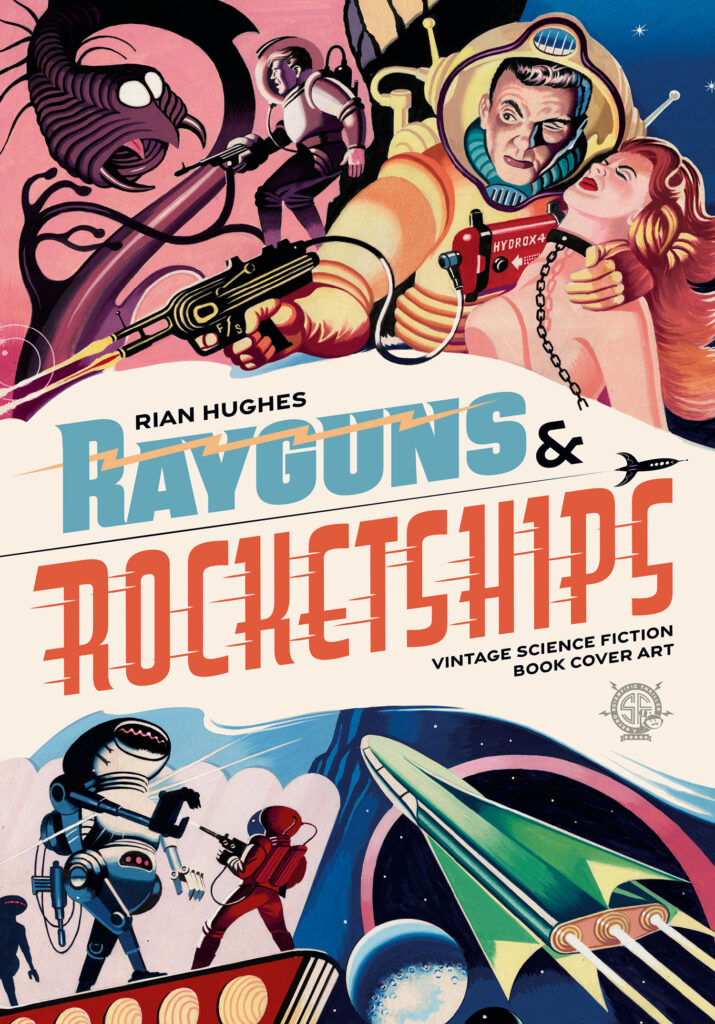
Compiled by Rian Hughes and collaborators with the loving care of enthusiasts, Rayguns & Rocketships collects about one thousand vintage science-fiction book covers from the late 1940s to around 1970, the art form’s energetic heyday. Although there’s an essay from Hughes along with written contributions from Steve Holland and author Philip Harbottle, the bulk of the book is the covers themselves in an uninterrupted flow, organised loosely by publisher but really as a wash of visual experience. Alongside the covers aimed at older readers the collection also dips into books and annuals aimed at younger minds, plus magazines like Practical Mechanics, and later in the chronology some mass-market paperbacks too. It maps a whole archipelago of retro techno-futurist imagery at the peak of its evocative power, optimistic but tense, primal but nuclear, reassuring but terrifying.
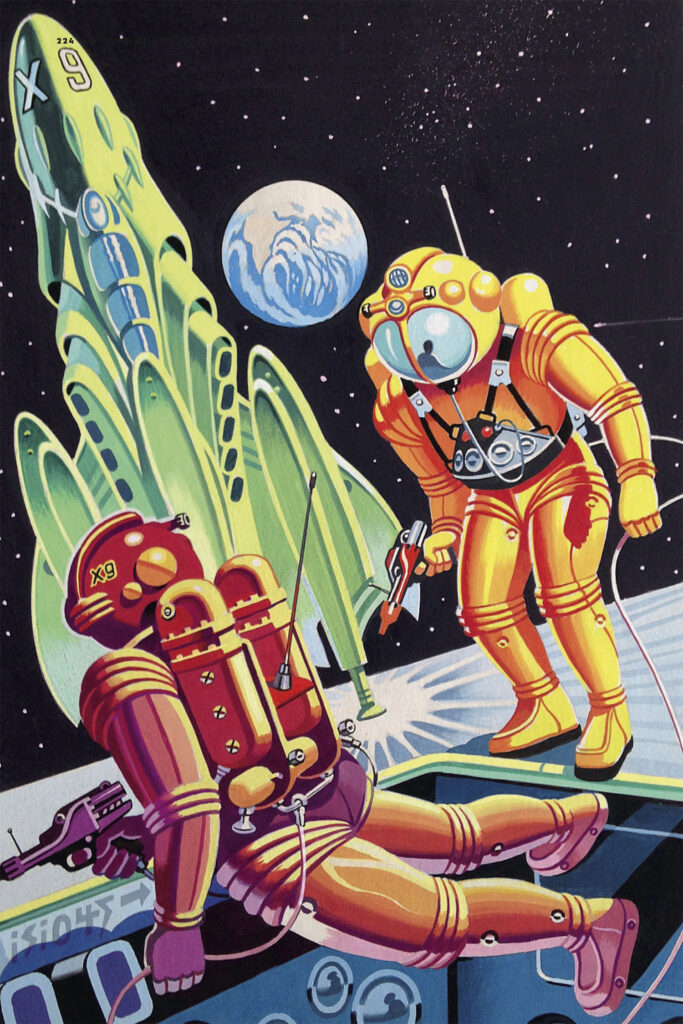
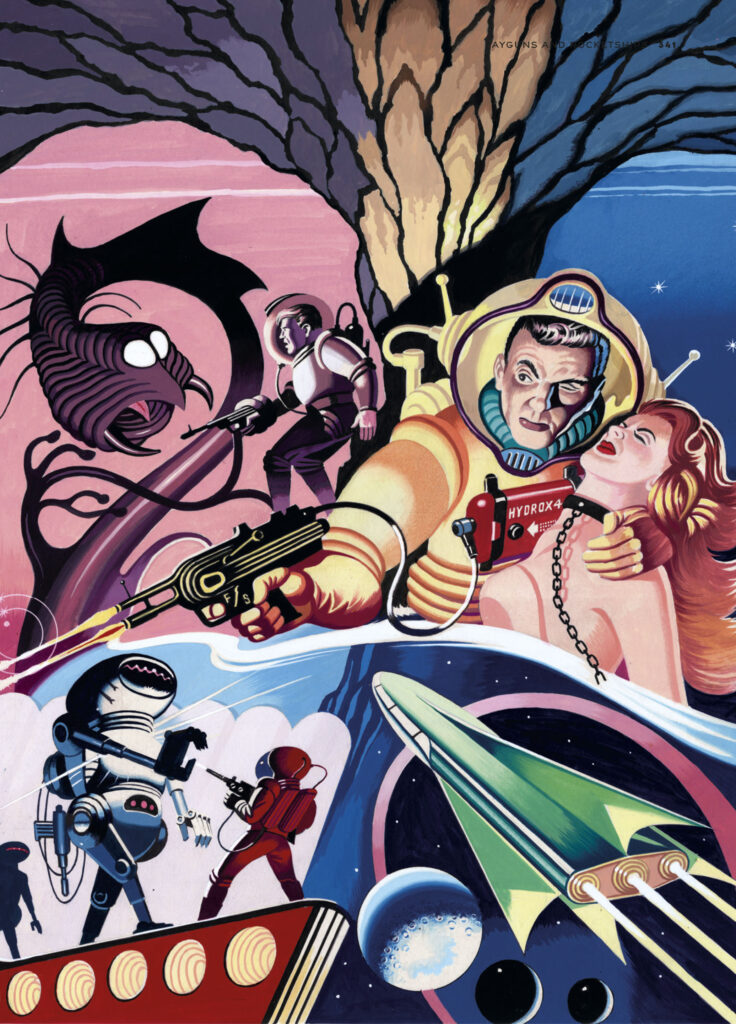

It’s a hefty 460 pages but not an oversized art book, which has the virtue of making the full page illustrations roughly the sizes of their original paperback form. It does mean that when illustrations are fitted into groups of four or nine on a page they are inevitably much smaller, but even that has a precedent: Hughes mentions a formative encounter with the Encyclopaedia of Science Fiction from 1975 in which cover reproductions were around one-inch high, and the smallest thumbnails in his new book are around the same size. This is a book of record, crediting (almost) each artist, and although the title doesn’t spell it out explicitly the subject is British sci-fi, so as well as giving a few spirited but long-gone UK paperback publishers their moment in the spotlight this is also a valuable balance to surveys of US sci-fi imagery and its familiar creators. The names of the writers are mapped out too, mighty pseudonyms like Vargo Statten and Volsted Gridban resonating with these images of atomic technology and interplanetary force.
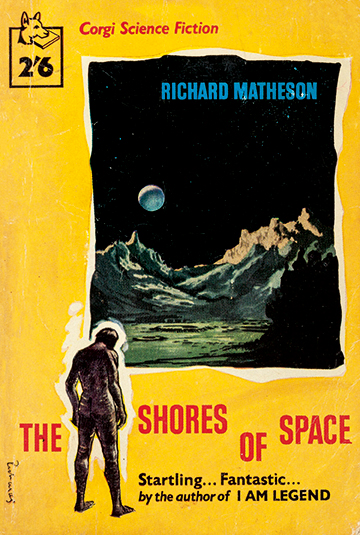


All the graphic flamboyance starts to cool down when the chill of the late 1960s takes hold, with abstract graphics and symbolic designs taking over; more cerebral images for a culture starting to look inward rather than upward. The book’s contributors can’t help but see this as a retrograde step, and after hundreds of brightly coloured slabs of sci-fi exuberance from artists like Ron Turner and Ron Embleton it’s hard to disagree. While mentioning the fact that so much original art from the period is lost, Hughes takes the opportunity to retell the story of IPC/Egmont casually throwing out old work by various artists in the 1990s, dumping wheelbarrow-loads of the UK’s sci-fi heritage into skips. That art had been the future once and then wasn’t any more, but it’s still going strong in here.



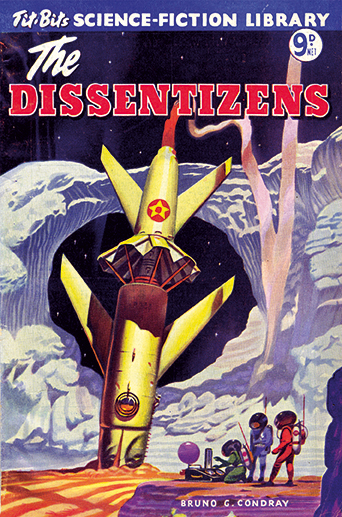
Rayguns and Rocketships, out now from Korero Press













You must be logged in to post a comment Login