


Feature
Happy 35th Anniversary To Indiana Jones

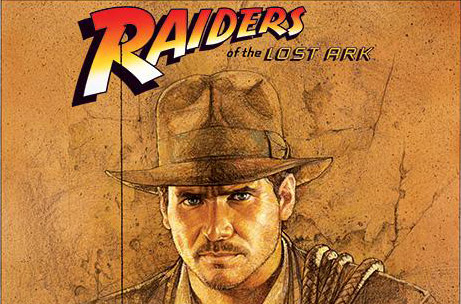
Me And Mister Jones
♦Tripwire’s Contributing Writer Gary Marshall put on his fedora, gets out his whip and talks about how Indiana Jones and The Raiders of The Lost Ark, celebrating 35 years this month, had a huge influence on his life…
Indiana Jones, the silver screen’s indestructible archaeologist and adventurer celebrates his 35th anniversary this month.
Borrowing heavily from the old Republic Pictures serials, such as Doc Savage, and H. Rider Haggard’s Allan Quatermain of King Solomon’s Mines, and with a look swiped from Charlton Heston’s Harry Steele in Secret of the Incas, the character of Indiana Jones was famously first discussed on a beach in Hawaii around the time of the release of the first Star Wars film.
Steven Spielberg told George Lucas how he wanted his next project to be something fun, perhaps in the James Bond genre. Lucas’s response was that he had something even better. Originally named Indiana Smith, the character actually was named after a dog, Lucas’s Alaskan Malamute, an in-joke that would be referenced in The Last Crusade. Spielberg disliked the name “Smith,” so Lucas casually suggested “Jones” as an alternative, and one of Hollywood’s defining archetypes was born.
Steven Spielberg succinctly captured what made Jones stand out when he said, “It was the willingness to allow our leading man to get hurt and to express his pain and to get his mad out and to take pratfalls and sometimes be the butt of his own jokes. I mean, Indiana Jones is not a perfect hero, and his imperfections, I think, make the audience feel that, with a little more exercise and a little more courage, they could be just like him.”
So, back in ’81, a fresh faced 11 year old was about to be dazzled and beguiled by what was to appear on the big screen. You have to remember, at that time there was no internet, no mass market campaigns, and films could often arrive with little or no fanfare. Heck, you could even buy and read the screen adaptation before the film actually opened. I went into Raiders of the Lost Ark (this was way before the addition of the name Indiana Jones to the poster) with zero expectations. It was just another film I was old enough to see without having to run the gauntlet of lying about my age to sneak in to an AA certificate feature. While Jaws had terrified, and Star Wars had been a waking dream, Raiders was so much more. As Spielberg said, here was a leading character that was to an extent grounded in reality – on the surface an everyman who you could believe in. This was my war hero grandfather made real, a globetrotting Nazi fighter, as quick with a quip as he was with a whip. And I loved it.
Up until this point, like all 11 years olds, I wanted to be an astronaut, or, given England’s somewhat limited space programme, a palaeontologist, digging for dinosaur fossils. This film fostered a sea change – now archaeology was the thing for me. My careers teacher was adamant my future involved economics, but in my mind I had a trowel in one hand and a rifle in the other. Spielberg had changed my outlook.
So did I end up bartering with swarthy Egyptians to descend into lost tombs in the Sahara? Climb mountains in the Middle East to find sacrificial altars? Hack through Central American jungles to witness hidden cities long reclaimed by nature? Have I had a gun put to my head at a border crossing? Crossed paths with a tank in the desert? Had a sword fight? Blown up a building with a fire arrow?
Too damn right, although I have never been able to master the bullwhip.
That’s the gift of truly great cinema – to make you believe, if even for only 90 minutes, and just maybe inspire the person that leaves that dark, popcorn infused cavern.
Raiders of the Lost Ark is for me the epitome of great cinema. As fresh today as it was 35 years ago, unbeatable when shown on the big screen, and all without a hint of CGI.
My passion for history and archaeology began with the man in the hat, and for the past twenty years I have tried to pass that passion on to the next generation, although obviously without neglecting students, breaking in and out of historic monuments, getting distracted by scheming Nazis hell-bent on world domination, or opting for machine gun over trowel.
For a film to inspire in such a way would be enough, but there is certainly far more involved in my case. In the British Museum, there is a case in the British Prehistory gallery that contains the sword, shield and crown of an Iron Age priest king. He stands out in archaeology because he was the only skeleton discovered still wearing his crown, interred as he was with the most decorated metal work of the period yet found. It was my trowel that found his burial site and the spirit of Indiana Jones that brought me to that cold muddy trench of ancient rubbish where he lay. It was a defining moment in my life and showed that every so often even Hollywood fantasy can deliver in the real world.
I do still hate Nazis though…
Raider’s MacGuffins
The Idol
Raiders of the Lost Ark opens with Indiana Jones deep in the middle of Chachapoyan territory. The Chachapoyans were absolutely real, however they were extinct by the 16th century. Their ruins dot the Andes mountains in northern Peru.
The golden figure that Indy removes from the ‘rolling ball’ temple was modelled on an Aztec greenstone carving called Tlazolteotl, considered to be a masterpiece by the Dumbarton Oaks Museum in Washington, D.C. Scanning electron microscopy used to recently analyze the manufacture of the idol has found ample evidence of the use of modern rotary cutting tools on the object’s surface. The Tlazolteotl idol, sadly, is a nineteenth-century fake.
The Ark
Rabbinic tradition states that Moses put the broken fragments of the first tablets of the Law, The Ten Commandments, into the Ark. Some scholars have argued that the plans to the Tabernacle were also contained in the Ark.
The Ark was twice carried into the field of battle to secure victory over the Philistines. The Israelites however were defeated, and the Philistines managed to capture the Ark. Raiders’ claim that “any army that carries the Ark before it would be invincible” collapses at this point, but don’t tell the Nazis. The legend of the power of this holy artefact came from the misfortune that befell the places where the triumphant Philistines had paraded the Ark. On the advice of the diviners, the Ark was returned to the Israelites, accompanied by an offering consisting of golden images of the haemorrhoids and mice that the people of Ashdod had been afflicted by. The choice to go with exploding and melting heads however is more cinematic!
When the Babylonians destroyed Jerusalem and plundered the temple, the Ark vanished, with many scholars believing it was probably taken away by Nebuchadnezzar in 597 BC and subsequently destroyed. Others cite Pharaoh Shishak (Shoshenq I) or Rameses III’s sacking of Jerusalem as the answer to the Ark’s location. The sacking eventually led to the removal of the Ark to Tanis outside present day Cairo, as seen in the film. The original ornate Ark which the film shows was almost certainly destroyed as a graven image under King Josiah’s reforms, and replaced with a simple wooden box which was easily lost when the Temple fell.
Though not used by the filmmakers in Raiders, the idea of a simple object from antiquity carrying great power would be used in The Last Crusade, when Jones is challenged with identifying the cup of Christ.
http://imgur.com/a/s3Vh5













You must be logged in to post a comment Login