

Book News
Tripwire Talks To Writer James Debens About His New Novel Old Masters In Marrakesh

Delving Into A Dark Colourful Past
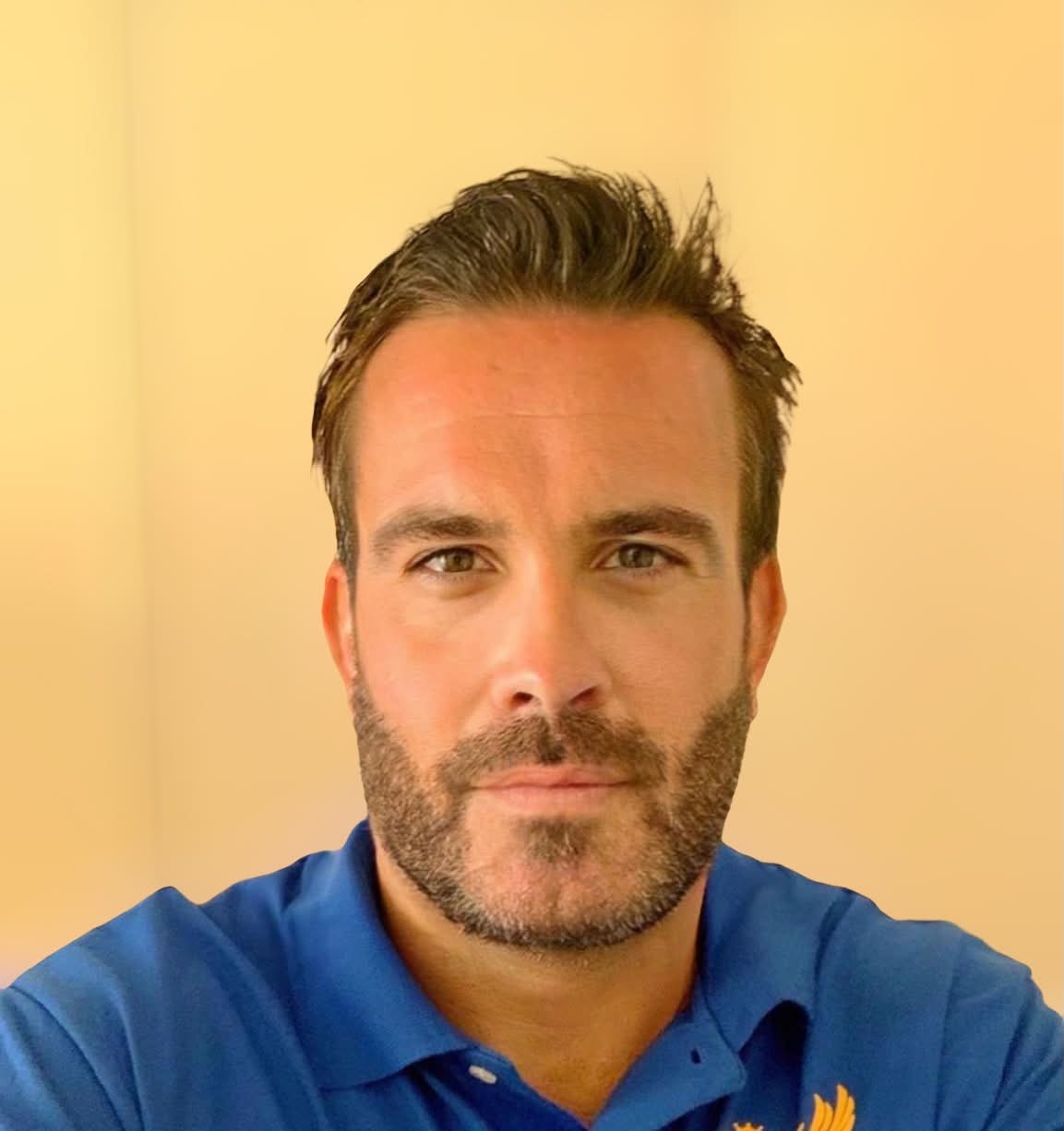
Tripwire just spoke to writer James Debens, who also has an extensive career as a national newspaper journalist in the UK and editor on publications like Newsweek, about his latest novel, Old Masters In Marrakesh…
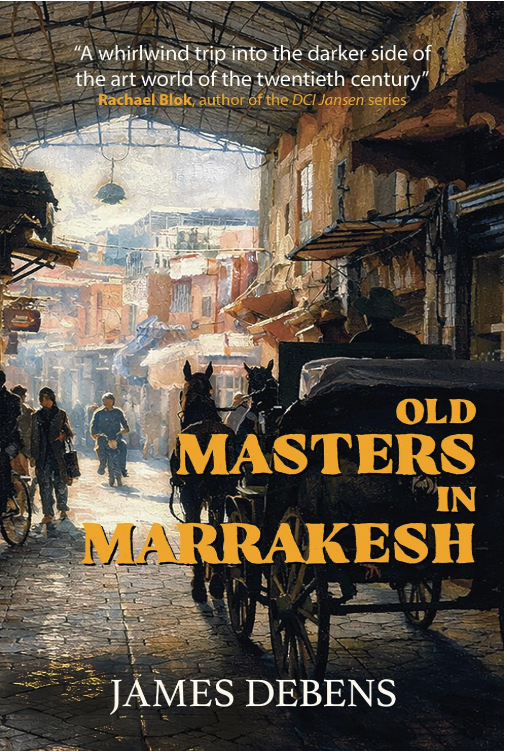
TRIPWIRE: What was the genesis of Old Masters in Marrakesh?
JAMES DEBENS: The starting point was the idea of bringing together two things that fascinated me: the extraordinary world of Old Masters art that my wife works in and the turbulent, morally complicated landscape of post Second World War. I was particularly interested in what happens to great works of art when the world around them becomes unstable — who protects them, who steals them, who trades them, and, ultimately, who has the right to possess them. They belong to the whole world in my mind – the most famous works are known to us all. Marrakesh seemed the perfect setting because it is a city where different worlds have always collided: European and North African, ancient and modern, the glamorous and the dangerous. I visited there in 2015 and 2018; both times were wildly different. The first time, David Beckham was celebrating his fortieth so we were glad we were cut off from everything in an olive grove with no tech. The second, we explored the city itself a lot more as we were on foot. The place is an elision of so much good taste.
TW: Who were the biggest influences on writing this book?
JD: There were probably several rather than one. I’d been seeing a lot about the Getty family – the TV series Greed, and the Ridley Scott film All the Money in the World with Christopher Plummer, who was extraordinary in the role of JP Getty. So when I had the five weeks to write the book, that family were at the forefront. At around the same time in early 2021, I’d also read a profile of the American interior designer who’d worked for the rich expats of Marrakesh in the sixties. It made me think of the influx of Europeans and how a great many beautiful things are created by passionate amateurs, with love. We create these families of sorts, even in a newsroom. Max the main character depends for everything on his trusted “family”.
TW: What has your experience as an editor helped you in terms of your skills as a writer?
JD: It’s aided me more than I realised when I began writing fiction. Editing teaches you to recognise when something is working and, perhaps more importantly, when it isn’t. As an editor, you become very sensitive to structure, rhythm, repetition and unnecessary words. You learn that sometimes the best thing you can do to a piece of writing is take something away. You also learn to look at a manuscript from the reader’s point of view: where will their attention sharpen, where might it wander, and what questions are you making them want answered? However, whether I remember to listen to all that is another matter altogether. I made mistakes with my first novel, spending too much time on every paragraph so that the overall plot and shape of it became irretrievably out of whack. With this novel, I wrote at least two thousand words a day as I had done a few years earlier for a 6N England rugby project that was twice the length of the average novel. Then I spent a while editing it and making it thinner at the tail.
TW: What has your experience as a journalist helped you in terms of your skills as a writer?
JD: It gives you a respect for facts. Our USP is fairness. Even when you are writing fiction, the world of the novel has to feel convincing. A reader should feel that the characters could actually have stood in that street, entered that building or had that conversation. The creation of worlds requires journalistic rigour and factchecks. And journalism teaches you to tell a story. You are constantly asking: what is happening here, why does it matter, and what will make somebody want to keep reading? Those instincts are invaluable when writing a novel.
TW: What do you get out of writing fiction that you wouldn’t get from journalism?
JD: Journalism is concerned with what happened; fiction allows you to explore what might have happened, and, more importantly, what something might have meant to the people involved. You can enter somebody’s head. You can move between the public event and the private emotion. You can leave questions unresolved. You can create characters whose motives are contradictory and sometimes unknowable even to themselves. Journalism gives you the satisfaction of discovering the truth. Fiction gives you the rather different pleasure of creating a truth of your own.
TW: Can you explain the book in one pithy sentence?
JD: A story about art, greed and betrayal, in which the fate of priceless paintings becomes entangled with the fate of the people who move them around.
TW: Are there any other particular writers’ work that you could compare this book to?
JD: My ambition was to combine the atmosphere of a literary novel with the narrative drive of a film thriller, rather than to imitate any one writer. But I always have Graham Greene and Patrick Hamilton in my head and I try to think in cinematic ways: I know a lot more about classic cinema and classical texts than I do about modern literature. When all the plots and characters are rubbed away, what remains in my memory – the atmosphere and how Greene and Hamilton both create worlds – is an inspiration. I also paraphrase Dylan a lot without even thinking of it.
TW: How much historical research did you need to do for this book?
JD: A great deal. And certainly there was considerably more than appears on the page. I knew the texture of the period because I’ve always been curious about the period 1945 to 1970. Marrakesh required its own research because I wanted the city to feel like a real place rather than an exotic backdrop. However, there is a balance. The research is there to make the fiction believable; it shouldn’t announce itself. My hope is that the reader never feels they are being given a history or geography lesson. They should simply feel that they have been transported into that world – and schooldays are over!
Old Masters In Marrakesh is available now published by Afsana Press from all good bookshops and online











You must be logged in to post a comment.