

Feature
Tripwire Takes A Look At The Work Of UK Indie Film Company Shogun Films

Flying The Flag For British Genre Cinema
Tripwire’s contributing writer Chris McAuley takes a look at the work of UK indie genre film company Shogun Films and speaks to its head Jonathan Sothcott…
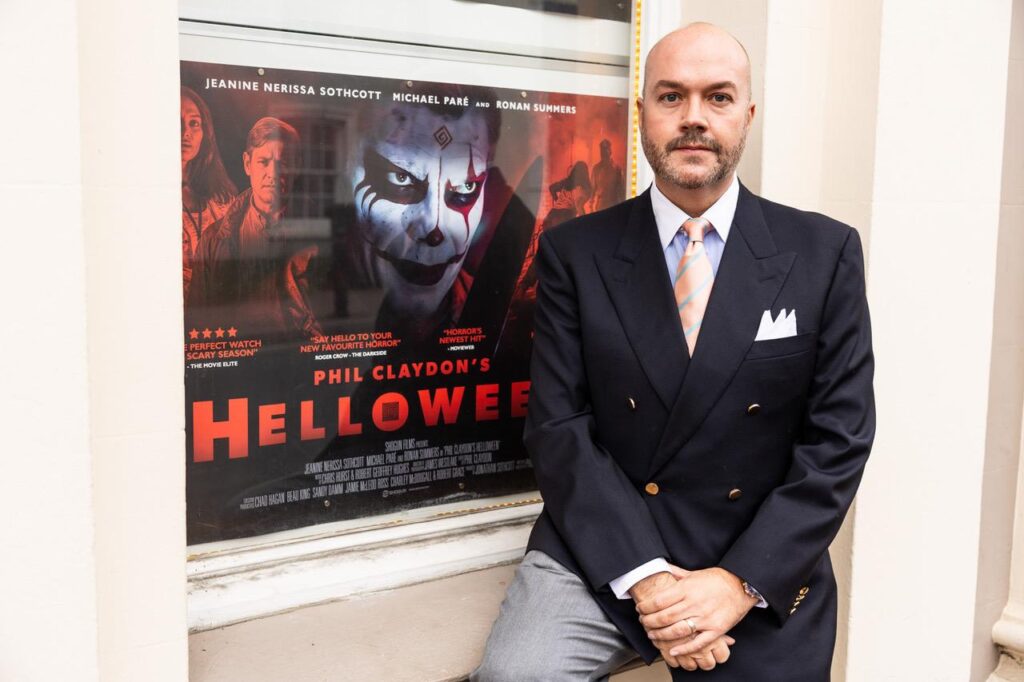
There is something wonderfully reassuring about discovering a film company that understands exactly what kind of movies it wants to make, particularly at a time when so much of the industry appears obsessed with either enormous franchise filmmaking or content designed to satisfy an algorithm. Shogun Films, under the stewardship of producer Jonathan Sothcott, belongs to a much more interesting tradition of British filmmaking, one in which strong characters, recognisable stars, unapologetic genre storytelling and a healthy appreciation for the movies that came before are combined with the commercial instincts necessary to actually get films made. With its latest productions, the espionage thriller Knightfall and supernatural horror film Harbinger, Shogun is demonstrating that this philosophy is not simply surviving, but evolving into the identity of a genuine independent British studio.

My own appreciation of Jonathan’s work began before Shogun Films itself, through the wonderfully entertaining British gangster pictures We Still Kill the Old Way and We Still Steal the Old Way, films which understood something that many modern genre productions seem to have forgotten. Audiences do not necessarily require reinvention every time they sit down to watch a movie, but they do require personality, characters they enjoy spending time with and filmmakers who understand the traditions of the genre they are working within. Those films possessed an old-fashioned confidence which reminded me of the British crime pictures I had grown up enjoying, while their casts brought together familiar faces and performers who understood exactly how to inhabit that world without allowing the proceedings to collapse into parody.
That same sensibility has followed Sothcott into Shogun Films, although the company’s ambitions now extend far beyond the gangster genre, and the fascinating thing is that its films are beginning to possess a recognisable identity regardless of whether they involve criminals, spies or supernatural horrors. There is a lineage here which stretches back to companies such as Hammer Films, where audiences could encounter horror, thrillers, adventure pictures and dramas while still recognising the personality of the studio behind them, and there is perhaps a little of Cannon Films in the mixture as well, particularly in Shogun’s willingness to embrace action, colourful casting and straightforward entertainment without feeling the need to apologise for any of it.
A Different Kind of British Spy Thriller
Knightfall represents perhaps one of the clearest examples yet of what Shogun does particularly well, because on paper the film could easily invite comparisons with the enormous machinery of James Bond, yet its intentions are considerably more intimate and, in many respects, more interesting. Built around Ros Knight, played by Jeanine Nerissa Sothcott, and her father, portrayed by the legendary Ian Ogilvy, the film takes the traditions of British espionage cinema and brings them into a smaller, grittier environment where questions of loyalty, family and survival become every bit as important as the expected intrigue and action.
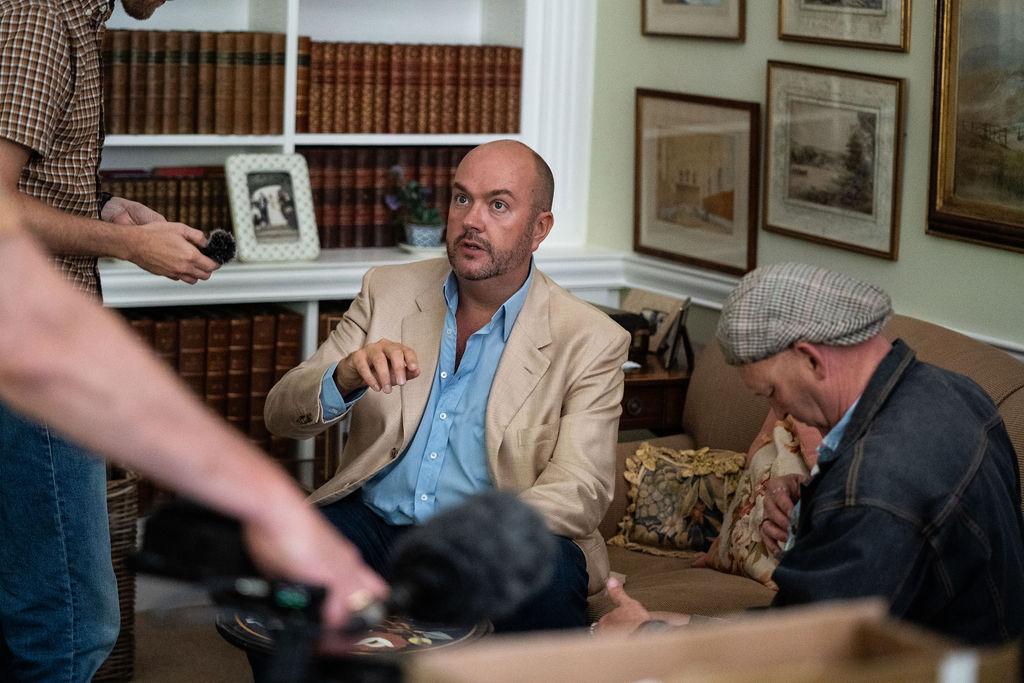
When I spoke with Jonathan, I asked whether Knightfall represented Shogun taking on the great British spy movie tradition on its own terms, and which elements of Bond, Harry Palmer and the wider espionage genre he wanted to preserve. His answer revealed that the film’s origins were actually considerably more contained.
“When the treatment landed on my desk it was really a home invasion movie with spies as characters and I wanted to build out from that,” Jonathan explained, identifying The Fourth Protocol and Michael Caine’s The Holcroft Covenant among his influences, particularly in their ability to generate the persistent feeling that nobody can be entirely trusted.
Rather than attempting to compete with the scale of Bond, Jonathan wanted Knightfall to embrace something deliberately smaller, tougher and more nostalgic, describing his intention as creating something “small and gritty and old fashioned.” A filmmaker friend subsequently compared its atmosphere to the great seventies and eighties “Dad Movies”, including North Sea Hijack, The Eagle Has Landed and Force Ten from Navarone, a comparison Jonathan understandably regarded as an enormous compliment.
The casting strengthens that connection with British genre history enormously, with Ian Ogilvy bringing decades of screen experience to the production while Jeanine Nerissa Sothcott occupies the centre of the film as Ros Knight. Their father and daughter relationship provides an emotional foundation beneath the espionage mechanics, something made considerably more convincing by the existing friendship and chemistry between the performers. Jonathan recalled watching the pair complete a demanding chessboard scene after a long and exhausting day of production, with both actors delivering substantial monologues successfully on the first take, an experience which reinforced his belief that one of the most important ingredients in his filmmaking is simply securing the best actors available.
Jeanine also carries much of the physical responsibility for the film, appearing throughout its action sequences and drawing upon her real-world karate experience while working with the stunt team to create fights that feel appropriately physical. Jonathan is particularly enthusiastic about her confrontation with Michael Paré, whose long career in action cinema makes him an ideal opponent, and the resulting sequence appears to encapsulate Shogun’s philosophy rather neatly. Recognisable performers are not being employed merely so their names can appear on a poster, but because their experience and screen presence can contribute something tangible to the film.
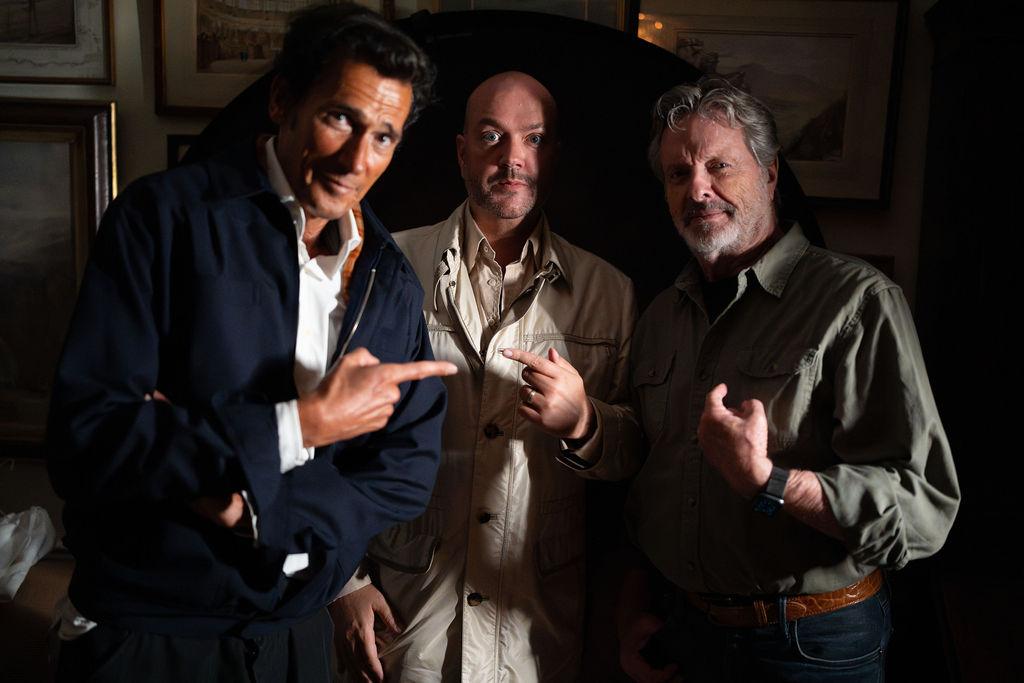
Another particularly intriguing piece of casting comes in the form of Geoffrey Moore, son of the late Sir Roger Moore, whose presence within a British espionage thriller inevitably carries a certain cultural weight. Jonathan had known Geoffrey for many years and had previously worked with Sir Roger on DVD releases of The Wild Geese and The Man Who Haunted Himself, while Sir Roger had also contributed a foreword to one of Jonathan’s books. The challenge, therefore, was finding a role for Geoffrey which acknowledged that history without turning his appearance into stunt casting or an elaborate joke about his father’s most famous role.
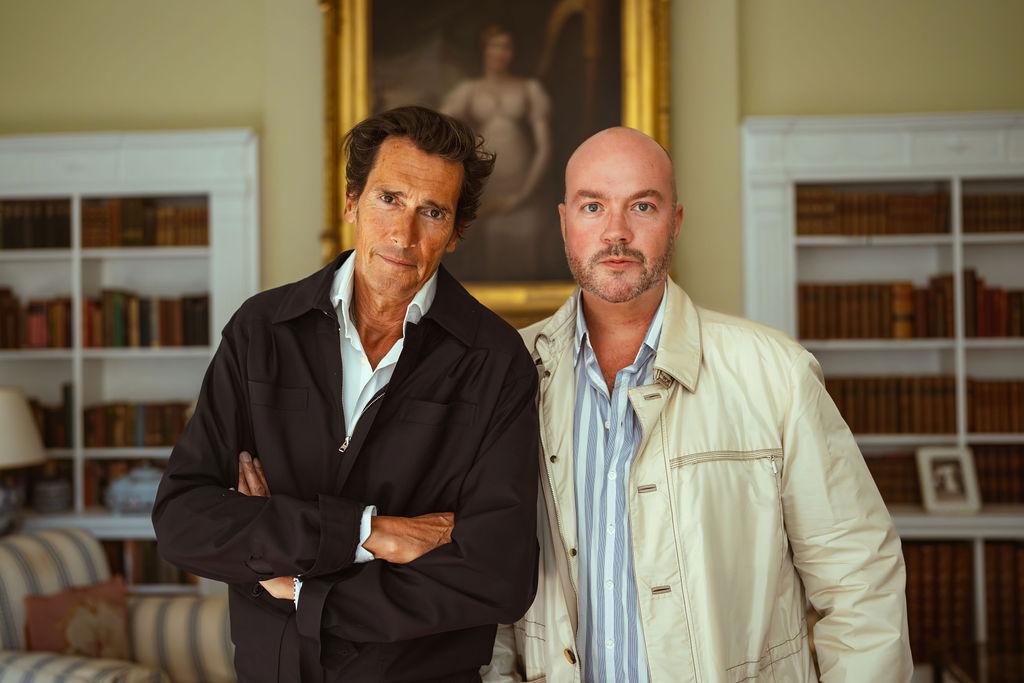
Knightfall provided precisely that opportunity. Jonathan describes Geoffrey as possessing tremendous style and charisma while also emphasising that he has a very different screen presence from his father, and there was a conscious effort to ensure that the film never descended into espionage pastiche. Even the possibility of expanding another role to accommodate further legendary British actors was ultimately rejected because Jonathan felt it risked pushing the film towards self-parody. That restraint is important because nostalgia works most effectively when it provides flavour rather than becoming the entire meal.
The Machine Knows How You Die
If Knightfall demonstrates Shogun’s affection for British espionage and action cinema, Harbinger reveals another side of the company entirely, although its wonderfully simple central idea feels equally connected to the tradition of high-concept genre filmmaking. At its heart sits a sinister fortune-telling machine capable of revealing how people are going to die, taking something recognisable from seaside arcades and fairgrounds and transforming it into an object of supernatural menace.
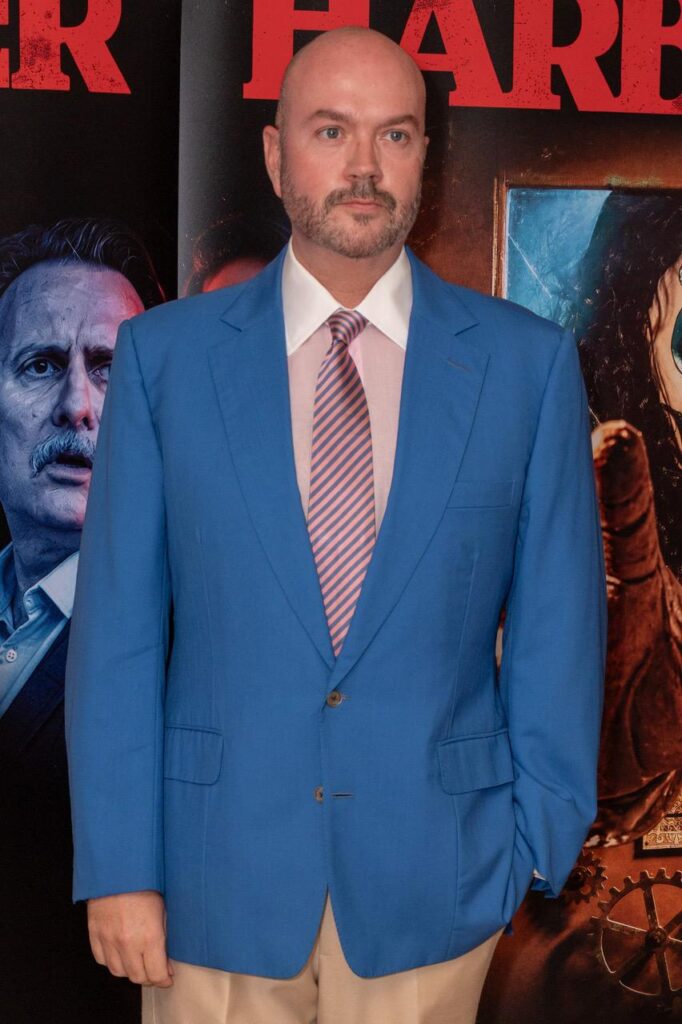
The origins of the concept are wonderfully mundane, which somehow makes the idea even more effective. Jonathan recalled seeing one of the machines on Santa Monica Pier in 2018 and telling Jeanine that it belonged in a horror film, before another encounter years later in Hastings caused them both to jump and convinced him that perhaps the universe was trying to make the suggestion rather forcefully. Jonathan developed the initial idea, Harry Boxley subsequently found the route into the story, and longtime collaborator Simon Cluett developed the screenplay.
For Jonathan, the simplicity of that central concept is essential because contemporary horror exists within an extraordinarily crowded marketplace, where a film often needs to communicate its identity almost instantaneously. The fortune teller provides precisely that visual hook, while the premise itself can be understood in seconds, something that recalls an older school of horror filmmaking in which the audience could look at an image, read a title or hear a single sentence and immediately understand why they wanted to see the movie.
There is also something pleasingly tactile about Harbinger’s concept at a time when so much modern horror gravitates towards technology, screens and digital threats. A fortune-telling machine is physical, theatrical and inherently uncanny, occupying that uncomfortable territory between entertainment and ritual where audiences know intellectually that they are looking at a mechanism while some primitive part of the imagination still wonders whether it might know something that they do not.
What Makes a Shogun Film?
Speaking with Jonathan, I found myself returning repeatedly to the question of identity because Knightfall and Harbinger are obviously very different films, yet both somehow feel completely at home beneath the same company banner. His answer immediately clarified why, because the producer he identifies as perhaps his greatest influence is not an individual at all, but Hammer Films.
Hammer remains primarily associated in the popular imagination with horror, yet its output stretched across thrillers, war pictures, adventure films, psychological dramas and numerous other genres while retaining a remarkably identifiable character. Jonathan also cites Cannon Films during the 1980s as another example of a company whose personality could transcend individual genres, and that is increasingly the territory in which he wants Shogun to operate.
“For me I love clearly identifiable genre films with great casts and original ideas that deliver on action,” he told me. “Hammer did it. Cannon did it. And I hope Shogun can do it too.”
That statement perhaps explains Shogun better than any complicated corporate mission statement ever could, because the objective is not to chase one fashionable genre until the market becomes exhausted, but to establish a relationship of trust with an audience. Jonathan wants genre enthusiasts eventually to see the Shogun logo as “a kind of guarantee of a good time”, an ambition that recalls an era when the identity of the company behind a picture could itself become part of the attraction.
With eight movies already completed, that ambition is beginning to look increasingly realistic, and Jonathan has no intention of slowing the machinery down. His goal is not necessarily to chase dramatically larger budgets, but to increase output while maintaining the production model Shogun has already established, with the company potentially capable of producing six films annually and perhaps as many as eight when the circumstances are right. Looking towards 2027, he envisages an output weighted approximately seventy percent towards action, thrillers and crime, with horror accounting for the remaining thirty percent, and his stated ambition is wonderfully straightforward: he wants Shogun to be in near continuous production.
For someone who first encountered Jonathan Sothcott’s filmmaking through the swaggering British criminal world of the We Still… movies, there is something enormously satisfying about watching that creative philosophy grow into something considerably larger. The genres may change and the scale of the company may continue to expand, but the fundamental appeal remains recognisable, built around charismatic performers, clear concepts, an affection for genre history and an understanding that audiences occasionally want a movie to simply grab them by the collar and give them a thoroughly entertaining couple of hours.
British independent cinema needs companies willing to take those chances, but it also needs producers who understand that independence should not mean thinking small creatively. With Knightfall looking backwards towards the rich tradition of British espionage while finding its own identity within it, and Harbinger taking the wonderfully macabre simplicity of a killer fortune-telling machine and turning it towards a contemporary horror audience, Shogun Films appears to be doing something increasingly valuable.
It is building a brand around the movies themselves.
For those of us who remember when the appearance of a particular studio logo could immediately tell us what kind of evening we were about to have, that might be the most exciting development of all.









You must be logged in to post a comment.