


Feature
Flashback February: Blueberry


♦2016 is an anniversary for Tripwire. It marks the 24th anniversary of the magazine, which began back in February 1992. So for the rest of February, we shall be representing some of our classic moments over the past 23 years. In one of our digital editions in 2011, ANDREW COLMAN celebrated Charlier and Jean Giraud aka Moebius’s Blueberry so here it is again…
The Saga of Blueberry
The Blueberry series, set in the old West of the mid- 19th century, is one of those rare anomalies in comics – a European take on a grassroots American genre that surpasses and to a certain extent, prefigures developments in it that would occur in the following decades. The series takes its influences from a variety of sources that are interwoven with history and legend, from 1920s pulps such as Spicy Western, through the myriad western comics of the 1950s, to the grandiose mythological sweep of Hawks and Ford, yet successfully transcends, if not reinvents them. The character of Blueberry also predates the enigmatic, cold-blooded loner that would soon arrive in the shape of Eastwood’s Man With No Name, although he is far less monolithic and has little in common with him, save his perennial outsider status. The series itself is also a high watermark in artist and co-creator Jean Giraud’s career, rivaling any of the science-fiction and fantasy work he produced under his nom de plume, Moebius. Yet despite the importance of this series, the publishing career of Blueberry, especially in English translation, has been a chequered one.
 The genesis of the series took place in 1961. French artist Jean Giraud, who had already worked on western strips for Far West magazine, approached Belgian writer Jean-Michel Charlier about producing a new series set in the same milieu for his magazine, Pilote. Charlier, who had co-founded Pilote with such luminaries as Asterix creators Rene Goscinny and Albert Uderzo, was very much focused on realism in his work and initially rejected the idea. However, a trip to the Mojave desert in 1963 caught his imagination and kindled his interest in the history of the West. Upon his return to France, Charlier and Giraud immediately set about producing pages of the strip that would eventually become Lieutenant Blueberry’s first story, the six part Fort Navajo series.
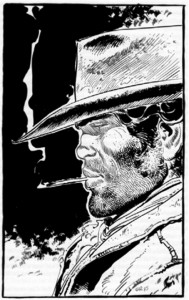
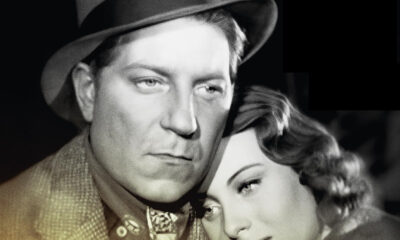
Key to the longevity and uniqueness of the series was the title character. Michael Steven Donovan, the son of a Creole woman and a plantation owner, grew up amongst slaves but like his father was a racist. Having been framed for murder he renounces his bigotry after being saved by a runaway slave. And despite being a Southerner, ends up enlisting for the North at the start of the American Civil War, the historical focal point for many of his adventures. It is at this juncture that he assumes his nom de guerre, Blueberry. Regardless of his convoluted, quintessentially American origin, Blueberry is very much a European entity, suffused with a world-weariness and sly, knowing cynicism that was very much in step with the mores of 1960s France, his looks based on the French screen icon of the era, Jean-Paul Belmondo. Neither an itinerant anti-heroic outlaw, nor a bastion of old-fashioned, inflexible decency, Blueberry is a flawed individualist who makes mistakes and bad decisions, yet (through his unorthodox upbringing) has a survivalist nous and cunning, which provides a great deal of edge for the character. His inherent nobility and anti-discrimination stance, coupled with his relentless battle against bureaucracy and both ruthless superiors and enemies alike, draws considerable empathy from the reader. He certainly wasn’t a Jonah Hex, although there are supporting characters in the strip who are close to that archetype.
The other crucial component of the series was of course Jean Giraud’s painstakingly detailed artwork, which although variable from one story arc to another, always strived for authenticity in its depiction of frontier towns, army camps, railroads, prairie landscapes and foreboding mountain ranges. Many of the illustrations are reminiscent of faded 19th century sepia photographs, whilst his desert scenes, featuring barren wastelands, craggy ravines and Fordian dustbowls, paint the harsh, unforgiving environment that Blueberry is trapped in. The cast of characters however, are drawn in a variety of styles, ranging from fine line to borderline grotesques, such as his comedic sidekicks Red Wooley and Jimmy McClure. Charlier’s intricate plotting and attention to historical accuracy add enormously to the mythos, detailing the knowledge and judgment of what is required to survive in such hostile territory, as well as the politics that constantly entangle Blueberry. What also separated Blueberry from other western strips was the visceral brutality of the pitched battles and gunfights. Such violence was used relatively sparely, and thus jarred with the tranquility of the rest of the story. However Giraud and Charlier were only too keen to show what occurred when fanatics such as Blueberry’s nemesis General Allister attempted to wipe out the Sioux and Cheyenne in his desire for victory and political gain.
This is not to say that Blueberry is steeped in history, or is an accurate portrayal of the West as it was – the earlier series were more rooted in realpolitik certainly, but as the title progressed it was clear that Giraud and Charlier’s version of the era is a widescreen, idealized, bawdy vision, filled with pulpish villains, baby-faced assassins, whores, grim jobsworths and fickle chancers. In the first series, Blueberry was just one of an ensemble cast. It was in the second tale, the four part story simply entitled Lieutenant Blueberry, first published in French in 1970, where he assumes the lead role. In this story, set in 1868, Blueberry is caught up in a battle between two rival railroad companies. Working under General Dodge, one of the few men who completely trusts him, he is caught between the machinations of two agents working for the other company, whilst trying to negotiate peace with the Native Americans whose existence is threatened by the white man’s progress. It is here that we are introduced to several classic characters, the ruthless, iron-handed Steelfingers, domineering brothel madame Guffie Palmer, and arch-enemy General Allister. The story contains classic plotlines and set-pieces that would feature often in later tales, such as Blueberry constantly out-thinking and anticipating the enemy, being wrongly accused and turned into a pariah by both sides, and being treated as expedient and disposable by senior officers such as the Custer analogue Allister. Not to mention coping with ever-changing fortune and escaping death more than once by a hair’s breadth. Blueberry somehow manages to steer his way through all the gunfights and sabotage, not to mention the massacres committed by the army and Sioux – but despite his guile and ability to survive through the war games, and his earned trust of both the Native Americans and General Dodge, this is the darkest of the Blueberry tales, with no happy ending.
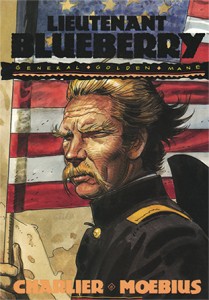 The follow-up to Lieutenant Blueberry, 1972’s Marshall Blueberry – The Lost Dutchman’s Mine, is a far more straightforward action-adventure yarn, with no political subtext. In this beautifully drawn episode, Blueberry’s partner, the hard-drinking McClure, is tricked by a phony Dutch nobleman called Luckner into assisting him in locating a goldmine set within the remote and aptly named Superstition mountains, a place feared and defended by the local Apache tribe, who are determined not to suffer the same fate as the Sioux and Cheyenne at the hands of Allister’s army. Blueberry, sent to the one-horse town of Palomito by his nemesis Allister to act as Marshal, basically gets involved in a classic cat-and-mouse chase between himself, the devious Luckner and a couple of bounty hunters. Charlier’s writing, already remarkably proficient at capturing the nuances and cadences of the characters’ speech, is imbued with considerably more humour and laconic wit amidst the baking tundra and double-crosses than previously.
However it is the five-part epic Blueberry saga (often referred to as Confederate Gold, that is Charlier and Giraud’s tour de force. Written for the most part in the mid 1970s but completed in the early 1980s, the emphasis, despite the return of many major players, is very much on Bond-style action and espionage. Blueberry, finding himself in and out of stockades on trumped-up charges after repeatedly falling out of favour with the army, is charged with finding the defeated Confederate government’s treasury in Mexico by General McPherson, under the auspices of President Grant himself. However, after being framed by the Mexicans of stealing the gold (again!) he is sent to a military prison, wherein he is chosen as a scapegoat by a cabal of conspirators, led by an all-too familiar figure, who are plotting the assassination of the President. Added to the established roster of characters are love-interest Chihuahua Pearl, Commandante Vigo (who is similar to Steelfingers), Colonel Lopez, the merciless killer Angel Face, as well as allies such as McClure, Wooley, Guffie, and his Apache friend Cochise. Narrowly avoiding death countless times and winning against seemingly insurmountable odds, it is a brilliantly plotted, highly involved narrative that I can’t recommend enough. As Jonah Hex artist Tim Truman commented, Charlier and Giraud created “a mythical Western dreamscape that should have been”.
Other albums completed by Giraud and Charlier include the prequel Young Blueberry which details Blueberry’s origin and his joining the Yankee army at the beginning of the Civil War, although Colin Wilson drew the latter three installments. After Charlier’s death in 1989, there have been further Blueberry stories, some featuring Giraud, but most not. Giraud teamed up with William Vance in 1993 for a Marshall Blueberry prequel that immediately precedes the events in The Lost Dutchman’s Mine, with one addition by Michel Rouge seven years later. There have also been a further 13 chapters of the Young Blueberry franchise, written by Francois Corteggiani, and drawn by Colin Wilson and Michel Blanc-Dumont.
 Attempting to track down every published episode of Blueberry is remarkably difficult, especially for English readers, as many of the stories have not been translated. The original Lieutenant Blueberry series, released in France by Dargaud Editeur in the mid-1960s, was mostly reprinted by Egmont Methuen in the late 1970s but seems unfindable now. The second Lieutenant Blueberry series, along with the first Marshall Blueberry and main Blueberry series from the early 1970s which were reprinted in English by Epic (Titan in the U.K.) and Dark Horse (one story only) are relatively easy to find on ebay, although Young Blueberry by Comcat Comics is not. Most of the other stories by Charlier and Giraud, such as Mister Blueberry, the later Young Blueberry and second Marshal Blueberry episodes that they did were not translated into English. And having checked Amazon, there appear to be many volumes of Blueberry, featuring both Giraud’s and other artists’ work but only in German. As the rights to the Blueberry material is spread amongst several publishers, it seems unlikely that there will ever be a unified, complete set of stories for English-speaking readers. But one can still dream.
ANDREW COLMAN













You must be logged in to post a comment Login