

Headlines
Flashing Back To Our Classic Frank Miller Interview From 2005

Talking Frankly
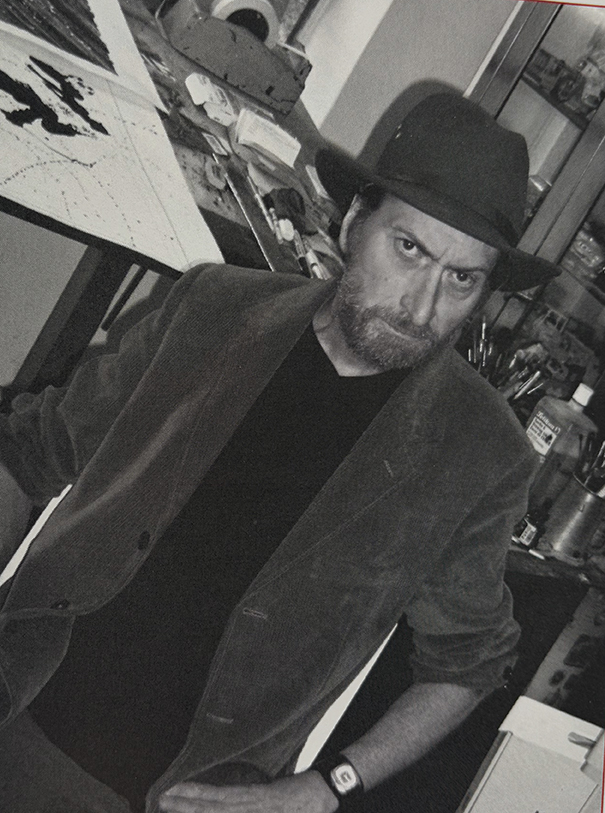
With our brand new Frank Miller interview coming in the next Tripwire print magazine in September, we thought it would be fun and interesting to reprint the one we did with him for the Studio Space book back in 2005…
Getting Started.
I was born in Olney, Maryland, but wound up in Montpellier, in Vermont, from the age of five. My mother tells me I was six years old when I came into her kitchen with a folded up piece of typing paper, stapled together like a comic book. I’d drawn all over the paper and I said to her, I’m going to do this for the rest of my life. Typical of my mother, she just said to me, You can do anything you want to, just put your mind to it. She was a very 40s mum and she was very encouraging, as was my father.
So, the course of my career was set, and I found out over the years that I couldn’t hold any other jobs. I had to keep at this cartoony business. I was first introduced to EC Comics believe it or not, when I was in Boy Scout Camp. My father was a scoutmaster and he got me underage to be in the Boy Scouts, so I was at Boy Scout Camp and there was a copy of a little paperback called Tales of the Incredible running around. I remember opening it up and seeing my first. Wallace Wood woman and feeling all kinds of hormones explode all over my body. This was my first exposure to EC, but I didn’t really get to delve into them until much later. Beyond that, there were DC and Marvel comics that we all grew up with. I first encountered Batman in a department store when I was maybe seven years old.
I found this 80 page giant that cost all of 25 cents. I opened it, and I still don’t know which story I was looking at, but I’m pretty sure it must have been drawn by Jerry Robinson. And what I loved about it is that it looked scary. It didn’t look like Superman. This guy was scary. He looked really terrifying. So I fell in love with Batman. The notion that he dressed up like a villain is delicious to this day to me. I barely graduated art school. The man I still call my mentor is Neal Adams. I got my start in the business through him. I went to see him a few times. He always had time for me. And eventually he started pulling out pieces of tracing paper, telling me this is what composition is, and drawing on top of my drawings. Finally, after maybe a year, Adams said, “Hey guys, look at this. He knows he can’t draw, but look at his storytelling.” So he glared at me, picked up his phone, and told me the editors were on the other end they had somebody for him. I got my first job for Gold Key Comics. We may draw nothing like each other, but he’s patient and generous, as many people are in the industry, if gruff. But the gruffness was part of the publishing business when I started. They’d break your nose and see if you came back. If you did, then they’d respect you. It was a time when entering comics is a lovely thing because we were all broke.
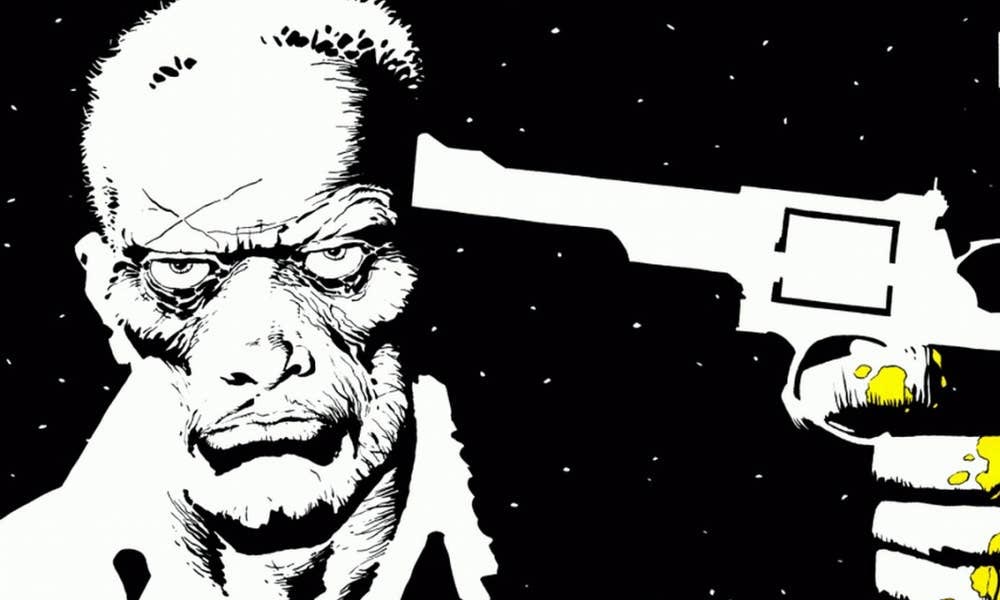
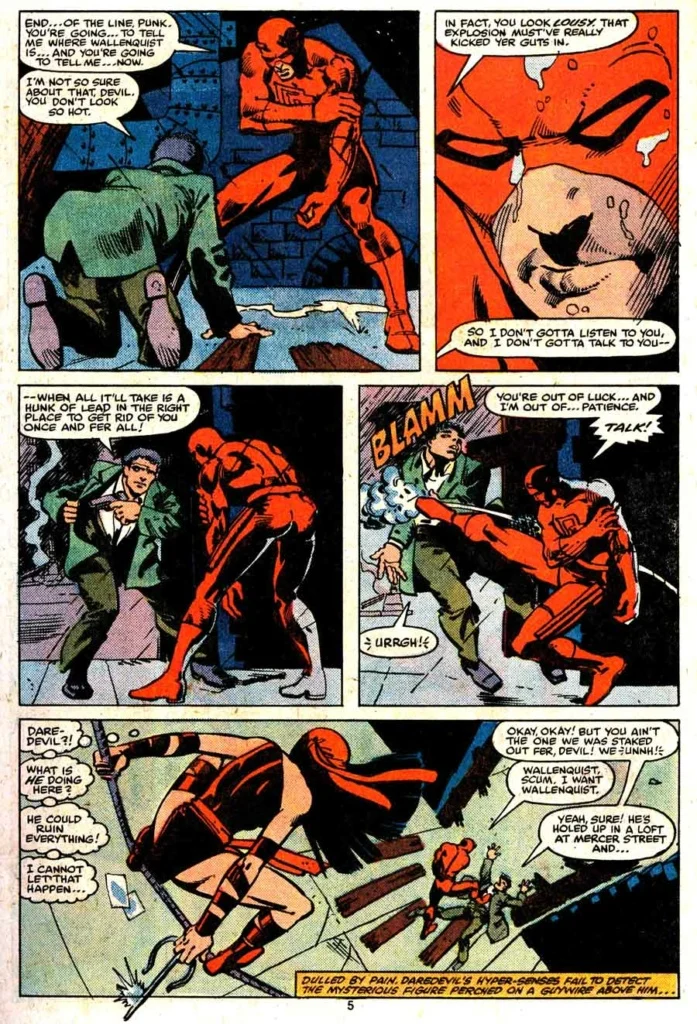
The companies didn’t pay squat, there were no royalties, and I got by on 25 a page, and these pages took me a week each to do. I eventually got bumped up to 35 a page when I did Marvel Comics. It wasn’t until later that a revolution came and we started getting more equitable treatment and it became a good living to have. Most of the people I enter the field with have made the majority of their income from doing advertising work. I hated advertising work, so I had to find a way to make comics pay. I love the intimacy of crime comics. And I love how it cuts so close to the bone and how it deals with human evil and human good at the same time. Concerning Sin City, without sin there is no virtue, and the Johnny Craig stuff in particular, which is my favourite, the straight out crime stuff, is full of dark motives and people trying to do the right thing or doing the wrong thing and getting caught. It’s about justice. Eisner’s The Spirit was the other main influence in the crime stuff because he presented a trick that I emulated in my Daredevil run, which allowed you to dress up your characters as superheroes when you’re actually doing a crime story.
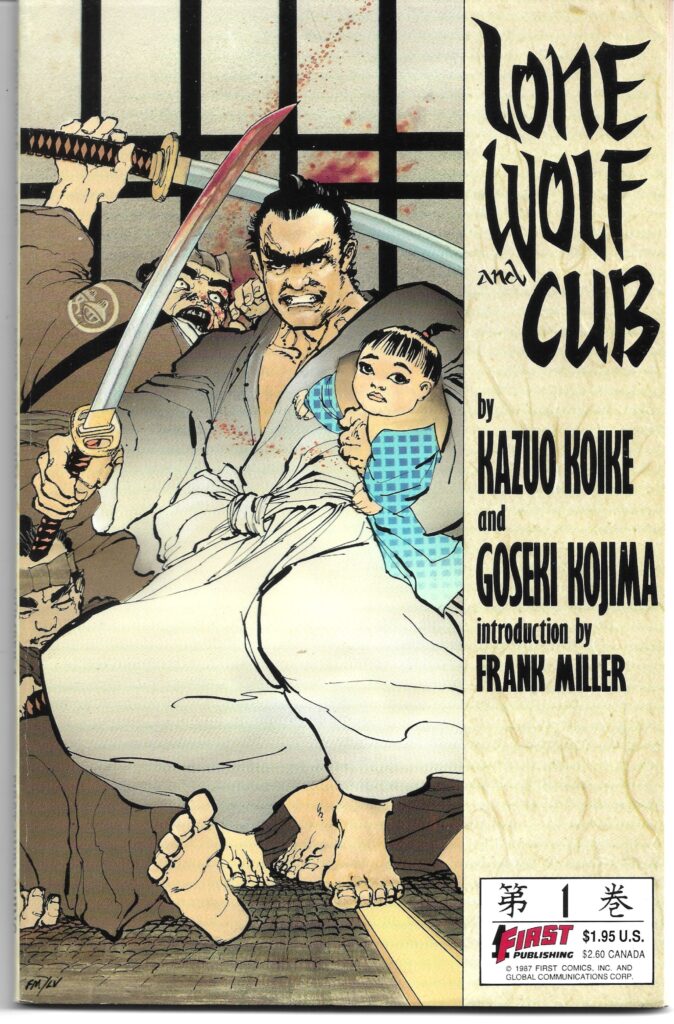
Japanese culture and art is something that’s always had an influence on me, too. I love the way the Japanese so unabashedly combine sex and violence in a way that Westerners shy away from, and they create an exaggerated mystical approach that in many ways seems truer than the real world. I first discovered Lone Wolf and Cub when I was first starting out felt that it ripped away all this glummery that covered up comic books. It was a girlfriend of mine at the time, Laurie Sutton, who was my editor at DC Comics, who turned me onto it.
Her father worked in the oil industry and he brought a copy of it back from Japan to give to Laurie, who gave it to me and my mind exploded, so I had to hunt the rest down. Basically I went to Japan and gathered them all. I was in my early 20s and I came back from there full of vim and vigour that I was going to steal this stuff and also I wanted to make sure that it was published in the United States because it was the best graphic novel I’d ever seen and nobody had seen it. It would inspire quite a change In American comics, so I struck a deal with first Publishing that I would draw the covers with Lynn Varley painting them, if they would publish them, and they did. They published 12 issues. That was the beginning of manga being recognized by the United States.
It was way overdue. I worked from home for years. Eventually, though, once I was doing Daredevil for Marvel, I hooked up with Walt Simonson, Jim Sherman, and Howard Chaykin and joined Upstart Studios. Join Upstart Studios. I was invited to fill the place that Val Merrick had left, and that was a wonderful time because that was when I got exposed to the work of Moebius and other European artists. It was a salon and it changed my work forever. I think we all changed each other as we went. I was able to feed off the knowledge of the other artists because these were all older artists. I’d seen some of Walter’s stuff when I was a kid and had been around almost as long. This was a lovely period and a great time to be at Marvel Comics because Jim Shooter had shaken things up and started insisting on much better storytelling and for all that people complained about him I think he transformed the comic book industry and America had probably helped to save it.
I’d always had a great deal of leeway working with Shooter because all I had to do was convince him it was good and he’d go for it. I remember when everybody thought he’d never go for the death of and daredevil so I simply said let me talk to him I walked down to his office because his door was always open and walked in and just stood there in the doorway. And he said, what is it? So I said, I want to kill Elektra. And he dropped his pen, stared sadly at his desk, looked up at me and said, Frank, tell me the story. I told him the story and he said, that’s great. So I’ve always been treated very well by this field. I first conceived Ronin as a reaction to two huge influencers. One was Koike and Kojima’s Lone Wolf And Cub and the other was the work of Moebius. I wanted to take what had begun to feel like a pair of handcuffs, as wonderful a time as I had on Daredevil and Wolverine, and do something somewhere else. Also, Will Eisner published A Contract with God, which I regarded as a sword stuck in the sand, saying, This is where we can go, you young puppies, and I wanted to do something that would last.
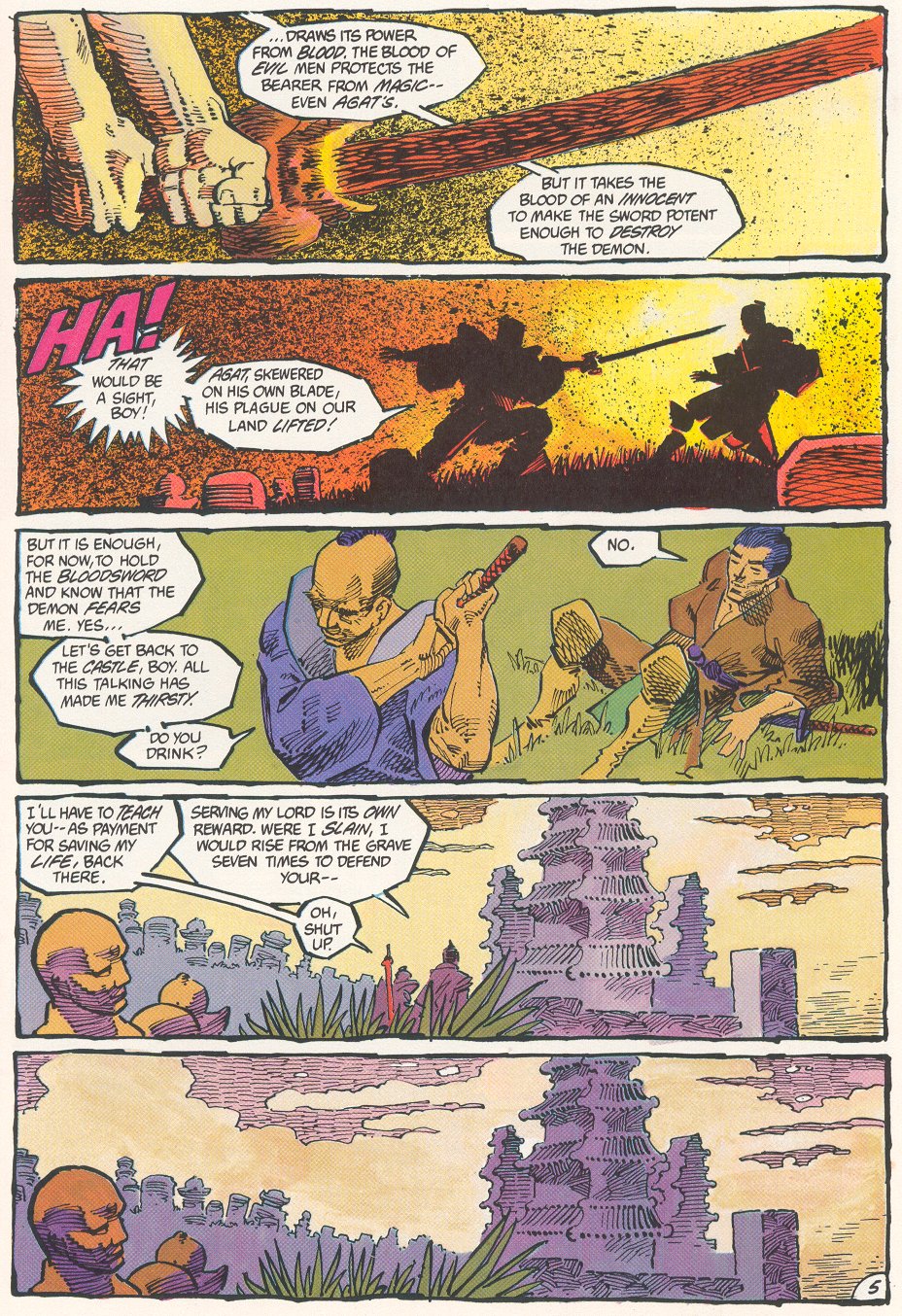
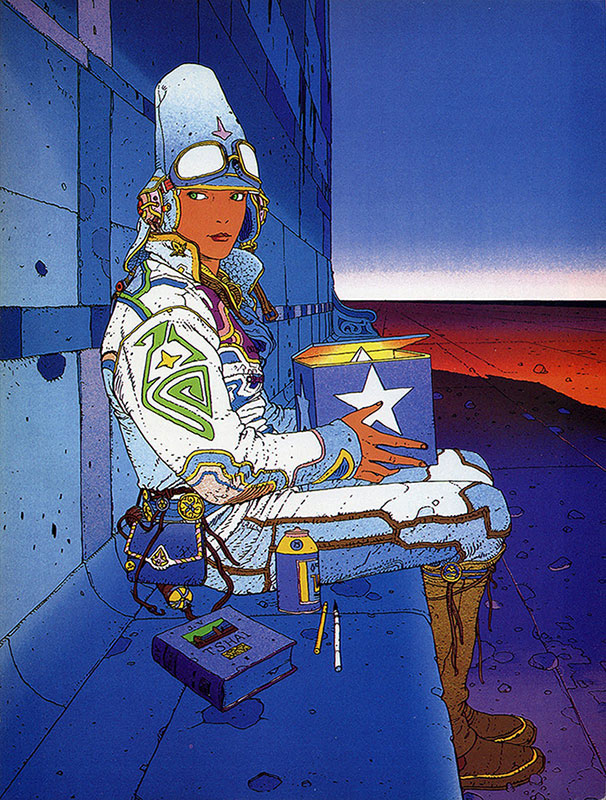
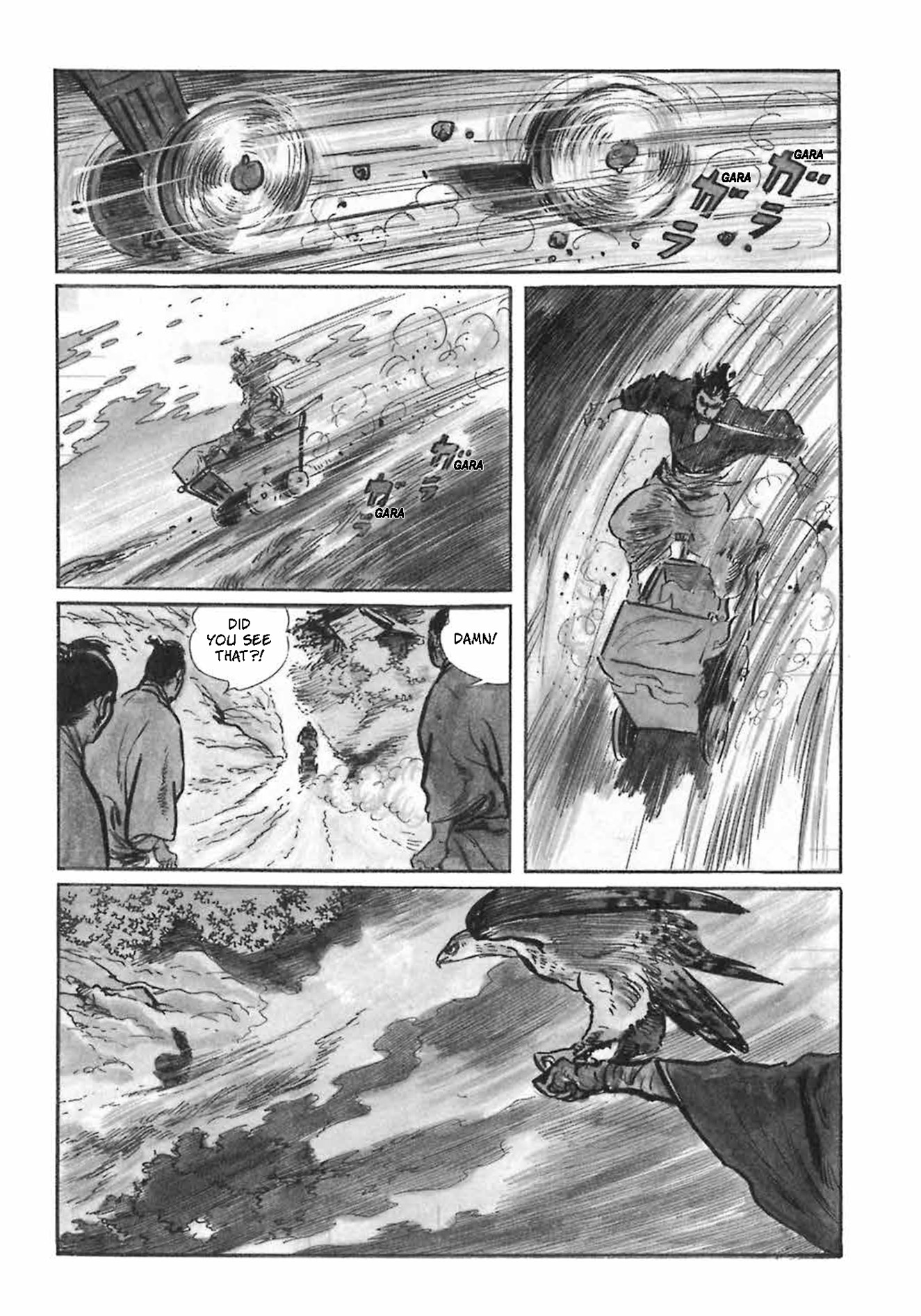
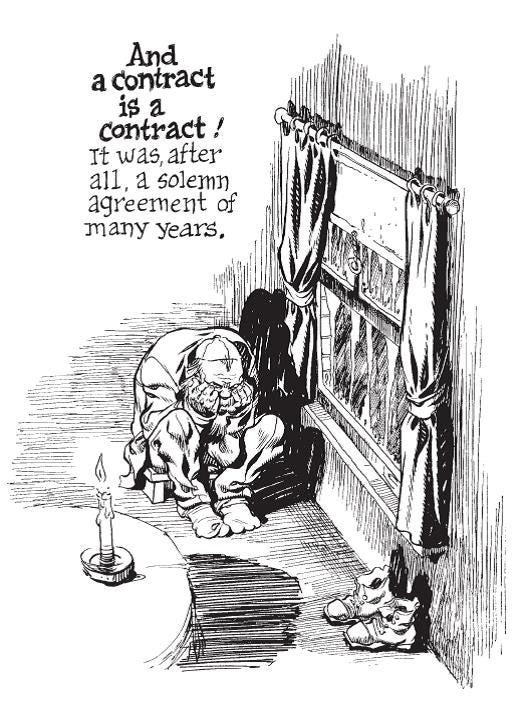
So, with all the arrogance of the 20s combined with these wonderful influences from worldwide comics, I charged into it recklessly and did the comic book of my dreams to kill myself on it. It was a joyous and liberating time.
The studio space. When I did Dark Knight Returns, I moved to California, but I was channeling New York, so I was working by myself then and with Lynn Varley. When I’m working. With other artists. As a writer, I tried to play to their strengths and their proclivities. When Dave Gibbons and I first started talking about working together, one of the fascinating things about Dave is that he’s a Brit who has a fascination with American iconography. So I thought, let’s recreate Captain America, but let’s bring it down to basics. As I got to work with him, I realized that Dave has an uncanny ability to tell everything with a straight face.
And what I’ll do is open those windows and listen to the sounds of the city rather than put on any music when I’m working. The city has its own rhythm and noises. Having said that, when I was doing 300, there were two CDs I played non stop. I played a lot of Empire Brass, an album called Hero’s Journey. I don’t know who the artist was, but it was music that evokes the feel of 300. Very mythic and dramatic. When I’m working on Sin City, I’ll either Work without music or play something classical or something as corny as old theme songs from crime shows. In the studio, I have lots of props as I like to work from three dimensional reference. I’ve got more than 200 die cast metal cars, the fleet of Sin City. So when I draw a car, I’ve got Franklin Mint models I’m holding, often making my left arm numb as I’m drawing with my right.

I’ve got replicas of all the weapons I draw, and these have increased dramatically since doing Sin City. Sin City for me was a wonderful breakthrough. Because when I started it, I’d been immersed in Hollywood and hadn’t drawn for two years. So I sat down and started drawing, and it was a whole different style of drawing to the way I drew before. I was much less patient and bolder as an artist, and I wouldn’t worry if something was drawn perfectly or not as long as it did exactly what I wanted it to do. So the women became sexier because they became simpler, and the cars became better because I finally learnt how to draw them. I do a lot more preparation these days. And execute more swiftly because of it. As far as consistency of look for my characters, I don’t worry much about that. My characters change their look across a story because that’s the emotional reality of what’s going on that’s where my Batman and Dark Knight gained about 50 pounds across the series what I do is work up my initial version of the characters and there’s a pretty polished illustrations. I use them not so much as guidelines Guideposts, but to get my brain in the right place.
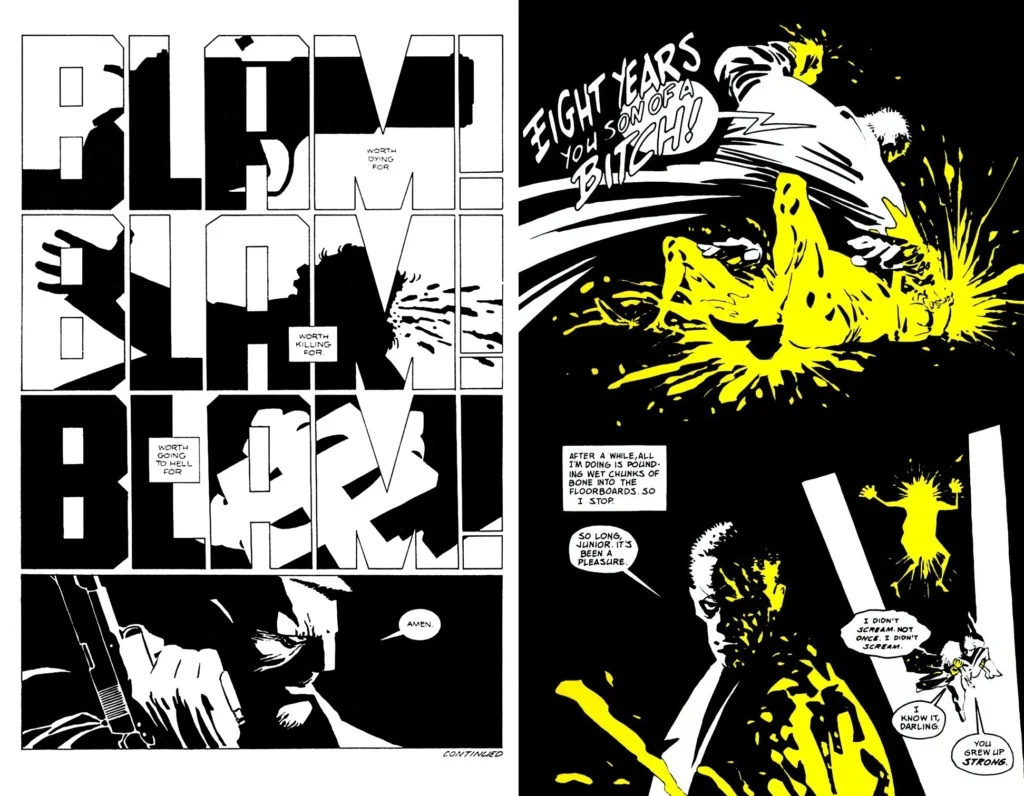
My style has changed many times, but my methods have stayed more or less the same. On tracing velvet, I lay out a dozen or so pages at a time, tightening up the drawing with a marker. At this stage, I draw the characters nude in black, then apply the drapery in red so I won’t lose the underlying anatomical structure. Next, on a fluorescent light day, I trace the drawings onto artboard, and finally the inking. You might say I do it backwards. Unlike most cartoonists, I brush in the blacks first, then add the line work later. This may sound strange, but it works for me.
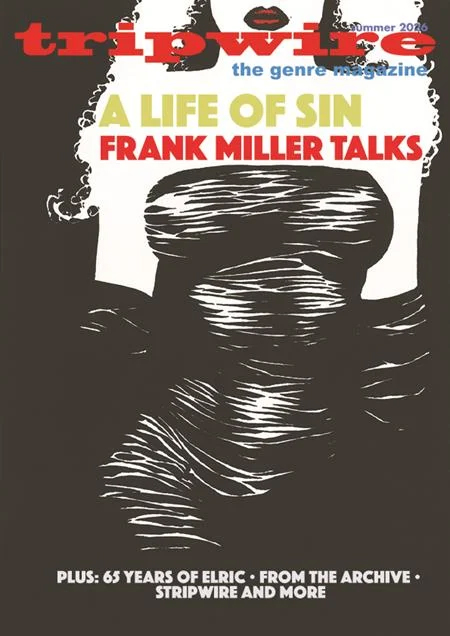
21 years later, we did a new interview with him which is appearing in the next print issue of Tripwire. To read it people can either order it direct from us or from your local comic shop.
https://www.lunardistribution.com/home/search?term=tripwire
https://trpwire1001.bigcartel.com/product/tripwire-summer-2026-issue











You must be logged in to post a comment.