

Feature
Flashback February: Brian Michael Bendis

♦2016 is an anniversary for Tripwire. It marks the 24th anniversary of the magazine, which began back in February 1992. So for the rest of February, we shall be representing some of our classic moments over the past 23 years. Many people who have been visiting the site will probably be unaware of our print history so we thought this would be a good opportunity to get them acquainted with it. So here is our interview with Brian Michael Bendis (Secret Avengers, Powers, Ultimate Spider-man) from Volume 4#2 published back in Oct 2000
The Man Who Wrote Too Much
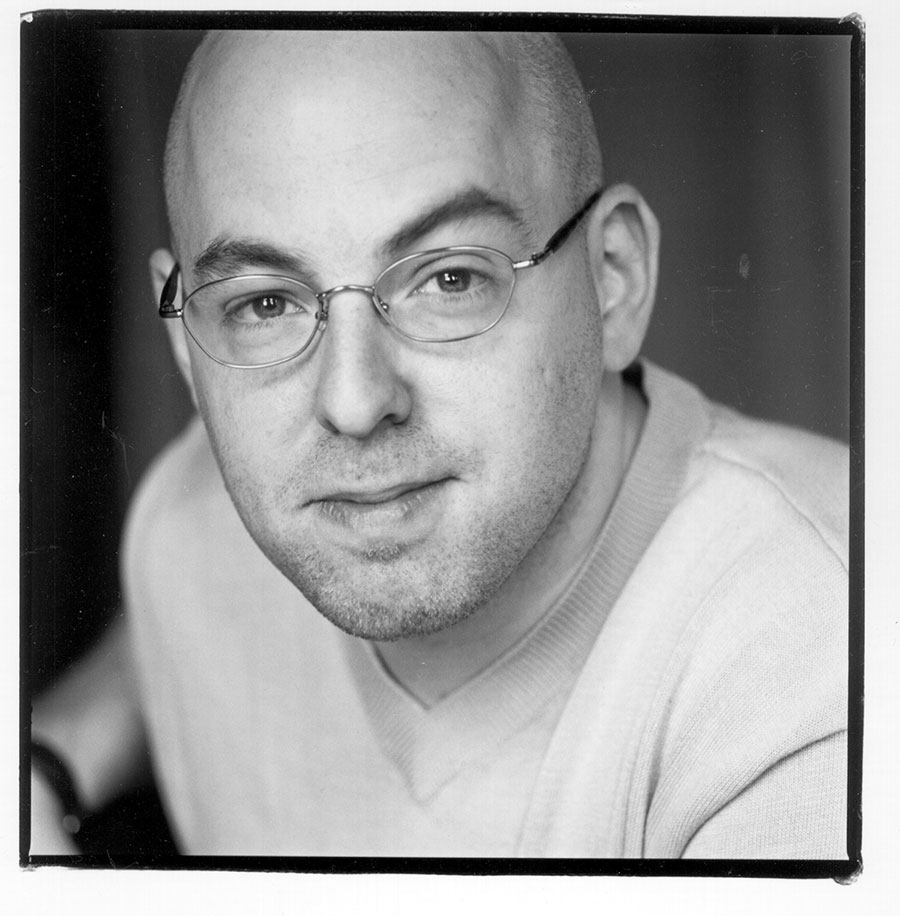 Brian Bendis speaks about Sam & Twitch, Hellspawn, Daredevil and Ultimate Spider-man
San Diego is a madhouse. A huge hall filled to the brim with tens of thousands of people. I meet Brian Michael Bendis for the first time on the Wednesday but don’t actually catch up with him to do the interview until the Sunday. When we begin the chat, it takes place at his Jinxworld table. We are constantly interrupted by commerce and the regular punters prove beyond a shadow of a doubt that Bendis has arrived. One of the most surprising announcements this year was Bendis being given Marvel’s Ultimate Spider-man title. Bendis jumped at the chance to write this:
“The truth is that the task of writing Spider-man is something that I’ve always wanted to do. When Marvel approached me, they said that they had read Sam & Twitch and Powers and they wanted the same style. So I wrote it the way that I normally write, fully expecting to get a kill fee and that would be that. Amazingly, when they read it, they loved it and asked me if I wanted to do the same thing with X-Men.”
But X-Men was a harder proposition for Bendis and he has his reasons for walking away from it:
“After I agreed to write Ultimate X-Men, I sat down and realised that I’d never written a team book before. I didn’t have my brain wrapped around it the same way as I did with Spidey,” Bendis explains to me honestly. “I love the X-Men and I loved the movie but I just wasn’t the guy to write it. You need a guy who feels the same way about the X-Men that I feel about Spider-man. I did work on it for a few weeks but, with 12 million copies out there, I should not be practising on the job. There’s lots of other stuff at Marvel that I want to do and they were generous enough to let me off the book.”
Bendis is a very good talker. He has a very easy way with him and knows how to sell. It seems that it runs in the family:
“My mom actually taught me how to hustle,” Bendis tells me as he deals with another customer at the table. “She works in publishing while my cousin is an award-winning illustrator who’s work has appeared in the New York Times. I learned how to do it at a very young age and that really gave me the edge over some of my classmates in college because I was already working fulltime as an illustrator at college. I learned not to let any art out of my hands for less than $100 and I learned another trick. When you go into a client’s office and they ask you how much it’s going to cost, you ask them ‘what’s your budget?’ and the person usually ends up telling you because it’s not their money. Nine times out of ten it’s five times what I would have charged.”
Bendis’s goals were set from a fairly early age:
“I said to myself ‘I don’t want to work in fast food or have a job in an office. I want to be an artist and so I will hustle to get there’.“
At college, he met opposition to his ambition to work in comics and his attempts to convert his tutors fell on deaf ears:
“I went to the Institute of Art in Cleveland, Ohio. I’ve loved comics and I’ve wanted to be a comic artist since I was ten years old. At art school, they were very anti-comicbooks. I wanted to learn everything that they had to teach me but I wanted to apply it to comics. I even brought in things like Blood and Stray Toasters and try to show them what comics could be. But they didn’t want to have anything to do with it.”
Ultimate Spider-man is part of Marvel’s attempt to bring in new readers to comics. Bendis has a very specific sort of title in mind:
“Ultimate Spidey is going to be nothing like Super Spidey Stories, it’s going to be more like the TV show ‘My So-Called Life.’ It’s hopefully an intelligent teenage melodrama with a superhero element. It’s very character-motivated and in the theme, tradition and humour of the original Spider-man run, particularly John Romita’s run. I feel a lot of love for the material but, having said that, it’s written in my style and not Stan Lee’s. We removed a lot of the stuff that a more sophisticated comicbook audience wouldn’t dig right now but, on the other hand, we were simply removing the anchor of continuity so that, when people get a free copy of this with their shoes, they can pick it up and enjoy it on its own terms.”
Bendis is confident that the title has a longterm appeal to it:
“It’s basically going to be a greatest hits package of all the great things that have happened to Spider-man over the last thirty years,” he elaborates, sounding pretty chuffed with himself. “Gwen Stacy’s going to come back eventually and we have the best Rogues Gallery ever to play with. It’s funny that here I am with the greatest of toys to play with in comics. Wait until you see Bagley’s Doc Ock. Also, since the Spider-man movie is coming out in 2002, it just seems like the best kind of product to have out while the movie hype is beginning to kick in. There’s going to be the same kind of internet blitz that we saw with the X-Men film. At the very worst, if I can’t come up with any good ideas, it’s got thirty years to run, right?”.
Bendis has made his name as a writer-artist but his current projects see him as a writer alone. But this doesn’t change his perception of himself:
“I’m a storyteller. Right now, I’m obviously more popular as a writer than I was as a writer-artist. Having said that, the thing is that you take opportunities to tell your stories as they come and these are the opportunities that I’ve had this year. Last year I did editorial cartoons for the local newspaper but at the same time, there was my mainstream work.
I was always a big fan of those guys who had a career drawing storyboards, a career in comics and another career somewhere else. I see the same trend happening in my life where I’m a screenwriter and a comicbook writer, I’m an Indy guy and a mainstream guy. I like the different hats, as long as it’s within the realm of storytelling and it’s work that I’m proud of on some level.”
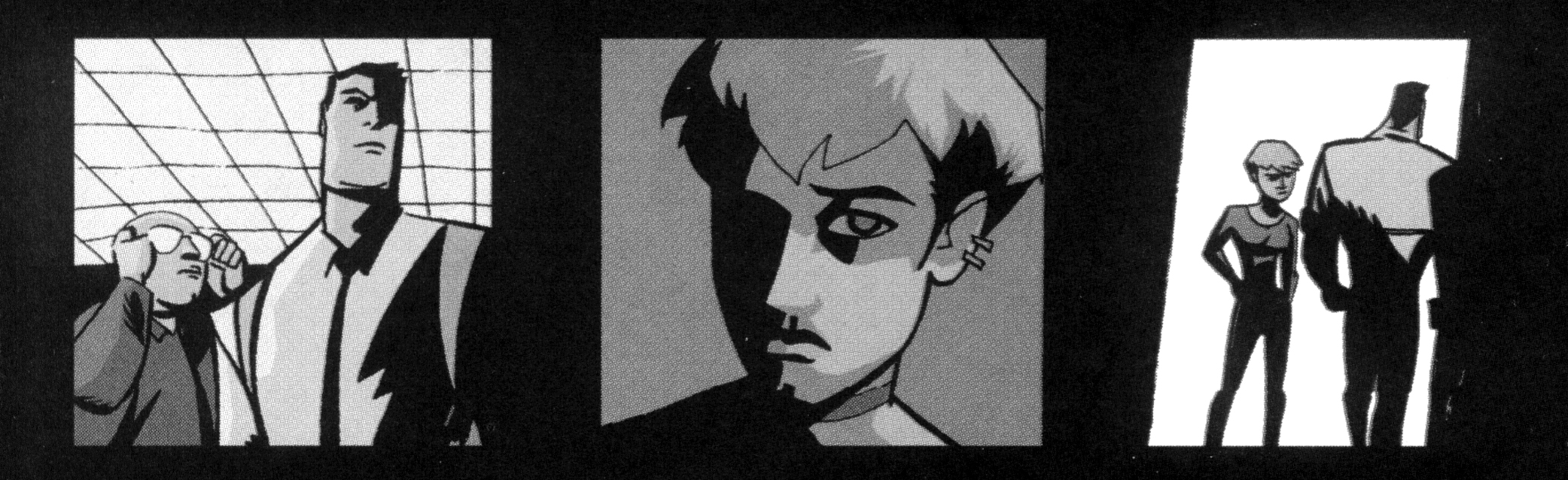
It’s the diversity of Bendis’s work that sets him apart from many other writers. Moving from his table at San Diego to his hotel room later that afternoon, the faded elegance of the Westgate Hotel, we discuss the surprise hit title of the year, Todd McFarlane Productions’ Sam & Twitch. It started life as a Spawn spin-off but Bendis has made it his own. At last, he has managed to get the artist he’s always wanted to draw it:
“Alex Maleev was at the top of my list when I was given the book,” he tells me as the warm breeze blows through the hotel room window. “I have artist’s approval on it and I made a list of guys I wanted. It’s a very small group of artists who can draw noirish character acting. There are a lot of people who can draw giant space monkeys but it’s a very specific artist who sees the overall subtlety of acting. Alex also draws the way that I wish I could and I’m not just saying that. I didn’t know before we got him on board. I was thrilled and seeing one of my characters, Jinx, appear in the first issue that he’s drawn, makes it doubly fun. I think that anyone who has a preconceived notion that this is a Spawn book and wouldn’t buy it for that reason are being snobs because it’s been out for nearly two years now and you can see that it’s not a Spawn book. It’s Homicide: Life on The Streets and, if you can’t get past the prejudice, then you’re missing out on a great book. Everyone who reads it enjoys it. We receive 150 letters an issue whereas Spawn itself gets about a handful of that. Unfortunately, it only sells about a quarter of what Spawn sells. But I’m very proud of the book and I work the hardest on my research for it.”
Bendis has consulted police to make sure that he gets it right in Sam & Twitch, he is at pains to emphasise:
“They were actually at San Diego this weekend. The police who I’ve spoken to are comic fans. You feel that you really want to make them happy because they’ll call you if you get something wrong. It’s good to have them at your beck and call.”
Bendis has been able to research the role of the coroner, thanks to a personal connection that he has:
“Melanie Simmons, my editor on Sam & Twitch, has a best friend who’s one of the most famous coroners in the country, so if you notice that Casey, the coroner character, gets more and more involved in the book, then you can thank Melanie’s friend for giving me the inspiration for all of this good stuff.”
But he does draw the line at some aspects of research that he would find just too gruesome:
“I couldn’t go to a post-mortem. That’s a situation where it would really surprise me if something was going to happen that I needed to see for myself.” You can almost feel the revulsion in his voice.
“I saw dead bodies in college and that’s enough. I lived with a biochemist when I was in college and she used to come home with arms wrapped in butcher paper and tried to stick them in our freezer. I’d say to her: ‘Get that out of here!’”
Bendis enjoys the research part of writing and finds it easy to extract anecdotes from people:
“You assume that, because you’re a storyteller, you think that everyone wants to or can communicate ideas as a story. People have these wonderful stories but not everyone wants to write. Jinx, for example, is based on a real bounty hunter. She’s a great, interesting person and just wants to tell you these fabulous stories, which are so much more amazing than anything you could actually imagine. Also, even a little bit of research fills a project. Even in Sam & Twitch, when I introduce the more fantastical elements, it’s grounded in reality. It’s the same thing with Powers. The ground of it is so firm that, if I take off and tell some mystical story, you’re going to buy it.”
In fact, Bendis admits that he spends more time on Sam & Twitch than any other of the books that he’s currently writing:
“I spend more time on Sam & Twitch because it’s so much fun to do the research. Even with the Witchcraft storyline, I researched it. Witches are probably the most maligned people in comics. It’s not based on any kind of reality. When you get to the reality of paganism, it’s fascinating. I actually knew a couple of witches and that pretty much wrote the story for me. One of them told me about a guy who was part of a coven and they found out that he was molesting boys. So they did this spell on him, this Blue Candle of Justice. They’re not allowed to use their powers against anyone because it comes back to them threefold, so the Blue Candle of Justice means that whatever wrong this guy committed happens to him, so he got arrested and raped in jail. So it got me thinking: ‘What would happen if you started killing witches and what would they do?’ I used the Blue Candle of Justice in the Witchcraft story.”
When it was started, Sam & Twitch was supposed to be a title with rotating artists. But, it turns out, this was more out of necessity than anything else:
“It was intended to be rotating artists. Every story was to have a different artist, like the Sandman series. Each story feels different. I thought that it was a good choice to have Angel [Medina] as the first artist because he’s a Spawn illustrator and the readers wouldn’t be thrown by it. But he was pulling off more of a Berni Wrightson look. Alex wanted the job and we had a job for him. I think that he’s going to knock people’s socks off. He did a wonderful job on Superman/ Predator but I find that to be a waste of his talent. He needs something that is written especially for him. When I found out that he had got it, I rewrote the whole story.”
Powers has been very successful for Bendis and it’s an idea that’s been in his head for a little while:
“The best part about Powers is that I come from a generation of comic book artists raised on Dark Knight and Watchmen. I you were raised on them, you think that there is really no point in doing a superhero comic. It’s been done. I had nothing original to say. I’m also a big believer that, if you want to write Batman, then you should get a job writing Batman. There’s no point creating another character exactly like him. But it came to me. What I do like to write about is celebrity media and the whole ‘VH1 Behind The Music’ aspect of the celebrity media. So I decided that, if there were superheroes in the world, then there would be a VH1 for superheroes on television. There would constantly be superhero chatter and hollywood stories about superheroes. The media would be all over them.”
It was this seed of an idea that triggered everything else off:
“The public would have a different perception of them to the media. So I had this idea and wanted to do a homicide book desperately. So I spoke to Mike Oeming, who’s been a friend for years, and I had my deal at Image to do whatever I wanted, so everything came together. Mike’s desire to draw in an Alex Toth style was interesting to me but it’s shocked a lot of people. Lots of people said to us that we were going to do a hardboiled book but one that looked like this. To be honest, it’s the only way that I saw it in my head. ”
The art plays a very important part in Powers and Bendis sees it as having a very definite purpose:
“It’s drawn in a way where you can emotionally respond to the characters. Every lineweight has got an emotion to it. No-one would have expected the book to look like this. I like to make comics that I don’t see out there by other people. I’ve not seen a book that’s like this or a book that’s similar to Sam & Twitch either. For me, you want to make books that you would buy. That’s how you decide which projects to take. Powers is coming together really well. It was a bit of a leap stylewise from Torso, which was dark and very mature. I’ve never had a book that’s done this well. Myself and Mike [Oeming] were happy with our black and white numbers but we never had a hit. We overprinted 210% of the initial print run on #1 and now it’s gone. We’re going to wait for the trade to get it back out there because you reach a point when you just get scared about how many people will buy something of yours. ”
Bendis is really pleased with the way that Image have pushed this book:
“Image took it upon themselves to go for it. They even did a 25% overship to retailers, which sold out.”
Before it came out, people were claiming that Powers bore similarities to Astro City. But Bendis was actually more worried about it being compared to one of Alan Moore’s ABC books:
“A lot of people were comparing it to Astro City before it came out. But I had never read the title. I was more worried that it would be too similar to Top Ten when that was announced. But when that came out, it couldn’t be more different. It happens all the time to people. Top Ten is pretty much a comedy for comic readers whereas I want everyone to read Powers, even those people who’ve never read a comic before in their life, and all they have to know is what a superhero is. Astro City is a loving, respectful homage to a certain type of comicbook and that’s just not what I’m doing. But I did grab a bunch of Astro City’s just to make sure. The bottom line is that it’s a superhero book whereas Powers is a cop book that happens to have superheroes in it.”
He’s quite adamant that there are no similarities:
“Also Powers will never be taken from the superheroes’ point of view. If a character flies off panel, then they disappear. I’m more interested in the story on the street. I’m a Rosencrantz and Gildenstern kind of guy. I like to follow what’s happening off camera. It’s the same sort of idea with Hellspawn.”
The man certainly knows how to segue. Before we leave his hotel room and go to the Italian restaurant where we wrap up our interview , we talk about McFarlane’s new Spawn regular. (This interview took place in three different locations over the course of an entire day. Never before have I had to work so hard for a feature)
“In Hellspawn, we deal a lot with the culture that would surround him if Spawn was screwing around Earth. There would be a sub-culture. There’s a sub-culture about everything.”
Bendis has taken his fascination with what happens behind the scenes to the next level of logic with the title:
“There would be websites dedicated to it. Even now you still have people walking around dressed as The Crow. People would either be obsessed with Spawn or they would worship him. Another thing that I deal with in Hellspawn is the consequences of his decisions. He makes a decision which he thinks is the right one and we return to that character in six months time to find out that he fucked up because actually it wasn’t the correct choice to make. I’m very interested in the implications to him and to the world around him. The other theme of Hellspawn is that there’s this war between Heaven and Hell that’s been brewing in Spawn forever. You have the two opposing sides fighting but no-one on Earth actually cares. They don’t act as if there’s this big judgement coming.”
Bendis writes differently for each artist that he works with:
“I vary my style for different artists. I wrote the Daredevil four-parter especially for David Mack.” He checks his watch and sees that we still have a few minutes before we have to leave for the restaurant.
“I didn’t just write what I wanted to see. It’s the story that David Mack’s talent needed to do because he doesn’t need to do Daredevil and, if you’re going to have him do something, it should be worthy of him. We have a story that’s being told from seven or eight different points of view and each one he does in a unique drawing style. With Ashley [Wood on Hellspawn], I write it out and he doesn’t want layouts. With Sam & Twitch, I lord it over everybody. I do layouts, I place the word balloons.”
The reason for letting creators like Mack and Wood alone becomes clear:
“But when you have talents like Ashley and David, truly gifted painters, you really don’t want to hold back their muse. You don’t want to force them to do things that they don’t really want to do. But you do want to challenge them to do things that they might not have done. I try to train myself to see in Ashley-vision or David Mack-vision, rather than using my usual bag of tricks. When I’m writing Hellspawn, I can only see in Ashley’s muted worldview and he takes my scripts and there are some images that inspire him tremendously, whereas with others, he thinks of another image and paints whatever he wants. Then I put it all together.”
He’s found working as a writer with another artist very instructive:
“I’m learning the art of collaboration this year. I went from doing everything myself to collaborating with these people and really trying to let them speak as much as I speak. It makes you look good if the artist is happy.”
We move onto the restaurant. It’s a buzzing Italian place in the centre of San Diego. At the table is Bendis’s wife Alisa, his writing partner Marc Andreyko, Wildstorm artist John Lucas, writer Ben Raab, Nocturnals creator Dan Brereton and a teenager, the son of one of his neighbours, who’s been helping Bendis out on his San Diego table. It’s the last night of the con and everyone is really tired. We pick up where we left off and Bendis fills me on the status of the Daredevil four part story that’s going to be running in the regular title as well as Daredevil: Ninja, the miniseries. It seems that the run with David Mack has been hit by the lateness that the title seems to suffer constantly:
“Joe Quesada’s late but there’s been a lot of circumstances as to why he’s behind. But, after all of the books come out, no-one’s going to remember that they were late. The last issue of Camelot 3000 came out about a year late and no-one remembers that except for me and now all of the people reading this article.”
He grabs a piece of bread from the basket and then continues.
The plot for Bendis’s run with Mack features reporter Ben Urich, a classic DD character:
“It’s a very serious story where Ben Urich finds this catatonic child whose brain only works on a comicbook level and he can only speak in comicbook language, so Urich needs to find out what happened with Daredevil to make the kid this way. We discover a lot of things about Daredevil and Ben Urich through the kid. The only thing that I didn’t get to do in this story was feature ass-kicking ninjas. So I suggested to Joe that it’s been years since anyone did an ass-kicking ninja story in Daredevil and I had an idea that involved the theft of Stick’s stick. Daredevil has to go and retrieve it and beat a bunch of ninjas. Where the run with David is dark, serious and multilayered, the ninja series is choreographed ass-beating throughout. We wanted to create new fight scenes for comics and we did a lot of research into different fighting styles.”
Apart from his comic work, Bendis has managed to strike a few film deals. But sensibly he is a little reticent to talk about it. His reasons make perfect sense:
“We’re in development on Torso and Miramax is producing it. What gives it more of a push than we could on our own is that Todd [McFarlane] is producing it and they can see the dollar signs with all of the merchandising. We have a better shot than normal at getting this made but I don’t believe anything until the cheque clears. I’m not a guy to announce anything until the deal is done. I don’t want to be one of those guys making half-announcements. The Shi film has been coming out for the past four years, starring Tia Carrere, and where is it? Get the deal done, make the product and then tell us about it.”
One adaptation that has already started is the Jinx animated series, which is running on the Web at Thrave.com. This is a development that’s got Bendis excited:
“It’s being put out in installments on the Web. It’s fun because it’s great to hear Jinx talk. We showed it here at the show in a huge auditorium and it was weird. Bill Murray said that what he hates about filmmaking is that you make a joke and people laugh two years later. That’s how I felt about the Jinx animated series. I like Thrave, they’re a good bunch of guys. Artists are running the company. I was very close to going to the film commission to get money to make Jinx myself before they called. In my comic book career, I was always making my own stuff but, when it came to film, I would rely on the laborious studio process. So I thought that if I wanted to make it so badly, then why don’t I make it myself? But thrave called me and said that they could do animated stuff and i had complete control. It was a lot of fun to direct actors and Mike Oeming is the Art Director on it. It’s black and white because it’s a black and white comic and, if I had all of the money in the world, I would still make a black and white film of Jinx.”
Even with everything that Bendis is working on at the minute, he has another project that will come out next year. Over the dessert at the restaurant, he reveals what it is:
“The next project that I do for myself is going to be a book that I do for Image and it’s going to be an autobiographical comic in the same style as Fortune & Glory but dealing with my college years. It’s a romantic comedy but it’s neither romantic nor funny. I have a very versatile story to tell. You could say that this depicts my first year as a comic creator but it’s not Brian Bendis Year One. I was going to bring it out for December but I think that now I’m going to do it at my leisure and put it out next year. That’s the comic that’s most inviting to me at the moment. It’s going to be called either Virgin or Julie Is A Virgin. The title doesn’t refer to me, by the way.”
Bendis has also brought out a Torso trade but it’s not going to be the usual collected edition:
“We’ve just published a Torso trade paperback which reprints every issue of Torso plus an appendix of actual crime scene photos. It’s not going to be as elaborate an appendix as the From Hell one. What some people may not realise is that the most outlandish things from the Torso comic book were the true things. I tried to incorporate some of the crime scene photos in the art to emphasise this.”
He has also just negotiated a deal with Image to put out a book that reprints all of his one-offs. Again, he intends that to be a different proposition as well:
“It’s a book that’ll include all of my specials and one-shots but will also have more than thirty new pages of stuff in it. It’s going to be very thick and I want to do for writing what those Art of John Romita books do for art. I want to put in a writer’s sketchbook where I do a commentary on the stories because people want information and, to be honest, I don’t want to write a book about writing. I’m trying to do something new with this. “
Bendis’s life is very busy at the moment. He points out that his wife, Alisa, is even busier than him but he can see a time when he will cut down on his workload:
“She’s getting her master’s degree in education and she has her school hours and then she has to come home and read eight chapters a night. She also runs my studio. Eventually we’re going to pop out a kid and calm down. I’ll lower my productivity rate but she’s so busy that I might as well do the work. When I start to burn out and start hacking shit out, then I’ll cut down. When I was twelve, I really wanted to write Spider-man and it’s really cool that I’m now being paid to do it. At the moment, I’m doing the work that I really want to do as an adult.”
Once the meal finishes, we all head off to the cinema, to see the Harrison Ford film, What Lies Beneath. No-one is particularly impressed. We go our separate ways and I thank Bendis for his time.
As a postscript to this feature, a couple of months later, it is announced that Powers is going to be turned into a big budget feature film, to be produced by Mace Neufeld, for Sony. I call him to get his take on it and he is upfront as ever:
“This is Hollywood, I don’t know when or if it will come out,” Bendis said. “But Sony does not buy a lot of stories they don’t make into movies and Neufeld is high profile. ”
He hasn’t been asked to write the screenplay due to the pending Hollywood strikes and he’s pleased about this since he’s so busy anyway. The fate of Torso as a film is more in doubt, as it’s stuck in development hell.
A little later, I spoke to him again about the appointment of Joe Quesada as Editor-in-Chief at Marvel. His response to the news was very upbeat:
“Joe took the chance on bringing me to Marvel, let me work with [David] Mack and him on Daredevil, recommended me for Spider-Man and has been a trusted friend and advisor. What do you think my thoughts are?”
Although the majority of his work has been very dynamic and in-your-face, Bendis is actually a very thoughtful and introspective man. He wasn’t interested in talking about his family and wanted to let his work speak for itself. His is a name that will continue to be prominent in comics for many years to come.
JOEL MEADOWS
Wolverine: Old Man Logan Volume 0: Warzones Uncanny X-Men Vol. 1
 Powers: Bureau Volume 2 – Icons












You must be logged in to post a comment Login