

Book News
Tripwire Talks To Veteran Crime Writer Linwood Barclay

A Life In Thrillers
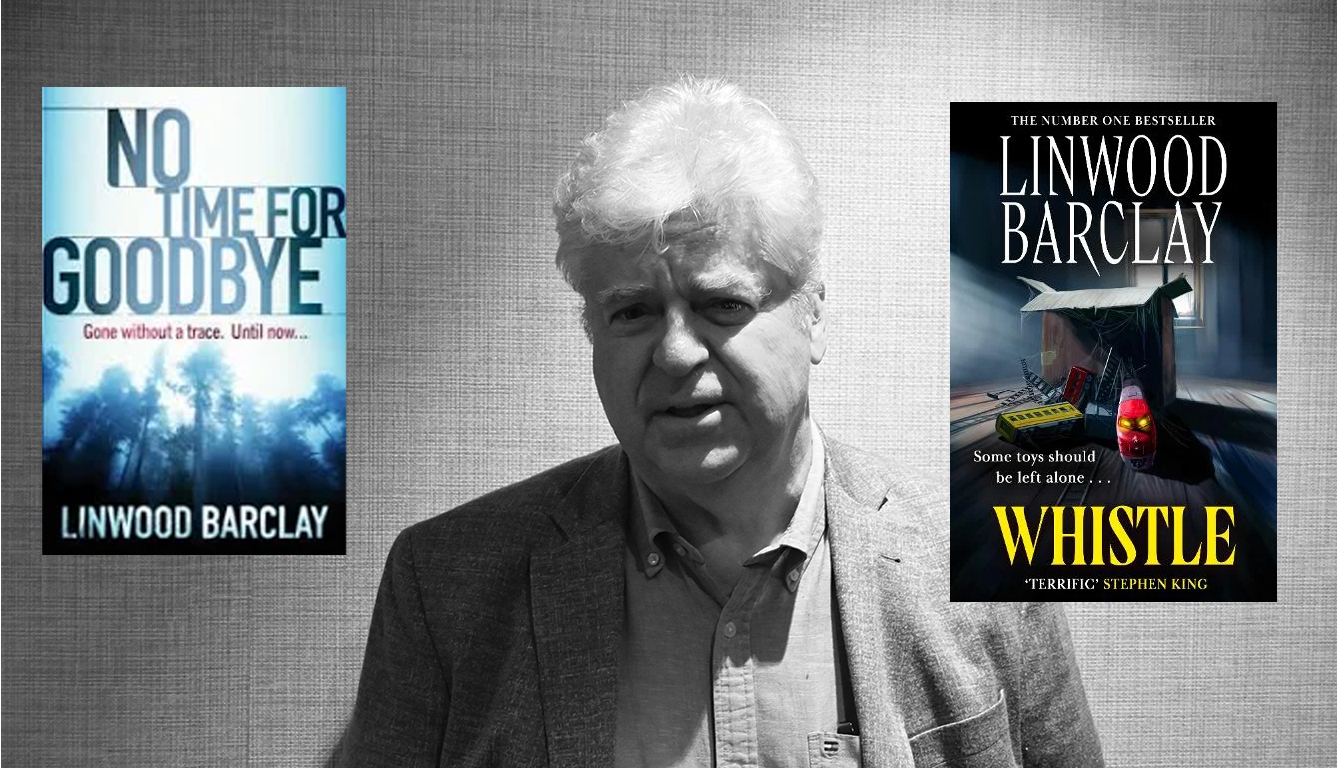
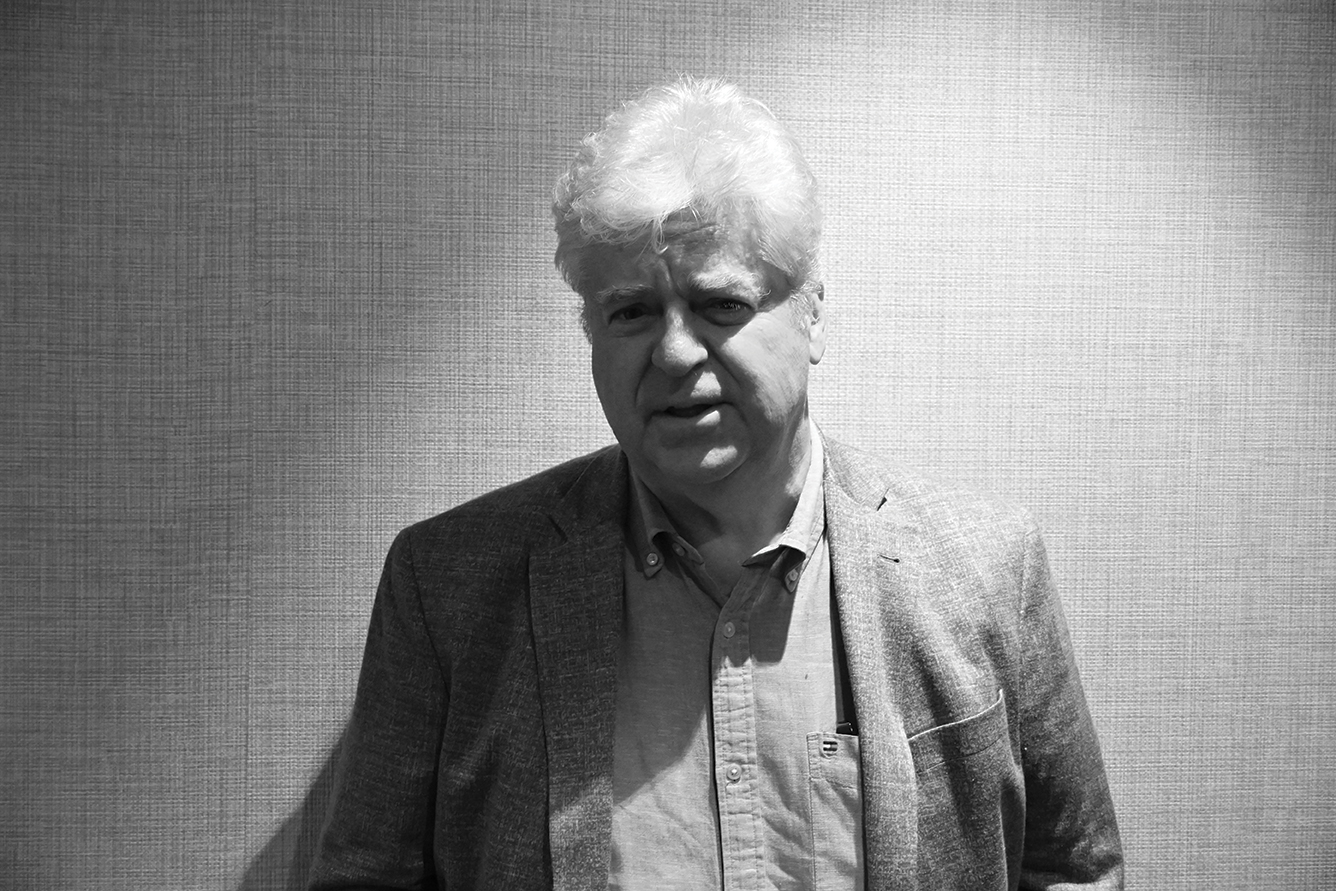
Veteran best selling Canadian author Linwood Barclay was at London’s Capital Crime festival in June and Tripwire’s editor-in-chief Joel Meadows caught up with him to talk about a career in crime and thrillers and his latest book Whistle, which is a slight change in direction. Pics: Joel Meadows…
TRIPWIRE: So obviously you live in Canada, but you were born in the States?
LINWOOD BARCLAY: Yes.
TW: So you moved at quite a young age.
LB: Yeah, my parents, just before I turned four, I was three years old when my parents moved to Canada. And so I’ve never lived in the States since then.
TW: I guess you were pretty young then, so you don’t have any memories as a young kid.
LB: Just of the house that we had, that’s about it. The only thing I remember, you know, I remember the house and, but really, yeah, not much else.
TW: But your father was an illustrator. Is that right? And obviously that’s one of these careers which is slightly unstable in terms of, you know, stability as a job.
LB: Well, it was steady for him until, you know, like he was very busy. He was one of the top automotive illustrators in the world, you know, all through the 50s and into the early 60s. And so, you know, if you look through Life, look Saturday Post magazine back in the mid-50s and saw Ford ads and they were all illustrated before, there’s a very good chance he drew those. And so an advertising agency in Toronto wanted him to come work for them, so they made him an offer. And so my parents, that’s when I moved to Canada. And then three or four years later, photography killed illustration. All the ads started to become photography.
TW: I can imagine. So, I mean, do you remember him? Do you remember kind of looking over his shoulder when he was working when you were kids, and you’d go into his studio and you’d watch him work?
LB: I vaguely remember doing that when we still lived in the States. Yes. But when we moved to Canada, he mostly worked in the ad agencies.
TW:Oh, okay. So he wasn’t at home.
LB: So not as much. But there were a couple. In the year before he died, my favourite car was a Javelin. And he was going to draw one for me, but he never finished it. So I watched him. So he had a drawing table and all that stuff at the house.
TW: But you lost your dad, when you were 16, is that right? So obviously it had a huge impact on you as a teenager. It must have been an absolutely horrendous blow.
LB: It was the sort of defining moment of my whole life because we were, because once what he did in advertising had died, my parents bought sort of cottages or trailer park, what you’d call a caravan park, as a business. And so, although my mum managed that, I essentially did everything, ran it after my dad died when I was 16.
TW:Wow.
LB: Yeah.
TW: And you had a correspondence with Ross McDonald.
LB: I did.
TW: I have to talk to you about that. How did that come about?
LB: Well, when I was in university, I guess it was my third year, I wanted to write… First of all, I discovered Ross McDonald’s books when I was 15. And I just adored them.
And I found everything he had done, I was just reading it all. And he was my absolute favourite writer. And so I had some freedom at university. I was going to do a thesis on the detective as an iconic figure in literature. But featuring a lot on Lew Archer, Ross MacDonald’s creation. And so I wrote a letter to him, care of his publisher, that hoping that it forwarded and said, hey, are there things that have been written about you I might not know about?
So I got a letter back. And he said, “yeah, there was a Newsweek cover story and there was this and there was that.”
And then I did this really awful thing, because now I had his home address and I wrote him back and I said,…I would have been 19, 18, 19? I said, “I’ve written a novel, can I send it to you?”
And he wrote back and said, “okay.”
So that began a very lengthy correspondence back and forth, back and forth, to the point that he was going to be coming to Canada, and he invited me to have dinner with him.
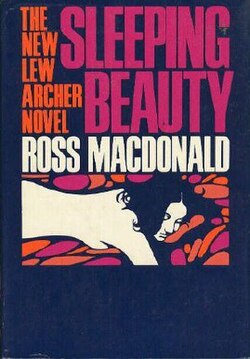
So on May 1st, 1976. And I had this astonishing evening with him and his wife Margaret Miller was there. I guess his real name of course was Kenneth Miller. And I brought with me a hardback edition of his novel Sleeping Beauty. And he wrote inside it:” for Linwood who will I hope someday I write one.”
It’s my most treasured book.
TW: Did he become like a mentor for you as a writer?
LB: Yeah, I mean, it’s not like I saw him every day, because I was in Canada and he was in California.
But we had a lot of correspondence, and the books that I wrote, which were never published, and we can all be grateful, I guess, for that. But he said, you know, this one needs a subplot.
And it needs to be longer, maybe working on some subplot, and that’s what it needs.
But he thought enough of them that he wrote a letter to his publisher and suggested they have a look at my stuff.
But perhaps the publisher was wiser than he was, or more discriminating. But he was very nice. he was a very nice man, he was very generous with his time.
TW:That’s interesting. So obviously that was another very formative moment in your career.
LB: Yeah, it really was. When I met him, and even after the course, I think my father had been dead, you know, two, three years or more.
But I don’t know if you know, there’s a wonderful coffee table book called It’s All One Case.

TW: No.
LB: And it’s all about Ross MacDonald, and it’s filled with covers of every edition from every country.
And there’s his story in it. And there’s a huge, there’s almost a whole page in that book about me. That’s amazing. Where he was, in the interview, he talked about coming and being in Canada and the tour I gave him at the university and all this stuff. So it’s all in there. I’m in the biography that Tom Nolan did for Scribner’s as well.
TW: That’s amazing. So when did you first feel that you could write as a profession?
LB: Well I was trying while I was still at the university and in my early, in my mid-20s. And I was still, I’ve written a novel, I can’t remember, I probably wrote a novel when I was 24, 25 or maybe 26 and sent that out and those didn’t get published. But I mean, I was a so-called professional writer.
TW: You did the humour column.
LB: Well, that was later. But at the age of 22, I got a reporting job. So I was a reporter at 22.
TW: On a Canadian newspaper?
LB: On a Canadian newspaper. I was on a couple of small papers and then in 1981, I joined the Toronto Star, which was the largest circulation of press. But when I went for the interview, I went in for a reporting interview, and they said we don’t need reporters, we need really good copy editors and editors on the desk.
They said do you have a lot of editing experience? And I said sure.
TW: You lied.
LB: Yeah I lied. It’s fine.
TW: So you were copy editor on the Toronto Star?
LB: Well I started as a copy editor and then I was promoted to assistant city editor.
I was a copy editor and then I was assistant city editor. Then I was news editor and then I was the paper’s chief copy editor. And then I was the life section editor. So I did all these editing jobs between 81 and 93. And 93 is when I got a regular column. And so I did that three columns a week from 1993 to 2006.
TW: Wow.
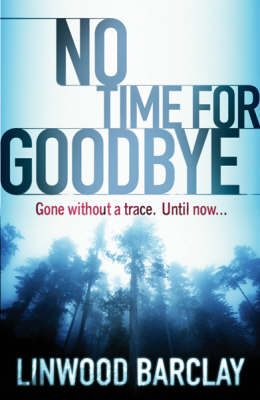
LB: Until 2006. Yes, wow. And I had written, towards the end of there, I wrote four sort of comic thrillers between 2004 and 2007. And then the fifth novel I wrote was No Time for Goodbye. It was a monster hit. Yes. And when that contract happened for that, I took a year’s leave of absence from the paper to write a follow-up. And I never went back. I didn’t go back.
TW: But it’s interesting that obviously someone like Carl Hiaasen obviously came from the newspaper field as well.
LB: And Michael Connolly.
TW: It’s amazing. Yeah. So it’s good grounding because you’re exposed to all these bizarre stories and truth is sometimes stranger than fiction. Is that a fair comment do you think?
LB: Well, certainly the background. I mean I think when you’re working at a newspaper it’s like getting a crash course in the world. Because if you’re not covering everything you’re editing everything. And you have to work really quickly on stuff. Someone says I’ve got a story, it has to be edited in half an hour, you have to cut this to fit, etc. And I love doing that.
So I think that what I got out of journalism was not so much ideas for stories, but work ethic.
Yeah. It’s not precious, it’s work. And how to work quickly and how to produce.
And none of this bullshit about writer’s block because you just have to go to work.I mean, but I loved the editing. Probably the most fun I ever had was working in Evening Shift when we would be editing the first edition. And you would build a newspaper from scratch, basically.
You’d have 100 stories, 50 pictures, and all these page dummies with all the space. It was all pasted up. It was paste up still. But some of the most fun I ever had was, you know, I mean, everything had to be ready and pasted up by 7.30. And the most important story of the night was like this huge feature that’s 40 inches long and it drops at 7.30 and it’s completely ass backwards. So you have 40 minutes to edit it basically. So I would sit down with a reporter and I would say we’re gonna turn this whole thing upside down, we’re gonna move this here, we’re gonna put this here, we’re gonna do all the transitions and I could do all of that in 45 minutes and it was so much fun. It really was.
TW: So crime is a great conduit for telling stories. Crime is still one of the most popular genres. Why is it still one of the most popular genres? You know, in novels, why does crime still connect so much with readers?
LB: Well, it’s interesting, first of all.
TW: Is it about people’s flaws? Is that because people are flawed?
LB: It’s not just that. There’s a lot of drama in crime. Yes. And for a long time they used to say that people like crime novels because at least in the novel order is restored. Or maybe some kind of sense comes out of chaos. Yes. It doesn’t always. No. But I think that’s one of the appeals of crime.
What appeals to me from writing it, other than the fact that it’s often what I’ve been a fan of growing up, it’s what I always read and watched, was that I could never write a literary novel because I need that skeleton of a plot. I need something to hang everything else on.
TW:So do you plot quite tightly when you’ve got a novel? Do you plot from start to finish?
LB: I don’t… I know the big picture before I start. I want to know, that if I have a great opening, before I write the book I have to know what all the circumstances are that brought us to that opening. I want to know who did what. I want to kind of know where I’m headed generally and I have a pretty good idea where I’ll end up. But I don’t know what’s in that big mushy middle. So I’m not a pantser.
TW: So you’re halfway between a planner and a seat of your pants kind of writer?
LB:I’m halfway between them, yes. I’m the guy, that if I’m building a house, I’ve got the blueprints for the foundation and I know the foundation. I know the shape of furniture I’m going to put in there, I don’t know any of that stuff.
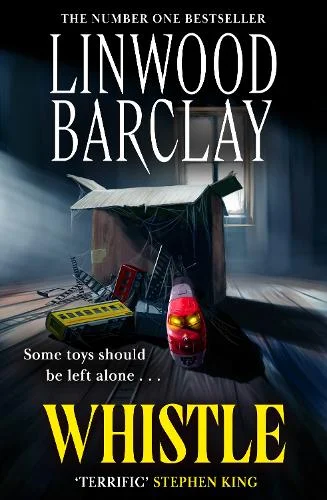
TW: But you’ve also switched recently. Your new book, Whistle, is a different genre. It is. So was it terrifying to switch?
LB: No.
TW: Was it liberating?
LB: It was liberating. It wasn’t terrifying to write, it was more like, will readers respond to this kind of book for me? But it was a bit liberating because when you do a thriller in the real world, everything has to fit. And if you try to jam plot points together, jam that square peg into a round hole, as it were, people notice that. So this book was liberating. Like I could have someone hearing a train whistle in the night when there was no train track nearby. And I don’t have to justify that. I don’t have to explain it. It’s because it’s that kind of book. Weird stuff happens.
And so, that was fun. When I started, I was like, well, you can’t do that, that wouldn’t really happen. Well, that’s the point of this book. This will be kind of things that couldn’t really happen, but yet they’re going to happen in this book.
TW: Yes, yes. But with a thriller, obviously, it’s all about the tension, about ratcheting up the tension.
LB: Yeah, because I think, you know, this book has everything that you would want from all my other books. There’s tension. Yes. There’s a sense of momentum to it. Yes. There’s twists in it so you still get all that, but you just now have a couple of new things in the stew, which is horror and supernatural.
TW: So are you switching back to your more regular genre?
LB: I will. The next book will be the regular genre. Whether I’ll do more books like Whistle will depend on how it’s received.
TW: So it’s just come out, hasn’t it? So you’ll have to wait and see what the response is like. LB: Yeah, it’s too early to know. I don’t even think we’ll know until it hits paperback. And see how it does. And that still gives me lots of time, you know, to decide whether to do another.
TW: So does it get easier as a writer, the more experienced you are, or is every book a new challenge as a writer?
LB: Every book’s a new challenge. I mean, there are some things that I guess are easier, but I find every book I make some new mistake and then I don’t make that one in the next book and then we do a new one. And so every book’s a challenge and with every book, you’re always too close to it as the author of it, and you just don’t know until somebody else reads it, whether you’ve completely screwed it up or whether you did it right.
TW: Do you try and push yourself as a writer and say, I want something in this book that I’ve never done before? I want to attempt something completely brand new.
LB: I don’t know if I consciously think about it, but I do know that every time you do a book, you think the goal is I want this to be the best book I’ve ever done. And some years, you feel like you’ve done it. And other years, you sort of finish and think, well, it’ll do. I can get by with this one. But is it as good as that one I did ten years ago? No, but maybe the next one will be that one.
TW: How many drafts do you go through on a typical novel?
LB: Well, the first draft I usually do in two and a half to three months. And then I go through it again myself.
TW: And do you eviscerate it?
LB: No, I don’t. I try and establish everything in the first draft. I try, you know, and of course it still goes back to working as a newspaper guy. You haven’t got any time to sit and rewrite, to go back and polish and polish and polish. But I’ll take two to three months on the first draft, leave it for a week, go back into it, usually spend just another maybe a week on it, go through and polish it, and then I’ll deliver it. And the number of extra drafts that it needs really then is going to be down to the copy editor.
You know, my editors will say, well, it needs this or it needs that. This is fiddly piddly stuff, that doesn’t really worry me, so that’s fine. And style points, or this character doesn’t work, or this underpinning of the story is not working. Those are the things you really don’t want to hear, because then it’s major surgery.
TW: How do you feel about your work once it’s finished? Do you ever reread your own stuff? I don’t know if you do.
LB: Probably not. No, I don’t think I’ve ever. The only time I’ve ever re-read my books is when I was, for a while there I did a trilogy, The Promised Souls trilogy. And I would go back into the other books to refresh my memory about things that were going to be in a subsequent book. But otherwise, no. It’s too painful. It’s like baby pictures.
TW: Do you try and read other people’s work? Like new writers and these new people? Do you want to expose yourself to what the next generation or the one after, the newer generation are writing?
LB: I don’t even read a lot of horror and I don’t even read a lot of what you might call thrillers. I’m always attracted by the writing. So I would read a George Pelecanos. Or a James Lee Burke. Or out of crime, you know, an Ann Patchett. Or Colm Toibin. So I read people like that. I think you should admire the craft and I think what I tend to do is to read people who I think are way better than me, which gives me lots of choice. So I read them and I and I think ‘Man am I glad you don’t have to be this good to get published.’
Because I’m in awe. Some writers I just think, man, I just don’t know how to do it, like I can’t believe it. I really feel that with someone like Ann Patchett or Colm Toibin, but my favourite book last year, I think I read was Long Island, his tribute to Brooklyn. And I just think his characters are as complicated as my plots. And I’m pretty impressed. I’ve got a little bit of a stack of crime fiction at home that I haven’t read yet. I have the new Carl Hiaasen.
TW: Yes, I haven’t read his stuff in a few years.
LB: I also read authors like Elmore Leonard. I think the first book I read of his was 52 Pickup. It’s really good. Because, these guys blackmail the main character. They say, ‘We’re going to tell your wife you had an affair, you have to pay us money’. But he goes, ‘the hell with you’. So he goes home, tells his wife he had an affair. And that was it, yeah. Like I say, I’m drawn to the writing by certain people. I’ve got a new James Lee Burke has come out since I got here. So I’ll pick that up when I get home. I have the new… I have the new… I’ve got the new Scott Turow.
TW: Oh, nice. Is that a legal procedural?
LB: Yeah, it’s the same characters from Presumed Innocent.
TW: I’ve read some of his stuff.
LB: I interviewed him a couple of years ago for an event at a festival.
TW: So if you had to pick a modern crime writer, like a new one, let’s say you should read this guy’s or woman’s or this person’s work, would you pick one?
LB: Well, I wonder if I haven’t read enough of the new ones. I keep going back to the old standards. Actually, I thought the best thriller I have read so far this year was The Big Empty by Robert Crais. It’s an Alice Cole novel. I just thought it was great.
TW: Do you read much British stuff?
LB: Some. I’ve read Ian Rankin, I’ve read some Peter James, I’m sure there’s others that I’ve read that I’ve forgotten. A couple of years ago I was reading two Val McDermids. I love Mark Billingham too.


Linwood Barclay’s Whistle is out now in hardcover







You must be logged in to post a comment.