

Comics News
Writers/ Co-Creators Shawn McBee And Maciej “MJ” Jankowski Talk About Supernatural Comic Kickstarter Campaign Westron#1

Tapping Into Nightmares
Writers/ co-creators Shawn McBee and Maciej “MJ” Jankowski launched their kickstarter campaign to fund their Westron#1 supernatural comic on Kickstarter a few weeks back. The campaign has ended but they are still taking late pledges so we caught up with them to find out more…
TRIPWIRE: What was the genesis of this series?
SHAWN MCBEEE/ MACIEJ MJ JANKOWSKI: We’re both big fans of European folklore, especially when it concerns strange creatures of myth. MJ, being from Poland, was raised on some Slavic legends as a child and then began to explore them more in depth on his own
an adult, while I (Shawn) got very interested in the Celtic faerie folklore through exposure to the works of Brian Froud as a teenager and delved deeply into that and other legends as a result.
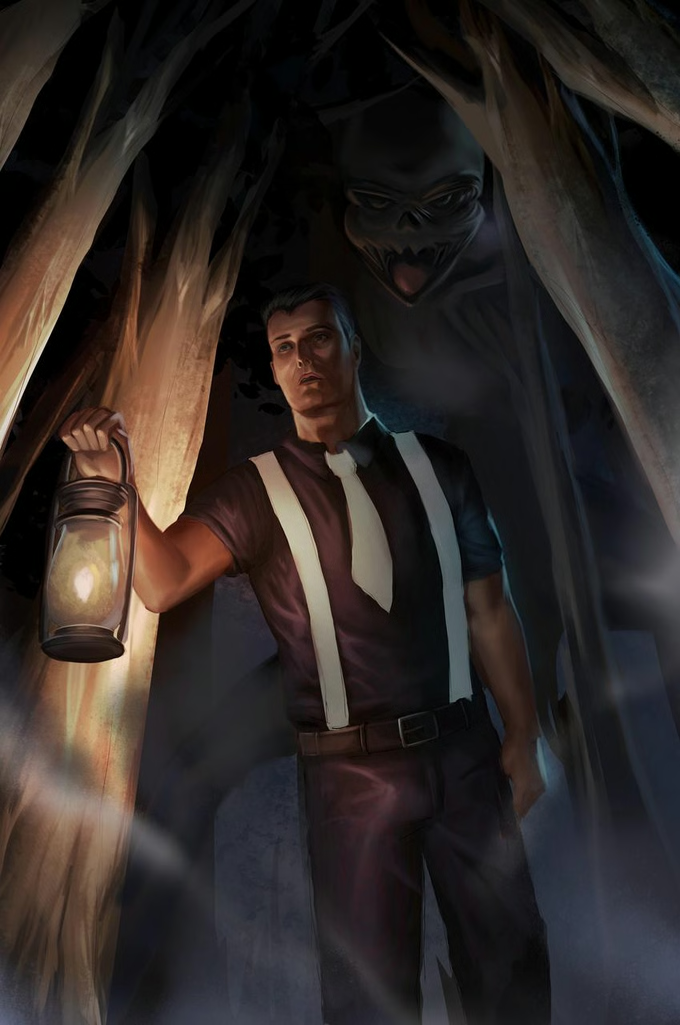
One thing they have in common, though, are horrific mythic creatures that were literally designed to give children nightmares. It’s a largely untapped well of terror because everyone seems too busy making the millionth vampire or werewolf story to bother with this rich tapestry of nightmare fuel that’s just sitting there.
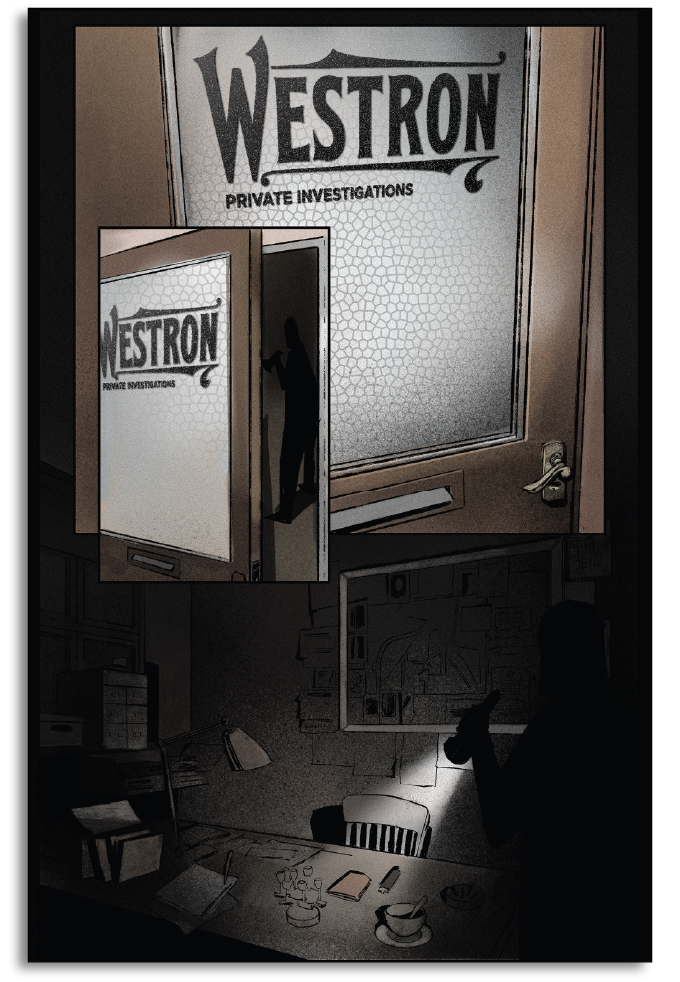
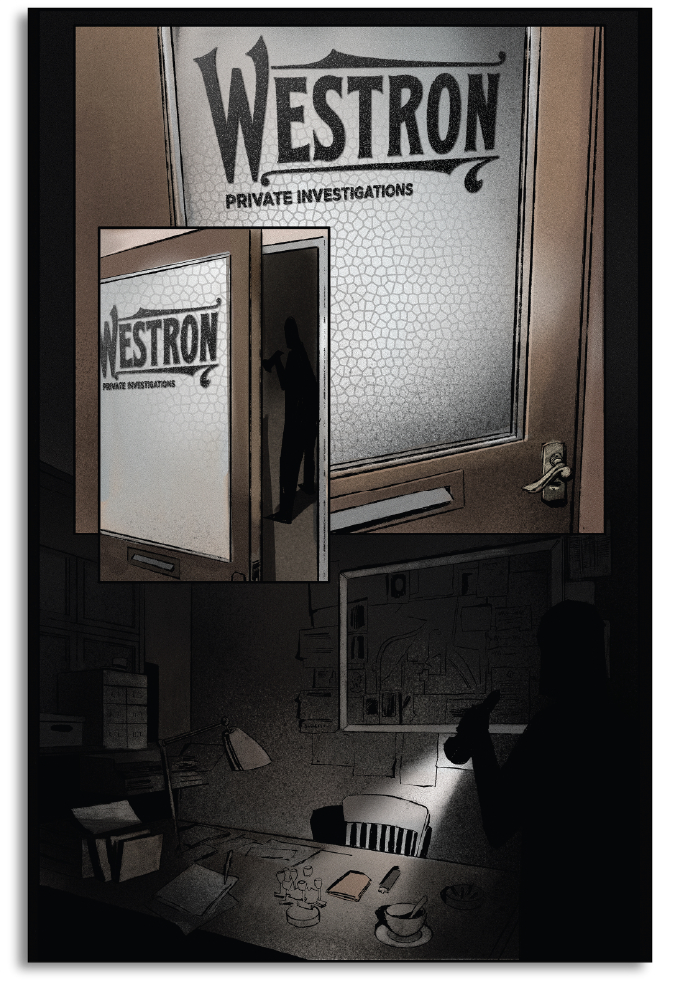
So MJ came up with the initial idea of a private investigator who solves mysteries related to these creatures, who in our world are called Slavfor and then he brought me on as a collaborator.
TW: How did both of you get together as creators?
SM/ MJ:We met in the nerdier corners of the internet. I had worked on DC’s Stargirl TV series and done a podcast about it. MJ was part of a DC Multiverse Wiki and so reached out to me with questions to fill in the gaps of the wiki’s information. Eventually, I joined the Wiki’s Discord and we got to know each other a bit…
So when MJ came up with the concept for Westron, he thought of me as a collaborator and just asked if I wanted to write a comic with him. I had just worked with the writing staff on Stargirl (I was the show’s lore-keeper) and it had reignited my passion for writing. So I jumped at the opportunity.
TW: How did you get the two artists on board for this comic?
SM/ MJ: The internet is a magical place. We posted on a subreddit called r/ComicBookCollabs with a description of our project and what we were looking for. We got a lot of responses and, after some trial and error, settled on Nicolás Nieto as our A-Story artist and he recommended his friend Matías De Vincenzo for the B-Story and we absolutely love the both of them. Fantastic artists with styles that really fit our story.
TW: Can you describe the series in one pithy sentence ?
SM/ MJ: The story of a man who fights Slavic demons with more success than he has conquering his own demons.
TW: You have gone the kickstarter route rather than traditional distribution. What are the pros and cons of this for both of you as creators?
SM/ MJ: : Well, it’s worth noting that it wasn’t entirely by choice. We did submit to some traditional publishers. But we did so without our hopes up. As first time comic creators, it was never very probable that a real publisher would take a chance on us. We considered it a pretty big success when Dark Horse rejected us instead of just declining to respond at all. We always figured we would go the Kickstarter route in the end, but thought we should at least try. That said, there are pros and cons to each. With Kickstarter, you get to build your fan base on the individual level. You get to connect to each buyer and get feedback and maybe even engender in them a loyalty to you or to your project. They have access to us in ways they otherwise wouldn’t and vice-versa.
With traditional publishing, you actually make much less per individual sale (MUCH, MUCH less) but you have the opportunity to reach a much larger audience. And it’s not as intimate a connection with the audience, but everyone wants their stuff to be read by as many people as possible, right? And, of course, with a publisher, you have someone else who’s job it is to do a lot of the time-consuming tasks that take you away from the creative parts of making a comic, allowing you to focus more on creating.
TW: Would you use Kickstarter again for a future creative project?
SM/ MJ: : Oh, for sure. It’s a lot of work, but as you see people reacting to your project and you get to build up that community, it’s incredibly rewarding. Of course, if Image or Dark Horse or someone wanted to publish us, we wouldn’t exactly slam the door in their faces, but we see Kickstarter as a great way to build a community of comic book lovers, including other creators.
TW: How closely did both of you work together?
SM/ MJ: : It varies, depending on the phase of the work, but generally very closely. We have different strengths as writers and we learned pretty quickly how to effectively utilize those differences. For example, one of MJ’s strengths is conceptualization. He dreamed up the entire concept for Westron, including an overarching mythology, in practically one evening. He comes up with these concepts super easily; they practically pour out of him. That’s not one of my strengths. I have an idea and I have to work hard to build it into something that can sustain a story.
But that is where my strengths lie: story and structure. I take those concepts and weave them into a compelling narrative that builds intrigue, teases out future reveals and lets the reader become immersed in the concepts MJ creates.
So MJ ideates pretty much on his own and I do the script pretty much on my own, but the rest of the time, we’re on the phone or a video call or texting for hours at a time sometimes, working out ideas for making this story and these characters come to life. We change and tweak things along the way, refining our story into something that will, in the fullness of time, come together in an incredibly satisfying manner (we hope).
TW: Stylistically it does shift towards the end of this first issue. How do you keep this flowing cohesively for the reader?
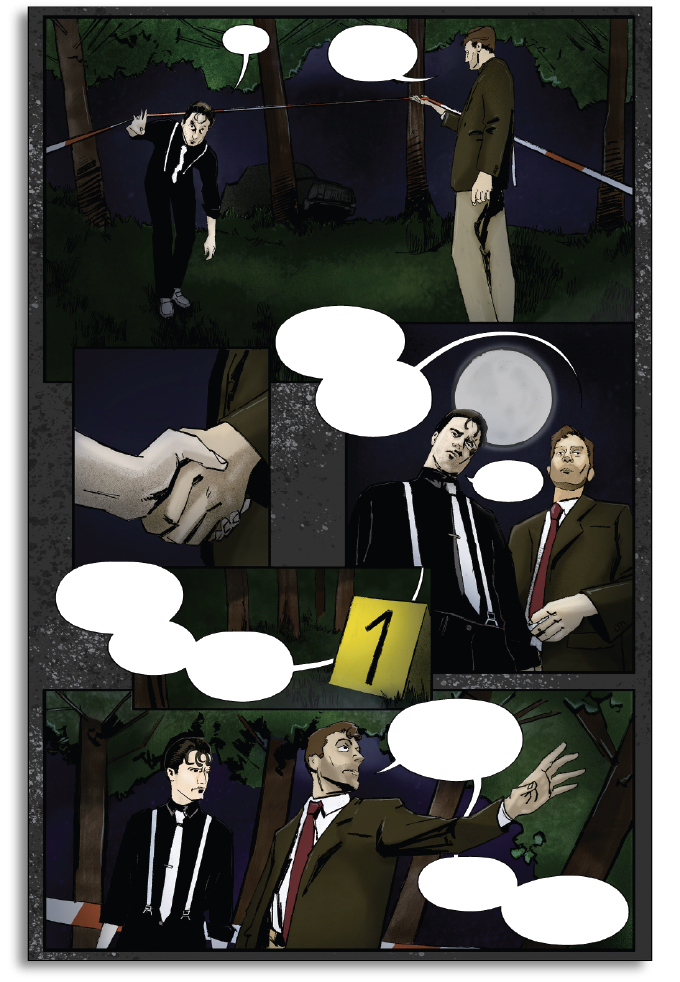
SM/ MJ: You’re talking about our shift to the flashback and the end of the issue, with the different art style? We know that it may come across as a bit jarring in the first issue, but in the course of this story arc, that was just the best place for that split. The whole series will have these flashback sequences but they’ll typically be a bit more integrated, rather than being bisected in the issue the way it landed this time.
The flashbacks tie in with the main story, but they are also a story in their own right and we felt that having two artists would make it very easy for readers to know which story they’re in. But it also gives us the opportunity to draw parallels and highlight contrasts between the stories visually, as well as narratively. The two artists are friends who live near one-another, so they can collaborate directly on these aspects. As the story progresses, we’re confident it will not only be coherent for the reader, but also add an extra level of meaning to the story we’re telling.
TW: How did you find writing a supernatural thriller?
SM/ MJ: : As with any writing, there are challenges. But with a clear understanding of the story we want to tell and who the characters in that story are, it all tends to fall into place fairly easily. For supernatural stuff, you just have to establish rules so that these elements are consistent. If you’re making it up as you’re going along, the reader will know. For the thriller elements, you just have to always keep in mind the unique language of comics and utilize them to build tension (and release it) at the appropriate times.
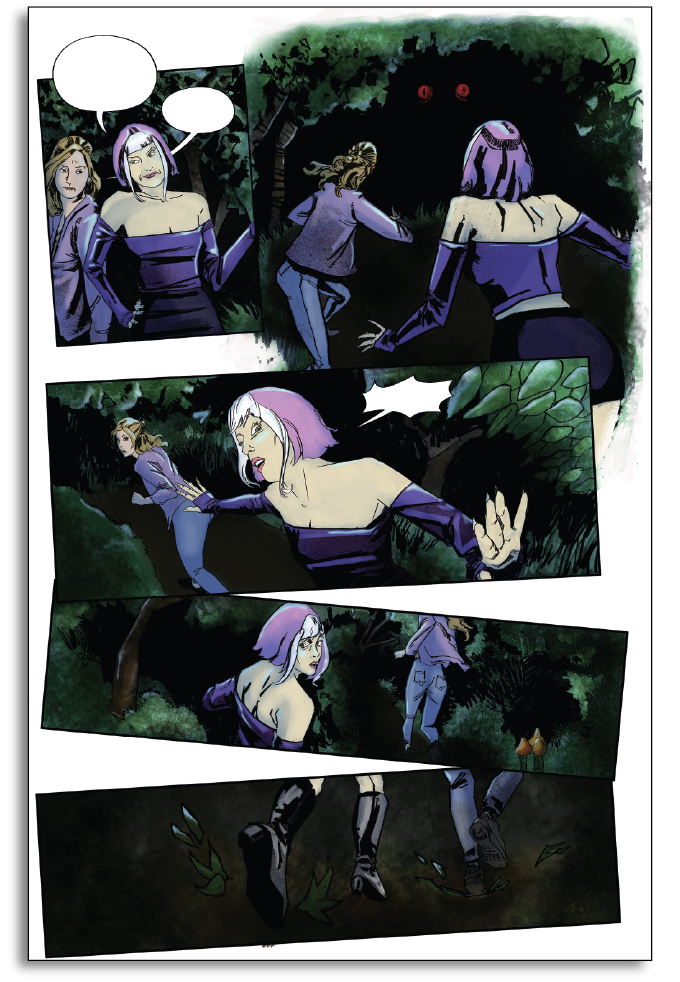
For example, in this issue we start off with a couple of girls walking in the woods. In the script, we specify that the panel layout should be boring and unobtrusive. But when the girls encounter a mysterious creature in the woods, the panels are jumbled and chaotic, to reflect the panic the girls are feeling as they flee in terror.
And that’s the great thing about comics. It’s not just pictures and words that tell your story. It’s page layout, it’s framing, it’s where you turn a page, it’s what you DON’T see in the gaps between panels. All of it can be used to build a feeling that enriches your story.
TW: How do you see yourselves keeping the momentum going to get a series funded via kickstarter? What are the challenges here rather than with a standalone graphic novel?
SM/ MJ: : This is something we worked out well in advance of launching our Kickstarter campaign. We self-funded our first issue’s art so that we’d be able to deliver to our backers in a timely fashion. And we’re using the funds we’ve raised in our campaign to fund the art for the second issue (as well as printing for the first) so we can do the same for the #2 campaign.
The hope is that we can grow our customer base as we move forward until we reach the point that one campaign raises enough funds to finance multiple issues, allowing us to move from production of one issue directly into the next
with no gap. We hope to eventually be able to be on a monthly release schedule, as people expect from a comic series. But we plan on releasing consistently and reliably even if we don’t reach that particular goal.
As for the challenges, in some ways it’s less challenging than a graphic novel, at least the way we do it. Graphic novels come in at around 240 pages which is a LOT of art to finance up front. That’s like 10 issues of our comic, so the goal one would need to set in order to fully fund a graphic novel would be much harder to reach unless they didn’t need to pay for art or already had a very large fan base already.
We love graphic novels, but there’s just something special about a series made up of 24 page issues where you have to wait issue-to-issue. Breaking Bad could have been a great movie… but they were able to do so much more with the idea across 5 seasons of television.
support the campaign on late pledges now here
People can also check out the Indiegogo follow-up campaign too





You must be logged in to post a comment.