

Book News
Tripwire Talks To Academic And Author Clive Bloom About London Uncanny


The Big Smoke As Never Read About Before
Joel Meadows just chatted to London academic and author Clive Bloom about his new book London Uncanny out now…
Described by The Times as a polymath, Clive Bloom is currently Visiting Professor in Residence at the Larkin Centre for Poetry and Creative Writing, University of Hull and a Research Fellow at the University of Timisoara (Romania) having previously been a Research Fellow at New York University. He is Emeritus Professor of English & American Studies at Middlesex University and a best-selling author and publisher of over twenty books on politics, gothic literature and London.
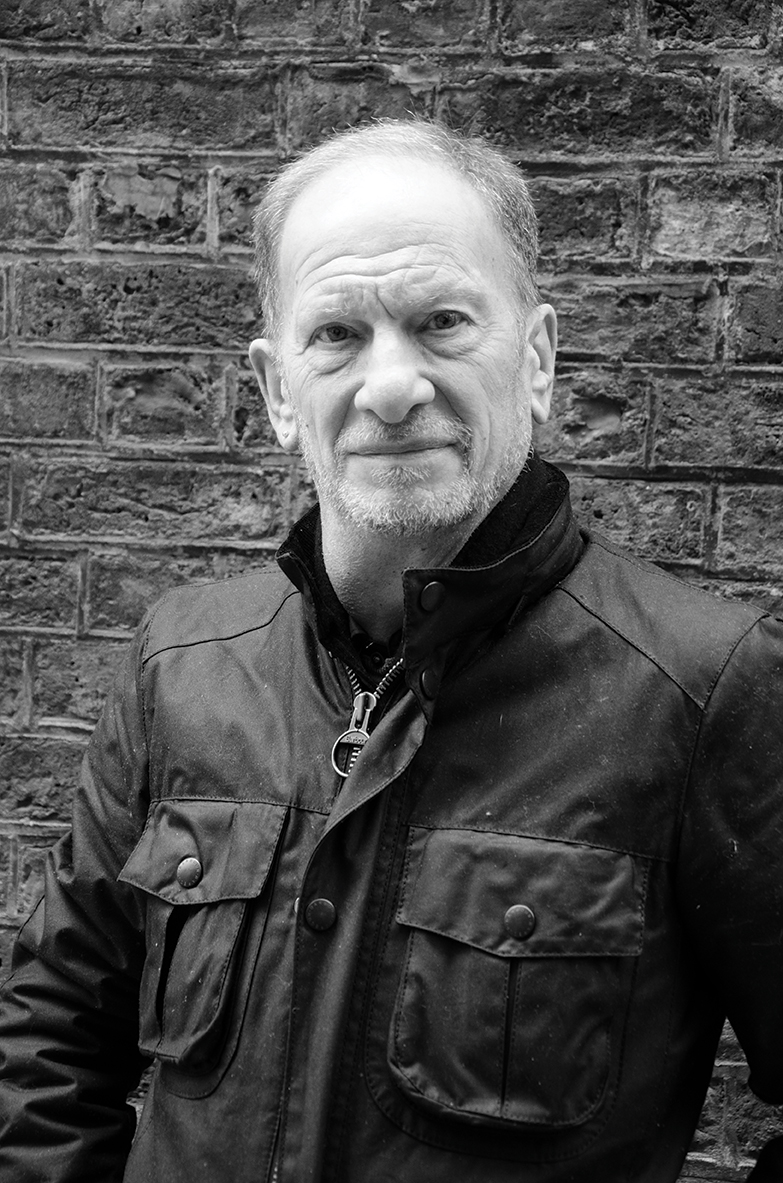
pic: Joel Meadows
TW: Okay, so let’s start with the very beginning. So what is the genesis of the book?
CB: The genesis of the book is the fact that I’m a Londoner and the idea that I wanted to produce a book which was about London. But about London that’s inside your head not the London that’s bricks and mortar, because what I’m arguing in the book is there are two forms of London.
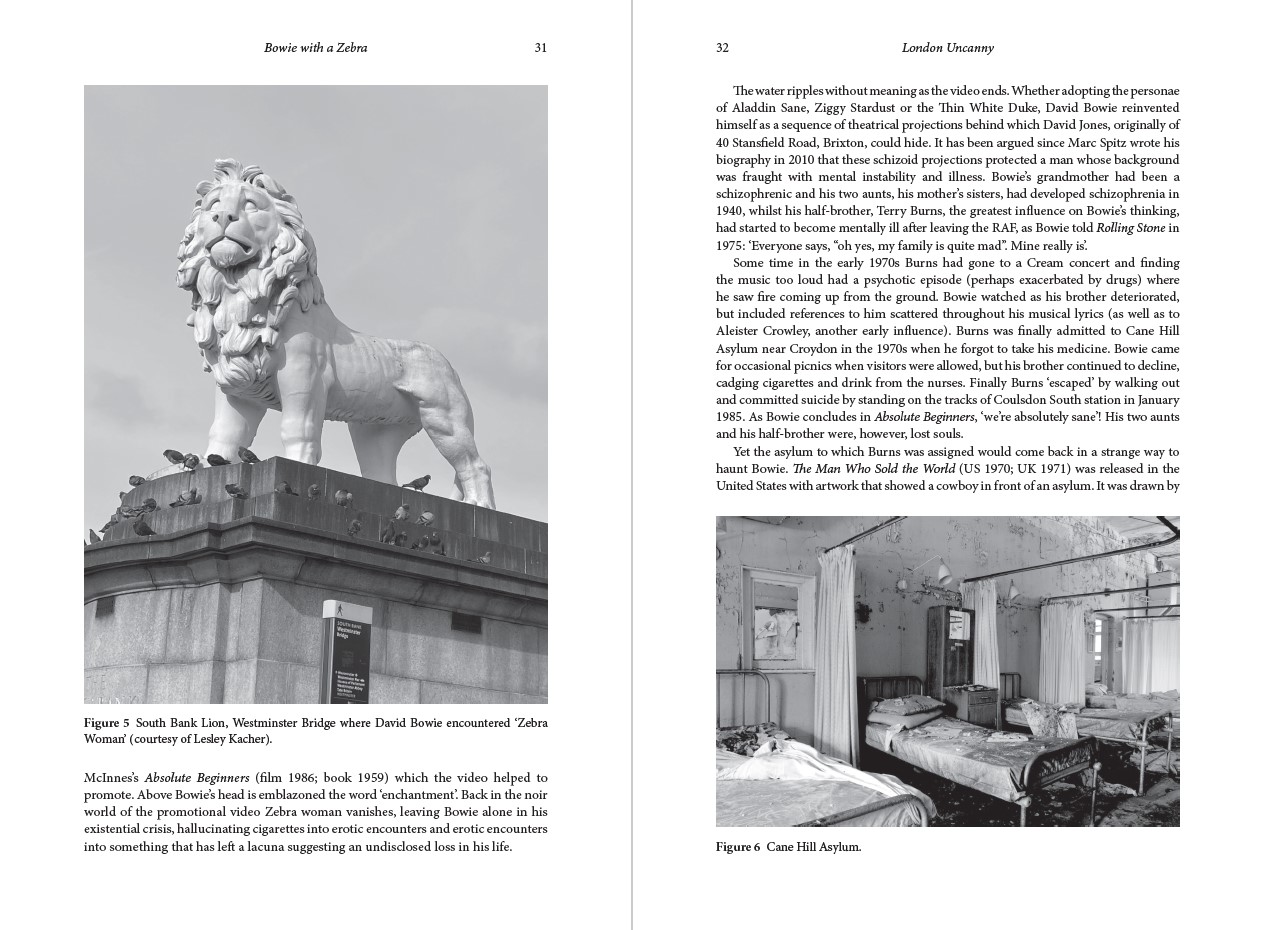
One is London where you see buildings, streets, shops etc, and the other is a sort of supernatural or occult London, which is London in your head, London from history, London from fiction and film and art and the London scene from never built architectural projects, high rise cemeteries in the heart of the city and giant statues on the Thames. What I set out to do was write a book which is about uncanny and otherworldly encounters in London. I’ve got people like David Bowie in there with a zebra woman in a video filmed on Westminster Bridge, I’ve got Abba in there as ghostly simulacrums walking around the stage in Stratford, and I’ve got more traditional people from Arthur Machen to Aleister Crowley. Dickens is in there doing his night walks and having a terrifying encounter with a man eating a pie in Madame Tussaud’s. I’ve got another story about TS Eliot walking into his wife whom he hated. He walked into Vivian and the whole point is he said, “I walked into a ghost.”

It’s a mixture of supernatural tales, as well as factual tales, and there’s a mixture of fact, fiction and film in the book.
It’s all about encounters. For instance, David Bowie’s brother was in an asylum as you might know and it’s an odd coincidence fact that this asylum was actually one of the very first places of urban discovery where people went into empty buildings.

Then I also talk about Folgate. Have you been to Folgate Street?
TW: I admit I haven’t.
CB: 18 Folgate Street is a type of faux eighteenth-century artwork. You walk around it, but in that situation, you’re the ghost. You’re haunting their space. At the end of the book, I talk about the artists Gilbert and George, who see London as being a city full of bones – not of the dead, but discarded from fried chicken shops on a Saturday. What they mean by that is when you go outside their door (which is in the East End), the pavement is covered in chicken bones. The book is about London as a mental space and as psychological projection. I’ve got Neil Gaiman in there and Clive Barker in there too. Peter Ackroyd is in there as I write about Hawksmoor and I’ve actually got Jeremy Corbyn in there too! So it’s a mixture. When you read the book, it’s essentially a meditation on London, but It’s not a travel guide.
Funnily enough, when I first started writing the book, there was so much material that I’ve written second book, a follow-up book, which I’ve actually finished.
TW: So talk a little more about the first book.
CB: It’s about what I would call the random encounter. It’s about the uncanny, that’s why it’s called London Uncanny. My definition of the uncanny is things in the place they should not be. When you walk into someone where they shouldn’t be or find something out of place, or even out of space and time. There’s meetings with space men on the streets of London and there’s one particular one that’s very interesting about an encounter in Hammersmith. For some London life is an hallucination brought about through drugs, trances and ritual. It’s a ‘thin’ place.

TW: How hard was it to avoid getting lost in research with a book of this kind?
CB: You have to do lots of research, sometimes in strange places and with strange people, And you must go and look at the sites as well, The book’s broken down by area in the index and then after that, there’s a very long bibliography to help others on the journey.
TW: How far back do you go? Do you go back to the Plague?
CB: Yes I do. I deal with Daniel DeFoe’s version of the plague because it’s a fictional representation disguised as history. There’s an interesting thing in there where someone who’s meant to be dead and about to be popped into a plague pit suddenly pops up and says,’ I’m not dead.’ Certainly an uncanny encounter for the people pushing the dead cart. One area that I argue against is the fact that bits of London existed before London existed. The Romans built London. There’s no archaeological evidence whatsoever about things being before them, but myth trumps real history here.
TW: So what else do you cover?
CB: I write about the rise of the 1960s and 1970s occult and mystical movements and addresses in London. I’ve got the Highgate Vampire in there for the very simple reason that its mixed in with other things. I write about the Mithraeum in the City of London as a strange encounter with the commercial city. As I’ve said I also include things that people wouldn’t expect. I wanted to write something on the occult, so for instance I’ve got something on an occultist who lived opposite Cleopatra’s Needle. She believed that ancient Egyptians had entered her home. I would say that pretty much 95% of the book people might not know.
TW: So what is your take on the occult? Is it a sceptical take?
CB: It’s not a sceptic’s take but it is presented with some distance.
London is a place of strange resurrections too. Eastern European shops seem to pastiche British fiction and present it as retail reality. They’re always called Dracula or Transylvania or named after Jack the Ripper. So they bring back the fictional Victorian idea of the past as a joke in the present. The return of the repressed as a joke.


Q: So it’s not an academic book then?
CB: It’s a book for all serious readers who love the weird and outré and who love London. It’s a mainstream book. It was actually too long when I finished writing it so I have written a second book called The Dark Heart Of London which should be out next year.
London Uncanny: A Gothic Guide to the Capital in Weird History and Fiction is out now from Bloomsbury Publishing






You must be logged in to post a comment.