

Book News
Lev Grossman Talks His New Arthurian Novel The Bright Sword

Redrawing The Sword
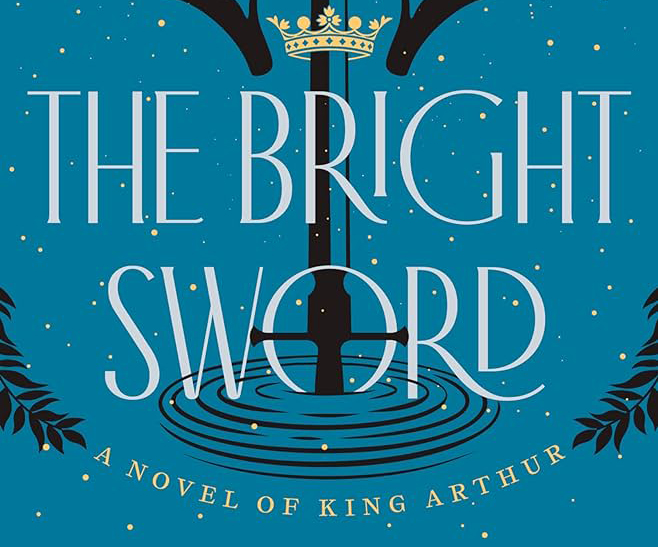
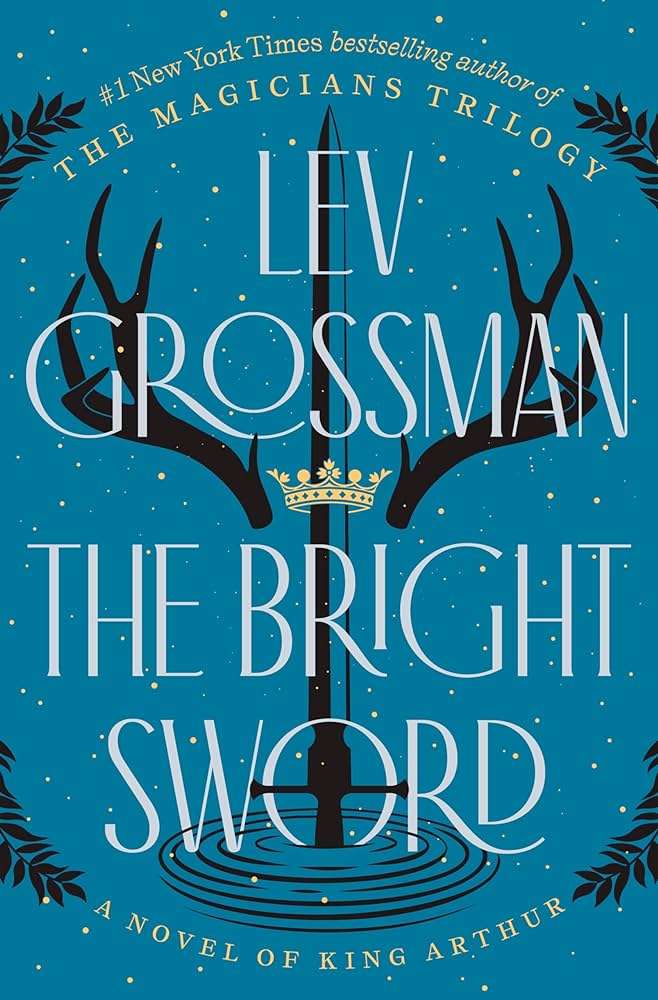
Lev Grossman, creator of the hit book series The Magicians, which was adapted for TV, has just written a new book which is out now, The Bright Sword, which is a new take on the Arthurian legends and Tripwire caught up with him to find out more…
TRIPWIRE: How do you find something new to say about Arthurian legends?
LEV GROSSMAN: Part of it is looking for blank space on the map. When TH White wrote The Sword in the Stone, he told the story of Arthur’s childhood for the very first tie. No one had ever done that before—it was a blank spot on the map. I went looking for more blank space, and I found it in the world after Arthur’s death.
And of course there are loads of characters whose stories haven’t been told yet, like Sir Dagonet, who was Arthur’s fool, or Sir Palomides, who’s a Muslim. What’s he doing in Britain? Where did he come from? Nobody knows! There was still so much left to say.
TW: How long has this book been percolating for?
LG: Since I was about 11, when I first read The Sword in the Stone. But really I didn’t take seriously the idea of writing about Arthur till about 10 years ago. Till then it felt like everything that needed to be said about Arthur had already been said. But the world has changed so much since I was 11 … I started to feel like we needed a new Arthur to go with it.
TW: What is it about Arthur and his affiliated characters that continues to appeal to readers centuries after Morte D’Arthur and a long time after T.H. White too?
LG: I think one thing, not to state the obvious, is Arthur’s goodness. He’s a true believer, he wants to be a good man and a good king, but it’s not always clear to him what being good means. And he’s fighting the headwind of fate, and the past, and his own fallible humanity … that’s something we’ll never stop relating to.
And the other part is that it’s a story about a family. Uther and Igraine, Arthur and Guinevere and Mordred, Gawain and his brothers, Morgan le Fay—they’re all part of an extended and blended and incredibly dysfunctional family. It’s like Succession. That’s always going to be fascinating.
TW: Did you look at any other Arthurian books or works as inspiration or even as just a springboard as to how you could approach this in a different way?
LG: I went back to a lot of the Old Welsh stuff – the Mabinogion, Y Gododdin, the Spoils of Annwn, Clwch and Olwen, which are all so strange and Celtic and haunting. And then more modern stuff like Tennyson’s Idylls of the King, Rosemary Sutcliff, TH.White, up through Mists of Avalon and Bernard Cornwell. Not to mention Camelot 3000! Everything was grist for the creative mill.
TW: The Bright Sword is a very different sort of book to the Magicians, so did this throw up many challenges for you as an author?
LG: There are definitely reasons this book took me ten years to write. I was not a writer of medieval fiction before this, and it took a lot of research to gather enough detail to make the story feel historically grounded. And I was trying to follow after 1,400 years of poets and novelists, all of whom had told basically the same story I was telling … I wanted to be sure I was really adding something to the tradition.
And Arthur himself is a challenge, as a character. He’s a good man – it’s his defining characteristic—and it’s hard to write characters who are both good and also interesting.
TW: It is also heavily allegorical with echoes of modern society. How did you find the balance between traditional Arthurian epics and a more modern approach to creating this book?
LG: They say about science fiction that it’s set in the future but it’s really about the present, and I think you can say something analogous about King Arthur: his story is set in the past, but somehow it’s always about the present too. I wanted to find the strands of his world that resonated with our time, but without ever forcing the connection. I didn’t want to be too heavily allegorical. After all, the human realities don’t really change. We’re always searching for meaning, and trying to process the past, and understand who we are … it’s just a matter of figuring out where and how they were doing it then.
TW: With Arthur absent, does the liberty of his absence make your life easier or harder as a writer?
LG: A bit of both, really. If Arthur’s gone, you can’t fall back on the same traditional tropes and stories of Arthurian fiction, you have to figure out new ones. Which is hard. But it is liberating too. There’s something about that world, the world without Arthur, that feels so modern in its darkness and lost-ness—it’s a post-apocalyptic world. It’s The Last of Us.
TW: How would you describe the book in one pithy sentence?
LG: Camelot breaks, and a random bunch of oddball knights try to fix it, with mixed results.
The Bright Sword by Lev Grossman is published by Penguin Books in the UK and Penguin Random House in the US
https://www.penguin.co.uk/books/463661/the-bright-sword-by-grossman-lev/9781529939125
https://www.penguinrandomhouse.com/books/554241/the-bright-sword-by-lev-grossman/








You must be logged in to post a comment.