


Headlines
Tripwire Talks To Dave McKean About Illustrating The Folio Society’s Gormenghast


Peake Quality
The Folio Society published Gormenghast by Mervyn Peake last year illustrated by Dave McKean and with an exhibition of McKean’s art from the book running at Adam’s Gallery in Reigate, Tripwire’s editor-in-chief just spoke to him about how he approached creating the art for the edition and the exhibition. Photos: Joel Meadows…
TRIPWIRE: How did you approach illustrating Gormenghast?
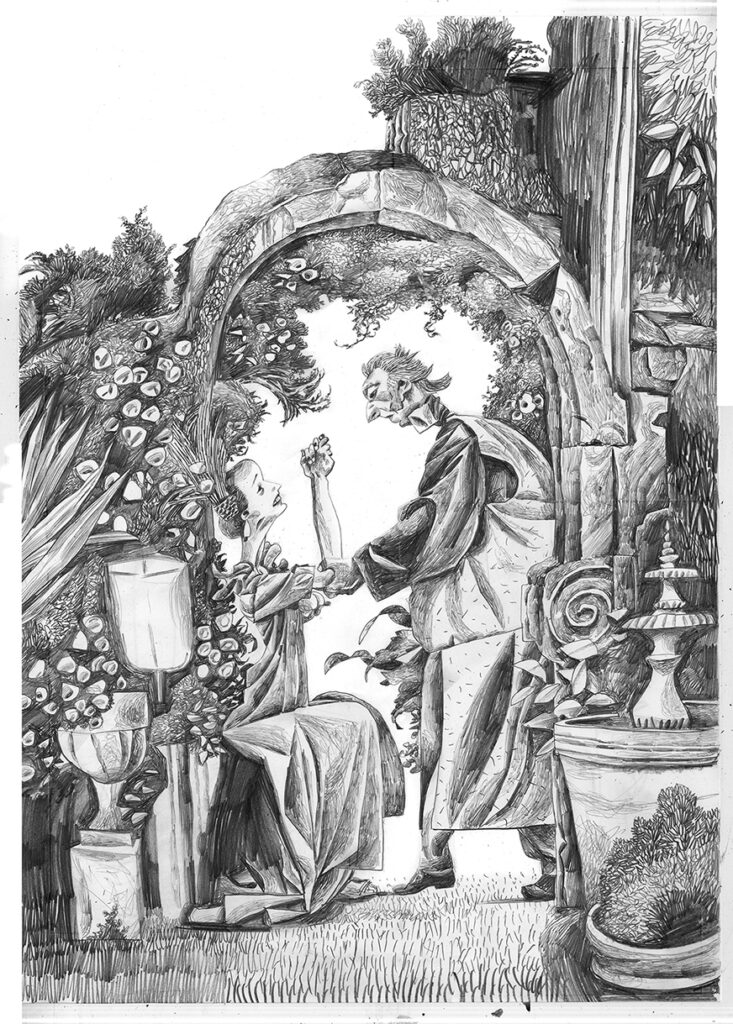
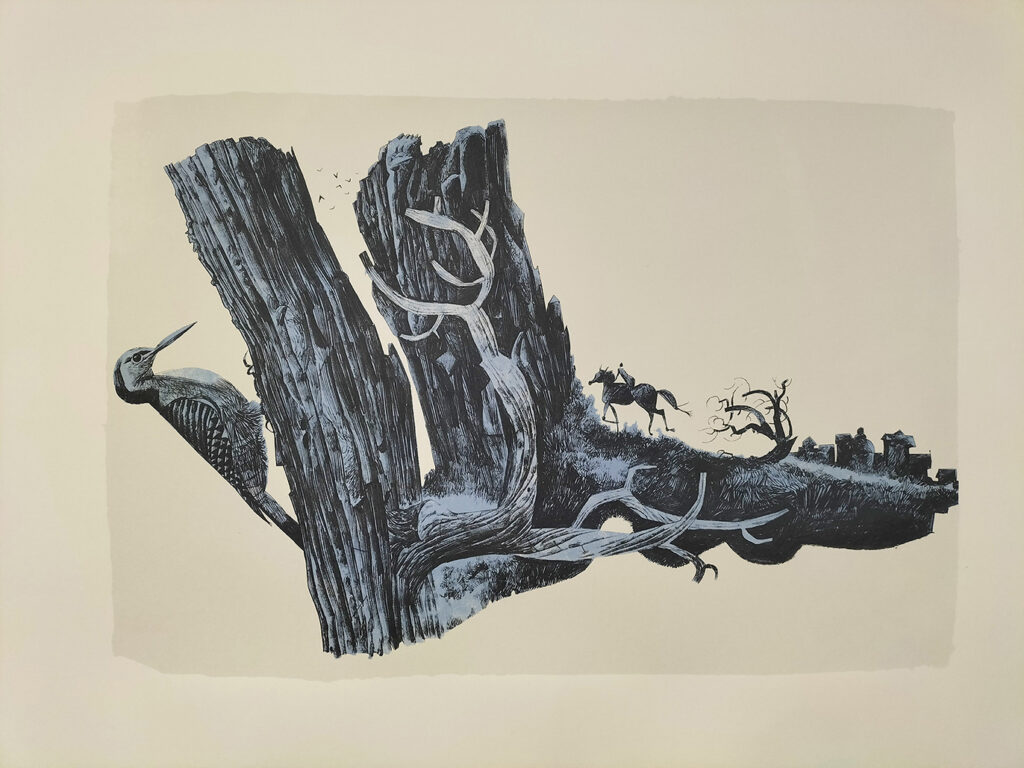
DAVE MCKEAN: I read it, obviously, but I liked it a lot more as an adult reading it. I think when I read it in art school, I was expecting another Lord of the Rings, and it’s not a fantasy novel at all. It’s a kind of social satire set in an alternate feudal England within a labyrinthine castle kingdom. And the passages of nature writing, outside of the castle walls, really struck me. I made copious notes for images, there was something I could have developed on almost every page. I was commissioned for around 25 images over the three volumes, but I talked to my editor and convinced her that it would be more interesting and immersive to do a lot more drawings – I ended up doing more like 150. I thought it should have a gothic quality to it, and I wanted each image to suggest the labyrinth of corridors in the white negative space left between the figures, objects, birds, and pieces of castle detail.

TW: Your love for the books is well known so how daunting was it to illustrate a work that means so much to you?
DM: I don’t know where you got that from. I didn’t have great memories of reading Titus Groan forty years ago. So it was a great surprise to me how much I liked the trilogy. It was more daunting knowing that Peake was also a great illustrator, so I had to try and come up with something that matched him, but didn’t ape him, and in some way honoured his work and creation.

TW: How closely did you work with the Folio Society in terms of art direction?
DM: Folio commission illustrators and designers they already like and trust, so you’re halfway there before you start. Then it’s a matter of proving that you are appropriate for the book, and that you have a compelling idea to thread the imagery together. So once I’d done some roughs for the design of it, and a sample or two of what I had in mind, they were then were happy to leave me alone to crack on through the whole book. Editorially they picked up on a few details I’d missed or misrepresented, so I changed those. There was a little noodling with the position and size of some of the images, but basically I laid the book out and that’s what went to press.
TW: What was your approach in creating the interior pieces for the three volumes?
DM: Each book has its own colour. The images are pencil drawings with single colour wash overlays. The first two volumes tried to suggest the plan of the castle in the shapes and flattened perspective of many of the images. Only the third volume feels a little different. Titus has escaped the confines of the city and finds a strange world, somewhere between steampunk, Victorian England and sci-fi. The nature is still present, but the narrative is fractured. You can tell Peake was having mental problems at this stage. I tried to have the suite of drawings in book three feel part of the set, but also pushing into something else.


TW: Why do you think almost eighty years after Peake wrote the first volume that Gormenghast still speaks to readers?
DM: It’s beautifully written and highly visual. The characters remain fully realised and unusual. And I think Peake invested a lot of himself and his anxieties into the paranoid courtly world, crumbling class system, and the frustrated, ambitious, morally ambivalent Steerpike.
TW: Did you have much input into the final format of the books?
DM: Yes, Folio always works very closely with me as I’m suggesting design elements and technical specs for the books. The final format is a mix of mine and their ideas, and then I’m free to illustrate and design the type.
TW: You have done a number of projects with the Folio Society. What is it about them that appeals to you as an artist/ illustrator?
DM: Obviously they have a vast library of books in their catalogue and history now, it’s an extraordinary library. They have published most of the great authors and classic volumes, and worked with some of the greatest artists and illustrators of the 20th and now 21st centuries, so it’s an honour to be part of that story. They take enormous care over the presentation of the books, and yet they are very hands off once we’ve decided on a style and path. And they’re just very nice creative people to work with.
TW: You have an artistic career going back to the 1980s now. Do you still want to push yourself as an illustrator with each new project?
DM: Certainly. Each project offers its own opportunities for me to learn and try something new. I can always do better, and I hope I’m still improving, honing my craft, and defining more clearly what I do.

TW: Selecting the pieces for sale at Adam’s Gallery, how hard was it to whittle it down to a quantity that the space could accommodate while still reflecting the flavour of all of the images you created?
DM: I only did some of the whittling. I gave Adam more than he needed, so he chose the works that felt good for him in the space, I’m very happy with this choice.
The Gormenghast exhibition is on now at Adam’s Gallery in Reigate in Surrey
https://www.adamsgallery.co.uk/










You must be logged in to post a comment Login