

Comics News
Tripwire Reviews 2000AD’s Joe Pineapples: Tin Man


A Radical Send-off?
Joe Pineapples: Tin Man from 2000AD is out this week and Tripwire’s contributing writer Tim Hayes takes a look at it…
Joe Pineapples: Tin Man
Pat Mills, Simon Bisley/Clint Langley, Annie Parkhouse
2000AD
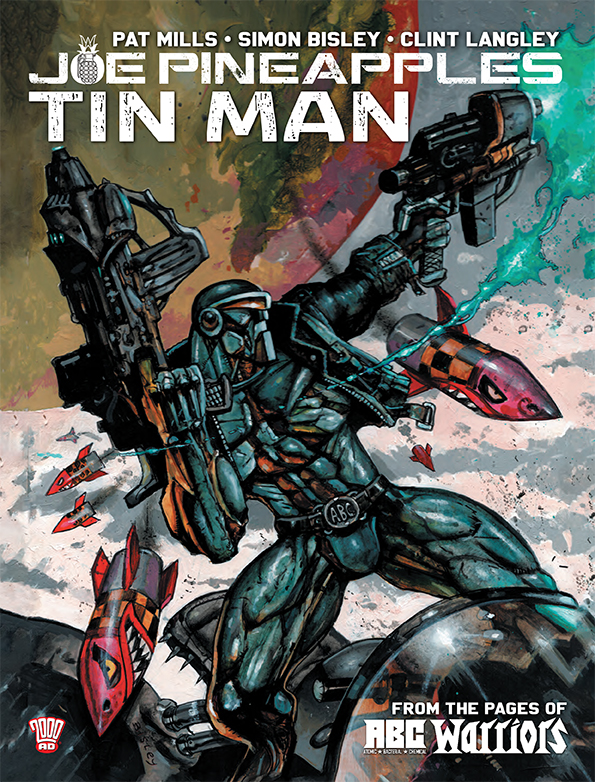
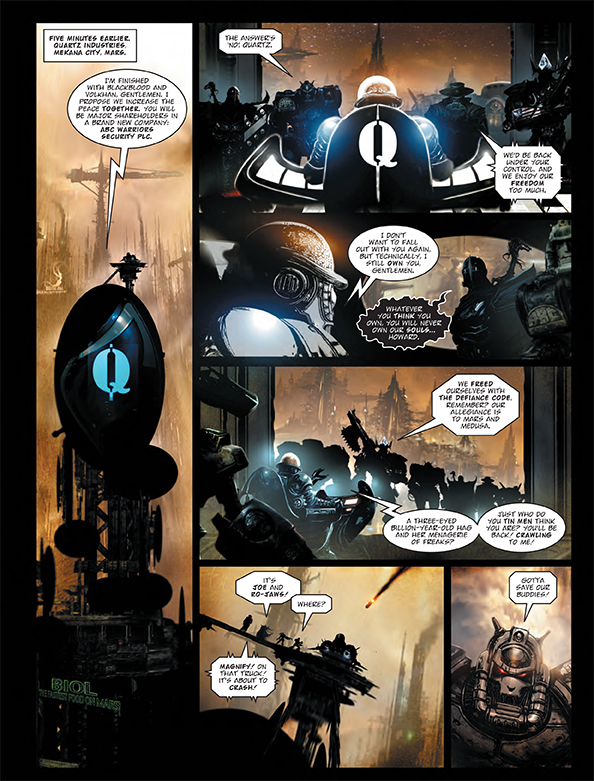
Pat Mills’s long goodbye to 2000AD has been lengthier than planned. His final Sláine story ended in 2021 but only after a delay while Leonardo Manco finished the art; and something similar, but even more so, caused five years to elapse between the announcement of Tin Man by Mills with artist Simon Bisley and the story actually beginning in the weekly comic. Sláine: The Horned God by the same team is still a crown jewel of the 2000AD reprint programme after 35 years and any reunion is newsworthy, so an indefinite wait for this final story from Mills about his robot sniper character Joe Pineapples might have frustrated everybody. The published story may too, since in order to get it over the line Rebellion enlisted Clint Langley, a long-term collaborator with Mills for several years and an artist with whom Mills is clearly very much in sync, to draw the last nine episodes of the story after Bisley did the first two.
Langley has worked with Mills since not all that long after The Horned God appeared; but even so, having these two particular artists do a relay effort in Tin Man makes the story bridge separate eras, with the present dislodging the past. Langley’s art is its own unique thing in 2000AD, flamboyant modern digital manipulations and textures layered over the figures of traditional action comics until the joins between the different toolboxes blur. As a colourist he takes big swings, putting streams of primary colour behind desaturated images, or dropping the hues out altogether until the pages resemble inked original art. Bisley’s two Tin Man episodes are also striking, although not like each other; the first is slick and smooth and dark, and the second is the kind of energised harsh jagged painting that the artist was doing in in the pages of Madi: Once Upon A Time Time In The Future in 2020, probably around the time the Tin Man pages were created.
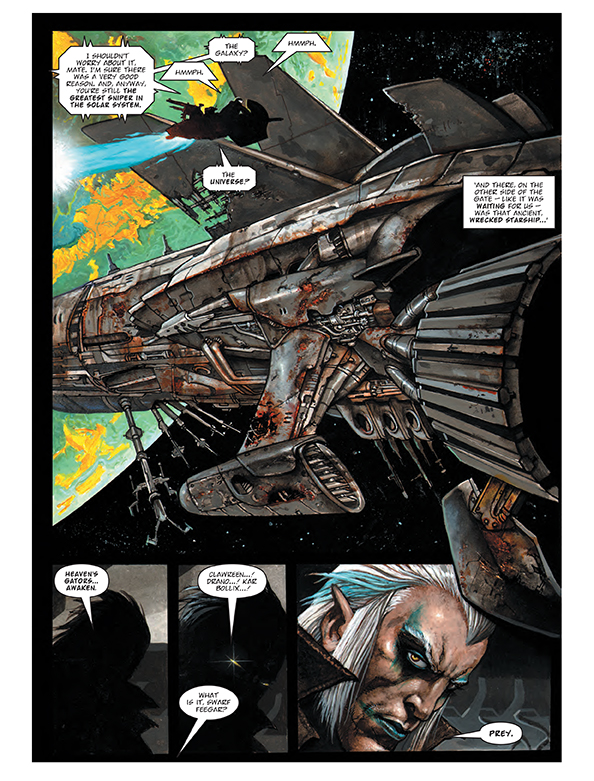
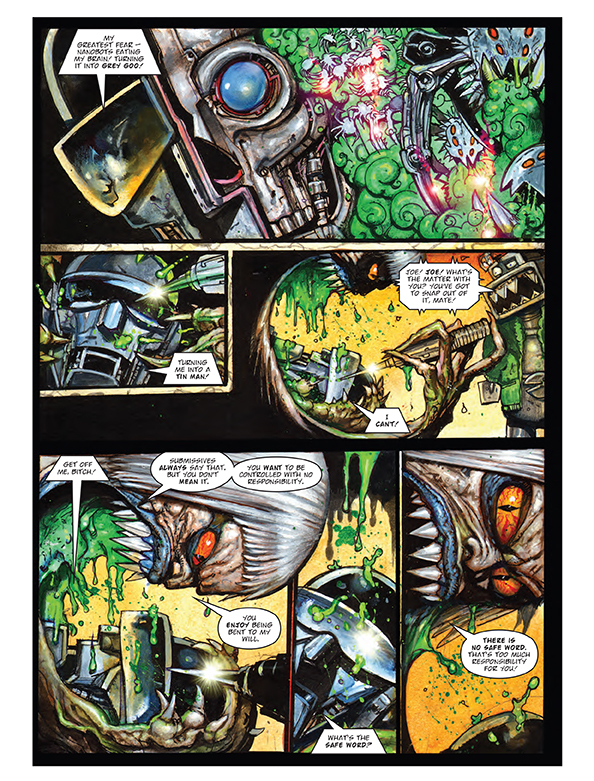
For his final Joe Pineapples story, and possibly his last work for the comic he helped create, Mills forces a character to decide whether a skilled but mistreated craftsman can keep his soul while working for distant bosses who don’t really care. Joe and his long-suffering and sometimes insufferable comedy foil Ro-Jaws start off marooned on a tiny asteroid in space, apparently languishing there millions if not billions of years. Joe ponders his own nature by remembering past missions alongside Sue Bananas, a female robot assassin who made Joe feel a few feelings he was unfamiliar with, and who was convinced that both of them had actual souls in their artificial bodies. While Joe recalls missions against wicked robots and humans alike, the arrival of a cult of murderous lunatics and a handy wormhole lead Joe and Ro-Jaws back in the general direction of their past, where friends and foes await them. Mills has an absurdist streak in him alongside a radical one, and the two woebegone robots in Tin Man start off on a testy duologue of meandering frustration as if they were stuck in a Beckett play, at the mercy of some unseen higher scriptwriter. Politicians, military generals and the church then take their customary places in this writer’s crosshairs.
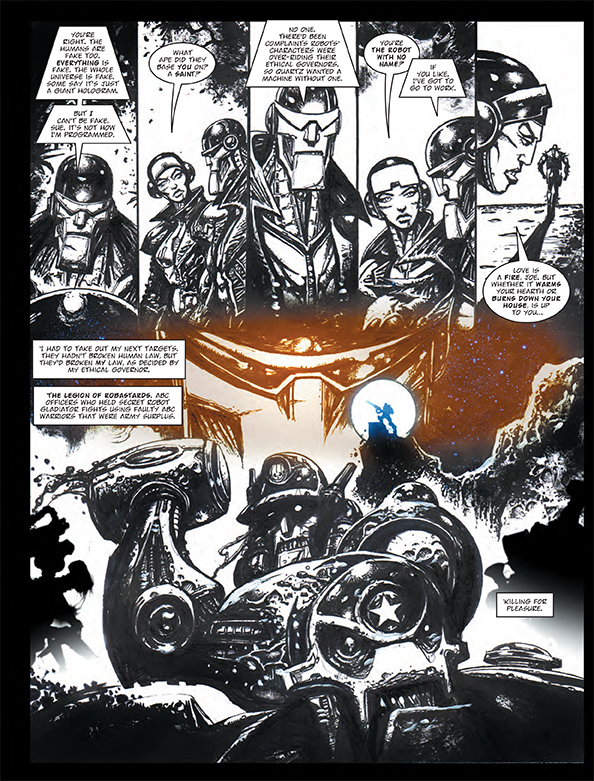
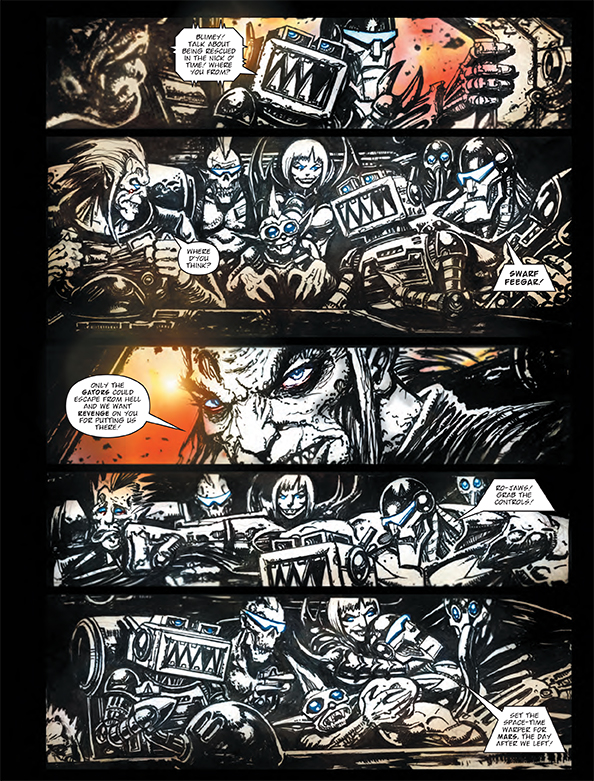
Whatever actually happened with the two artists and their schedules, the change in visuals is undeniably a disruption; but neither Bisley nor Langley are inclined to draw a boring page, and Tin Man is pushed along by the punch of the individual panels rather than any overall unity. Anything with the names Mills/Bisley together in the credits box will summon up the spirit of 2000AD‘s past, and Tin Man has more voltage in the visuals and the thematic intentions than some of the comic’s present output, the unsolvable logistical issues perhaps a clue to why that was then and this is now. With both his character and his readers in mind, Mills settles his anti-hero’s self-doubts before waving him off.











You must be logged in to post a comment.