

Comics News
Tripwire Talks To Pat Mills About The 35th Anniversary Of British Comics Anthology Toxic


Trying To Break The Mould
Toxic! was an anarchic weekly British comic that ran for 31 issues between March to October 1991, that was published by Apocalypse Ltd. This means that as of March 2026, it will have been 35 years since issue 1 hit the shelves of British newsagents and comic shops. So Tripwire’s contributing writer Paul N Neal reached out to one of the main leading creators behind Toxic, writer Pat Mills…
TRIPWIRE: Before diving headlong into the details, Has it occurred to you, that at the time of writing this, it is almost exactly 35 years since the release of the first issue of Toxic? Does it feel like 35 years since those heady months of 1991?
PAT MILLS: No, Toxic feels very present in my mind. As so do all British comics, even today. I don’t feel a sense of loss for Toxic, especially, but I do feel a sense of loss of comics for an audience aged 10 – 16, male and female.
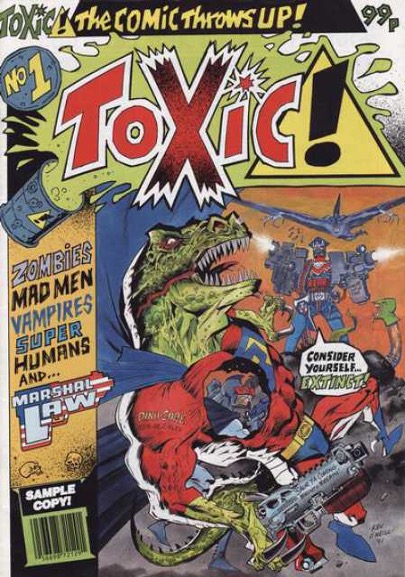
TW: It is generally believed Toxic was the idea of yourself, Kevin O’Neill, Mike McMahon, John Wagner and Alan Grant. Was it really the brainchild of such an esteemed team of creators? What I mean by this is did the very first initial germ of the idea for the title come from one particular individual and did the idea gain traction and snowball? Or did you all come to the same conclusion at the same time that the British comics scene required a fresh voice?
PM: IIRC it was the publisher – Geoff Fry – idea. He put it to all of us. I saw it as an opportunity for creator-owned books such as Marshal Law, Accident Man and beyond.
TW: As I understand it, part of the vision for Toxic emerged from a feeling that at the time 2000AD had lost some of it original punkish sense of Rebellion. That may be a slightly unfortunate choice of words given the name of the current long-term owner of 2000AD, but was Toxic created as an effort to recapture some of that initial anti-establishment mindset?
PM: Yes, it was going to have a more punk-like quality. It would also be full colour – hence why 2000AD responded by going full colour, arguably a mistake in some cases.
TW: Without labouring the point, was there a mission statement for Toxic? Beyond a sense of perhaps recapturing a sense of some creative freedom as creators, would creator rights have been a significant motivating factor?
PM: Definitely creator rights. It paid off – there have been two Accident Man movies. There was no mission statement because none of us wanted to be editor. Or to be the driving force. After 2000AD I didn’t want to go through the whole creator thing again.
So, it divided into two camps – John Wagner and Alan Grant. And myself and Kevin O’Neill.
Some similarities between us, but no strong enough theme and that would have played a role in its downfall.
TW: How long did it take to get issue one of Toxic published and in the hands of readers? Was it something that from start to finish took months or even years to fully realise?
PM: No, it was brought out in a rush. Compared to 2000AD where I had a year.
I’d guess it was six months, probably less.
TW: Would you be willing to admit that based purely on page count the first issue of Toxic and several that followed were to an extent dominated by stories you wrote? That must have been a wonderful opportunity to create new and interesting stories alongside an established anti-hero in the shape of Marshal Law. Was this by design or the just a question of timing and deadlines?
PM: It was by default. We couldn’t find other writers, so Tony Skinner and I and Alan Mitchell and I wrote many of the stories.
TW: There were several strips in Toxic where you are credited as co-writers with Tony Skinner. Can I simply ask, how were those writing duties broken down? Was there a division of labour in regard to plot and dialogue, or perhaps did you take alternative turns on writing instalments of any episodic series?
PM: We sat down and wrote them together.
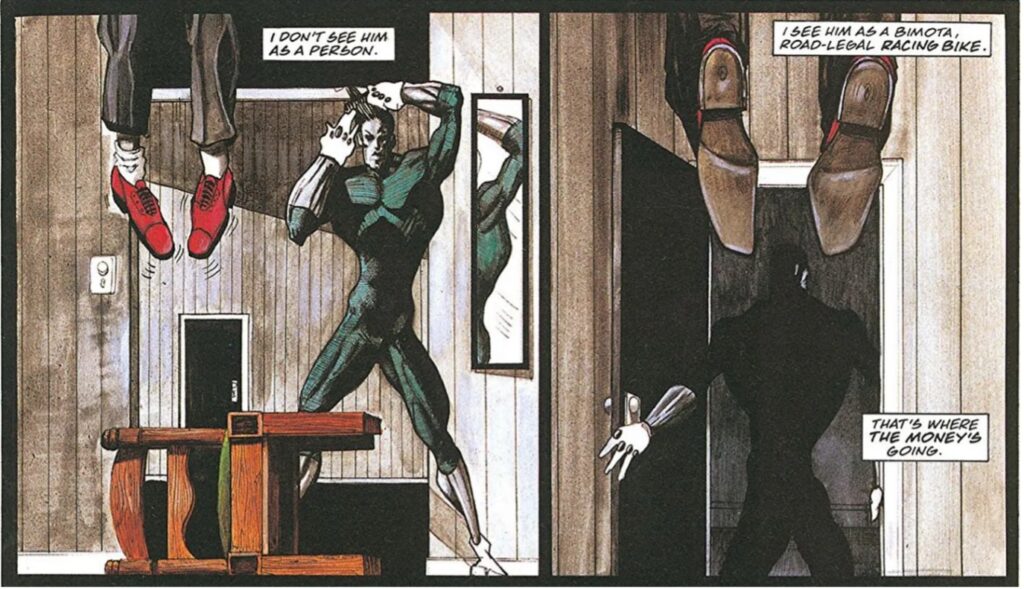
Tony had a real technical knowledge of arranging accidents and making them look authentic. I recall professional fans being rather prissy about this.
TW: Were you happy with issue one of Toxic at the time? With the benefit of hindsight, how do you look back on that debut issue now?
PM: It’s not bad. Accident Man was a runaway hit. But it does show signs of being a captainless ship. Kevin’s art editing helped unify its style, but underneath it, there isn’t a strong theme.
TW: This may be a foolish question, because I suspect there could be several reasons. Why did Toxic not live up to its initial potential? On paper it should have been an enormous success. You have stated in the past that part of the problem was a lack of a clear editorial voice or vision? Would I be totally incorrect in suspected there was slightly more involved?
PM: Lack of theme was definitely part of it. I didn’t want to be editor and take control. For a brief period, I had to do so..
There was no support within the industry or fandom. For example, my new generation of artists were going to be excluded from UKCAC as professionals. I kicked off about it and that was changed.
The industry wanted to see Toxic die because Geoff Fry was not well-liked. There was some justification for this, but – then and now – British comics do not have a mainstream comic supportive sense of community, as applies elsewhere.
Many comic fans or creators would rather see new comics projects fail. Truly. I can provide examples to bear this out.
It’s a negative British attitude of mind – a delight in failure – that I have experienced my whole career in comics from the very first day I started.
Hence why I work mainly for France.
TW: Some fans might consider Toxic a truly bold but ultimately unsuccessful failed experiment. Would that be an unfair description?
PM: That’s fair. But it requires further elaboration. Some creators suffered from ‘whipped dog’ syndrome. They would rather go on working for the slave master, better the devil they know, rather than take ownership of themselves and their work.
Such creators were affected by the hatred towards Toxic from within the industry (and fear) and so we couldn’t call on their talents.
It was a golden opportunity they chose to pass on. That cautious attitude I have no time for.
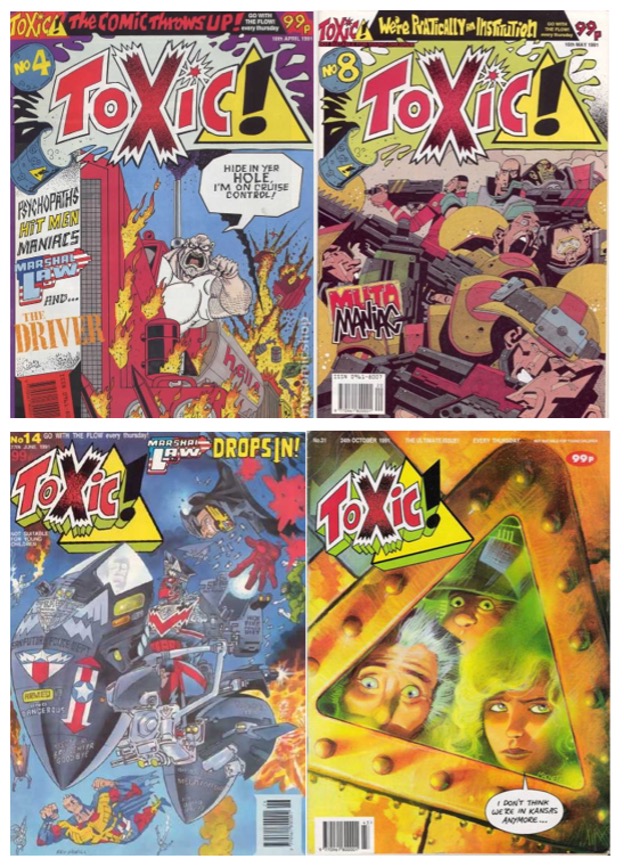
TW: How do you personally look back on Toxic? Looking back on those 31 issues, do you feel a sense of pride, or do you have any regrets?
PM: Yeah, I’m pleased with no regrets. Just a reminder of the negativity of the UK comic industry – which played a role in its demise – still with us today. I’m so glad it didn’t hit you that way and you have positive memories!
I’m the only one, AFAIK, who ever speaks about this, but I do think the UK comic industry’s deep conservatism, caution, a resistance to change, hatred of success, enjoyment in failure, endlessly looking back at impossible Golden Ages rather than forward to the future, is an unspoken malaise that affected Toxic as it affected other comics before or since.
For example, when 2000AD came out, and was a runaway success, the managing editor would regularly call me into his office and say – with barely concealed glee – the circulation was dropping at the rate of 2k a week, which was in fact actually quite normal. He was willing it to fail!
I’ve encountered this defeatist attitude my entire career and Toxic was no exception.
I suppose having an upbeat, pro-active, politically counter-culture attitude to life it comes as a shock to realise, if I’m looking for kindred spirits, I’m probably in the wrong industry!
The industry, that is. Not the readers many of whom share a similar world view to me which makes it all worthwhile. So, I’m likely whenever I meet up with them to thoroughly enjoy our conversations which are likely to include Toxic.
TW: How do you personally consider the state of the British comic scene in 2026? An argument could be made to say it is now pretty varied and vibrant. With crowdfunding and Kickstarter campaigns the likes of The ’77, Falcon and many other projects that British comics scene has come alive again in a way that has allowed more creators to express themselves? Would you agree or do you wish there were more titles supported by publishers that appear in newsagents etc without such direct financial fan support?
PM: From a fan point of view that is true. but mainstream readers age 8 – 15 are not catered for. Often, snobbish fans won’t care about this audience and IMO often despise them.
TW: Out of curiosity do you know who might happen to own the rights to the copyright or the IP to Toxic? Would there be a way anyone, not necessarily yourself, could ever be in a position to relaunch the title perhaps in the form of crowd funded annual, or the occasional special? In thirty-five years has anyone ever proposed such a thing? For that matter would you approve of anyone doing so?
PM: We all own the copyright. Great idea!
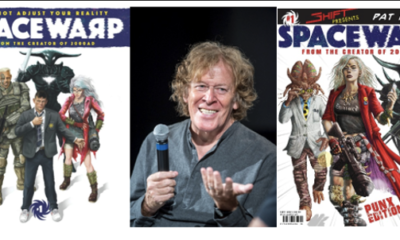
TW: I’d be slightly foolish not to ask. You were heavily involved in the creation of the title Spacewarp. It may be the case that this is a subject that could justify an entirely separate interview. What is the status of Spacewarp?
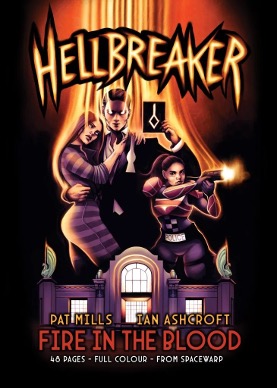
PM: Hellbreaker from Spacewarp was a successful Kickstarter and is due out later this year.
TW: Finally on the subject of Toxic what do you feel is the legacy of Toxic for The British comic scene? Do fans mention Toxic to you on a regular basis? Or for example as I would suggest, after Toxic ended, would you say the title pushed 2000AD to go full colour rather than featuring so many black and white stories? Or would that have been inevitable regardless?
PM: Offhand, I don’t recall Toxic gets mentioned much. 2000AD going full colour was arguably a mistake. Its legacy for me was Accident Man with two movies by Scott Adkins. There were other stories I liked in there like The Driver, although fans didn’t like it so much.
Once again, it suffered from being a captainless ship.
TW: Finally, whilst I have the opportunity, what are you working on currently. What can comic fans expect from Pat Mills in 2026 and beyond? Is there anything you would like to promote?
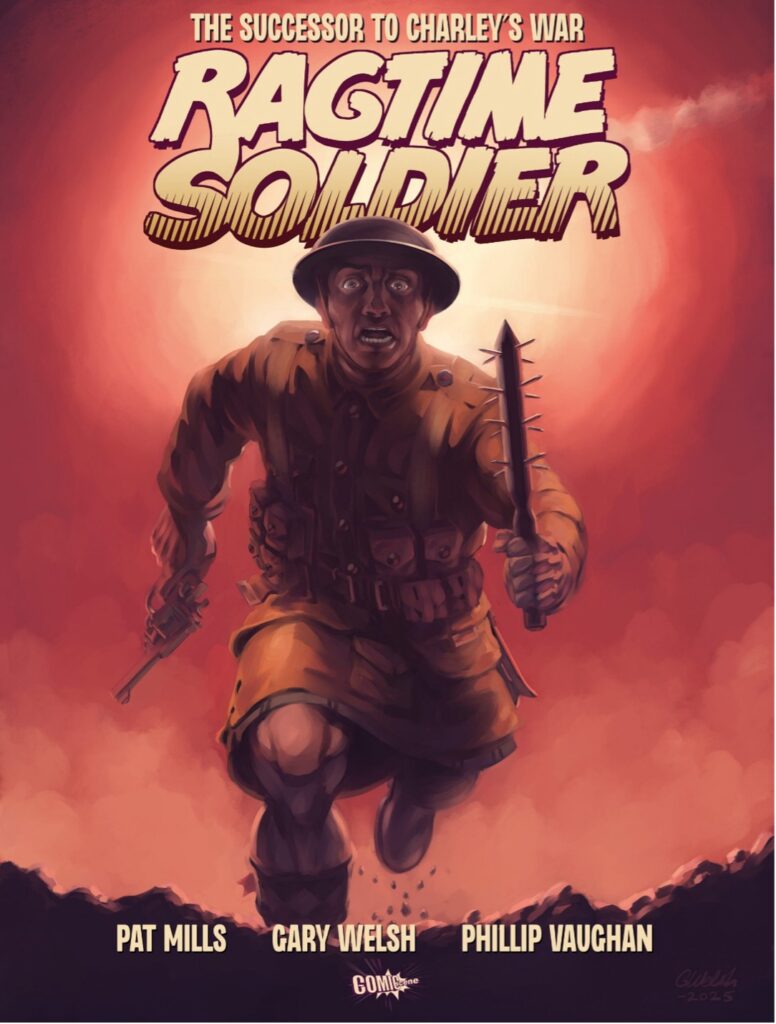
PM: Love to! Thanks. Ragtime Soldier – 48-page graphic novel by me, Gary Welsh and Phil Vaughan. Ragtime Soldier is the successor to Charley’s War!
Otto Vampire Knight probably 2027. The story could be described as ’20,000 Leagues Under The Earth’ when a Human Subterrene enters Hell!
And more Requiem Vampire Knight. Plus, the Manga version of Requiem.










You must be logged in to post a comment.