

Comics News
Tripwire Asks Again: “What Makes a Good Comic Book Editor?” Part Two


Herding Cats and Performing Miracles?
In the past, Tripwire’s contributing writer Paul N Neal has delved into the details of how comics are made. He has asked about how to approach icons such as Judge Dredd, Batman and Superman. He has even asked many creators about the best Christmas comics, or simply what goes into producing a wonderful comic cover.
Recently Paul decided to pose a deceptively simple question, he asked “What Makes A Good Comic Book Editor?
To address this question, Paul asked a number of experienced artists, writers and indeed comic editors for their thoughts. A link to Part One of this article is presented below:
https://tripwiremagazine.co.uk/interview/tripwire-asks-just-what-makes-a-good-comic-editor-part-one/
As promised here is Part Two of Neal’s article.
There will be a third article in this series.
Tripwire might even share some individual and extended articles based upon the insights of these wonderful comic creators simply because they have all been so generous with their time.
To start the ball rolling, we begin with some words from a genuine comic industry legend…
***
Diana Schutz
(Comics Editor, Comico, Dark Horse Comics.
Editing American Splendor, Grendel, 300, Sin City, Usagi Yojimbo and many, many more)

What Makes a Great Comic Book Editor?
In 1985 I edited my first comic book, and over forty years later—with almost as many years of hiring, and sometimes firing, the multiple assistant editors I trained along the way—what has not changed about the job is this: it’s bloody hard! And not for the faint of heart.
Shelly Bond, who excelled as my assistant in 1988 and went on to her own sparkling career at Vertigo/DC and beyond, writes that the editor’s “ultimate goal is to get the best work out of the creative team on deadline.” And there it is: the rub. Best work vs. deadline. Art vs. commerce. In between a rock and a hard place, baby: that’s where the real editors live!
It was Jack Warner, founding partner with his siblings of Warner Bros., DC’s parent company, who said, “I don’t want it good. I want it Tuesday.” Early on in my own career, I famously wrote, “I want it good and I want it Tuesday!” Because Shelly is right: while the details might vary from company to company, the editor’s job overall is a combination of quality control and project management.
As a project manager, you’re a troubleshooter and a multitasker. When it comes to the typical monthly comic book, created via group process—or, more unkindly, assembly line—the editor must juggle a multitude of different jobs by a multitude of different creators with a multitude of different deadlines, so it’s absolutely crucial to think on your feet: to identify, analyse and solve all the problems that crop up—and they will! —from the initial idea to that printed comic book on the stands. Extreme organisational sensibility is a necessary skill.
But Jack Warner notwithstanding, all that effort doesn’t mean a damn if the comic’s not worth reading—a fact too often forgotten by corporate publishers. The independent publishing movement of the late ’70s and early ’80s was intended as an industry sea change: with publishers becoming creative stewards of artists and their work, the editor’s primary responsibility shifted from the publishing company to the creator. Now, the onus is on the editor to do whatever is necessary at the publishing end to help realize the individual creator’s unique vision—Matt Wagner’s career-spanning concept of Grendel and its many iterations; Frank Miller and Lynn Varley’s singular approach to the story of 300; decades of Usagi Yojimbo filtered through the exclusive eye of Stan Sakai! Every editor, like every creator, has an individual style, but the goal should always be to adapt that style to the needs of each creator. There’s every reason not to put your creators in a box, especially if you want to encourage their creativity, so you give them what they need, not what you need. It’s never about you. It’s always about them.
In the past, when asked what makes a great comic book editor, my response—as a working editor—inevitably began with attention to detail and strong organisational abilities. I’d also mention social skills, because editors have to talk to their creators! And editing comics—as opposed to prose—requires a grounding in both language and art, along with a sense of comics history as well as an awareness of contemporary creators and an understanding of the business of publishing, since editors are businesspeople, after all.
But now that I’ve spent the last ten years working freelance, translating French and Spanish graphic novels into English, I’m on the other side of the editor’s desk. And from this new perspective, I have to say that there is nothing more important to me, as a freelancer, than communication with my editor—though the hostile takeover of that communication by electronic mail serves neither of us. When it comes to deadlines, of course, emails are easy to dodge. More importantly, however, building a personal relationship with one’s creative partners is a critical aspect of the editor’s work, and email’s a big fail in that regard. It’s useful as an adjunct to the telephone, but not as a replacement. And by the early aughts, we had bred an entire generation of junior editors who either refused to or were no longer able to speak to their creators!
Editors are a freelancer’s lifeline: our connection to the outside world and a gauge of the publisher’s interest in the project to which we dedicate every single moment of our working life. If the editor doesn’t know enough or care enough about our work to engage with us personally, then what on earth is the point? As a freelancer, just knowing that I’m not working in isolation knowing that my editor is there and vested in the work I’m doing—makes a huge difference! To both my output and the quality thereof.
—Diana Schutz
© March 2026
***
Tom DeFalco
(Writer, The Amazing Spiderman, Thor
Marvel Editor in Chief 1987 – 1994.)
An editor must be an eternal student of his/her craft and an objective reader of every specific project. An editor’s job is to make sure that the project is clear, understandable and as good as it can be within the time and budget allotted to it.
When editing established IPs, the editor has the additional job of determining if this project adds to the IP—which should be the project’s goal—instead of subtracting from the IP or merely treading water.
Also, consistency is the most important quality needed to make a good editor-in-chief—consistency in editorial vision and temperament. My team always knew where they stood with me. They knew how I would answer most questions before they asked. They also felt free to approach me if they had any kind of problem.
Editors edit individual projects. An editor-in-chief edits the editors and should rarely, if ever, edit an individual project. I didn’t edit a single project during my time as editor-in-chief and didn’t even read most of our comics.
The comics I did read usually fell into two groups. The first was a title that was declining in sales. Mark Gruenwald and I would gather up a run of the title and try to figure out why the sales were decreasing. The second group was a random pull of titles that Gruenwald and I would read—just to make sure that every individual title was clear and understandable to someone who wasn’t following it on a regular basis.
An editor-in-chief must provide clear editorial guidelines as well as a stable and nurturing environment for his/her editorial team and creative community. We provided our editors with a simple list of dos and don’ts. I also did my best to shield my people from the vagaries of the sales department and upper management but doubt I was as nurturing as I could have been.
While an editor must focus on the project in front of him/her, an editor-in-chief must keep his/her eyes on the future, looking six months, a year, two or three years ahead. A big part of the job is anticipating new trends and popular tastes as well as planning new titles and projects—like the Marvel Masterworks, our poster programme and magazines like Marvel Year In Review.
When you’re in any kind of business, you’re either growing or shrinking and I wanted Marvel to grow. I remember when I first proposed a trade paperback programme that produced a new book every other month. The sales department told me that six new trades a year was too much for the market. These days more than six are released every week.
***
D G Chichester
(Writer, Daredevil, Nick Fury: Agent of SHIELD
Editor, Epic Comics: Stray Toasters, Marshal Law, Groo the Wanderer.)

Editorial Vision?
A good comic book editor is a shepherd. That’s the essence of what you want to be. Or at least the essence of what I tried to be! You’re not there to get in the way but to make the right selections of talent and help them realize the best version of their vision.
When working on a company-owned property like Spider-Man, Captain America or Daredevil, you are assembling the team. It’s not just about filling the queue with issues; you should have an understanding, respect, admiration and excitement for what those people will bring to the title. In consultation with the team, you’re helping them bring that vision to life. This doesn’t mean they can do whatever they want. If they stray from their intended goal, it’s your job to steer them back on course.
As an editor, you are a steward of the character and a guide for the creative team. Now, sometimes changes along the way do happen. If a team becomes disinterested or incapable of realising the initial vision, it’s your responsibility to either get them back in line or find a new team. There’s also a fair bit of project management and being a creative linebacker, ensuring the creative team can keep creating without being bogged down by external drama.
From a creator-owned perspective, where most of my experience lies, it becomes something else. The creative team owns and develops the property. As an editor, you’re still a steward, consulting with them on what they want out of the book and correcting them if they go off track. Some teams respect this input; others do not.
For example, one team made it clear they didn’t want my input. Because it was a creator-owned book, they could dismiss my suggestions, which in my opinion led to some storytelling confusion that could have been avoided. My role shifted to keeping them on schedule and ensuring production quality.
In contrast, Bill Sienkiewicz’s Stray Toasters was on a whole other level. Bill wanted input and feedback throughout the process. We had many discussions during and after work hours to help him achieve his vision, where I was glad to be a valuable sounding board and guide.
Somewhere in the middle is the example of my work on Clive Barker’s Hellraiser books. Despite being an established IP, there was more creative collaboration than I expected. Clive wanted input on adapting his properties to comics, and we worked together with Archie Goodwin to create the foundational ideas for what the book would be about — how it would be like the movies and where it would be different, what new elements would be introduced and what would be expected of creators.
In that instance, as an editor I set the identity of a title and enlisted what I hoped to be the right talent while keeping them true to the story world’s guidelines. Some creators took those opportunities to brilliant new places; others stumbled badly and produced offensive work that needed to be stopped or dismissed. So, I guess you can add “arbiter of good taste” to the shepherd/steward label system!
Ultimately, a good editor promotes creativity. Even when people lose sight of it, you must keep your eye on the goal and horizon for the entire team and title.
***
Jeff Mariotte
(Writer, Desperadoes, Buffy The Vampire Slayer, The Shield.
Editor, Wildstorm, DC Comics and Editor in Chief IDW Publishing.)

I’ve been asked to offer a few thoughts on what makes a good comic book editor. I was one for a while (a comic book editor—whether “good” applies is for others to judge), and I still dabble in it today. I was a senior editor at DC Comics and the first editor-in-chief at IDW Publishing, so I have some experience at a very large company owned by a media conglomerate and a considerably smaller, privately owned one to draw on.
I think the most important quality in a comic book editor is a willingness to find out.
You don’t know—you might think, but you don’t know—whether any given comic is going to work. You might have access to the hottest writer in the business and the hottest penciler in the business and think surely, this will be a huge hit.
But you might be wrong.
The artist and the writer might function on different wavelengths. They might have different cultural understandings, so when the script calls for a handsome, wealthy man, the artist’s idea of that character might be completely different from the writer’s. Or the writer likes to write in full script, giving detailed description of every panel on every page, Alan Moore style and the artist might feel that her contribution is thus diminished and not bring her A-game to the page. Any number of issues can arise. Throw in an inker, a colourist and a letterer, and you’ve got that many more personalities potentially getting in one another’s way.
Or they might mesh beautifully and deliver brilliant work. You don’t know until you know. And the editor has to be okay with that.
A good editor should be open to discovering new talent. And a good editor should be open to work from a long-time pro who the current generation seems to have passed by. Both of these mean the same thing—a good editor should be open-minded, willing to consider work from anyone, even if they’re not the current rage.
What else? A good editor should be picky. Patient. Pushy. Able to communicate with people across the desk or a thousand miles away. Willing to go to the mattresses to defend the right story if corporate wants to kill it. Comfortable going to the local comic shop to see what everybody else is doing. And dedicated to the medium, with a sense of its history and hopes for its future.
***
Baden James Mellonie
(Writer, Edge of Extinction.
Co-Editor Shift Magazine.)

What Makes A Good Comic Book Editor?
I’ve been editing comics since 2011, which is as long as I’ve been writing them. A great editor needs to be good at managing people. Often the creative team are widely differing personalities and you have to funnel everyone’s energies into a creative outcome, with minimal damage to any roadside vehicles. So, you have to be able to communicate effectively and be able to support and reinforce what the vision is for the defined project that you are working on.
You’ve also got to be able to say no. Sometimes dialogue doesn’t work, the page doesn’t flow, the panels to action ratio doesn’t quite fit. You have to “see” the script, read it and project it into reality, in my case widescreen. If i can work through that script and visualise it I can see the outcomes. Then the art, sometimes that needs to be critiqued. An artist, for me, has to tell the story, so that process, of making the mundane feel important, is vital to the story. The artist’s vision has to fit with the perceived outcome from a writing and editorial perspective. Lettering, colour pages or black and white, the covers, book design, logo, depending on the gig all have some input from the editor.
I look at a comic book in the same way I watch a movie. I want it to flow, effortlessly from start to finish. I want to be entranced, engaged, amazed and drawn into the world that has been created and the story that has been written.
It’s a great job. And I’m lucky enough to edit for Shift, Shift Presents and Eighth Continent Publishing.
***
Colin MacNeil
(Artist, 2000AD, Judge Dredd, Magic The Gathering, Warhammer 40K.)

WHAT MAKES A GOOD COMIC BOOK EDITOR?
Other than, someone who employs me, what does make a good editor?
I think it all comes down to one basic thing. A good editor cares about the comic they’re editing. Now they can care due to professionalism or care due to being really into whatever the comic is about, but either way it’s all about caring. Caring about putting the right writer with the right artist on the right story. Caring about the past of the comic just as much as caring for its future. Caring for the readers of the comic, both old and new. … And those yet to be readers.
So, what does a good editor need to be? They need to be a tyrant, a peacemaker, a thinker, a doer, knowledgeable, intuitive, cautious and daring. They also often have to be an octopus too; with all the different things they have to juggle in order to get a comic out.
Above all, they have to care. If they don’t care, then it will show in the comic. If the comic doesn’t care for itself, then why should the readers care? If the readers don’t care, they don’t buy it and you won’t have a comic anymore.
The motto of the Special Air Service (SAS) of the British Army is “Who Dares Wins”.
In my opinion, the motto for a good editor should be “Who Cares Wins”.
***
Stuart Moore
(Writer Marvel Comics Civil War novelisation.
Founding Editor DC Comics Vertigo Imprint.)
The most important skill for a comics editor is knowing when to dig in and get your hands dirty, and when to sit back and just let the work come in. Some creative teams work best when left alone, while others require careful managing at every stage. The best editors in the business judge every project on its needs and proceed accordingly.
***
Dave Elliott
(Publisher and Editor Atomeka Press.
Editor, A1 Deadline revival.)
Depending on where you work, editing can be fairly easy or really hard.
I didn’t go to comics editing school because there wasn’t one. I got my O and A levels in English and English Lit but I was focused on trying to draw at the time. It was only when I first started in comics, where my first work was editor and art director for a reprint line of comics, that I started to learn what made a good editor.
A lot of it was recognising what you had already seen and appreciated in comics, but I now started to understand the art and skill of what gave you those thrills on every page turn. Even in a reprint of a strip, you have to make sure to keep those page turns that give you the same impact or you start spoiling a lot of surprises.
Being a good editor is a delicate balancing act. You’re there to please your publisher and possibly senior editors, but you also want to have a good relationship with the people who are working on the comics you’re editing.
When you start work editing a book, don’t pry into the creator’s private lives. As they get to know you and like you, they will let you in or not. If they don’t, do not take it personally; many are very private people and want to keep it that way. Build their trust but don’t lie to them. I’ve occasionally been in the middle between a creator and a publisher where there’s friction and have had to find ways to protect the creator from an unreasonable publisher (and keep my job).
If you’re working with a creator on a creator-owned book, it is different. You’re there to help them do THEIR book. If you know them well and feel they won’t mind, try giving them feedback if you think it will benefit their book. Definitely let them know if you spot something wrong. It’s a delicate balance, but as you get to know each other, the work will get better for both of you.
As an editor, you might find that the expansion in your duties might come from unexpected places.
I once worked on a series that would be owned by both the creator and the publisher. We both knew each other, and as a lot of the projects I was working on were with screenplay writers who needed a lot of input into their projects, this creator knew about it, so they asked me to just let them do their thing.
They knew what they were doing and had the ending all worked out, even though it wasn’t in their outline. As the series went on, the creator warmed up a little, and we discussed the characters, the world, and the ending, but they never let on what that was. When we started on the last issue, and the artist was waiting for their script, I received the first three or four pages of the script with a note that they didn’t have an idea how to end it, and with other deadlines pulling at their time and headspace, they asked if I could finish it for them.
I wrote it, they approved it, the artist drew it, the creator got paid for it and even my partners didn’t know I’d done it. Doesn’t happen often, but shit happens, so be prepared.
I also strongly believe that the best editors are either creators or have tried to be, and understand what it takes to write/draw/colour/letter, etc. Knowing what you’re asking of a creator is important to understand, especially over holidays.
I’ll never forget getting a few notes from an editor at 3 PM on a Wednesday before a Thanksgiving holiday to have something finished by Monday. These were redoes on a project that was already finished, so it had to go to the printer on Monday. First issue of a new book. I sent him back a couple of questions by 3:10 PM as his notes weren’t clear. They’d already left the office for the weekend. I sent them pages as they came in over the next few days, to no reply. Fortunately, we guessed right, and there were no issues with our corrections, but if you’re going to ask people to turn something around over a holiday weekend, be available to answer any questions and give feedback. It’s the least you can do.
I mentioned a couple of paragraphs back about working with screenplay writers doing comics. As ‘Editor’, I have often had to ‘Direct’ a writer’s script into graphic novel form.
Film scripts and comic scripts are very different. Film scripts are usually devoid of any direction and detailed description because you are meant to leave a lot open to interpretation. You want to allow a director to see where they can assert their vision on your story. Start putting in points of view and tight character descriptions and you’ll put people off even wanting to show it to a director.
In comics, you have to be the writer and the director, as well as the cinematographer. A good artist will be able to work some of it out for themselves, but you need the script broken down into pages and page turns.
As editor on some of these projects, I had to break down the screenplay into pages, giving direction, including colour notes for the artists to work from. Often, an artist will come back with something better than what was written; it can sometimes be a fight to keep their changes. If you fight for them, it will be appreciated.
At the end of the day, a good editor has to be a good listener. Know when to step in, and when to step out. You’re all working on making something the best it can be.
And remember your audience.
***
Larry Hama
(Writer, GI Joe, Wolverine.
Editor, Conan, The ‘Nam, Crazy Magazine etc.)

The perfect comic book editor would be somebody who has hands-on experience drawing, writing and colouring sequential storytelling. We have to settle for what we can get, which these days, for the most part are well-meaning enthusiastic dilettantes.
The vast majority of current editors are writers. It’s very hard to think of a contemporary editor who can draw or can tell a story with a series of images. This poses a problem when dealing with a visual medium like comics wherein the pictures are supposed to tell the bulk of the story.
Comics are not illustrated prose. The magic lies in what happens between the panels; the images we see in our heads that bridge the gap- the implied images that are the grout between the tiles, the little imagination triggers.
On the first monthly comic I pencilled, I was literally given a three-paragraph plot, related to me over the phone. From that, I had to draw a 20-page story (this was called “Marvel Style”) I was doing most of the work of the writer and getting paid half of what he was getting.
I could at that time barely finish a page a day whereas the writer was knocking out 2-3 twenty-page stories a week. That was when I set about trying to get writing work- but all the editors were writers and they actively discouraged artists from writing, because that meant less work for them. It took me over ten years to break through that glass ceiling and it was only because every writer in the industry turned down doing a certain toy-licensed book.
I was a full editor at that point, and I had asked every editor for script work and was turned down. I was the last person they asked to write the licensed property, and I took it. A year later, that book was outselling X-Men in subscriptions. The editors told me it was a fluke.
Finally, they gave me a title that was teetering on the edge of being cancelled. A year later it was the number 2 selling book. I was told that was a fluke as well.
This is probably beginning to sound like I have a poor opinion of editors overall, but that is not true. There were definitely editors out there who knew what they were doing and had integrity. Archie Goodwin, Louise Simonson, Joe Kubert, Joe Quesada, Annie Nocenti, Carl Potts, Al Milgrom and Jeff Rovin come to mind. But I have had numerous mind-numbing experiences with editors who didn’t have a clue about visual storytelling and could not visualise a scene from a written description.
I was given a script once where the writer called for a panel in which one character is looking out of an office window thirty floors above the street and spots another character coming down the sidewalk who is passing a trash can in which there is a newspaper, with a bold headline and the character is reacting in shock to the headline.
I called the editor who bought that script and told him that the panel was impossible to draw. The editor did not understand why. “It’s perfectly clear and written out for you!” When I explained that all that data needed at least three frames to make clear, he told me that he was the editor and I was just a hired gun.
Also, IMHO an editor’s job is to have taste and to hire the right people for the job, and let them do their thing. I have noticed that those editors who ask for massive corrections seldom improve the finished work.
***
Mark London
(Founder, CEO, Chief Creative Officer Mad Cave Studios.
Writer, The Underworld Universe.)
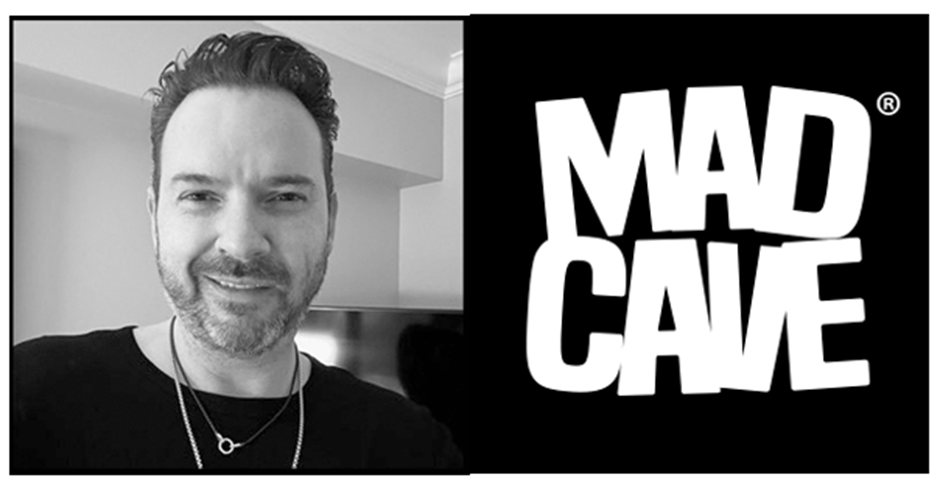
There are no bad writers, just bad editors… I’m kidding. Ask ten publishers and you’ll get ten answers. Here’s mine, earned the hard way: a great comic book editor is one of the most undervalued jobs in this entire industry and when you find a great one, you hold on to them like gold.
Writers fall in love with words. Artists fall in love with images. Everyone else on the book falls in love with their own piece of it. An editor has to fall in love with the story, the thing that exists between all of it. That’s the first thing. If your editor can’t tell you, unprompted, what your book is really about in one sentence, they’re not doing the job. They’re simply scheduling it.
The best editors I’ve worked with see the whole building before a single panel is drawn. They’re thinking about structure, pacing, whether issue three earns the twist in issue five. They know the difference between a script that reads well on the page and one that will actually translate into sequential art, which, trust me, are two very different animals. But in the same breath, they’re managing human beings: writers, pencilers, inkers, colonists, letterers and each with their own anxieties, deadlines, insecurities and occasionally egos that need to be gently walked off a ledge.
A great editor knows when to push and when to back off. They know the artist whose pages get better when you leave them alone, and the writer who needs a 30-minute phone call before every draft. They give notes in a way that lights a fire without burning the house down. You don’t learn that in a classroom. You learn it by caring about people and by getting it wrong a few times first.
And they’re doing all of that across borders and time zones, which is something people outside of comics don’t always appreciate. This is the most collaborative medium on earth. You’ve got a writer in San Diego, a penciler in Madrid, an inker in Manila, a colourist in Buenos Aires and a letterer working at 2 AM somewhere in between. The editor is the thread that pulls all those voices into one voice.
They carry the writer’s intent to the artist and the artist’s instinct back to the writer. They make sure the colourist understands the emotional tone of a scene, not just the palette. When a book feels cohesive, when it sings, that’s almost always because an editor was relentlessly holding the line on vision. And nobody sees it, because great editing is invisible. That’s the whole trick.
Here’s where a lot of editors fail, and I’ll say it plainly: a great editor protects the book from everyone. Including the publisher. Including me. If I come in with a bad note, I want my editor to push back. If marketing wants to change a cover for the wrong reason, I want my editor to fight for the art. If a deadline is going to wreck the quality of the storytelling, I want them to raise the flag before it’s too late, not after. An editor who just says yes is worse that’s no editor at all; that’s basically a rubber stamp with a title. The job requires a spine. At Mad Cave Studios, I try to build a culture where that spine is rewarded, because the book is what matters. Not my ego. Not anybody’s.
Underneath all of that, the best editors I’ve worked with share a few things. They read voraciously, and not just comics, but novels, screenplays, history, poetry, the backs of cereal boxes, whatever. They understand that great comics come from great culture, not just from other comics. They have taste, which is something you can’t fake and can’t really teach, though you can sharpen it over time if you’re honest with yourself about what’s actually working and what isn’t. And they have stamina, because this job will ask more of you than you can possibly imagine and the rewards outside of the work itself are mostly invisible. The book comes out.
The writer gets the reviews. The artist gets the Eisner nomination. The editor quietly moves on to the next project. That’s it, that’s the gig. If you need the spotlight, go be a writer. If you want to build something that lasts, learn to edit.
I’ll give you a real example. Mike Marts has been helping me shape the Underworld Universe from the beginning and I don’t think most readers understand how much of that world exists because of the work an editor does behind the curtain. We started by crossing over the first three books, Revolution 9, Hour of the Wolf, Exit City, into Endless Night, and now we’re launching Phase 2 with three different IPs and three different characters running in parallel. That is not for the faint of heart.
When you’re building a whole universe instead of a single book, every decision you make in issue one has consequences two and three years out. You have to look ahead, get the right teams on the right projects, and keep the tone consistent across creators who have never even met each other. An editor who can hold that much in their head at once, while still giving each individual book the attention it deserves, is the reason a shared universe holds together instead of falling apart. Mike does that, and then he does it again the next week.
We’ve been lucky at Mad Cave Studios to work with some of the best in the business and I’ve watched what a great editor does to a good book. They don’t fix it, they elevate it. They find the story that has always been hiding inside the manuscript and pull it into the light. That’s the difference between a book that comes out and a book that lands. And in this industry, right now, with everything shifting under our feet, that difference is everything.
***
John Anderson
( Editor, The Beano 2016 – The Present Day.)
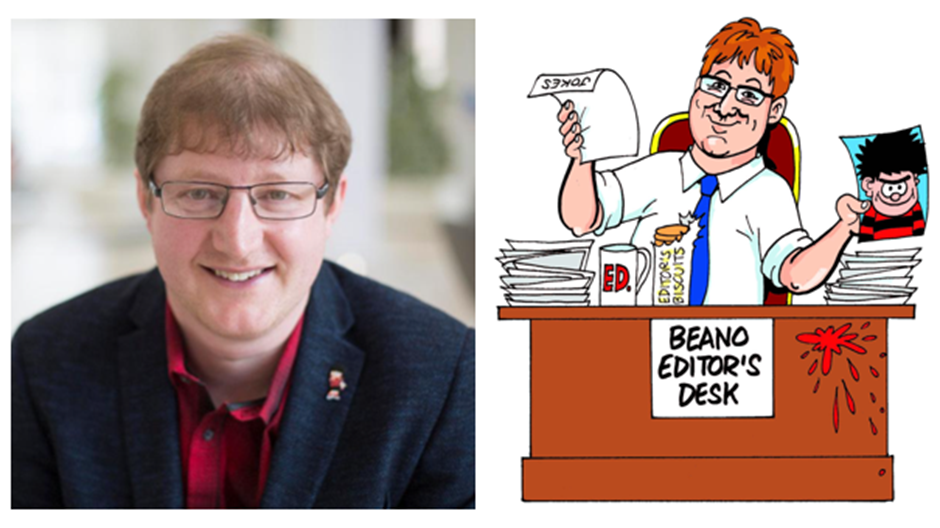
NOTE: The art above is by artist Nigel Parkinson and used with Tripwire’s thanks.
‘What Makes a Good Comic Book Editor?’ is an extremely loaded question and the best place you’ll find an honest answer is by asking the audience, I guess. I can provide insight into what I do and why but judging the success or otherwise isn’t really in my gift, that really belongs to the kids who read, laugh and see themselves in Beano every week.
There are two threads to being Beano editor: in some places, these threads overlap and in some places they don’t, but let’s get the boring thread out of the way first… the logistics. I don’t think I’m telling anyone anything they don’t know by saying we don’t finish issue A of Beano and immediately start on issue B. In any given week we can be working on as many as ten individual issues at the various stages of production, with editorial planning starting around three months before the sale date. That’s a lot of Dennis the Menace comic strips occupying your headspace at the same time, which feels appropriate, given it’s his Year of Mischief. As such, the threat of the wheels coming off is a very real and very present danger (or at least it feels that way some weeks), that informs virtually every other consideration.
Being organised is a prerequisite. Simply, time is the one thing you always want more of but never have and why an experienced team is a necessity. I’m very lucky on Beano to have colleagues who have racked up more years than they’d be happy to admit, but with that experience comes a muscle memory that make sure the basics are done at speed, volume and at a standard that allows you to create space to enjoy the ‘fun stuff’, or the second thread I alluded to above – the part where the comic really comes alive for the people reading it.
Beano editors are a bit like James Bond actors… there isn’t very many of us and you know that Beano was here before you and will be here after you as well. So, you have a legacy to respect as well as one to pass on, and part of that is making sure each new generation feels like it belongs to them just as much as it did to the past, especially as so many people share the love for Beano with the kids in their lives.
And you have an audience which, while changing with every generation of kids who pick it up, is also very invested in what you’ve done before. It’s easy to think Beano is the same artefact as it ever was, and while that’s true in the general sense, it isn’t so much in the specifics. The content is subject to a constant evolution as it responds to the changes in tastes of that audience. That evolution comes from listening to kids, hearing what makes them laugh and what they want to see more about, because at its heart Beano is all about reading for fun and giving kids the space to make some creative mischief along the way.
We maintain a dialogue with our readers through their correspondence with the team. In the vast majority of cases, if you write to the Beano editor, I’ll read it. And as tastes change, we respond to that… although in most cases the readers reinforce things that were already swirling around your head.
I’m never not surprised to be reading a Beano from ten or even five years ago and realising that, while the changes you implement seem small scale at the time, over the longer term all these incremental changes add up.
The biggest of recent years was the passing of David Sutherland, which even in hindsight still feels like an epochal shift. Originally working for Harry Cramond in the 1961, Dave, as the team knew him, was the last illustrator to deliver physical artwork to the office, with the rest of the contributors having long-since transitioned to digital delivery. That legacy is in play here too – in most cases Beano illustrators are a self-selecting bunch and will have been readers themselves – with a Sutherland influence on their work. The balance for me isn’t to capture the Beano you remember reading, so much as how to capture that love in the spirit rather than the letter of what you do, so that today’s readers can feel that spark in their own way.
It goes without saying that the current generation of writers and illustrators are a very talented bunch who’ve been doing it for long enough and to a high standard that in many ways I simply have to keep out of the way… or at least provide them the space to do their best work (which is sometimes easier said than done on a weekly schedule). You don’t just have to be very good; you also have to be very fast. And you don’t just have to be very good and very fast; you also have to capture the ineffable Beano essence too.
Then finally there’s judgement. And I don’t just mean about whether the jokes are funny enough or whether we’ve got the colour of Cuthbert’s cap right – I mean around what’s important to the audience. We’ve established time is tight. So, the key component on an editor’s judgement is whether the cost of time and resources is towards something the audience either cares strongly about or will notice, whether it adds to their enjoyment, their mischief, or that feeling that Beano is really for them. If it is – it’s worth doing. If it isn’t, you’re giving up time and money for something irrelevant.
Reading this back makes it seem like being Beano editor is a very serious job. And you’d be right – making kids laugh is very hard, and I’m very serious about it! But on the other side of the ledger is when you do make the kids laugh, when you hear from them, see what they send in, and realise they’re finding their own voice, humour and mischief in those pages – which is the key metric of success ultimately.
***
John Higgins
(Artist, Judge Dredd, Before Watchmen, Razorjack.
Colourist, Watchmen, The Killing Joke.)
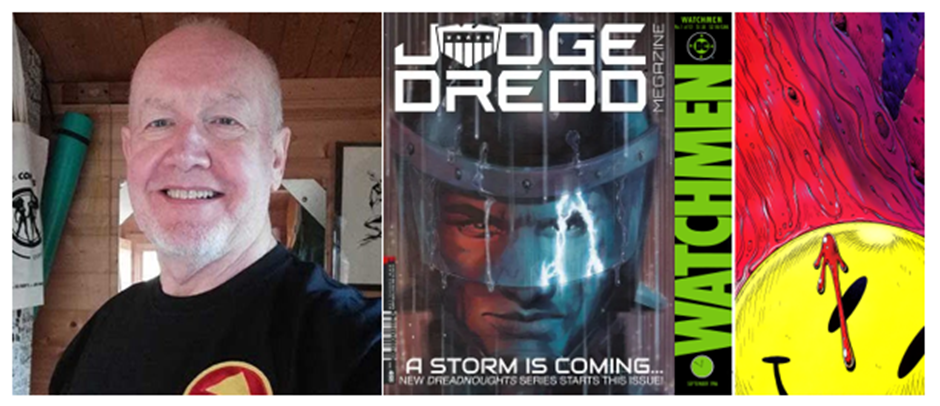
I have worked with some of the best editors in the business: Archie Goodwin, Karen Berger, Axel Alonso, Steve McManus and many more. The interesting thing about good editors is they need to have many attributes that also make great freelance creators. To be visually literate, to write to a high standard, to be a comics fan, to be a great motivator, and to have a fresh eye to be able to read submissions and see its strengths beyond it just being a good story in words.
One of the first jobs I had was illustrating children’s books, on asking for directions on the level of horror depictions I received a letter from the editor Marion who wrote, when she said, “not disgustingly gory” she meant blood and gore rather than not too scary; “maggots in eye sockets would be fine.”
I just love that final line.
The other was on the Jacked mini-series from DC comics written by Eric Kripke, in the mature line. This direction was a discussion between editors, and the directive that came back to me, “take the tiara off the porn star!” This might seem like a non sequitur, you just need to read the comic!
***
Glenn Greenberg
(Writer, The Spectacular Spiderman, The Rampaging Hulk, The Silver Surfer.
Editor, Incredible Hulk v Superman, X-Men Manga etc.)

“What Makes a Good Comic Book Editor?”
If we’re talking about editors of corporate-owned comics—as in, comics published by Marvel, DC, and other major companies that own the properties outright— First and foremost, good comic-book editors hire creative teams for each book the way a director casts a movie. They get the people who are best suited for the specific material, rather than just plugging in any warm body or some drinking buddy.
Following that train of thought, once an editor gets the best people, the right people, for each title, that editor should then get out of their way and let them do their jobs. That doesn’t mean take a completely hands-off approach.
The editor should be there to offer guidance when it’s asked for, to point out and/or correct mistakes—typos, continuity errors, lapses in story logic, etc.—or to make suggestions that could improve the work. And the editor must be able to rein in the creative team if they go too far—because, in the end, it is up to the editor to determine what is “too far” and ensure that nothing objectionable or inappropriate gets published that could hurt the title—or, by extension, the company. One of the most important qualities for an editor to possess is good judgement.
On the other hand, the editor must be open-minded and willing to let a creative team take some creative risks in order to draw more interest—and therefore more readers—to a title. Again, this is where good judgement comes into play. It is necessary for the editor to be able to determine what is a strong, bold, fruitful creative risk that could rejuvenate a title and position it for long-term success, and what is nothing more than a shock-value move that would bring only fleeting attention.
It is the editor’s responsibility to know and understand the core concept, the history, and the characters of the titles on which that editor is working, and to uphold—or exceed—the standards that had previously been established for those titles.
Furthermore, one of the primary responsibilities of the editor is to always be thinking of ways to maintain or raise the sales figures. This sometimes involves the difficult task of removing a writer or artist from a title, as it may be a necessary step to ensure the longevity of the title and possibly even the editor’s own job. It is very important that the editor always use the power to remove people from a title judiciously—only when it is clear that creative differences cannot be resolved for the title’s benefit.
Good editors are able to conceive and develop projects that have the potential for critical and commercial success. They understand the marketplace, the audience, and current trends, cultural and sales wise.
On a practical level, good editors have strong organizational skills so that they can get their titles produced and published on time. They have to be flexible and adept enough to take whatever steps are necessary to stay on schedule, even when members of the creative team fail to deliver their work on time.
And, of course, they need to be able to work with other people.
***










You must be logged in to post a comment.