

Comics News
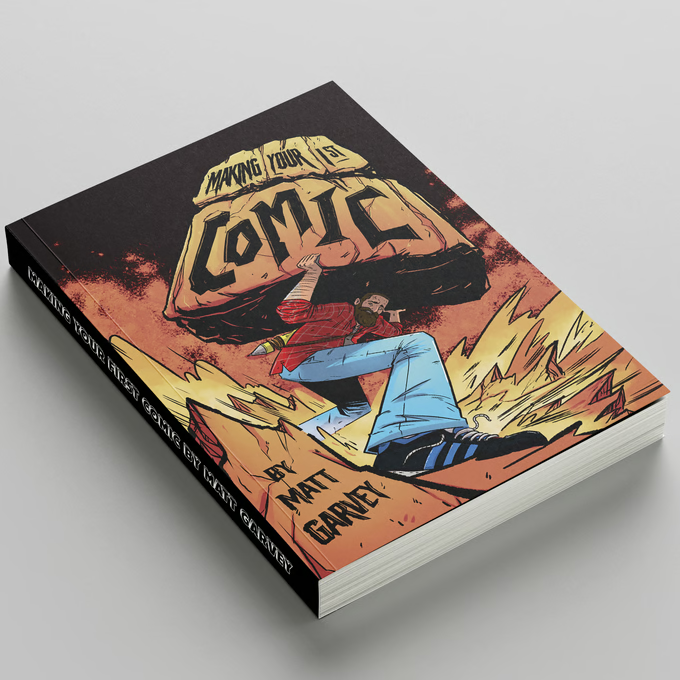
Matt Garvey Talks How To Make Comics: A no-fluff step-by-step Guide! On Kickstarter Now


How To Make Your Comic Creating Dreams A Reality
UK indie veteran creator Matt Garvey has launched his latest campaign, a book entitled How To Make Comics: A no-fluff step-by-step guide, on Kickstarter and Tripwire’s editor-in-chief Joel Meadows spoke to him to find out more…
MATT GARVEY: Just like my YouTube channel, it’s come from people asking the same questions over and over again whenever I do conventions or talk about comics online. Things like: “How do you start making a comic?” or “Where do you find an artist?” or “How do you Kickstart it?”
I realised there wasn’t really a proper, no-nonsense guide out there that took you from “I’ve got an idea” all the way to “Here’s my finished comic in my hands.”
Not everyone wants to watch my channel and listen to my annoying voice…so I thought…I’ll just write the book I wish I’d had when I started!
TW: You have been running your YouTube channel for quite some time now. How helpful has this been with creating this project?
MG: Massively helpful, it was the blueprint for the book. Doing the YouTube channel (Making Comics with Matt Garvey) forced me to break down the whole comic-making process into simple, understandable chunks. It showed me which parts people struggle with, which bits need more explanation, and how important it is to make everything super practical—not just theoretical waffle. Without doing the videos first, I don’t think the book would have come out anywhere near as focused.TW: How did you approach writing the book itself?MG: The same way I approach making comics, really—one step at a time.
I sat down, went through all my videos and mapped out the entire journey someone would take from idea to finished comic, and then built the book like a roadmap. No big lectures, no fancy jargon, just straight-talking advice and exercises you can actually use.
I wanted it to feel like I was right there in the trenches with the readers, helping them push through every stage, rather than shouting advice from some high horse.How hard was it to keep the subjects included in here fit the length of the book?
MG: There’s SO much you could talk about when it comes to making comics and it’s very easy to fall down rabbit holes.
The hardest part was keeping the book focused and constantly asking myself: “Is this actually useful to someone making their first comic?”
If it wasn’t 100% actionable advice, it got cut.TW: Did you spot any other topics you noticed after you finished writing the book that you couldn’t fit in?
MG: Oh, loads and the book grew. originally it was at around 180-ish pages, but for like two weeks after i kept adding more stuff and it went to 220.
Even not, I’m like, “Ahhh, I could’ve talked a bit more about this!” or “I should have included that!”
TW: What are the five most important things to consider when launching your first comic campaign?
- Audience first, campaign second—You need people ready to support you before you launch, not after.
- Clear, honest messaging—Tell people exactly what they’re getting and why it’s worth backing.
- Manageable reward tiers—Don’t create 50 complicated tiers; you’ll drown in admin.
- Postage planning—International shipping will kill you if you don’t factor it in properly.
- Over-communicate—Updates, transparency, and keeping backers in the loop makes all the difference.
MG: Not in the main text itself—I wanted the voice of the book to stay tight and coherent, but I have sprinkled some lovely art from the books I have had the privilege to make with some of my lovely collaborators.
TW: How has crowdfunding changed and evolved in the years you have been creating your own Kickstarter campaigns?
MG: It’s definitely gotten tougher and that’s not a bad thing, because it forces people to up their game.
The bar is higher. Readers expect professional-level presentation, regular updates, clear communication—the whole package.
Platforms have also changed how they promote projects, so engagement on your page really matters a lot more now too. It’s not enough to just hit launch and cross your fingers.TW: Did you use an editor to put this book together?MG: No editor, just me. i do hope it’s readable :DTW: What is the most important thing you have learnt as a creator from running 13 crowdfunding campaigns to date?
MG: It’s never about you—it’s about your supporters.
The minute you start thinking of your campaigns as a two-way conversation instead of a one-way sales pitch, everything changes for the better.
People are backing you as much as your book, so you owe it to them to be upfront, deliver what you promise, and treat them with respect every step of the way.TW: What do you hope this book will inspire those who buy and read it to do?
MG: I hope it gives people the shove they need to stop thinking about making a comic and actually start.
If one person reads this and says, “Screw it, I’m doing it!”—then I’ll consider the whole project a success.
Making your first comic isn’t easy… but it’s doable. And honestly? It’s one of the best feelings in the world.TW: Have you thought of any future projects in a similar vein?
MG: Yeah, 100%!
Support the campaign here











You must be logged in to post a comment.