

Headlines
How Video Games Bridge the Gap Between Geek Culture and Real-World Sports

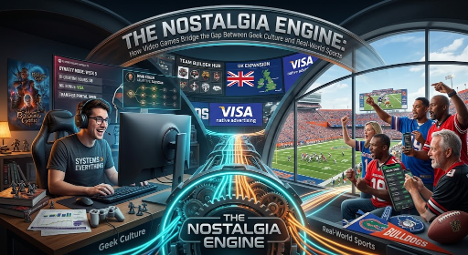
The Nostalgia Engine
The $220 Million Cultural Collision
Let’s be real about the historical entertainment landscape. Marketers spent decades treating system-obsessed gamers and weekend sports fanatics like oil and water. The industry operated on the stubborn assumption that these two demographics rarely intersected in any meaningful way. EA Sports College Football 25 took a sledgehammer to that boundary this season. Suddenly, hardcore spreadsheet nerds are transforming into actual gridiron junkies.
Look closely at the raw launch numbers, and you instantly see why Wall Street choked on their conservative projections. Electronic Arts slapped a $100 price tag on their Deluxe edition simply to grant three days of early access. Consumers did not blink. A staggering 2.2 million unique players bought into that premium tier immediately. Meanwhile, another 600,000 users slammed the servers via subscription trials right alongside them. We are talking about a minimum of $220 million in baseline revenue generated in a single weekend. That massive haul accounted for nearly three percent of the publisher’s total net bookings from the previous fiscal year.
Shift your gaze from the software revenue to the hardware market, and the ripple effect becomes even more undeniable. Console spending skyrocketed by twelve percent year-over-year in the launch month alone. Gamers aggressively upgraded their rigs just to play this specific simulator; PlayStation 5 sales jumped 25%, while Xbox Series units surged a massive 48%…
The Death of “QB #5”
Financial windfalls aside, the intense psychological hook here relies entirely on the new NIL reality. Legacy titles from the NCAA Football 14 era forced developers to populate rosters with generic, randomized avatars. Fans spent a decade throwing digital passes with a faceless, left-handed quarterback from West Virginia. The game legally could not acknowledge Pat White or any other real amateur athlete.
That sterile era of digital anonymity is completely dead. Through a landmark collaboration with OneTeam Partners, the publisher orchestrated an unprecedented opt-in program for 14,000 active FBS players. Every participating athlete received a flat $600 and a free copy of the software. Pundits correctly criticized the lack of backend royalties, but the locker rooms frankly did not care. Young athletes eagerly signed away their rights for the cultural cachet of being inside a mainstream video game. As a result, the barrier between the digital sandbox and the physical broadcast dissolved overnight.
Disguising a Brutal RPG in Football Cleats
You might think the core appeal lies in throwing deep bombs or hitting the spin button on a plastic controller. The reality is far more systemic. Analytical gamers actually live inside Dynasty Mode. This complex management ecosystem essentially functions as an intense, highly punitive Role-Playing Game.
Unlike the rigid, salary-capped corporate structure of Madden NFL, the collegiate level offers 134 distinct programs defined by total structural chaos. Gamers who usually spend hundreds of hours tweaking supply chains in strategy titles pivot seamlessly into the role of a head coach. The development team locked career progression behind strict, branching skill trees. A user must choose between archetypes like Motivator, Recruiter, or Tactician. You cannot simply grind the game to max out every attribute. If a manager prioritizes tactical on-field stats, their recruiting board inevitably suffers. This brutal asymmetry forces players to hire complementary coordinators. The act of juggling staff synergy mirrors the exact kind of party composition logic you find in Baldur’s Gate or Mass Effect.
Spreadsheets, Cut Lines, and The Transfer Portal
Recruiting logic in this title strips away the instant gratification found in modern action games. Managers receive a finite block of weekly hours to scout a sprawling national board of high school prospects. To uncover a player’s true attributes, a user must invest weeks of meticulous, procedural effort. Survival above the brutal top-ten and top-five cut lines demands constant, stressful resource management.
Let’s look at how official prospect visits operate. A devastating loss to an inferior team while a five-star recruit sits in the virtual stands will permanently tank your chances of signing him. Conversely, blowing out a fierce rival secures massive statistical bonuses. Throw the chaotic modern Transfer Portal into the offseason mix, and the stakes rise even higher. The game transforms into a high-stakes spreadsheet simulator that keeps analytical minds addicted for months.
Exporting American Chaos Across the Pond
Domestic dominance makes sense given the cult-like devotion to southern college football in America. International performance tells a much stranger sociological story. American football usually fails to penetrate Europe due to convoluted ranking systems and the absolute cultural dominance of soccer. Interactive software quietly bypassed decades of failed broadcast syndication attempts.
Consumer data from the United Kingdom proves this gateway effect beautifully. The game debuted as the seventh best-selling title in the region last July, easily doubling Madden’s initial two-week sales. European strategy fans accustomed to the systemic depth of Football Manager discovered a profound connection to the gridiron. British fans realize that American football actually operates like a violent, highly tactical version of chess. Once a player from London masters the intricate counter-plays of a Wing-T offense, their investment frequently spills into the real world. Frankly, it is entirely common now to find international players checking their digital depth charts against live NCAAF odds just to see how their favorite simulated programs match up in reality. Video games are educating foreign consumers on hyper-regional sports far better than any television marketing campaign ever could.
Native Capitalism and EA’s Shared Ecosystem
Corporate synergy naturally follows this captive, highly educated audience. Electronic Arts abandoned archaic banner ads in favor of embedding partners directly into the gameplay loop. The expansive Visa integration perfectly illustrates this modern monetisation shift. Digital athletes inside the Road to Glory career mode can accept Visa-branded NIL deals. These lucrative sponsorships provide tangible, in-game statistical boosts to the virtual player.
Over in the highly lucrative Ultimate Team mode, events force users to grind branded objectives to earn coveted virtual currency. The catch? The core audience actively embraces it. This form of native advertising somehow makes the digital sandbox feel even more authentically capitalist, directly mirroring the actual financial realities of modern amateur athletics.
Frankly, this entire illusion relies heavily on the publisher’s shared ecosystem. The decision to abandon legacy hardware allowed the studio to build an uncompromising technical simulation. Massive, interconnected datasets required to manage a 134-team dynasty run flawlessly on modern solid-state architectures. Technological innovations pulled directly from EA Sports FC ensure that stadium lighting and procedural crowd reactions look stunningly realistic. Audio samples and rendering techniques lifted from the EGO Engine used in F1 broadcast technology amplify the immersion on the gridiron. This shared technological DNA systematically lowers the cognitive barrier for global adoption.
The Autonomous Fandom Engine
Grassroots engagement guarantees this franchise will avoid the stagnation of typical annualized sports releases. The development team at the EA Tiburon studio in Orlando actively embedded themselves with local powerhouses like Edgewater High School. They actually funded the local team’s international trip to play the NFL Academy in London. Former professional players visited those local practices to evaluate kids and assign digital ratings for the game’s customisation suites.
That level of hyper-local goodwill buys incredible loyalty from the broader sports community. If you combine this organic outreach with the Team Builder web suite, the studio secures multi-year player retention. Fans can meticulously design custom uniforms down to the thread pattern, construct bespoke stadiums, and import fictional universities directly into their save files. The community dictates the lore and the geography of the simulation.
The mass market continues to prove that socially integrated, culturally relevant simulators dictate industry economics. Through the intertwining of brutal RPG mechanics with the pageantry of American athletics, developers built a transatlantic bridge for geek culture. Legacy sports broadcasters should be absolutely terrified by this paradigm shift. Within five years, live television networks will not just be competing with interactive simulators for weekend viewership; they will be forced to pay video game publishers for access to the demographic pipelines that actually sustain real-world sports.