

Feature
Flashback February: Road To Perdition Interview

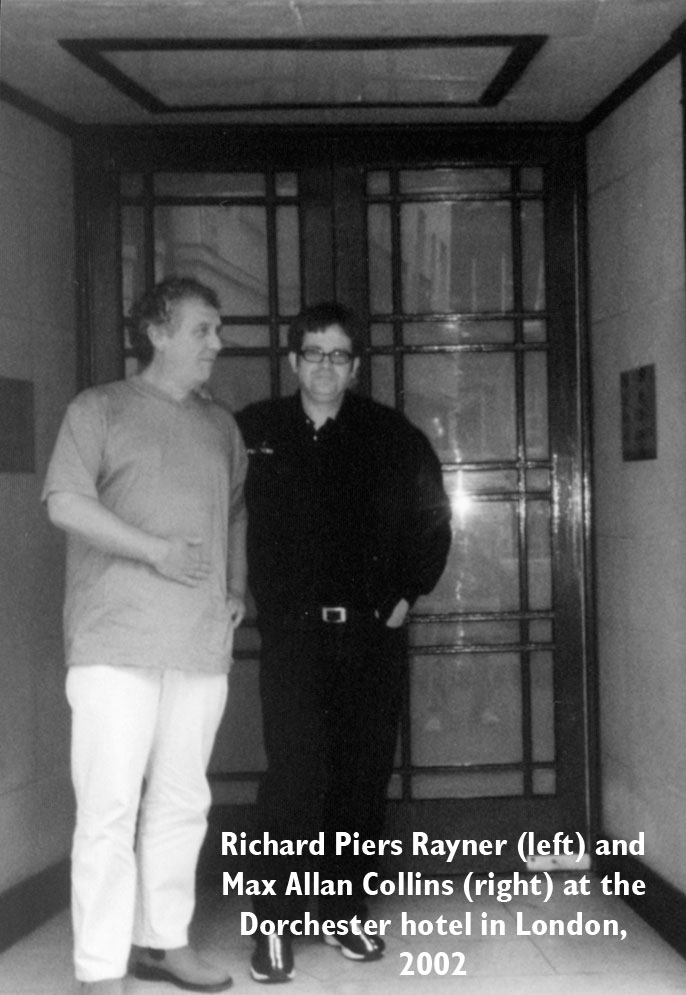
2016 is an anniversary for Tripwire. It marks the 24th anniversary of the magazine, which began back in 1992.So for the rest of February, we shall be representing some of our classic moments over the past 23 years. Many people who have been visiting the site will probably be unaware of our print history so we thought this would be a good opportunity to get them acquainted with it. So here is our interview with Max Allan Collins and Richard Piers Rayner about their graphic novel Road To Perdition coming to the big screen back in 2002, directed by Sam (Spectre) Mendes. This originally ran in Tripwirex10, our 10th anniversary book published in 2002
Road Less Travelled
MAX ALLAN COLLINS, with artist RICHARD PIERS RAYNER, talk ROAD TO PERDITION, the Sam Mendes movie based on their graphic novel
JM: Recently, Sam Mendes was criticised at the Venice Film Festival by Alexander Walker for making the film almost more amoral than the book. What are your feelings on that, Max?
MAX COLLINS: I liked the film very much and this strikes me as a question posed by somebody with an agenda. There’s been so much talk about the graphic novel being heavily Catholic. I’m not Catholic myself. The reason the characters are Catholic is because in history he would have been and that’s why I used it as a
characterisation aspect of the story and frankly the use of Catholicism in the graphic novel is primarily ironic. It isn’t, I think, any more or less moral than the film. The basic thread of O’Sullivan constantly going to confess after he kills somebody to light a candle is meant to be a hypocritical and naive act on his part, not something that
truly has anything to do with theology. So this is a misreading, a rather absurd misreading of the graphic novel. It’s true that there’s less overt Catholicism in Mendes’s movie but at the same time, we begin with a wake, with heavy religious overtones or undertones and we have a major confrontation that takes place in the basement beneath a church while a mass is underway. I just wonder what movie this guy went to?
 RICHARD PIERS RAYNER: I haven’t seen the film, being the only person in the world who hasn’t seen it. I don’t know. I’m going to go on what Max says from what I understand the way that the picture is put together. Inevitably you’re going to have differences from the source material and the thing that’s up on the screen. You take that as a given when you start, that there are going to be differences. But so far as I understand, it’s a very true adaptation.
MC: The problem with being too faithful to the source material, and not under- standing that these mediums have their own requirements, what can happen is you’ll have a film like the Harry Potter films, which is rigorously faithful to the source material and is this sterile, stillborn thing that pleased no-one. A movie shouldn’t be the Cliff Notes of the source material.
RPR: The interest has been unimaginable compared to what it would have been if it wasn’t for the movie.
JM: I was just wondering. Obviously you put Elliot Ness and Al Capone in the graphic novel but they’re absent in the movie, although Capone gets alluded to in the film.
MC: There were Al Capone scenes shot and will probably turn up on the DVD as deleted scenes. That was a tightening process and Mendes, as I understand it, really comes from the philosophy of ‘If it can come out, it should come out’ and there are people who were involved with production who are still quietly, privately complain- ing about the best moments lying on the cutting room floor. His priority has to be the film and how it plays. Basically the screenplay is 105 pages, our book is 300 pages, so it’s a matter of mathematics.
JM: Someone like Ness is very iconic. Wouldn’t it have been nice to have had him in there?
MC: If I had done the screenplay, there would have been some things from the graphic novel that were left out that would have stayed in. Whether they would have made it after Mendes went into the final cutting room is another matter.
RPR: I think my wife Bernadette had a fair point with regards to Capone being missing. Had he been in the movie, there would have been a tendency to regard it as just another Al Capone movie. So I don’t see any reason why we should be complaining about the absence of Al Capone. I am disappointed that Elliot Ness isn’t in there because I loved doing the Untouchables but that’s just fun from an artist’s point of view, as it’s great drawing historical characters.
MC: I think that what happened to Ness was the simplification of my plot and I think that was part of the compression process. Also with Ness, he’s iconic but not iconic in theway Capone is. We really know what the real Al Capone looks like and when an actor is cast as him, there’s an effort made to invoke the real Capone, but who is Elliot Ness in popular culture?
JM: I don’t know if it’s true but Sam Mendes is alleged to have dismissed the source material as ‘only a comic’ and thought that he could discard some of it.
MC: Early on, some of the participants made somewhat dismissive remarks about the source material and I just believe that’s an embarrassment, a throwaway remark. They were afraid that since the source material was a graphic novel or a comic book, this fact would have made the production seem less serious and less impor- tant. I know that David Self, the screenwriter, actually went to some of the princi- ples, including Sam [Mendes] and said ‘Really you need to be respectful of our source material’ and Self has been quoted as saying that ‘it’s a masterpiece in the graphic novel form’ so, in recent days the others have been much more complimen- tary about it. If you’re a comics fan, you spend your life apologising or explaining what you love anyway.
JM: Obviously the story’s about redemption and that’s obviously the case with both the book and the film. The comic is more like a Samurai story whereas this comes across a lot less in the film. How happy are you with the change?
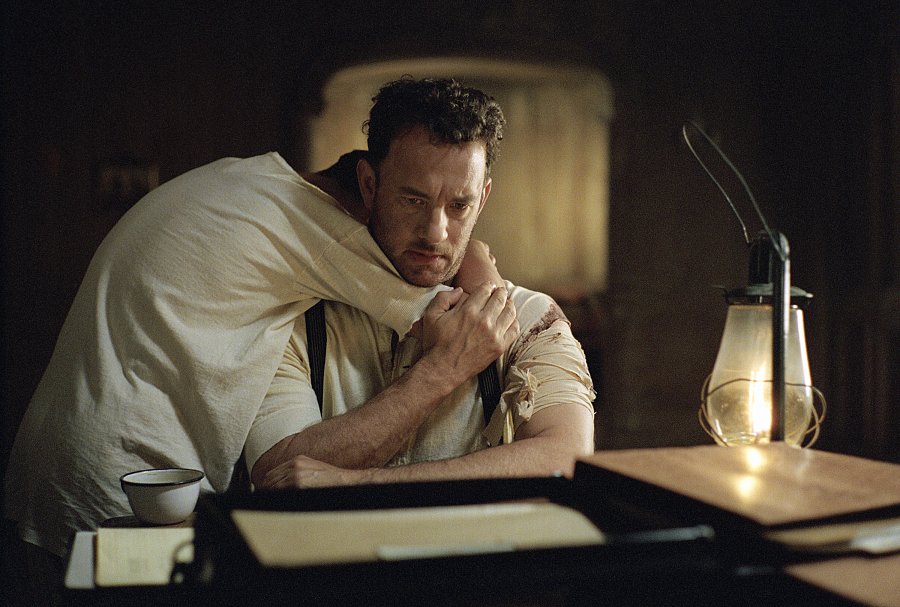
MC: Well, it’s definitely true that we conceived this as an American samurai and that aspect of it, while still present in the film, is toned down. I would have pre- ferred to have had one more gun battle. So that is one area where I would say that I’m a little disappointed but again I try to take it on its own terms and the Mendes take on this is to make it a little more real. It reminds me when people would ask: “Are you upset about Tom Hanks being cast in the picture?” And I would say “Oh yeah I was really disappointed, I was really hoping for Jean Claude Van Damme.” Get real! I believe since we took their money that it’s our responsibility to be supportive of them as long as they respect the spirit of the material.
RPR: It’s a totally new kind of source material for a movie of this type. It’s based on a comic book that didn’t have men in capes.
MC: You have such a prejudice against comics and then you have this film that comes out and looks like The Godfather and again, as you said, it surprised people in a good way but the anticipation was for it to be bad. For example, I recently had a young film maker in California make a half hour film out of one of my short stories, a very classical short story. He had been after me for years to get my permis- sion to do this. Finally I agreed to it as long as I could write the screenplay for him. So I wrote the screenplay, he shot it, he did a really nice job and he sent me the rough cut but he left my ending off. So I asked him “Where’s the ending? Didn’t you shoot it?” And he said “I shot it but I felt a little too pat for me.” But I said to the guy “Do not forget what it was about the story that attracted you in the first place.” He came back with a new cut, completely reflecting the original material. But he lost sight of it because people get embarrassed about pulp and he felt that he had to ‘transcend’ it. Pulp is a glorious thing. As we were saying the other day, Charles Dickens is pulp.
RPR: Dickens published in monthly parts and I think his first four novels were published as serials.
MC: What was much of Shakespeare but blood and thunder in its day? The audience watch people get killed. We don’t have to get embarrassed because it’s melo- drama or it’s larger than life. In fact that’s one of the reasons why comics, in recent years, are relatively untapped in the different kinds of larger than life stories.
JM: Obviously the graphic novel is gritty whereas the film looks more sumptuous.
RPR: They’re different media.
MC: I think I can take a little bit of credit for Richard’s approach because that’s why Andy Helfer, our editor, put us together. I wanted something that made you think of pulp illustrations, and classic illustrations from the Saturday Evening Post and so on, so that you wouldn’t have some of the modern amorphous junk, where there’s no sense of anatomy and linework…
RPR: Where you get things coming out of the panels. To me, that just draws attention to the artist. This had six panels per page, it’s very formal.
MC: I think you see that reflected in Conrad Hall’s cinematography, who uses the classical kind of frame. One of the things I find fascinating about the picture, is that almost virtually once a reel, Conrad Hall does something that knocks you on your butt. And once he’s done that, for the rest of the reel, he gets out of the way of the story.
JM: I thought the confrontation between Michael O’Sullivan in the street and the hoods was amazing in the film.
MC: Which is actually more like the death of Connor in the graphic novel. Another of the interesting things is that they would sometimes do something that we did in another context, which is fun. It’s funny that they were embarrassed because the fingerprints of comics are in this movie on every frame. In fact the cartooniest character is Jude Law’s character, who’s the only character I didn’t create in the picture, which means that they caught our vibe, whether they like it or not. In one place I saw Conrad Hall act like he’d never even seen the graphic novel but then I talked on the set, and people told me that there were dog-eared copies of the book being passed around the set, particularly by the camera crew. I think now that we’ve been on the bestseller list, I don’t think we’re being disowned quite as much.
RPR: That was disappointing. We were coming in at the end of the Paradox line. It was actually published after the line had been cancelled, thanks to Andy Helfer.
MC: This may sound extremely immodest but if we had been the first thing they published, it might have been a different story. Some of the strongest things came at the end.
JM: It seemed like a wasted opportunity.
MC: The problem is one of niche marketing because Pocket Books actually got our book into bookstores a bit in America and you indicated the same problem exists in the UK…
RPR: Any bookshop in the UK.
MC: Road To Perdition wasn’t put in the mystery section, next to my other mystery novels which would make sense. When they came to me, they pointed out: “You have existing readers. They’ll buy this”. Well they’re not going to buy it unless you put it in front of them and now that this book has been put in the front of the book- stores in the United States, because it’s a movie tie-in, we have a lot of what I would call civilians buying it.
JM: Do you wish that they were a bit more bold with the cover design of the new printing?
RPR: I would have loved to have done a new cover. I would have drawn Hanks. We talked about it at one point.
JM: It seemed last year when it came to the film, DC seemed reticent to bring the graphic novel back into print.
MC: They were. The retailers basically insisted and DC reluctantly brought the book out. Now Pocket Books on the other hand, who had a contract to bring it out again to the mainstream bookstores, they were eager to bring it out because they saw the potential. But if people are wondering what happened with DC and I’m going to say this as diplomatically as I can because unbelievably Richard and I are negotiating with them to do a Tales From Road To Perdition. The thing was that they had turned it down verbally about five times, so I began talking to Marvel and, when they found out Marvel wanted it, they actually wanted it and pointed out to me that I did not have a rejection in writing. It’s bouncing between Marvel and DC but it’s looking at this point like it’s going to be DC again, because they have first option. So we do have Andy Helfer still there and we have some people there who we like very much. Nonetheless, even some of the people at DC would be the first to admit that they treated this shabbily. Even as recently as the San Diego Comic Convention, where I was one of the guests of honour, I was not invited to sign at the DC booth. They have since apologised for that now that they’ve decided they want us back. The truth of it is they were embarrassed that it was not a Warners’ movie because they could have come in at the last minute, matched the Dreamworks offer, or assuming that it made it that far up the food chain, they could have either made their own film or made it go away by matching the other offer. They chose not to, so we became an embarrassment. Comics aren’t making any money so DC are effectively a development house, so, unquestionably after the Spider-Man movie, we’re the major comics movie of the year, in terms of box office and it was a remarkable missed opportunity for them in terms of breaking out of the Superman mould.
JM: It was a shame at the time that DC didn’t give it the push it deserved.
JOEL MEADOWS







You must be logged in to post a comment Login