

Comics News
Co-Creator of BLACK Speaks

Creating A Fictional World With A Difference
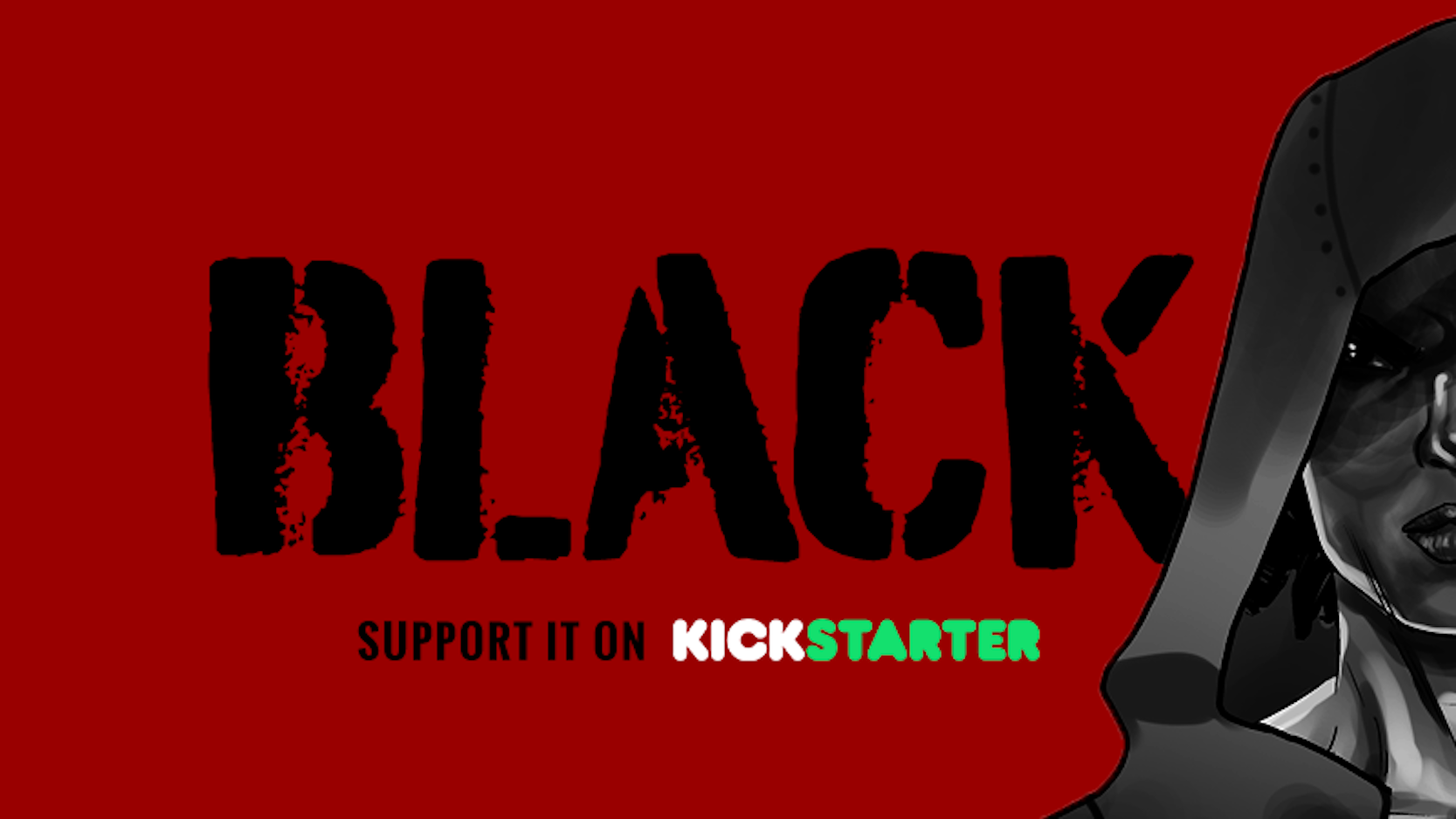
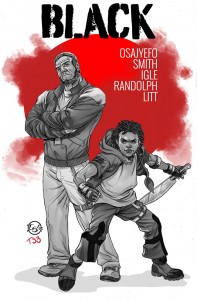
♦Kwanza Osajyefo spoke to Tripwire’s senior writer Andrew Colman about creating the kickstarter campaign to fund graphic novel Black and his and the motivation for him and the rest of the team which includes Tim Smith 3, Jamal Igle, Khary Randolph and Sarah Litt to create this project
TRIPWIRE: You have already achieved your goal in reaching your monetary target, with nearly 2,000 backers. Were you surprised by the response, or did you predict that the subject matter would elicit such a positive reaction?
KO: My hope was that the truth of this project would find a receptive audience, but I didn’t expect this level of response. I thought we’d be pushing hard for the original goal amount the entire month.
TW: You made it clear that you feel that due to under-representation, African- Americans (or indeed Africans) have been treated like two-dimensional tokens and divisive stereotypes. I assume this is historically speaking. What would be the best example of this? Obviously the Golden Age of comics barely featured African-American characters, and those that were around were very two dimensional, to put it mildly.
KO: Historically, I think it’s clear, so let’s look at a modern example to discuss a lack of progress: New 52 Cyborg. Here’s a character elevated into a leading team brand, but for most of the run wasn’t developed as much more than the JLA’s secretary and chauffeur.
Cyborg is there to market that team of classic characters as “diverse” and all he ended up doing was transporting them around and answering the phone. He didn’t have a solo book until well after the New 52 fizzled, and DC saw that Marvel had started race-swapping their iconic brands.
TW: In the late 1960s and early 1970s there was progression and tentative steps made by the industry to be more inclusive to racial minorities. Did you think that the Black Panther was a step forward, whilst Luke Cage (one would assume) wasn’t? Was Blade not representative due to being too genre-bound as a character? And did O’Neill and Adams’s Green Lantern / Green Arrow, which brought relevance to comics (especially with #76, which touched upon racial themes, and #87’s introduction of John Stewart) chime with you as an African-American comic fan?
 KO: I think “inclusive” is the wrong word for then and now. These were times when race was on the forefront of cultural consciousness, but the internal culture of comics hasn’t been very inclusive for most of its history.
Black characters’ inceptions at Marvel and DC were reflective of the times, but they were also a reflection of White creators’ perception of race and culture. Dwayne McDuffie tells a great story about how Luke Cage’s catchphrase came into being. The lack of inclusion in the industry means a lack of perspective that yields shallow content.
Blade was a great series, but most likely given agency through Snipes’ involvement and Marvel being in dire straights in the late 90s. That it hasn’t been revisited in the ascendance of Marvel Studios and the rise of superhero movies in general has some indication of a continued divide. It’s a repeated phrase that these big budget films need to sell in China where Black faces decrease attendance.
That Green Lantern story by O’Neil was a notable moment in comics history, but really only for one specific panel. John Stewart was an early race swap that, outside its marketing moment, has not elevated his status beyond the Justice League cartoon.
TW: What is your opinion regarding Milestone Comics? Did you consider it to be too much of a compromise, with DC, who may have offered creative free rein, having the final say on content?
KO: Milestone Media had an enormous impact on me personally and what they accomplished in the industry at the time was phenomenal. As for their agreement with DC Comics, I don’t know the full specifics of it but I do think in a culture that hasn’t changed much over the decades, creative independence is ideal.
TW: Have there been any characters in mainstream comics who have succeeded in delineating the African-American inner dialogue that you feel has been missing in the medium?
KO: Milestone Media gave us the most diverse depictions of Blacks and other ethnic groups in comics. Mainstream universes are rather too fantastical to present race in a believable context. In their world of mutants, inhumans, metahumans, etc. the ignored context of race would seem awkward to introduce.
TW: The super-hero, especially with the arrival of the X-Men and The Doom Patrol in the 1960s, carried universal themes of the alienated misunderstood outsider that frightens humanity (another good example would be the perennially angst-ridden Silver Surfer). Do you feel that such characters did not represent you as an African-American in any way?
KO: Doom Patrol were more isolated by their disfigurements and don’t represent a group of people. The X-Men was a closer parallel to themes of bigotry, but as most of their characters could walk around without being harassed, it doesn’t make for a strong analogy for race. No one would swipe left on Jean Grey or pull Iceman over for driving a nice car.
Silver Surfer was more Man Who Fell to Earth; I don’t think a parallel to issues of race is there.
TW: You mention that African-Americans are at a disadvantage as white super-heroes can simply be “incognito” by removing their costumes whilst they cannot – they remain outsiders due to their ethnicity. What about characters that are not capable of this, such as Nightcrawler, Colossus, The Beast, or even Wolverine (all X-Men, for what it’s worth)? Is there no overlap regarding this dilemma with the African-American experience with these non-idealized, mutant characters? Do their experience or character arcs count for much?
KO: Nightcrawler and Beast are the only two that have similar problems to Black people. Colossus and Wolverine have options, keep you claws sheathed and don’t armor up. 99% of the X-Men don’t have to deal with Nightcrawler’s problems.
TW: The other theme aside from identity in your project would be empowerment. Clearly super-hero comics have always been escapist wish-fulfillment fantasies. In Black’s world, will the focus on political realism take the book away from genre? Will the primary goal be to educate rather than stimulate and entertain?
KO: My intention is for BLACK to be entertaining, science fiction. Like most fiction, I think the concept is open to what the individual brings to it. The story is grounded in real-world context, but I can’t say what people will glean from it.
BLACK is a story about human nature and internal struggles, and in this case how we’d behave in a fantastical situation in regards to that.
TW: And will the core plot point, that only African-Americans can develop super-powers, prove to be problematic in terms of how the lead characters react to this development? The inherent quandary is that the characters are African-American first and super-heroes (who are generally highly individualistic) second, yet they will still have to contend with the same issues as all other super-powered characters elsewhere. Will their background of adversity automatically make them different, or better?
KO: This is what I think categorizes BLACK as sci-fi rather than super-hero fiction, since what’s being explored in the story isn’t heroics so much as survival. No one saves a cat from a tree or fights a villain with plans take over the world.
BLACK is about human contradictions in the context of how we behave in certain situations, in this case only Black people having superpowers. What would that mean for the individual, for groups, for world governments, and for human history.
I think that’s the differentiator.
TW: Are there any non-superhero African-American characters that you consider to be important in the medium, especially in relation to your project?
KO: The medium of comics or entertainment? In comics, I think projects like Tuskegee Heirs, the Boondocks, and Yohance are important to showing that Black perspectives can flourish in variety of ways.
TW: Which African-American artists and writers have been the most influential and highly-regarded with yourself and your co-creators?
KO: Dwayne McDuffie, Christopher Priest, and Denys Cowan.
TW: What is your goal beyond the success of Black? More self-publishing and development of a brand? This seems like a series that could be the foundation for considerably more.
KO: The original intention was that the story of BLACK encompass three books, but the response has made it clear that we should consider additional content – so we’ll see.
BLACK ends on Kickstarter next Monday 29 February and you can still support it there until then











You must be logged in to post a comment Login