

Comics News
Two Comics Veterans Share Their Memories of Marvel’s 1986 New Universe


New Ideas?
Approximately forty years ago Marvel Comics embarked on a bold new experiment. It was called the New Universe. Tripwire’s contributing writer Paul N Neal recently reached out to two of our friends to see if they could share a few thoughts and memories in regard to this fascinating era in the history of Marvel Comics.
Tripwire spoke to Gregory Wright and Howard Mackie for their shared perspective. Their answers are presented here based purely on the alphabetical nature…
TRIPWIRE: Can you please share your memories about how Marvel Comics’ New Universe was first conceived? What were its goals and objectives?
Gregory Wright: When I arrived at Marvel Comics in 1986, I was working in the Epic Comics department headed up by Archie Goodwin. Archie had created 4 of the New Universe titles, so there was a good bit of discussion regarding this new Marvel imprint. I myself had nothing to do with the creation of the New Universe and did not work on any of the titles until later.
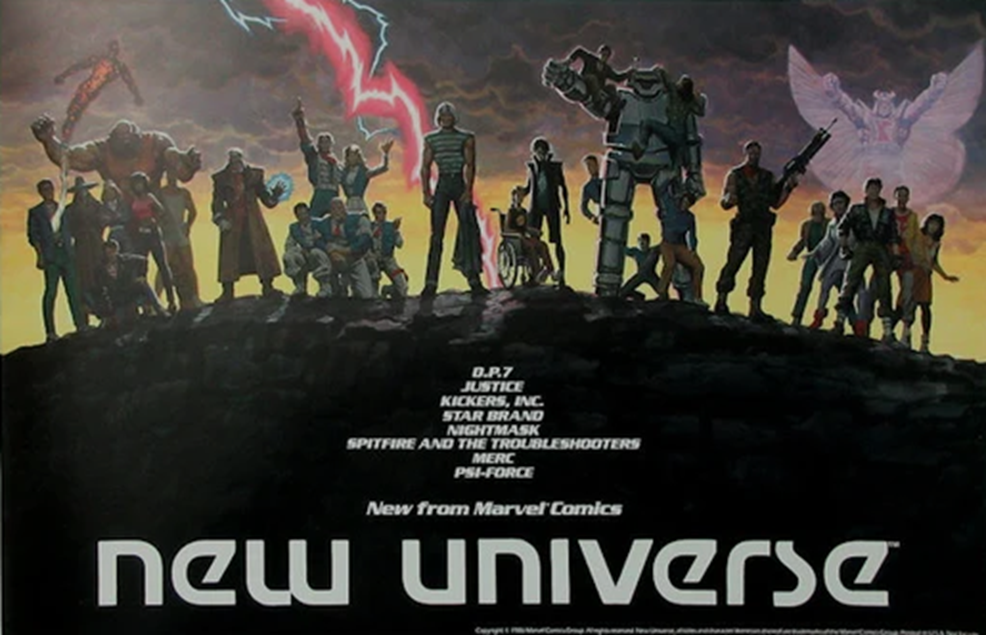
What I DO know is that the New Universe was conceived to coincide with Marvel’s 25th anniversary. It was created by Jim Shooter, Archie Goodwin, Mark Gruenwald, Tom DeFalco, Eliot Brown and John Morelli. The premise was that this New Universe was not connected to the Marvel Universe and prior to the launch that universe was exactly like OURS. No crazy science, aliens or superpowers. It was the world outside your window. The books would also happen in REAL TIME. So, every month would represent a real month.
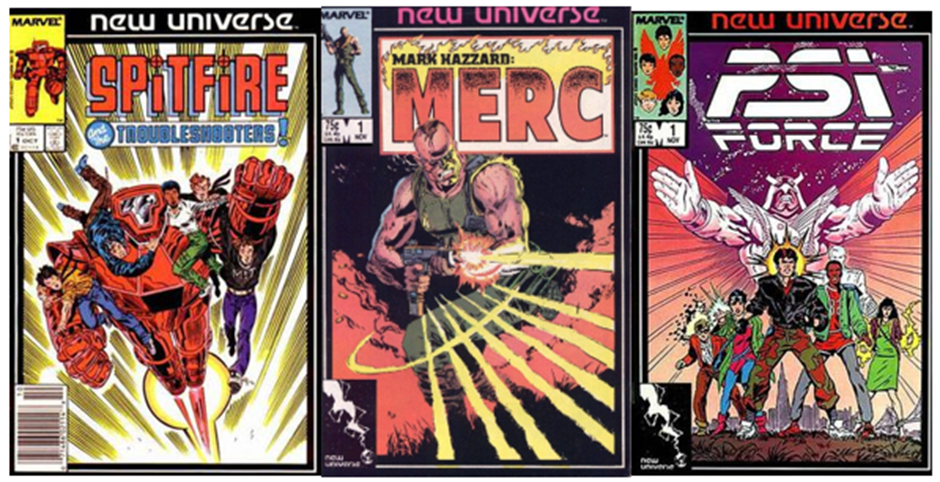
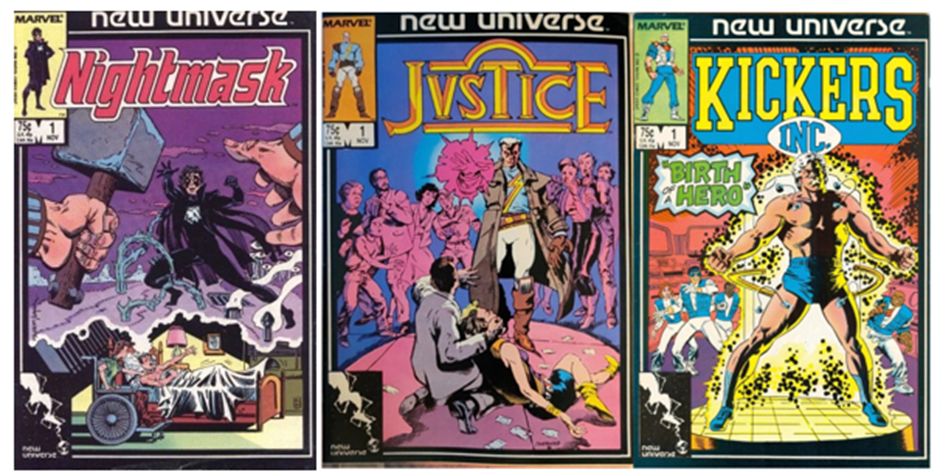
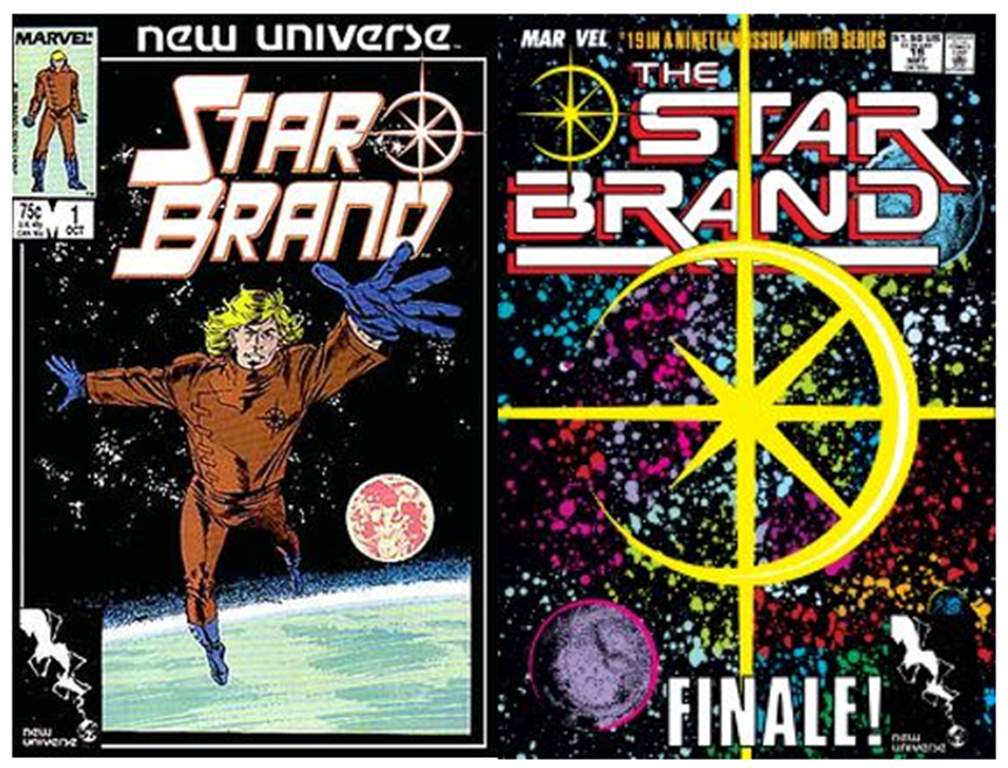
At the launch of the books was what was termed the WHITE EVENT which altered some regular people. The stories would then revolve around the idea of what could REALLY happen if a superhumans suddenly arrived in our world. Jim Shooter created Star Brand, Mark Gruenwald (with Paul Ryan) created DP7, Tom DeFalco (with Ron Frenz) created Kickers Inc, Eliot Brown and John Morelli created Spitfire And The Troubleshooters, and Archie Goodwin created Justice, Nightmask, Marc Hazzard: Merc and with Walt Simonson, Psi Force. It was to me a really cool idea and since it had so many amazing creators at its helm…it HAD to be great.
There was speculation that Jim Shooter was irked that every Marvel comic said Stan Lee Presents, when Stan had nothing to do with the production of any of the comics and didn’t even read them. Shooter did all the work. So, the New Universe would be something Shooter could put HIS name to…which he didn’t wind up doing. The goal was to have a separate universe of characters that were incredibly different from anything else on the market.
Howard Mackie: Please keep in mind that I was not involved in the initial development/creation of the New Universe or any of the individual titles, I can only speak to what I remember as an assistant editor and how it was described to us around the Marvel Bullpen. My recollection is that the original concept was what if the creation of the Marvel Universe was created in one burst of energy—the WHITE EVENT—and everyday individuals were suddenly granted superhuman powers. All of the stories were to play out in the “real world outside your window” without the baggage and most of the tropes that had permeated through the Marvel comic universe.
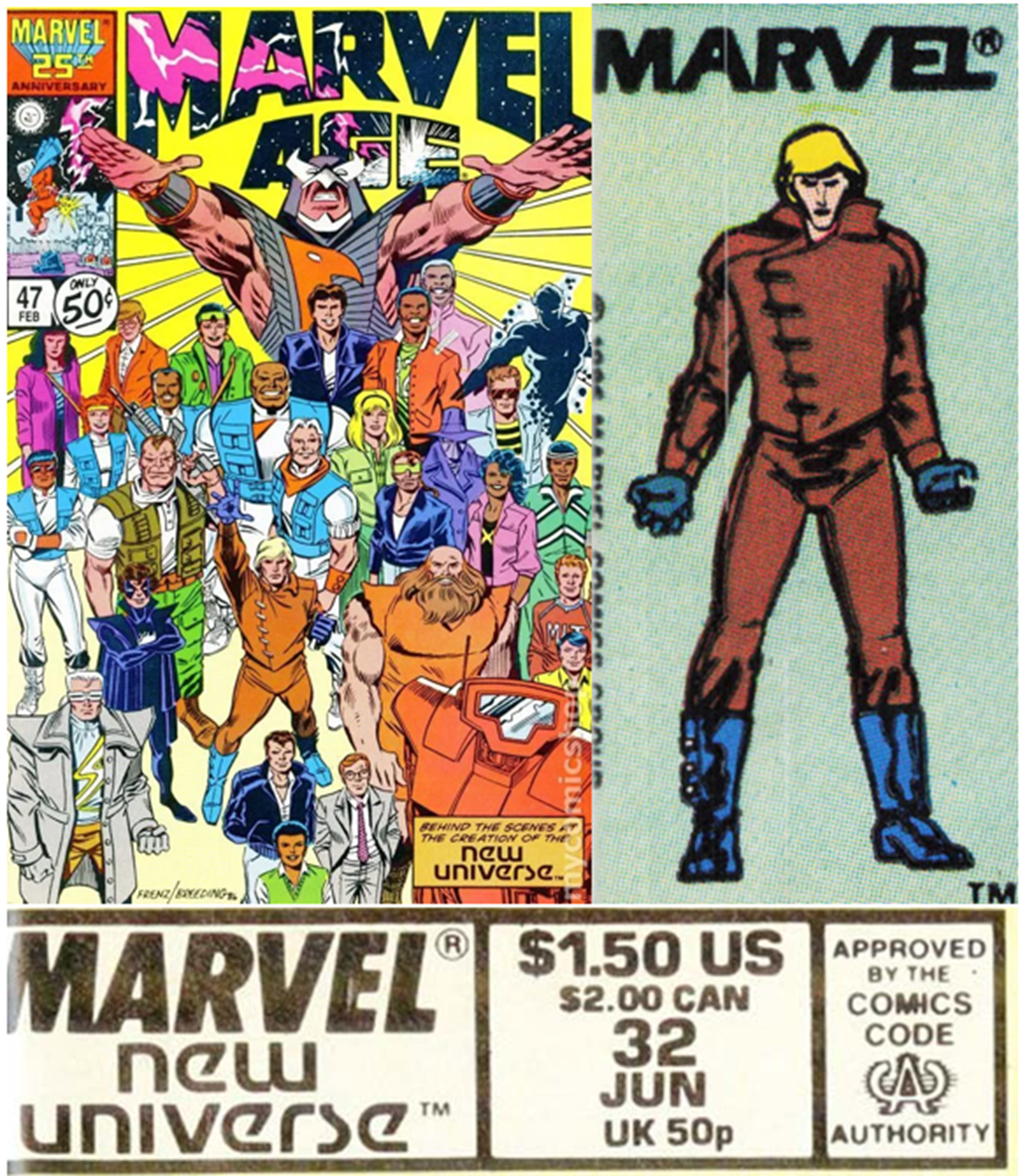
The New Universe was launched around the time of Marvel’s 25th anniversary, and I believe it was thought – from a marketing perspective—as a jumping ON point for a new generation of comic book fans. Fans who could be invested in the stories from day one… as opposed to having to have had 25 years of continuity to read through.
TRIPWIRE: Despite the fact it was forty years ago, now can you share what sort of input or involvement you had with the New Universe project?
Gregory Wright: Due to Jim Shooter’s obsessive meddling and micromanaging with all the New Universe titles, the entire office was in a state of chaos. Whether you worked on the books or not, you were affected by the creators quitting or being fired as well as editorial staff.
Stress was incredibly high at the time. I got a lot of my early colouring work on many of the titles because they were all running so late and the editors were scrambling hiring anyone who was available to help get the books out the door on time, DP7 was the only title that maintained its creative team for the entire run.
Most of the creative teams left their books very early in the run, sometimes after one issue, or were fired by Shooter for not “getting” the concept. Eliot Brown was the editor of most of the New Universe books at the beginning and was fired by Shooter. Mike Higgins replaced Eliot and had a tough time getting people to work on the books and Shooter made it difficult to manage creators with his constant demands for changes.
The stress put upon the editors trickled down to the rest of us. Everyone was really trying hard to make the books as good as they could be, and to please Shooter, but nothing was good enough. After Shooter was fired and Howard Mackie took over the books, I was more involved in a bit of conceptual planning from the sidelines and wrote a couple of back-up stories in Star Brand.
Howard Mackie: Again, I was brought in to handle the editorial reigns later in the relatively short game. I think I came to the New U after the first year, and at that point sales were dropping at a rapid rate. I was instructed by the new editor-in-chief (Tom Defalco) to shake things up, and to do whatever I could do to increase sales. That involved bringing in new creators to the books, and – sometimes—to literally BLOW THINGS UP!
The first person I called was John Byrne.
Byrne had left Marvel a couple of years earlier and had just had a wildly successful run at DC with The Man Of Steel. I was told that it was a long shot that anyone could persuade him back to Marvel to work on a book which had sales that were sinking like a stone. I called him. Apparently, I can be persuasive. He came on board.
Mark Gruenwald (my friend and mentor) was a corner stone of the New U, and the work he, Paul Ryan and Danny Bulanadi were doing on DP7 was exemplary… so they stayed in place.
Then, I got to work with Fabian Nicieza and Peter David—this was earlyish in both of their careers and before they went on to become superstar comic book writers. I also go to work with both Ron Lim and Lee Weeks—again, early in their careers.
In retrospect… I got to work with a pretty good team of creative talent during the remaining run of the New Universe.
TRIPWIRE: In your opinion, why did the New Universe fail to become a roaring sales success that would mean it would still be alive and well to this day? What do you believe were the fundamental mistakes made that led to its short life span?
Gregory Wright: The biggest reason for the New Universe’s failure was Jim Shooter. He micromanaged it in such a way that no one wanted to work on it. The creative teams changed almost every issue and there was no consistency. Shooter would break rules he set for the books in his OWN title, Star Brand and rage on anyone else who seemed like they might do the same.
Also, the concept wound up making the books so much less visual. No crazy settings or costumes…at the time readers wanted more visually dynamic comics. After Shooter was gone the editors and creators really tried to find a balance with the titles, but it was just too late. There were definitely some hardcore fans, and I think there was a lot of terrific work done on the titles.
One of the good things is that a bunch of newcomers got their breaks on these titles and made great careers. Fabian Nicieza, Peter David, Ron Lim, Javiar Salteres, Mark Texiera and Mark Bagley to name a few.
Howard Mackie: Unfortunately, I think it stumbled right out of the gate. I’ve heard rumours that the initially promised budget was drastically cut and that there was too much editorial interference. Again, I was not immediately there, but I also think it might have been better to launch with four core titles and build upon those. We pared the line down to the four books we felt had the best chance to survive.
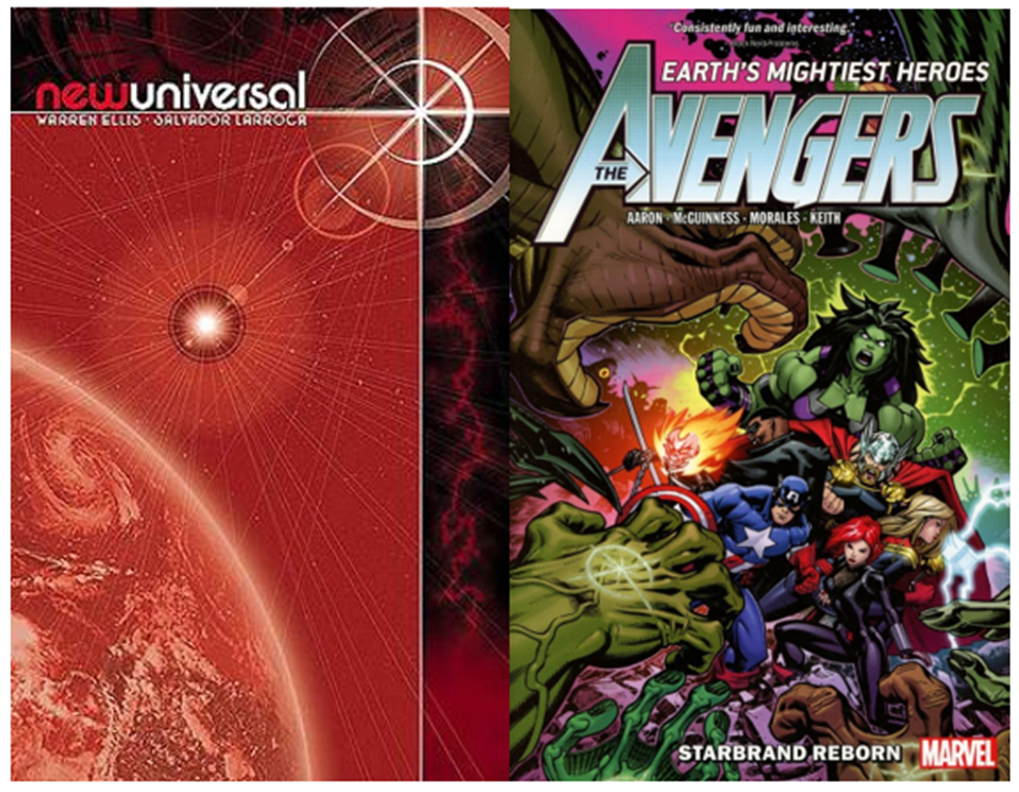
TRIPWIRE: Now in 2026, several writers have tried to give a few of the characters from the New Universe a second chance? Do you have a take on those efforts and ultimately what are the lessons that can be learned from the New Universe? Vitally what is the imprint’s legacy to your mind?
Gregory Wright: We look back on the New Universe now with kinder eyes. We can put aside the chaos that reigned while they were being produced and can see them much clearer for what they ARE and not what they were supposed to be.
There were some great ideas for the books created by creators. The execution was just destroyed by micromanaging them. I’ve enjoyed seeing folks bringing some of those concepts back to life, find a way to utilise them properly. Creativity dies with micromanagement and poor communication.
We had all hoped that, once the books were allowed to flourish properly, that the readers would embrace them and sales would go up and the books could be saved. But the damage had been done, and not even John Byrne could totally save the imprint. I’m glad to have been a tiny part of it all and would have liked to write some of those characters for a year-long run.
Howard Mackie: I try to not look backwards. I’ve heard that some of the New Universe characters have been brought into the mainstream Marvel Universe but I’ve not read any of those stories.
I do think of the New Universe as an imprint separate from the overwhelmingly successful Marvel Universe that had some minor successes of its own, and it was a breeding ground for creators and creativity. It showed that there was room in a growing comic book marketplace for a smaller lines of comics. Ultimately, Marvel had success with…er… the Ultimates line, but there were also a ton of independent/smaller comic book publishers from Valiant to Malibu and everything in between and since.
TRIPWIRE: What would you say were the standout or obvious creative high points from The New Universe?
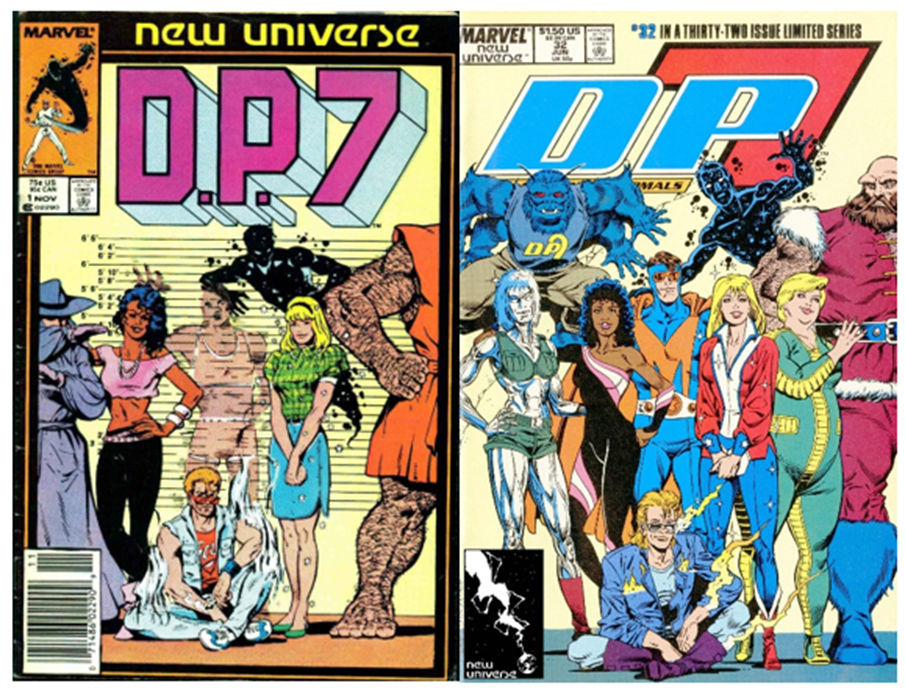
Gregory Wright: For me, the high point was Mark Gruenwald and Paul Ryan’s DP7. I felt that it upheld the idea of “The world outside your window” that was suddenly altered by the white event and how it altered certain humans. It felt the most REAL. It had the most intriguing characters to me.
Howard Mackie: Again, I might be biased, but I love what Mark Gruenwald did with DP7. He stayed true to the original concept and just kept exploring and developing the characters while staying true to the original concepts of the New Universe. I’m also thrilled to have gotten to work with creative talents like Fabian, Peter, Lee, Ron and others very early in their careers.











You must be logged in to post a comment.