


Comics News
Tripwire Reviews Berger Books’ Salamandre By INJ Culbard


European Sensibilities
Tripwire’s contributing writer Tim Hayes takes a look at Berger Books’ Salamandre by writer/ artist INJ Culbard…
Salamandre
Writer/ Artist: INJ Culbard
Berger Books/ Dark Horse Comics
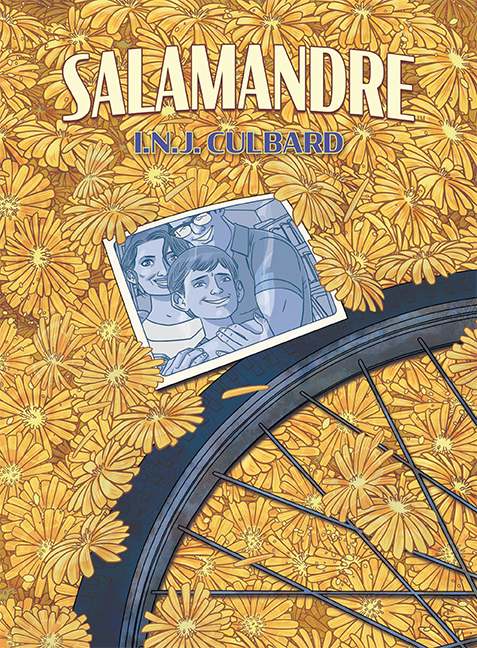
I.N.J. Culbard’s sweetly humane Salamandre wears the artist’s love of European bandes dessinées on its sleeve. Set at first in a Francophone location on the edge of a warm sea, where the buildings are pastel colours and deep-sea explorers go off in submersibles to search for leviathans, it has a European air of magic realism that then becomes an equally European air of delicate tragedy. And of politics too, since the setting is actually a broken island group called Les Débris divided between two separate nations: the republic of Montparnasse where it seems freedom and light dominate, and the empire of Monolith where surveillance and paranoia are everywhere, the buildings are drab cubes, and pleasures such as art and flowers are treated as contraband. In the aftermath of some recent war, the two societies regard each other warily.
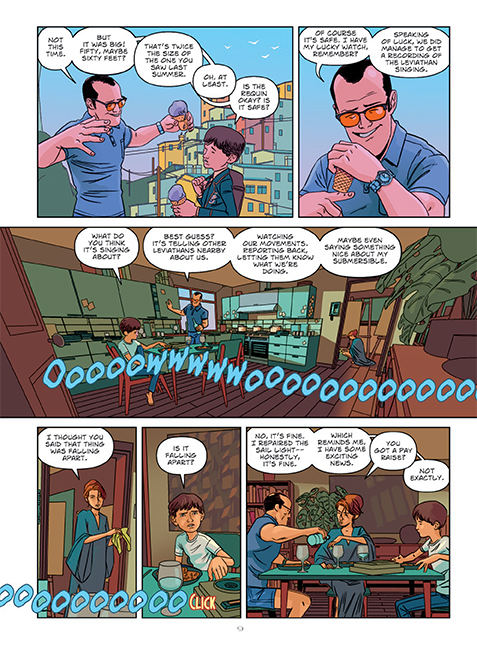
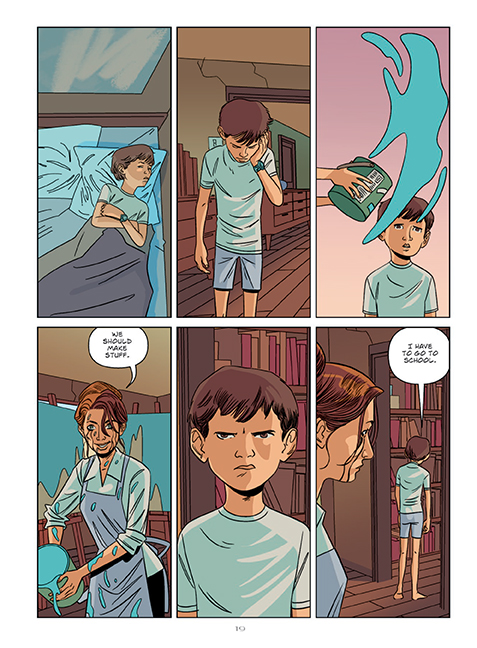
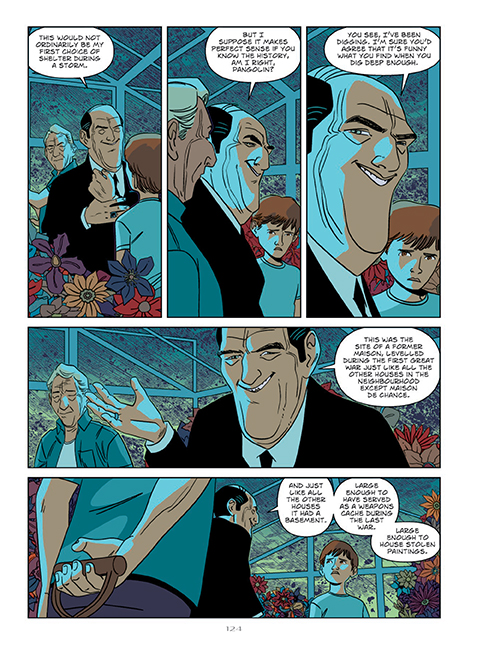
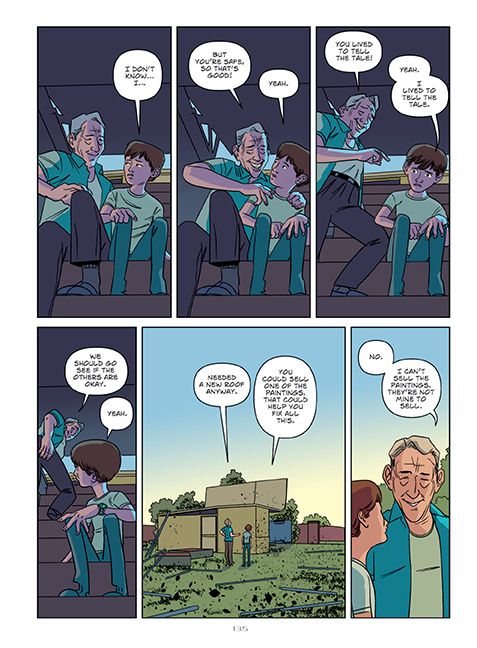
The story follows 11-year-old Kasper Salamandre, who loses his father in a submarine accident and then gets packed off from Montparnasse to Monolith to stay with his maternal grandfather. Dreaming of his father and other inexplicable phenomena, Kasper observes how small individual freedoms, the pleasures of painting or listening to music, are quietly nurtured by his distant relatives and their simpatico friends, while Monolith’s secret police peer at them from a distance. He meets Mélisande, an artist whose experiences watching other artists driven underground has left her waspish and sour, and whose influence on Kasper’s view of the world only grows once she herself vanishes into Monolith’s justice system.


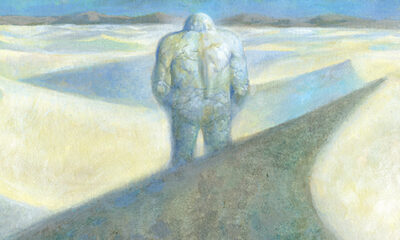
Culbard is a master of pacing and posture and digital pigment; his work on Brink in 2000AD uses all three in harness as the basis for the whole visual approach, and if Salamandre is less flamboyant in its mechanics that the artist’s science-fiction comics, its story telling is still all about interactions between characters and the body language they use. He’s also great at underplaying when he wants to, as with the heavily freckled skin of Kasper’s young relative Delphine, an artistic effect that covers her entire body without being indelicate. A vision of Kasper’s father in his deep sea diving suit out and about on dry land looks a lot like a nod to The Eternaut, the classic Argentine comic from the late 1950s whose science-fiction was personal and political, and the photo of Culbard’s father at the close of this book makes it clear that Salamandre is working with the same two topics. “The world will come to its senses one day,” says a character, and the book believes it might be true.

















You must be logged in to post a comment Login