

Comics News
Tripwire Looks Back At Very Dark Days For Comics

When Comics Almost Came To An End
Tripwire’s contributing writer Paul N Neal takes a look at a very dark time in comics history: back to the 1950s…
When compiling a list of important dates in the history of comic books many events compete for inclusion. For example, the publication of Action Comics number one, Detective Comics number one and the very first issue of The Fantastic Four are all vital to our love of a medium we all adore. Yet no list would be complete without an understanding of three days in the 1950s when the entire comic industry stood trial before the United States Senate.
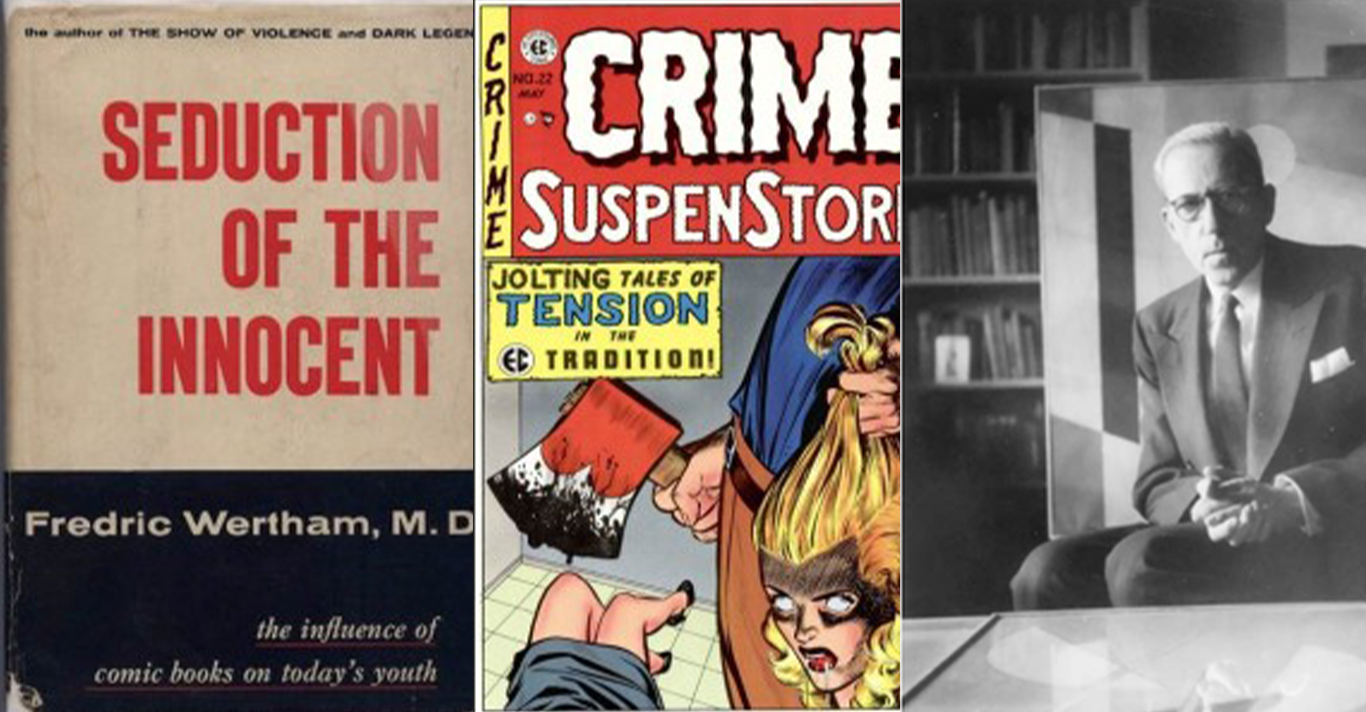
There was a groundswell of concern over the depictions of crime and horror in relatively cheap comic books that were being sold to young boys. In a large part these feelings were being given much fuel by the publication of an anti-comic manifesto written by Dr Fredric Wertham.
He was a German-born American psychiatrist and his views were given much credence in his book called Seduction of The Innocent published in the early 50’s. To this day there is much debate about when his views were actually first published. Nonetheless his views caused some considerable debate, and they caused an almost inevitable confrontation with the establishment at the time in America.

This all occurred at a time inclined towards censorship. It was the height of the McCarthy era when creativity was most certainly frowned upon to put it mildly. The apparent need for some form of regulation over the content of comics became an issue before the American government in April of 1954.
It all began on Wednesday 21 April 1954
The Senate Subcommittee on Juvenile Delinquency was chaired by Senator Robert C Hendrickson from New Jersey. They met on Wednesday 21 April 1954 in a courtroom in New York. At the time this was the home of all the comic publishers of the day, and indeed Wertham himself. All the pieces were aligned for a colourful reckoning not so incredibly different from the superhero comic showdowns we may have all become so accustomed to nowadays.
“Authorities agree” as Hendrickson started, “that the majority of comic books are as harmless as Coca Cola, but that hundreds of horror and crime books are peddled to our young people at an impressionable age.” He went on to state, “I wish to state emphatically that the freedom of the press is not at issue in this investigation.” This statement alone was in itself was the open salvo to begin a war of words.
There continued in earnest several witnesses, and a series or slide shows depicting images deemed to be acts of sadism and violence from comics of the time. The body count from comics were referenced and certain publishers were singled out for particular attention.
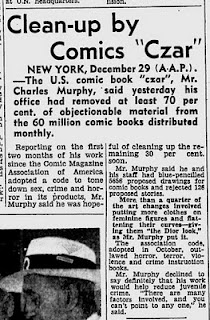

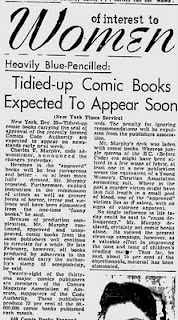
A story of note where an orphan boy who is fed well by his vampire parents was startling and was of note during the proceedings. Richard Clendenen, director of the committee commented , ”It might be said right triumphs in the end, since the boy turns into a werewolf and eats his foster parents.”
Dr Harris Peck, a local director for Mental Health Services, stated “we cannot look to comics as being as primary source for juvenile delinquency” whilst being careful to point out he was not an expert about comics and their effects.
Then came the turn of Edward Schultz and the Association of Comic Magazine Publishers appeared. This is where everything started to get interesting.
Henry Edward Schultz
The AMCP was created in 1948 by a group of publishers that agreed to a set of quite specific guidelines. Authors were forbidden to reference anything overtly sexually aggressive or disrespectful, and to what at the time, was deemed to be authority. Also, it ruled that crime could not be shown to pay and any divorce would never be portrayed as favourable.
Expressions that are now considered mild, such as “Gawd Almighty” or “Holy Cow” were replaced with simply with the word, “Wow”
Schultz pointed out in his testimony many of the publisher rapidly defected from the group arguing their guidelines were broadly useless.
Senator Estes Kefauver of Tennessee approved of the code stating, “If the publishers would follow this code, I do not think we would have this problem we are talking about today.”
It is possible if the Senator had forced through his agenda the comic industry might have just simply died upon the spot that day.
Dr Fredric Wertham
Wertham was the “prosecution’s” star witness. He immediately proceeded to list his credentials as the senior psychiatrist for the department of New York hospitals from 1932 to 1952, The Director of Mental Hygiene Clinics at queens Hospital and Advisor to The Court of General Sessions for mental illness. His two year study as a free psychiatrist in Harlem was the basis for his thesis laid out within the pages of Seduction of the Innocent.
To the Senators he described his study as painstaking, sober, and laborious. He mentioned that in many comics good won over evil, yet the villain was too often gloried, through criminal means.
Wertham also went on to say that comics discouraged children’s’ reading ability. Before retiring from the stand, he passionately suggested comics were in some way Communist in nature.
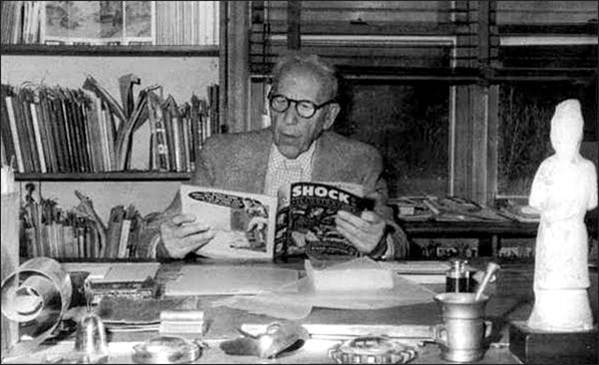
William Gaines
Gaines was the famous publisher of EC (Entertainment Comics) that were legendary for their content. Gaines opened his arguments by defending the rights of Children.
“What are we afraid of?” he asked “Are we so afraid of our Children? Do we forget that they are citizens too and entitled to select what to read or do? Do we think our children are so evil and simple minded that it takes a story of murder to set them to murder, or a story of robbery to set them to robbery?”
Gaines at one stage quoted Peck’s earlier statement that “No one has to read a comic book to read horror stories” and provided recent newspapers as evidence. He quoted Peck who stated, “No one has to read comics to read horror stories.”
The assembled senators were outraged. They asked what the limit of content Gaines would publish. They suggested he would publish anything that sold.
Gaines replied, “No I would not say that. My only real limits are the bounds of good taste, or what I consider good taste.”
The debate rumbled on for hours. Barbs were exchanged over many specific published images. Ultimately very little was decided or concluded.


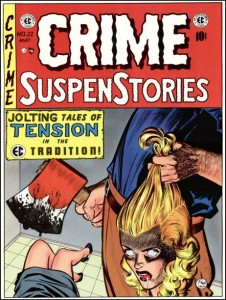
The Aftermath
In the months that followed many smaller publishing houses collapsed or changed their approach. The Magazine format had more freedom from scrutiny. Eventually Gaines created MAD magazine which became extremely popular. It outsold many newsstand comics at the time.
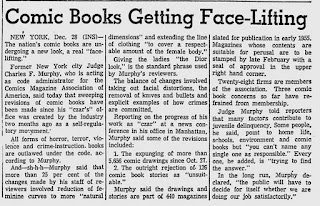
Some publishers took heed of the committee’s findings, which lead to the creation of the Comics Code Authority. For many years comics were labelled with their brand and they policed the contents of all comics. The CCA had the power to disrupt the distribution of comics hitting the stands.
A profound impact of those few controversial days was that previously significant sales figures for popular comics plummeted.
It was not until the dawn of Marvel Comics and The Silver Age that the industry truly recovered.
In the modern age the median age of the average comic reader is high enough for us to not concern ourselves with influencing the young. Accepting that though, it is worth remembering the comic industry itself might never have survived in any shape or form if not for some words of common sense in the spring of 1954.












You must be logged in to post a comment Login