

Doctor Who
Tripwire’s Man In Los Angeles Reviews Doctor Who: Wild Blue Yonder


The New Journey Continues
Tripwire’s man in Los Angeles Robert Cave reviews the latest Doctor Who Christmas Special: Wild Blue Yonder…
Wild Blue Yonder
Written by Russell T. Davies
Directed by Tom Kingsley

That was interesting. And somewhat unexpected. Very much a performers’ episode. And a story that really does play to one of the most Doctor Who elements of Doctor Who: running up and down corridors.
Of course, there is much more to it than that, but having a huge corridor and running up and down it – that is Doctor Who, and apparently something that won’t be lost just because the series now has the power of Disney behind it.
Speaking of the Doctor Who-ness of this latest iteration of the series, I should probably take a moment here to express my appreciation for the retro blue diamond Doctor Who logo that these specials are going out under. A blue diamond for the show’s diamond jubilee, a remix of something from the show’s past to reassure existing fans that the thing they loved was and is still recognisable. I don’t think much has been made of this being the jubilee logo, because failing to do so offers some great redirection away from whatever the new Doctor Who logo will be for the Ncuti Gatwa era.
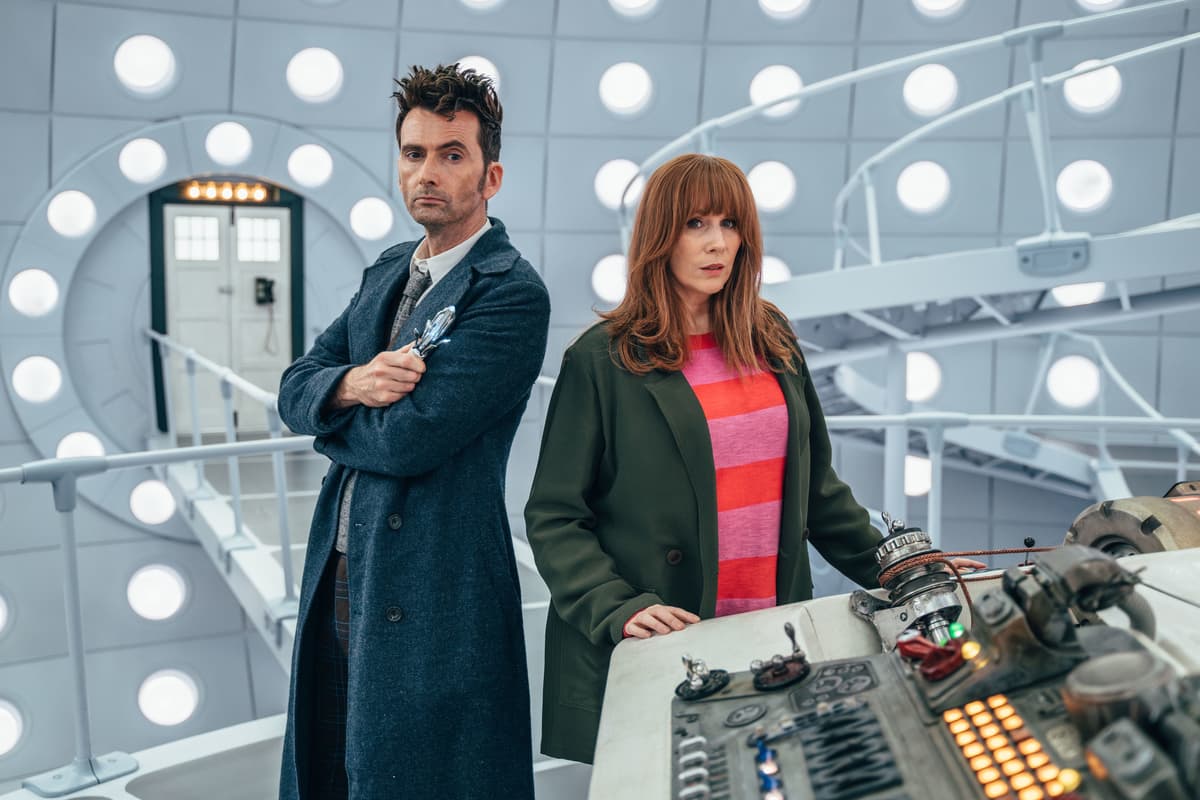
But focusing on there here and now, Wild Blue Yonder reminds me very much of, and probably is a spiritual successor to, Midnight and Turn Left; both character-led stories that gave actors of the stature of David Tennant and Catherine Tate a lot to work with. This story had the intensity and intimacy of a stage play, but with the budget and imagination of a triple-A TV series. I would have probably used the word Hollywood as an adjective here in the past, but Hollywood and movies in general have lost some of the cultural power and significance they once had. Would a theatrically released Doctor Who movie be as big as the new series launch on Disney+ will be? I doubt it. The notion of where you see the ultimate big budget, high prestige narratives has now shifted to video games and series on streaming services. Many of the young folk I talk to do not even recognise what they watch on Netflix or Disney+ as TV anymore. We are entering a new age, but fortunately Doctor Who is entering it with us, reconfiguring itself for the journey.


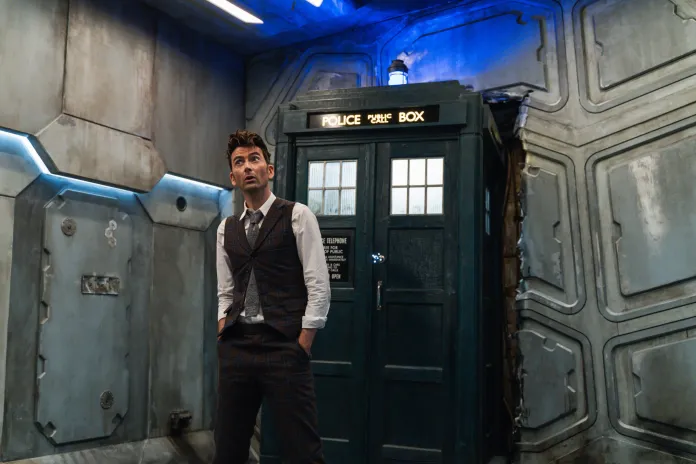
Something that Doctor Who fans look for in episodes are the joins – how this story links in with the continuity of the rest of the show. We look for the gaps in which other unseen adventures could fit in. I get the sense here that Russell T. doesn’t really want to leave any room for fans to interject their own stories on the Fourteenth Doctor in the future, but the trip to Isaac Newton’s apple tree perhaps leaves just enough space for the Doctor and Donna to land somewhere else with a fiery, broken TARDIS that is forever crashing into things. Not much space, because Donna hasn’t eaten since all the business with the Meep, and is still hungry on the nameless Wild Blue Yonder spaceship, but maybe just enough for a missing adventure or two.
And yes, Newton being portrayed by Nathanial Curtis, an actor of color, will annoy some people, but they really are all the people you would want to be annoyed by such things. The kind of people who cannot conceive of anything new being as good as their memories of the past. Any why was Newton even there in the first place? As he says, “to contemplate the mysteries of… [the] universe”… and to provide the punchline for a cheap laugh. But there actually are mysteries all through the episode, not least the Doctor and Donna ending up beyond the edge of the observable universe, far beyond the stars.
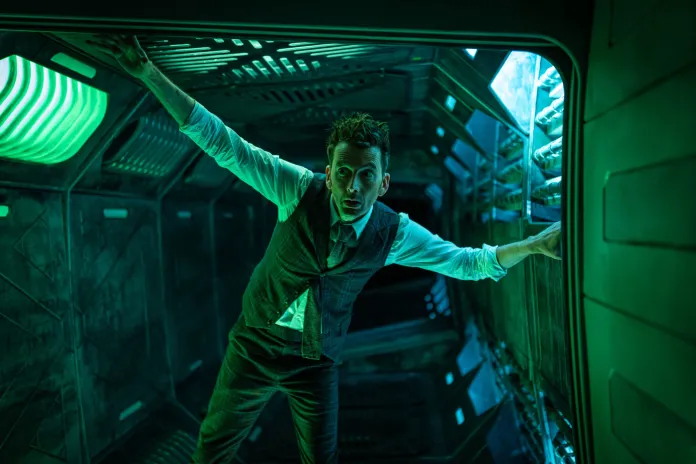
Beyond the stars (and everyone else in the universe) in a massive corridor, trapped with evil entities that are essentially the Doctor and Donna themselves. It is a wonderfully simple concept. So simple in fact that it could easily be overlooked, and even misunderstood as something smaller and less showy than last week’s story. But no, what this episode did was something different. It explored the unsettling, particularly the uncomfortable area of the familiar made strange; the incipient realization of subtle differences, off not-quite-rightness and a malevolence that is sensed rather than fully understood. Like the Other Mother from Neil Gaiman’s Coraline, there is an Other Doctor and an Other Donna here.
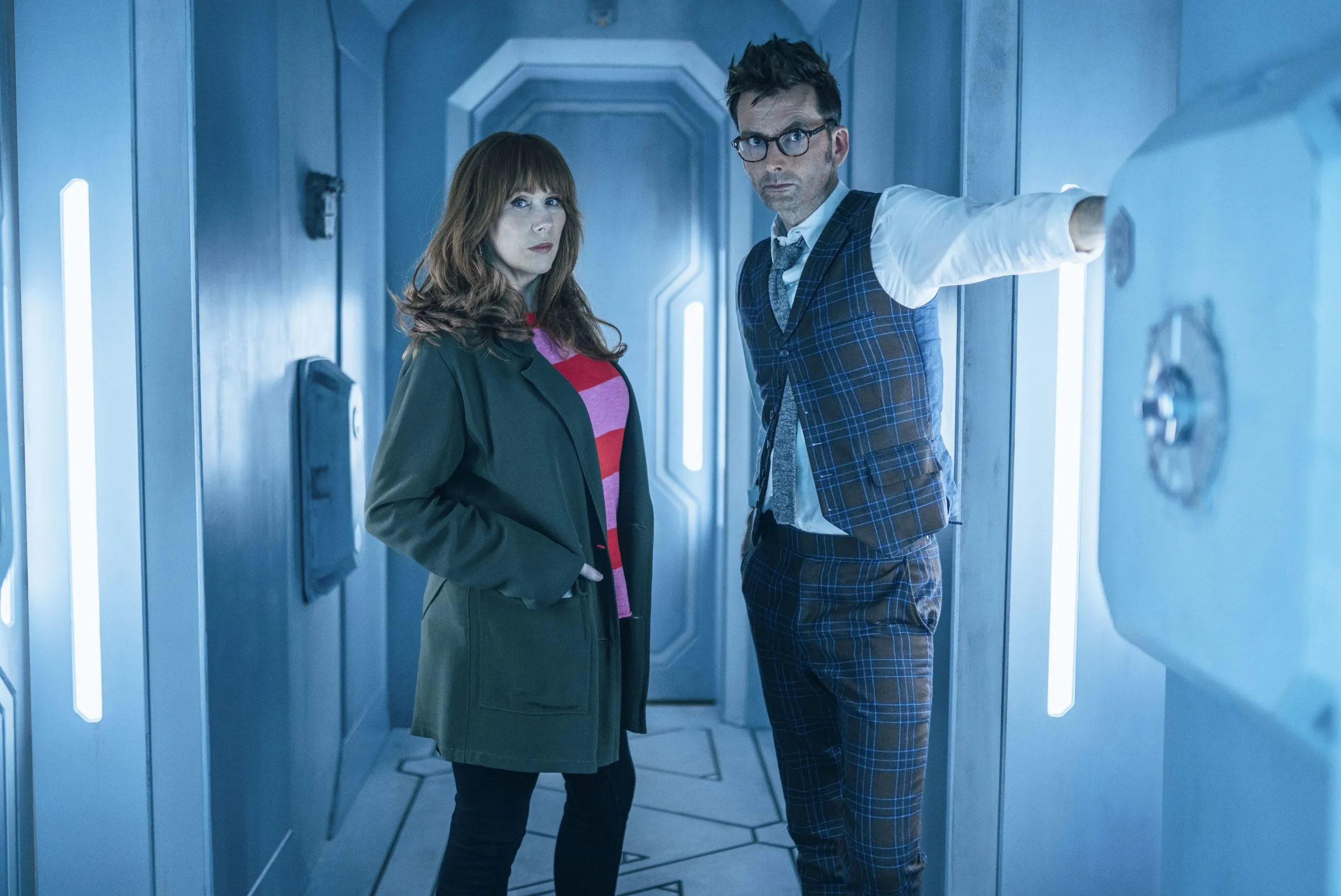

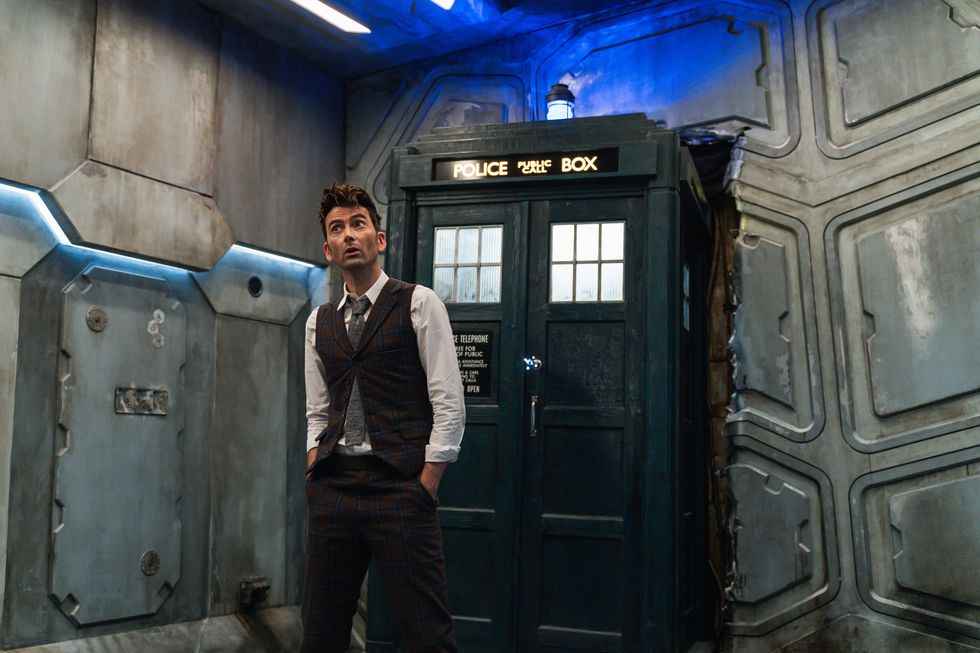
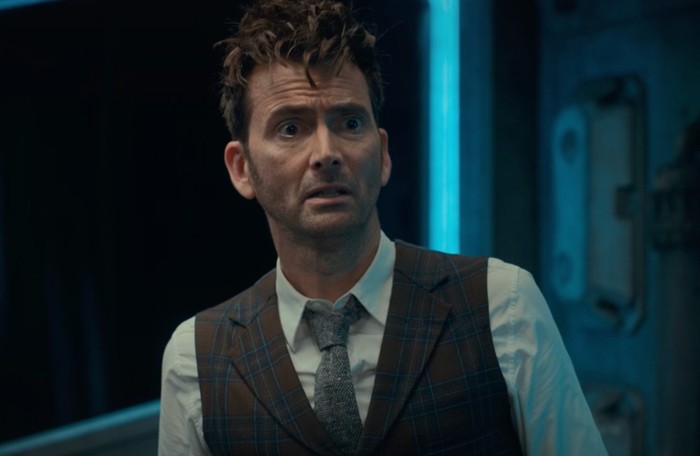
This is primal stuff. Properly creepy and, I’ll say it again, unsettling. It’s the kind of material that requires actors at the top of their game to really sell, which is why this is a perfect platform for Tennant and Tate. You wouldn’t want this kind of story going to a new Doctor or a companion we have only just met. Perhaps more so than the previous episode, which carried its own weight of continuity, the audience here needed to know the characters already, to have a sense of familiarity that could then be subverted by a line so simple as “my arms are too long.” This episode gave the audience the uncanny valley made flesh, or at least with a formidable mixture of practical and digital effects. Horror for the Dall-E and Open AI image generation generation.
The simple tricks are often the best. As any showman, or con man knows, it is all about how you dress it up. Here we have two actors playing two different, but visually identical characters, who are then split up, so the audience are forced to try and work out which is the original and which is the evil twin. The physical contortions of the Doctor’s Exorcist-like spider-walk only add to the sense of disquiet. It really is all about the performance. All the green screen work, computer graphics, all the stop-motion and all the money in the world can’t beat a great performance. It’s those performances that have kept folk coming back to Doctor Who for sixty years now.
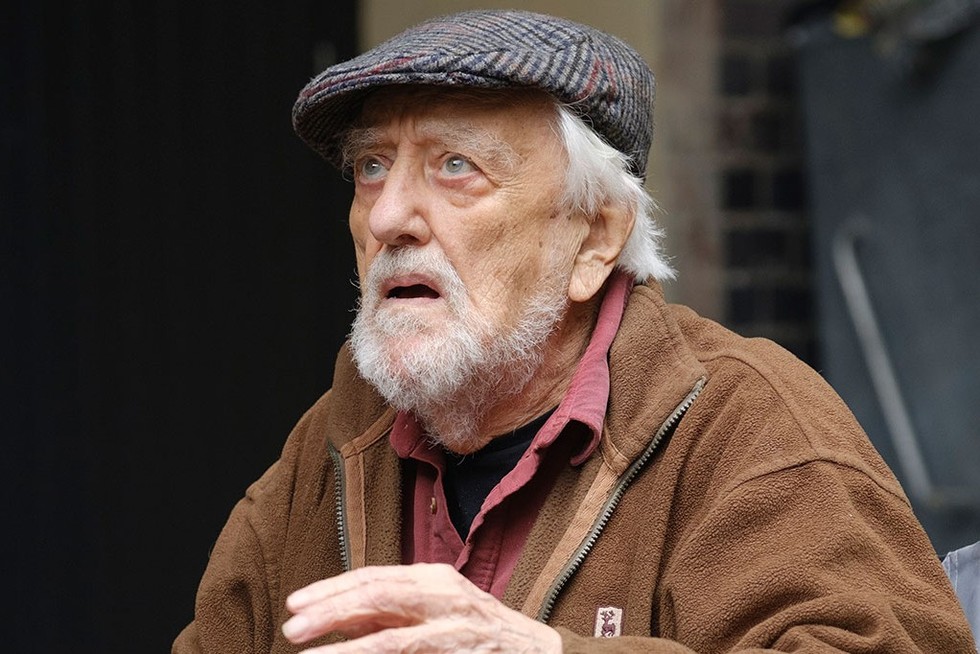
And then we get back to London (again) to see Bernard Cribbins reprise his role as Donna’s granddad, Wilf Mott. I’m not sure how much the production team managed to film before the actor’s death in 2022. If you are able to watch the credits before they are shrunk down, swallowed and otherwise mutilated by the default settings of modern streaming platforms, you can see that this episode is actually dedicated to Cribbins. That his performance remains leaves me hopeful that his character will be back for the last of the specials and that Cribbins will receive a suitable send-off in his final screen role.


I am, as always, looking forward as to what happens next. Yet I have really enjoyed this wonderful, unexpected reprise we have had of the Tate and Tennant’s partnership and the hints it offers of how the Doctor can revisit old faces, even if just the old favourites, eh? You might not be able to step into the same river twice, but with Doctor Who, each trip, no matter where or when it occurs in the timestream, can still be incredibly rewarding.
See you next week.
Here’s the special’s trailer







You must be logged in to post a comment.