

Comics News
Philippe Labaune Gallery In New York To Host New Will Eisner Retrospective

Celebrating The Work Of A Comics Master
The Philippe Labaune Gallery which hosted a Mike Mignola exhibition last year is putting on another major comics retrospective. Its Will Eisner exhibition kicks off this week…
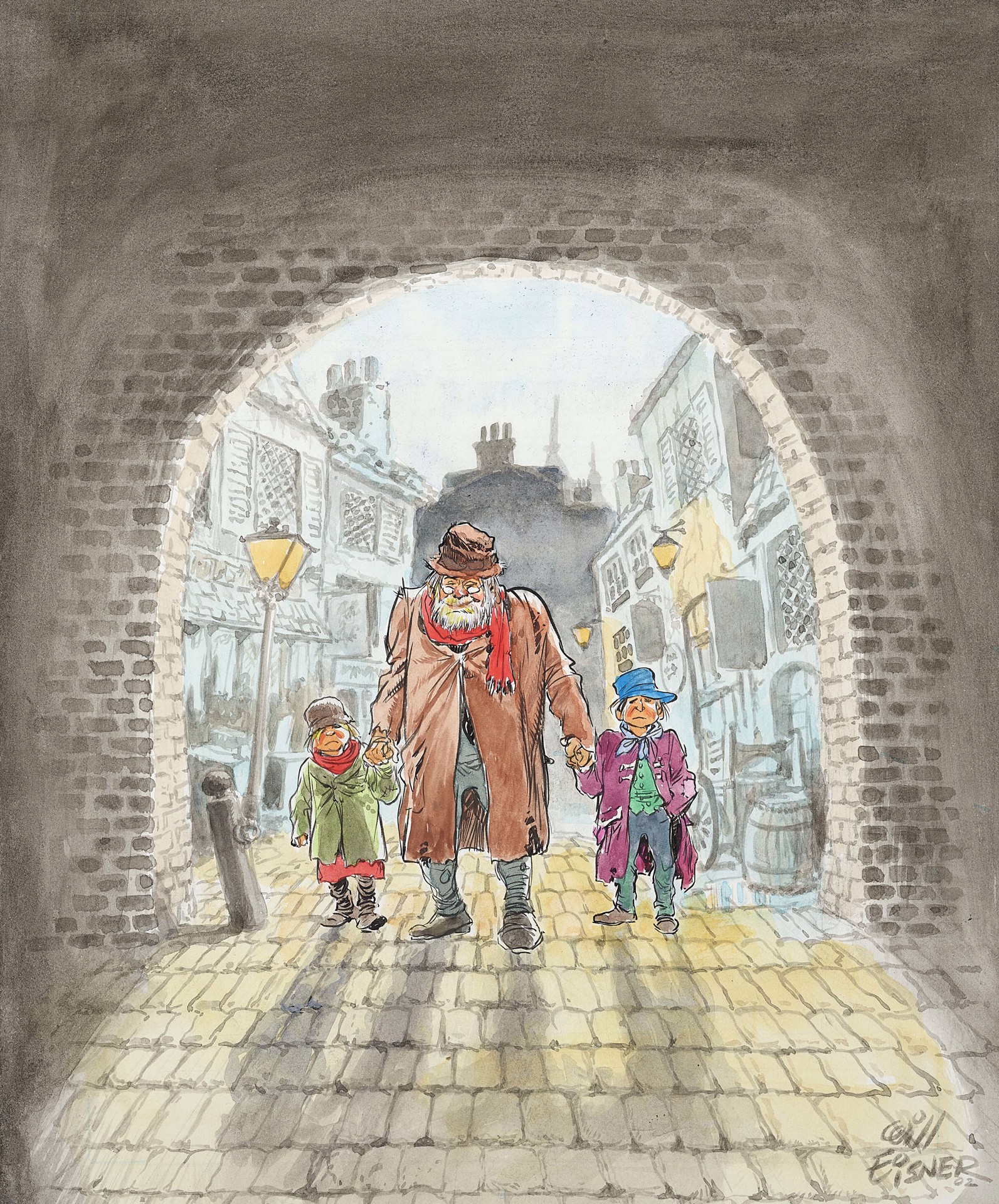
Philippe Labaune Gallery is proud to announce a very special exhibition showcasing original works by Will Eisner, one of the most influential figures in the world of comics and graphic storytelling. This exhibition organized in collaboration with the estate of the late artist and Denis Kitchen honors Eisner’s artistic vision and significant contributions to the medium, offering an opportunity to experience firsthand the creativity and innovation behind his iconic work. Known as “the father of the graphic novel”, Will Eisner’s distinctive artistic style and narrative techniques changed the landscape of visual storytelling, bringing a new depth to the comic and graphic novel genre worldwide. Showcased in the exhibition are seventy-nine original pieces: highlights include two US Army illustrations from 1941, a complete seven page story from The Spirit, Eisner’s groundbreaking crime-noir series, pages from the artist’s beloved city, New York The Big City, and selections from A Contract with God, including the entirety of the story, The Super.
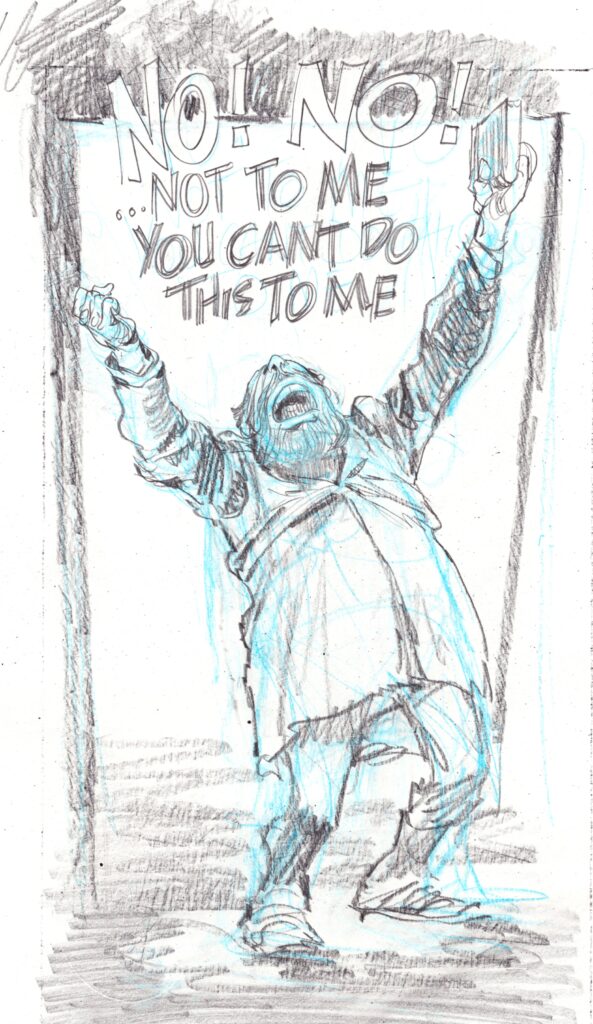
Published in 1978, Eisner’s A Contract With God is widely regarded as the first graphic novel. It tackles themes of loss, faith, and poverty and demonstrates the ways in which an artist can use visual artistry, emotional depth, and narrative to create work that acts as both an entertainment medium and a culturally significant literary endeavor. Eisner’s subject matter in A Contract With God focuses on the morally grey areas of human nature, illustrating how comics can tell deeply human, intimate, and complex stories. The artist’s technique, his masterful use of sequential art, innovative panel layouts, and ability to blend text and image, work to combine visual storytelling and sentiment. Specifically, his use of expressive line work and detailed facial expressions allow his characters’ feelings – grief, guilt, hope, and despair – to radiate off the page. He often employed close-up and angular perspectives to emphasize the intensity of a character’s emotional state, making them feel life-like. In A Contract with God, page 22: “No! No! Not To Me”, the character is positioned dramatically, yelling towards the sky, his arms raised in anger, and his face illustrating his mental turmoil. His despair feels immediate and real to the reader. Eisner’s approach was a departure from the more traditional, static figures seen in earlier comics, again demonstrating how he brought a new depth to the genre.
The Spirit, first published in 1940, followed the adventures of Denny Colt, a masked vigilante who fights crime in the fictional setting of Central City. In The Spirit, Eisner experimented with page layouts, using the entire space of the comic page to convey mood, time, and perspective. He broke away from the traditional rectangular grid, creating compositions that interacted with the narrative. This approach pushed the boundaries of comic book art. Furthermore, the artist’s blend of character development, humor, and gritty realism laid the groundwork for many future creators, influencing not only comic book artists but filmmakers and graphic novelists. On view is the oldest complete The Spirit story (1946) owned by Eisner’s estate. Eisner believed that the power of comics lies in their ability to communicate complex ideas through both words and images. In a conversation with J.W. Rinzler, Eisner said: “I think that the comics medium has two advantages: one is that it’s visual, and the other is that it’s sequential. And those two things combined provide a very unique form of communication.” His approach to comics was to blend the visual and the verbal in order to enhance the overall narrative experience: “my general procedure is to write and draw at the same time in rough form. Then I’ll go back and execute it on the drawing paper. The words and images are done almost at the same moment.” The results are stories that create an intimacy with the reader, making them resonate on a much more personal level. Eisner’s innovations were not confined to his own craft; he was also a teacher and advocate for the comic book medium as a serious art form. His educational efforts helped bridge the gap between comic books and fine art, making him a central figure in the movement to elevate comics as legitimate literary endeavors. His book Comics and Sequential Art remains a key text for aspiring comic book artists, offering insights into his own philosophy and process while also providing guidelines for anyone seeking to master the art of visual storytelling.

Will Eisner was born on March 6, 1917, in New York City. Throughout his career, Eisner received numerous prestigious awards, including the Shazam Award for Best Writer/Artist (1971), the Harvey Award (1988), and a special citation at the 1992 Will Eisner Comic Industry Awards, which were later renamed in his honor. He was also a major advocate for the comic industry, teaching at the School of Visual Arts in New York and authoring Comics and Sequential Art (1985) as well as Graphic Storytelling & Visual Narrative (1996), both influential texts in the study of comics as an art form. Eisner passed away on January 3, 2005. His legacy endures through the Will Eisner Comic Industry Awards, which continue to recognize excellence.
Opening Reception: Thursday, 13 February, 6pm-9pm
https://philippelabaune.com/show/philippe-labaune-gallery-will-eisner










You must be logged in to post a comment.