


Feature
James DC’s July Movie Roundup

Fantastic Tales, Danish Comedy and Classic European Cinema
In the latest in his occasional roundup, Tripwire’s Contributing Writer James DC casts his eye over the most notable new arthouse cinema and DVD releases…
TALE OF TALES
Director: Matteo Garrone
In selected UK cinemas now, and released on DVD/Blu-ray, 8 August.
Rating: 8/10
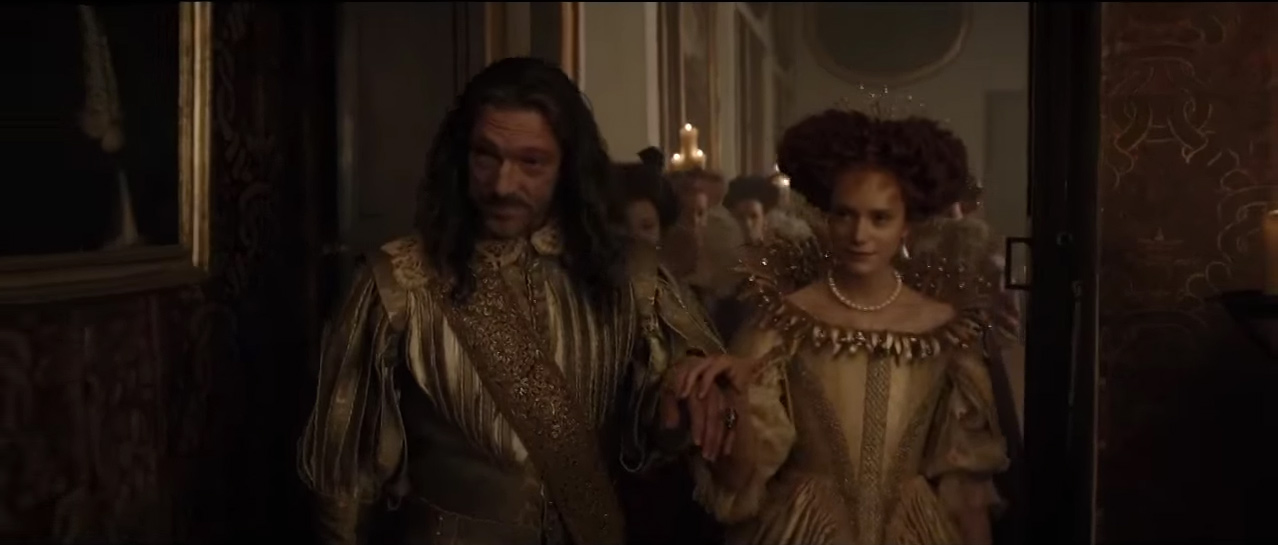
This is a portmanteau film (albeit with interconnected segments), based on a collection of fairy tales by the 17th century Italian poet Giambattista Basile, all of which were later transmuted into more famous fables by writers such as the Brothers Grimm and Hans Christian Anderson: Cinderella, Rapunzel and Sleeping Beauty were the later, partly sanitised versions of these dark, gruesome parables.
Director Garrone, mostly known for his Italian mafia thriller Gomorrah (2008), here creates an extravagant, hypnagogic world in which freakish and exotic characters embody pretty much all of the seven deadly sins; they scheme, betray, lie, cheat, covet, commit murder and various other evils, mostly for narcissistic, compulsive reasons. There are grotesque, quietly disturbing scenes aplenty here, as well as moments of mordant wit and playful asides – I found myself chuckling the most at the section ‘The Two Old Women’, whereby two repugnant old crones become romantically involved with a lustful king who is fooled into thinking one of them is divinely beautiful, with tragic results. This middle tale – of three – is simultaneously horrific and humorous, and it is this fine balancing act which Garrone pulls off with panache, throughout the film. As with all such evergreen mythologies, these fables work on myriad levels, communicating ancient truths and morality lessons to our modern, cynical sensibilities, all leavened by the thrilling wonders and precise refinement, on show.
Toby Jones, Salma Hayek and Vincent Cassel all play their parts to the hilt in true fairy tale fashion, but do not overdo it, at all – this is no pantomime for kids. But perhaps the real stars of the film are the awesome sets, props and real-life locations, such as gnarly, ancient forests, baroque castles and Gothic clifftops. Moreover, the special effects are superb, being made up from judiciously rendered, CGI-enhanced scenery, to frighteningly real prosthetic masks and make-up. Oh, and don’t forget the weird albino twins, the monstrous ogre, the sea-dragon, and a giant flea.
All in all, Tale of Tales is one of the most mature, well crafted Fantasy (with a capital ‘F’) films of recent years. A finely tuned, elegant clockwork gem, it towers miles above the over-stuffed, hysterically portentous, corny and tedious Lord of the Rings films. (All hate-mail will be automatically blocked, so don’t even bother!) Do yourself a favour and seek out this fantastic – in both senses of the word – film.
MEN AND CHICKEN
Director: Anders Thomas Jensen
In selected UK cinemas now, and on DVD 15 August
7/10
Previously screened at last years London Film Festival, the Danish film Men and Chicken is, in the main, a lot of fun. An odd, bawdy satire which piles ideas of eugenics, bad science and body horror on top of a madcap familial farce, Jensen’s film partly caters to the frat-boy gross-out comedy crowd, as well as the art house audience who like their comedies sprinkled with a frisson of socio-political commentary.
Stiff necked, pedantic Gabriel cannot stand his sex-obsessed, pervy brother Elias (played with wild-eyed elan by Mads Mikkelsen), but events conspire to bring them together in order to visit their hermit-like elderly father who lives on an isolated island called Ork. However, when they arrive at their destination they are confronted by three seemingly insane, brutish and filthy men with strange facial deformations, who then proceed to repeatedly batter them all over the head with stuffed animals on spikes, huge cooking pots, and anything else that immediately comes to hand.
Once their anger at being so rudely disturbed is quelled, it turns out the strange, redneck ‘mutants’ are previously unknown brothers to Gabriel and Elias. After a begrudging invitation to stay at the errant brothers’ gigantic, crumbling mansion, it eventually transpires that the ‘mad professor’ father to them all has long been dead and his festering corpse is kept under lock and key. From here, the film zips and zaps from one bizarre scene and plot development to another, all the while based in and around the brothers’ phantasmagorical, Gothic pile and it’s verdant natural surroundings. (I do not joke when I say that the incredible house is the major star of the film.)
It sometimes feels like too much has been thrown into the pot of this comedy-fantasy, but the ensuing stew just about works; from the darker, somewhat disturbing – albeit simultaneously funny – aspects of addictive masturbation, bestiality and mental retardation, to eventual redemption via a slew of mentalist slapstick, psychological insights and, finally, brotherly love. These elements occasionally feel a bit forced or contrived, but this is all but negated by the constant array of absurd curve-balls on offer, and one can’t help but feel sympathy for the deluded, crazy, yet ultimately good-natured characters.
One of the better bizarre comedies of recent years.
EMBRACE OF THE SERPENT
Director: Ciro Guerra
In selected UK cinemas now, and on DVD/Blu-ray 12 September
7/10
The film’s story is partly based on the ethnographic explorations, recorded in journals, of two historical figures who traveled into uncharted territory in order to study the indigenous peoples of South America, in the early to mid 20th century. There are two concurrent narratives, one set in 1909, and the other three decades later. In the first strand, German ethnologist Theodore travels alongside a native Shaman by the name of Karamakate. He is desperately searching for a rare Yakruna plant which is meant to have hallucinogenic qualities. Unfortunately, he is suffering from a fever which becomes more and more debilitating as his quest goes on, relying on Karamakate to intermittently nurse him. As he trudges on, by foot and via canoe on the river, the likelihood of discovering the plant becomes ever more remote. The two have an odd, friendly, yet oppositional relationship, with Karamakate a proud and noble member of his tribe and Theodore reluctantly emblematic of Western imperialism and all the evils that entails.
Years later, we see American botanist Evans continuing the search to find the elusive plant, whereby he meets an older Karamakate who, while lamenting being the last survivor of his now decimated tribe, nevertheless tries to help this second explorer complete the original mission. During these expeditions, the protagonists encounter other people, some more dangerous than others, like the crazed, sadistic Christian missionary who keeps a choir of native boys as slaves, or the riverside tribe which steals Theodore’s much-needed compass, much to his protestations. (He is more worried that the radical technology will offset, and thus taint, the tribe’s natural development.)
Shot in glistening black and white along parts of the Columbian Amazon, some of the imagery in this dream-journey adventure film is beautiful and striking. But, however redolent of similarly themed classics by Werner Herzog (Fitzcarraldo/Aguirre, the Wrath of God) Roland Joffe (The Mission) or Terrence Malick (The New World), Embrace of the Serpent is, sadly, not as rhapsodic, grandiose or inventive as those superior films. It is a much more prosaic telling of an extraordinary tale, and therein lies one of its weaknesses – it seems reluctant to fully embrace the magical, mysterious world it partly evokes. Why the director sometimes chose to shoot such incredible scenery in a rather pedestrian manner, I don’t know.
However, despite these faults, there are some enthralling moments which eventually pull the viewer into the narrative, all bolstered by the psychologically dense, naturalistic performances – especially by the superb native actor who plays Karamakate; Nilbio Torres. Moreover, in a political sense, this is quite an important film in that it subtly exposes the West’s imperialistic and colonial exploitation of indigenous, South American peoples throughout the last century, and does so via the vehicle of a generally entertaining, mystical adventure narrative. It may not all fit together as well as it could have done, but this is still a worthwhile antidote – if you are willing to try something a bit different – to the usually mundane, familiar fare on offer at your local multiplex.
MA MA
Director: Julio Medem
In selected UK cinemas now
1/10
This film’s ostensible subject matter is the mortally serious one of female breast cancer, which normally would be a recommendation in itself. It is also made by an admired Spanish film director and stars the always watchable Penélope Cruz. However, Ma Ma is not the sensitive, poignant, skillfully made, informative and meaningful film such an important subject deserves. Look elsewhere for that. It’s about as far away from the actual reality – containing all the visceral shocks, tragedy, emotional trials and somewhat escapist dark humour such a horrible situation often entails – as any irrelevant, run-of-the-mill Hollywood action blockbuster might be. Indeed, this is one of the worst films, from a big studio and relatively big-name art house director, I’ve seen in the last 10 years. I’m not kidding, here. In terms of cinematic style and craft, this terrible, execrable film makes any of pulp maestro Ed Wood’s B-movies look like utter masterpieces in comparison. (At least Wood’s films were entertaining and funny, in a retroactively Postmodernist sense.) As well as being far-fetched, dated and seemingly unaware of its own damning faults (despite its probable good intentions), the ersatz quota of this car crash of a movie reaches vomit-inducing proportions as it copiously ladles out oodles of enforced sentimentality, culminating in a nadir of sickly-sweet mawkishness. Even a Disney/Pixar animated movie would have related a more authentically moving version of terminal illness than this embarrassing, epic failure.
There are a few good, more realistic scenes near the start, when characters have to deal with tragic occurrences, but once Cruz receives the negative results from her doctor, Ma Ma becomes absurdly cliché and emotionally manipulative, absolutely smothering the audience in schmaltz. The main cancer narrative is clumsily conjoined with an absurdly unlikely love story, along with themes of reincarnation, uber-twee flights of fancy and other New Age frippery, to the point where it is almost inconceivable that this is the same director who had made the subtle, weird, brilliant films Vacas (1991) and The Red Squirrel (1993). The film’s worst crime is to take on such a serious subject but then portray it so unrealistically; oh sure, a cancer victim who, in the very last stages of a life-draining, severe illness, whilst weathering the debilitating affects of chemotherapy, still looks as bright, fresh and voguish as Cruz does here? Get outta here. (And that is just the tip of the iceberg in terms of ‘crimes against cinema’ committed by this shameless nonsense.) This anodyne piece of fluff was obviously targeted towards a very commercial ‘Hello’ magazine type audience, but for anyone with half a brain it is aesthetically redundant, naive, immature, simplistic, stupid, cringeworthy and horrid.
Just awful, awful, awful. It was one of the few films in recent years which I seriously thought of walking out of, but instead ended up staying for, because I wanted to see how bad it could possibly get……and yes, it totally paid off, with the three male characters singing an incredibly ersatz, minging song to a cute baby (incorporating the ‘reincarnated’ Cruz, no less!) at the end. If I had had to actually pay for this cinematic catastrophe, I would have come out of the screening positively fuming, so anyone with a modicum of taste and no money to waste should take heed. The one redeeming feature is that it may help to remind a few women to get regular mammograms, thus staving off some potentially severe diseases. Oh, and it is always nice to look at the beautiful Cruz, and she acted relatively well, despite the lachrymose, shocking lines she was given. But why on earth did she take part in this huge pile of crap? I suppose that, nowadays, when so many actors are willing to debase themselves, grabbing ever more limelight and attaining large wage packets is the be-all-and-end-all in the commercial film world.
If you have your wits about you, then avoid this one like the plague.
THE COMMUNE
Director: Thomas Vinterberg
In selected UK cinemas 29 July
6/10
Director Thomas Vinterberg, previous co-founder, with Lars von Trier, of the back-to-basics filmmaking manifesto ‘Dogme 95’, here stays within familiar territory, tackling interpersonal relationships, marital infidelity and moral ambiguity.
The setting is mid-1970s Copenhagen, Denmark. Anna and Erik are a middle-aged, married couple who decide to use the large house inherited from Erik’s father for an experiment in liberal, communal living, mostly made up of their friends and associates. They work out some basic house rules between themselves, and things go swimmingly at first, with everyone getting on with each other. But then a spanner in the works arrives in the form of a complicated affair: Erik, feeling alienated from his wife – once their companionship gets virtually drowned out by the noise and company of the others – begins an affair with a beautiful student of his; basically, she is the ‘upgraded’, younger model to his aging wife. He eventually confesses to Anna who, this being the free-for-all, lovin’ seventies, stoically takes it on the chin, offering to work out some sort of arrangement. But nothing is ever that easy. What transpires is a complex to-and-fro relationship between the three of them until someone has to take the bull by the horns and leave the commune, for good.
This is a reasonably enjoyable, mildly engaging low-key drama, but nothing too original or radical, unlike some of Vinterberg’s previous films, like the superb Festen (1998) or the riveting The Hunt (2012). One of the problems is that it isn’t really about the dynamics of the commune, instead focused on the difficult relationship between the three main characters. The commune, and its various group members, is just a catalyst for the breakdown of the couple’s marriage, and henceforth doesn’t come into play in a big way – in this sense it’s just another run-of-the-mill relationship drama. So why bother with all that, then, and call it ‘The Commune’? – the central plot could easily have been transposed anywhere else. Having known, as a child, some actual hippie communities in the 1970s, I was rather disappointed by the lack of narrative involvement with the commune itself. There is a goldmine of vibrant, challenging stories just waiting to be plucked from the true history of the ’60s/’70s counterculture and then made into a compelling film with extravagant characters, crazy happenings, complex and dissolute morality, sex, drugs and rock and roll, and all sorts of questions concerning the socio-politics of the era. But this isn’t that film, and even though it does engage with the interpersonal, ethical quagmire of the period, it just wasn’t enough for me.
Nevertheless, there is some good, strong acting, especially from Anna, the wife (played by Trine Dyrholm), who is the emotional centre of the film. And there are a few nice flickers of comedy, mixed in with the poignant scenes of tragedy and emotional unrest. But…..this film just didn’t stay with me. More to the point, I have seen it all before, to be blunt. Worth a look, regardless, if you fancy a relatively well told, authentic, intermittently moving relationship drama.
There is also the imminent release, on DVD and Blu-ray, of four of legendary director Andrei Tarkovsky’s films; all essential purchases for true film buffs.
IVAN’S CHILDHOOD (1962)
Released 24 July
9/10
Tarkovsky’s first feature film, this tells the story of an orphan boy struggling to survive amongst the violence, atrocities and immorality of war-torn Russia, during the fight against the attacking German Wehrmacht, in the Second World War. An astonishing debut, it incorporates the fractured narrative timeline, phenomenal scenery, raw, nuanced acting, superb cinematography, elliptical editing and lyrical dream sequences so familiar from all of Tarkovsky’s later films – in that sense, he started as he meant to go on. Right from the start, when the young boy is slowly wading through a muddy, night-time swamp, surrounded by the stark outlines of trees which throw shadows from the glare of distant artillery fire, we are thrown into an eerie, Noirish, other-worldly place and mindset, which only the unique talent of Tarkovsky could have dreamed up. Suffice to say, this is one of the best war movies ever made.
THE MIRROR (1975)
Released 30 July
10/10
Tarkovsky drew on his own memories, from childhood onward, for what is his most personal, autobiographical film. Ostensibly concerning the recollections of a dying poet, again the narrative timeline is fragmented and abstract, and reality and illusion intertwine, ambiguously. As the dense, yet ethereal imagery accumulates, the viewer is totally drawn into an enchanted, sublime vision, fusing nostalgic yearnings with ecstatic, existential reveries. An enigmatic, thematically and visually resplendent film which isn’t easy to pin down in terms of ‘story’, but which burns certain achingly beautiful, bitter-sweet sequences into ones mind, forever. As usual,Tarkovsky’s delicate but acute command of the visual medium excels all others, and this remarkable film is just one example of his unalloyed genius.
SOLARIS (1972)
Released 8 August
10/10
One of the greatest ever science fiction films, Solaris conjures up creepy, riveting images of ghosts, doppelgangers, desolate space, and far-off worlds, in the future. In Tarkovsky’s adaptation of Stanislaw Lem’s mindblowing novel, the plot focuses on a space station in orbit around an ocean world, and the scientists tasked with observing it. The planet is sentient and seems to be insinuating itself into the minds and emotions of the personnel, in one case recreating the dead wife of Kris Kelvin, the main protagonist, as a real living being – but is she actually ‘real’, or just the hallucination of a man on the brink of madness? Solaris is a phantasmagorical, elegiac masterpiece, dealing with themes of loss, regret, nostalgia, love and poetry, and, moreover, points up the utter lack of imagination and subtlety in most SF movies, these days. Unlike any other film in the history of cinema (apart from Tarkovsky’s own, formidable oeuvre), the original Solaris makes the Steven Soderbergh remake in 2002 look like lightweight, bland water to its rich, full-bodied wine.
STALKER (1979)
Released 22nd August
10/10
Tarkovsky’s second adaptation of a classic science fiction novel – Roadside Picnic, by Arkady and Boris Strugatsky – mixes SF with weird fantasy to produce a philosophical puzzle piece. Two men, a writer and a professor, accompanied by a scout known as a ‘Stalker’, travel into an area of desolate, ruined land called the ‘Zone’. It is not known what has caused this mysterious, virtually unexplored place to be hazardous to humans, but a few still try to navigate its dangers because, according to hearsay, all of ones desires and aspirations are granted when one reaches the ‘inner sanctum’ of the Zone. Tarkovsky’s most hypnotic and trance-like film, this probably is the closest to a dream state one could achieve through the viewing of a film. Intensely atmospheric and immersive, some scenes achieve crystalline perfection, at once beautiful and chimerical, extraordinary and tense. An hallucinatory, philosophically dense masterpiece, Stalker works on myriad levels, apart from being an utterly thrilling ride.
JAMES DC




You must be logged in to post a comment Login