

Feature
20 Years of Trainspotting

Choose Life…Again
♦Our Contributing Writer Ed Hipkiss takes a look back at the 20th anniversary of Danny Boyle’s seminal Trainspotting, released back in 1996…
“I chose not to choose life. I chose something else.” And with those immortal words, 20 years ago this year, we were taken into a world of drugs, desperation and degradation in the film adaptation of Trainspotting.
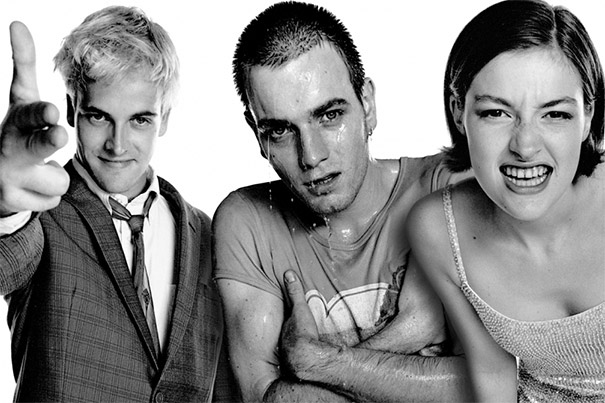
Fresh off of working on the criminally under-rated Shallow Grave, Danny Boyle’s directorial debut, he along with Producer Andrew MacDonald and writer John Hodge turned their attention to producing a 90 minute screenplay based on Irvine Welsh’s 1993 novel, the allegedly un-filmable “Trainspotting”. Having impressed them on Shallow Grave, a then relatively unknown Ewan McGregor was cast in the lead role as Renton. Now an international star thanks to his role as Obi-Wan Kenobi in the come-on-they’re-not-really- that-bad Star Wars Prequels, it can be a lot of fun rewatching this film and pretending it is some sort of Star Wars Prequel-Prequel, detailing Obi-Wan’s fight against drug addiction before knuckling down and learning to use The Force. Filling out the supporting cast of friends, fellow addicts and acquaintances, were Ewan Bremner as Spud (and who had previously played the part of Renton in the stage version of Trainspotting), Johnny Lee Miller as Sick Boy, two actors making their debut – Kevin McKidd as Tommy and Kelly MacDonald as Diane, and Robert Carlyle as the psychotic Begbie. Filmed in only 7 weeks on a budget of only £1.5m during mid 1995, it went on to make £12m in the UK alone, $72m globally and was ranked 10th on the British Film Institute’s list of Top 100 British Films of all time in 1999.
But that was the 1990s. How does it hold up now? It’s hard to argue in these dark austerity tinged times that it does anything other than hold up very well. In fact it’s hard to come away from re-watching Trainspotting thinking anything other than the more things change, the more they stay the same. John Hodge’s screenplay would not feel out of place, unrealistic, or more of an historical piece if filmed now. And ironically with the long proposed Trainspotting sequel now about to go into production, I do wonder what it can possibly add to the original when that original still resonates so strongly.
The black humour remains both black and humorous (or in the case of Spud’s unfortunate post-drinking night time accident, brown and humorous) as the characters remain trapped both by the social situations they are in and the addictive spiral they’ve entered into. And the serious moments are still as gut wrenching as ever.
Robert Carlyle’s Begbie remains one of the most frightening characters ever committed to celluloid as he casually glasses and kicks to a pulp someone for the cardinal sin of slightly spilling his pint.
Ewan McGregor manages to make Renton somehow likeable despite his selfishness impacting on the lives of those around him. Most notably Tommy who descends from clean cut athlete to HIV positive junkie after Renton ”borrows” his homemade porn video. Something he never admits to even after Tommy’s girlfriend dumps him because of it.
Ewan Bremner manages to make Spud one of the few likable characters in the film; a weak but amiable man, clearly afraid to do anything but follow the others example. And for this he pays the price by being sent to jail for stealing while Renton gets off with a suspended sentence (by entering a drug rehabilitation program pre-trial), before later getting cut by Begbie when he tries to intervene in the previously mentioned bar fight. But Renton looks after him – leaving him £2000 when he runs off with the money from a drug deal at the film’s denouement. A rare moment of kindness in the whole film.
But it’s the scene where Allison’s daughter Dawn is discovered dead that remains in the memory after all these years and it still hits as hard now thanks to Boyle’s exquisite direction (augmented by Blur’s “Sing” on the soundtrack). You’re immediately hit by the awfulness of someone so all-consumed by the need for Heroin that they neglect their infant daughter to the point of death (perhaps made worse by reports in recent years such as Baby P – it’s all too believable). Sympathy gives way to blame which in turn gives way to disgust as Allison begs Renton for a hit to take the pain away. Selfishness and weakness rule the day once more.
I also don’t accept that the film glamourises drugs and drug taking; an accusation that was levelled at it when it was first released. Maybe if you stop watching after 5 minutes it does. Carry on and watch it in its entirety and you’ll see it for what it is: a modern day Hell where desperation leads to addiction and addiction leads to desperation in a never ending cycle of trying to find fulfilment that never comes. Trainspotting cannot be viewed as anything other than a cautionary tale. These characters feel real because they are. We identify with them, as dubious and unsympathetic as most of them are, because we could so easily become like them. All it could take is something as simple as a stolen video tape. In fact if anything it’s even easier now. All it might take is a file copied off your computer hard drive…
ED HIPKISS









You must be logged in to post a comment Login