

Comics News
Artists Talk About The Right Way To Draw Superman Part One

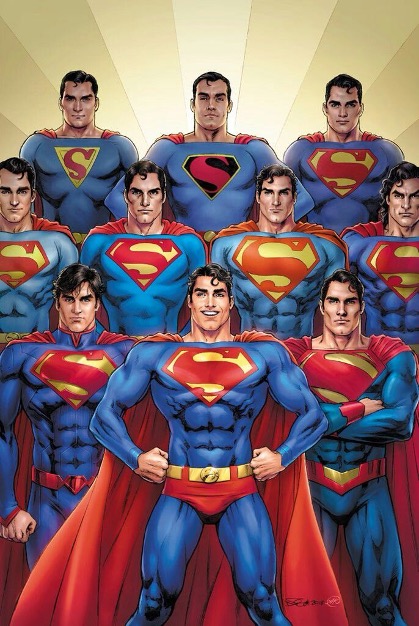
Portraying Krypton’s Most Famous Son
In two previous articles for Tripwire our contributing writer P N Neal asked a number of artists to talk about the best way to illustrate 2000AD’s flagship character Judge Dredd and later spoke to just over sixty artists and creators on how best to approach illustrating Batman.
Links to both of these articles are here:
With the release of James Gunn’s highly anticipated Superman film in July 2025, he thought it may be a good time for a follow up to his previous articles. This time his focus would be Superman and his secret identity, The Daily Planet reporter Clark Kent.
Here is the question he asked this time: “What specific challenges do Superman and indeed Clark Kent present for an artist? Can it be difficult to find the right approach to the character? Also, who is your own personal favourite Superman artist?”
He approached artists that have seen their version of Superman published by DC Comics, but also a small number of other respected comic professionals that may have only illustrated the character in other media or where Superman has been a significant part of their career.
Please note, in most cases Tripwire lists two or three credits for each creator, although accurate these details by no means represent a complete list of their accomplishments.
To start the ball rolling we begin with none other than Rags Morales, the artist who along with writer Grant Morrison relaunched Superman and indeed the entire DC Universe as part of The New 52 initiative in 2011.
Rags Morales
Artist, Action Comics, Identity Crisis, JSA, Hourman, Hawkman
Superman gave me my first job, teaching neighbourhood kids how to draw Superman’s face for 25 cents, and over the years I’ve seen movies and TV shows featuring Superman; in the ensuing years I have seen tales of his heroically legendary past and progressive values and even getting married.
And for me, this is where the rub happens. When you have a virtually indestructible protagonist, the antagonists have to one-up him time and again. It took them over 75 years to do it, but the wonder turned to absurdity when he was able to push a planet back into orbit. Married, defanged and now he’s bending the laws of physics?
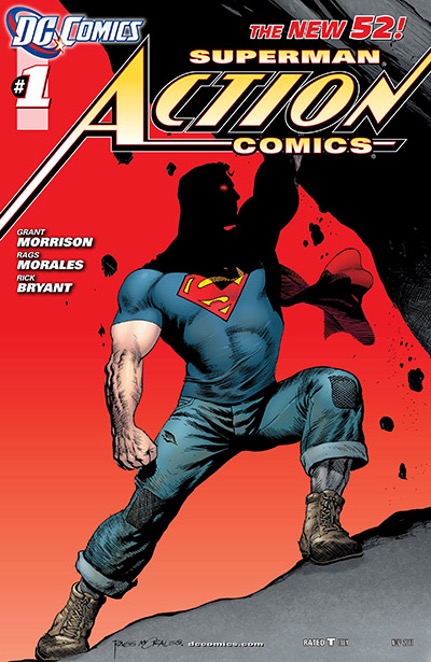
When Grant Morrison took him over, I was beyond myself with relief when we were told to start him off from scratch. Grant had an idea to give him jeans and a T-shirt. How charming. DC didn’t know how I would handle it, so I gave them a promotional piece, of Superman, half in shadow, lifting a boulder.
As for my influence beyond Grant, I saw this Superman being equal parts Lil Abner, Max Fleischer cartoons and a young Elvis Presley.
That works for me, for a mortal man who can do the stupendous, but yet it hurt him physically to do so. That’s what was missing in Superman for decades.
Dan Brereton
Artist, Legends of the World’s Finest, Superman Silver Banshee, Nocturnals
I first illustrated Superman because of a deep desire to do a Batman comic. My editor, Mike Carlin said, “if you wanna do a Batman book with me, it’s gonna have to be a World’s Finest.” That didn’t seem like a bad deal at all!
I endeared myself to Superman through the 50s TV show. To me, George Reeves’ Kal-El had a bemused way of looking at human beings, whether he was saving them, fighting them or working with them on a story. It was the most subtle impersonation of an extraterrestrial living among us as I have ever seen. I don’t know how much of that made its way into the artwork for Legends of the World’s Finest, but it was my way into understanding him. In the art I depicted Superman as a real person but tried to keep that physical ideal based on what had come before- it was never about reinventing him, and a lot more nerve-racking than doing Batman. I felt a responsibility to so many creatives who’d built the character over the decades to get him right.
My Superman artists are Jose Luis Garcia Lopez and Alex Toth.
Michael T Gilbert
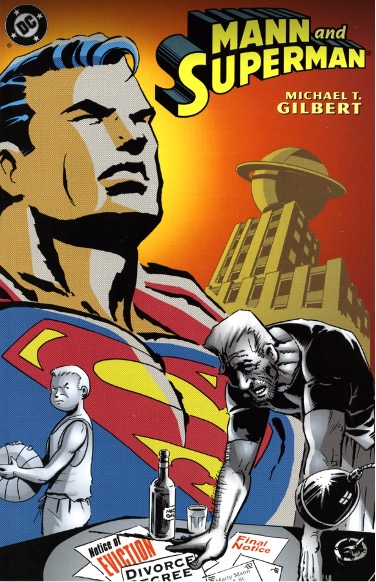
Writer and Artist, Mann and Superman, Mr Monster
Well, perhaps the greatest challenge to drawing both Superman and Clark is not to make them look too generic. There have been a zillion different artists drawing the Man Of Steel, especially in the last few decades, where DC has published literally dozens of Superman-related titles. The portrayal of Superman can easily look all purpose, if one isn’t careful.
In the few times I’ve been privileged to draw Superman, I’ve tried to give both Superman and his alter ego sharply defined figures and faces, and a sense of quiet dignity. I drew my inspiration from the more cartoony Wayne Boring style of the fifties, while also channelling more than a little of the raw energy of Joe Shuster’s early Man of Tomorrow. Those two, along with the great Curt Swan, remain my favourite Superman artists.
And of course, the challenge is to make Clark look a little “shlumpy” to contrast with the powerful, noble Superman.
Ty Templeton
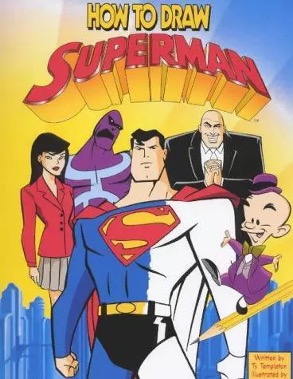
Writer and Artist, How to Draw Superman, Batman and Robin Adventures
I’d say the unique challenge of drawing that character is getting the likenesses correct. Clark and Lois have very specifically constructed faces and body language that the audience is very familiar with. A generic pretty woman and a generic square jawed handsome man isn’t enough to get by in a Superman story, they better feel like people you know well. Superman and Lois are the longest continually running characters in comic history and EVERY reader knows what they should look like. I tend to build the faces from Curt’s facial templates, and he was kind enough to leave behind MANY work sheets drawing them from every angle and showing every emotion. Both Neal Adams and Garcia-Lopez drew Clark and Lois like Curt’s characters, which is part of how good they both were at the job.
It’s interesting to point out, that my favourite comic creator of all time, Jack Kirby, did a run of Superman comics books with his taking over of the Jimmy Olsen series, and it kind of didn’t work, SPECIFICALLY because Jack didn’t bother with the likenesses, and DC felt they had to redraw all the faces on Superman, Lois and Jimmy, making for a jarring difference in style in the faces. Kirby made a great series out of Jimmy Olsen, but it didn’t feel like familiar friends you recognise, so it didn’t work.
My favourite Superman artist was Curt Swan from early on. When I was a child, Swan was the first artist I “recognised” by his style alone. Curt Swan was the “good” artist for the series. He had a realistic, almost photographic naturism to his characters and backgrounds. It is STILL, to this day, the best job I ever had, growing up to join this industry and work with Curt, inking over Swan for a year or so of my early twenties.
Now, having said that, the two BEST artists to draw Superman were Jose Luis Garcia-Lopez and Neal Adams, two of the best comic illustrators of all time, but favourite and best aren’t quite the same thing, are they? The skill sets that Lopez and Adams brought with them are mind-boggling, arguably better at layout and dramatic chops than Swan, but one cannot replace their first love.
John McCrea
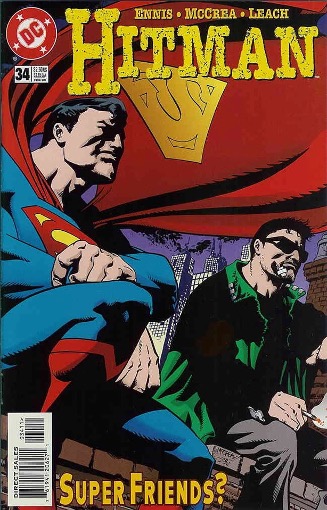
Artist, Hitman, The Boys, Dead Eyes
Note: Hitman issue 34, by Writer Garth Ennis and with John McCrea’s art featuring Superman won the 1999 Eisner Award for Best Single Issue.Superman is one of Garth’s favourite superheroes. I have always found him extremely tricky to draw as he is such a boy scout, and I am more used to drawing your…. troubled superheroes. That said, issue 34 of Hitman where Superman appears, is a great story. I just wish I had been more up to the task. I feel like I can draw a pretty reasonable Superman these days, but with guys like Dan Mora about, I doubt I will get the chance to ever draw him again!
Bart Sears
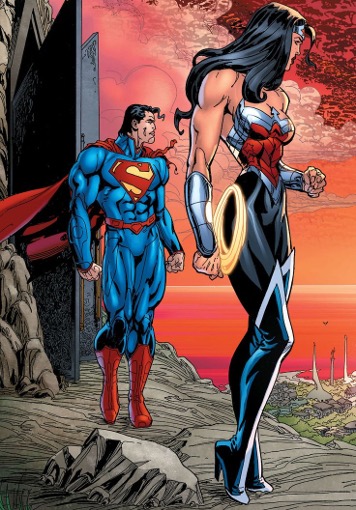
Artist, Superman/Wonder Woman, Justice League Europe, Turok
I’ve always been intimidated at the thought of drawing Superman. Growing up, Curt Swan was defining both Superman and Clark Kent – for me, anyway – and he is still, by far, my favourite Superman artist.
Kurt Schaffenberger, Murphy Anderson, Jerry Ordway, Neal Adams and a bunch of other artists did great versions, but Curt’s always sticks with me and intimidates me. Superman, in my mind, has always been the God of heroes, and I always felt I wasn’t ready, or maybe mature enough to capture what I see as his understated, regal power. So that was a challenge for me, making him heroic, but not overblown. Calm and strong, but with an innate goodness that shows in how he walks, talks, moves, etc.
Curt Swan captured all of these qualities, to me, for me. I think I finally did him justice in Superman/Wonder Woman #1. No Clark in that… he’s less challenging, in my mind, different vibe than Superman, it’s hidden under the glasses. It’s odd to draw the same character but make him different enough to both be unique characters, and it cannot be by just adding glasses. Curt nailed it. I haven’t had the chance to draw that uniqueness… yet.
Val Semeiks
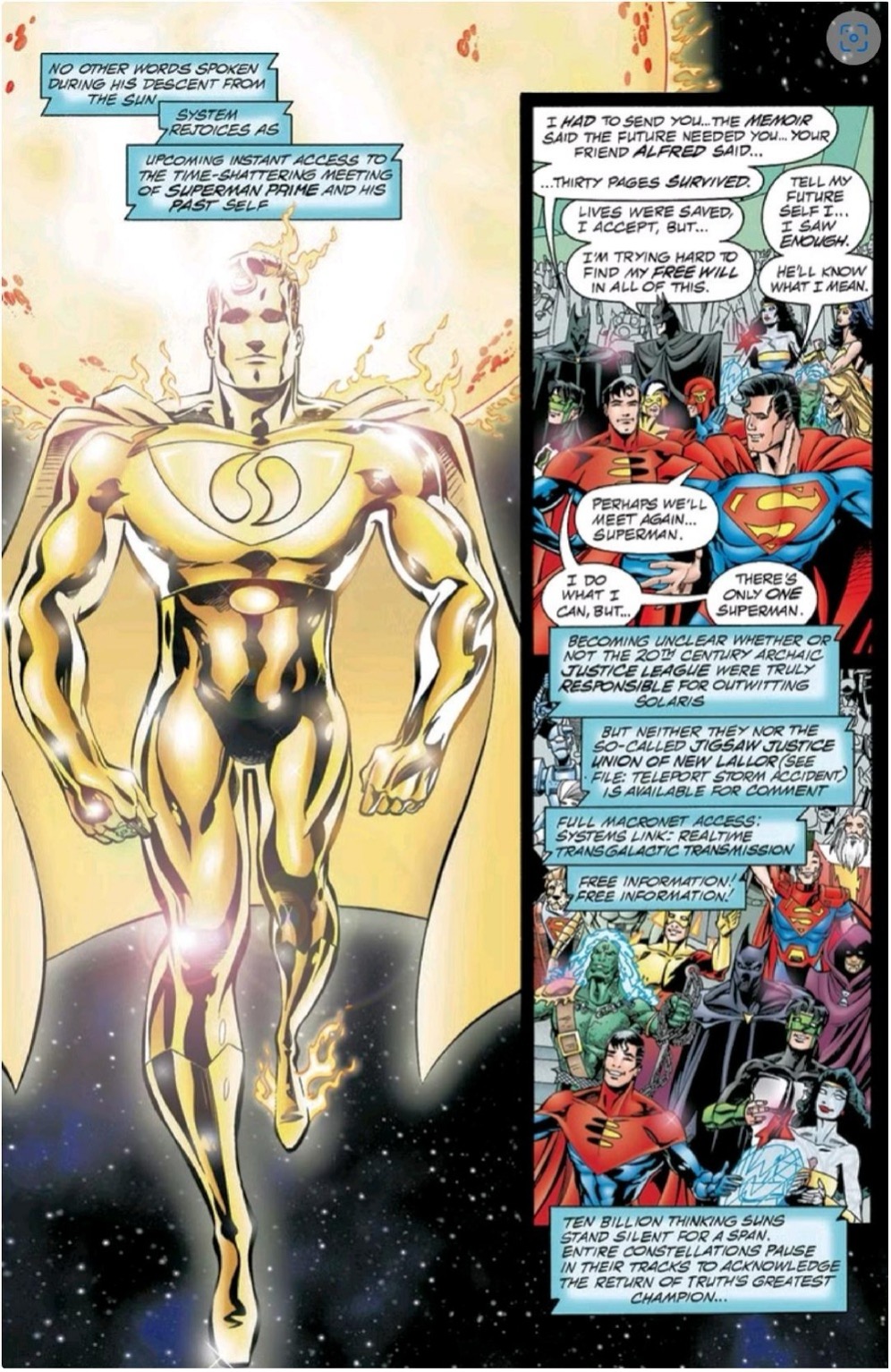
Artist, DC One Million, Demon, LOBO
While I’ve only drawn one Adventures of Superman comic and never a regular Superman book I’ve had plenty of opportunities to work with this comic book icon. The first time was a Superman guest appearance in The Demon. I drew the opening four issue Superman story arc for Legends of the DCU, some one-shots and a whole bunch of Justice League stories. Most notably the core miniseries for DC 1 Million. That one had our current Supes along with the version from one million years in the future. Superman never made an appearance during my run on LOBO, but I always wanted to do a crossover with Bizarro. I think that would have been hysterical, but DC editorial thought he was overused and nixed the idea.
My favourite work with Superman was the DC 1 Million series. It was a great story by Grant Morrison, and I really enjoyed the cosmic aspect of it. I’ve always seen Superman as a very noble character. He doesn’t make wisecracks and is very respectful of everyone. Superman One Million not so much. He’s more stressed out and unsure of himself. The dichotomy was interesting to see play out.
It might be surprising, but Superman isn’t my favourite character to draw. I find him very one-dimensional. I like to draw emotion, and he tends to be one note – stoic and resolute – not a lot of range. I suppose that’s why they have all the Lois Lane and Daily Planet backstory. Just to give him some emotional content. But I find that stuff to be played out and the newspaper thing to be archaic in this day and age. I really hope the new Superman movie isn’t another origin story.
I go way back with Superman. The best Superman artist was and always will be Curt Swan.
Scott Kolins
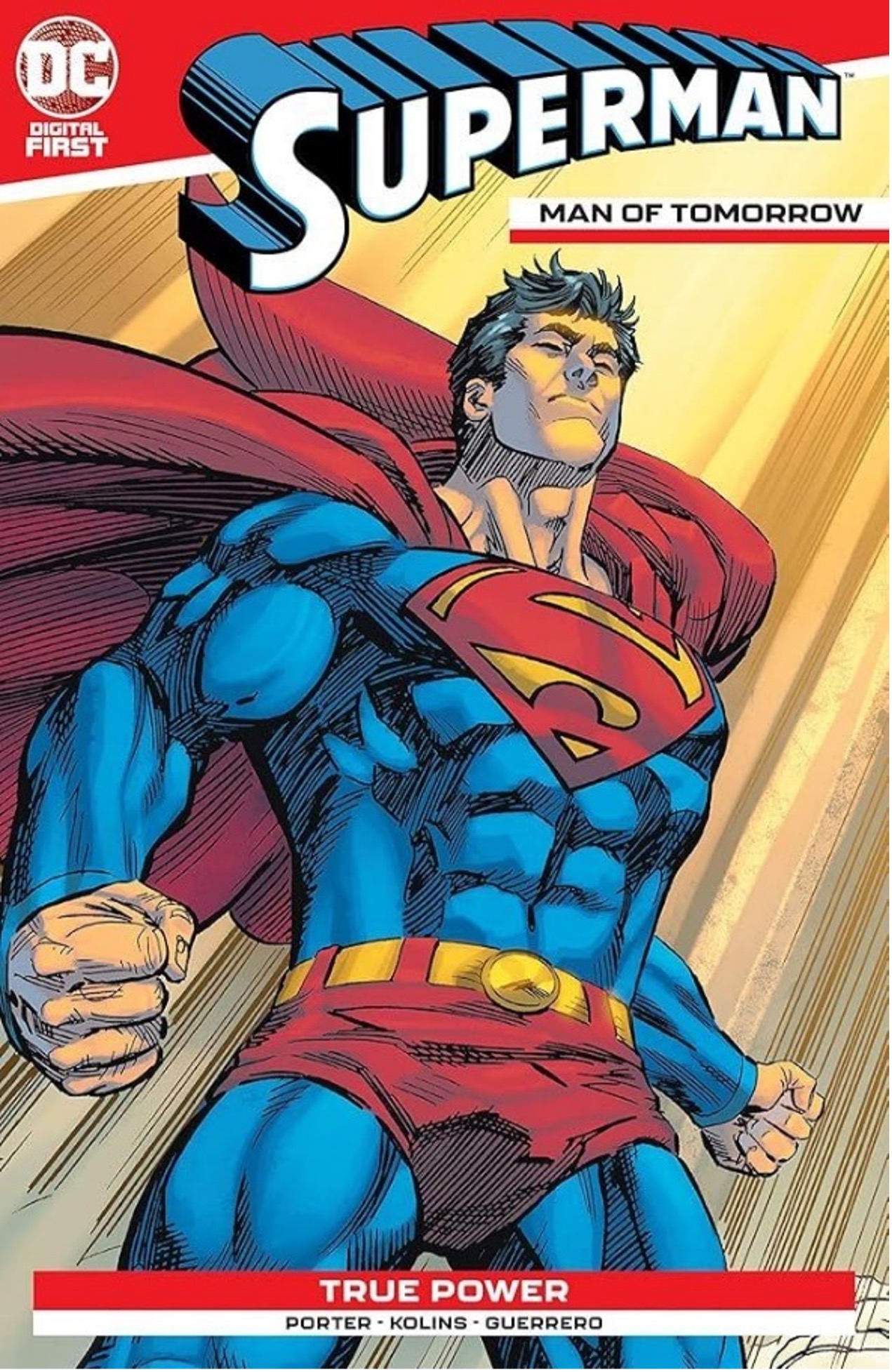
Artist, Superman Man of Tomorrow, Superman/Batman, The Flash
Superman is an iconic character that is very easy, to me, to “get” wrong for an artist or a writer – or for any creative endeavour. He was made of a time that no longer exists, barely comprehensible by readers today, and yet there are many aspects to Superman and his portrayal, to me, that are timeless – though I’ll admit may not actually ‘be’ timeless.
Maybe he won’t connect with readers in 50 or 100 years? Who knows, but for now – the real trick is to get across the power, majesty, honesty, and empathy of Superman, often in a fatherly way – though not dragging the imagery through too much patriarchy or antiquated obnoxious outdated views. He’s very “white” and yet should exude such an aura of empathy, to be brother to anyone from any race. We have to understand that he would die to save each and every one of us. Superman has very un-ordinary features – he’s incredibly handsome and has a physique that sets him apart from most men living on earth – he’s very muscular but not cumbersome.
The Superman costume has to feel like there’s a reality to it – a comfortability and yet has a dreamy “never looks wrong” quality. The cape never drapes ‘wrong’. His shorts never bunch-up. His bold colours should never compromise humanity, but he’s never ‘drab’. The colours and style don’t make the “S” on his chest shield unreadable. His hairstyle is again from a by-gone era but can be subtly played-with and tussled somewhat as to still be appreciated by readers today.
He is eternally somewhere between 25-30 years old. Sometimes you can even outright change a few of these aspects and still get across what embodies Superman if the core feeling of his character still comes across to the reader.
Then you balance all that glorious impossibility with the ‘down-to-earth’ aspects of Clark Kent, his ‘alter ego’. I’m very much in the camp that believes that the character is always Superman who wears the identity of Clark Kent, but that does not mean that there are any falsehoods with Kent. It may be an ‘act’ of sorts, wearing glasses he doesn’t need, or running to catch the elevator and missing it – but it’s part of his empathy, his brotherliness, wanting all of the rest of us to feel connected to him. He chooses to live amongst us, work amongst us. And it’s not a duty. He enjoys us earthlings deeply. We’re his best friends, which is why he continually strives to be our best friend.
I’ve had difficulty drawing many characters but never found Superman or Clark Kent to be very difficult to draw, but that doesn’t mean he’s easy either. I’m not sure I have a favourite Superman artist. I love seeing all sorts of artists and different styles get him “right”.
Jerry Ordway

Writer, Adventures of Superman. Co-writer The Death of Superman storyline; Artist, Adventures of Superman, Superman, Superman/Batman, Action Comics; Inker, Crisis on Infinite Earths, Man of Steel, Superman Time Magazine Cover
When I was first asked to draw Adventures of Superman, in 1986, I realised I was immediately going to be judged against all of the others who had drawn the character. As a younger person at the time, I wasn’t paralysed by the notion. It wasn’t until I got to my first story, when the gravity hit me. Superman was universally known, and loved for many years, with many talented people working on the property. To meet that challenge, I pretty much decided I needed to “own” the character, make it unique to me, yet not violate the work done before me. I still feel strongly that an interpretation needs to be unique, meaning a Superman, or a Clark Kent face should be identifiably different from that of a drawing of Bruce Wayne, or Green Lantern, despite the limitations of 2d line art. I looked at what Superman’s co-creator Joe Shuster drew. His version had a slightly “Roman” nose, and a strong chin, so I embraced that. For a visual, I had found the qualities to shoot for and built on it throughout my time drawing the character. Another influence was Christopher Reeve’s version, in the films.
I have always felt it best, as an artist and writer, to be a “method actor” meaning living through any characters eyes. What does Superman stand for, how would he react in any situation. The films gave me the key, which was Clark Kent was the real person, Superman, his construct. That assured the humanity of what is essentially an alien being, living on Earth.
My favourite Superman artists are Joe Shuster, Jack Burnley, Curt Swan and Jose Luis Garcia-Lopez. If forced to choose one, how could it not be the originator of the character, Shuster? It starts with him.
Alan Burnett
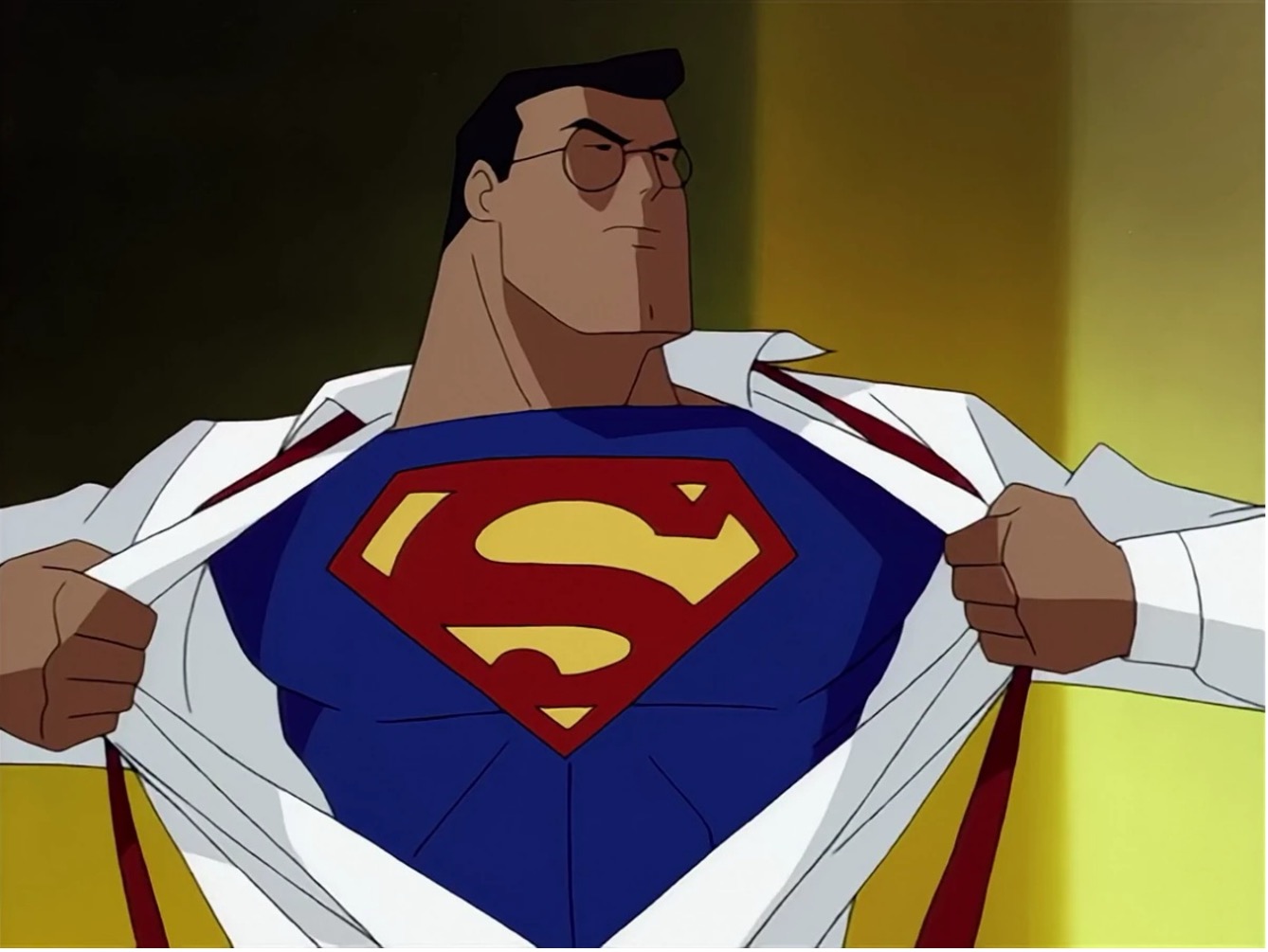
Producer/writer on Superman: The Animated Series
Art Credit: Animated Image heavily Inspired by Bruce Timm.
I grew up on Superman in the ‘50’s and early ‘60’s. Consequently, my favourite Superman artist was Curt Swan, who was the Norman Rockwell of comic book artists. His style had a very inviting photo-realism to it, with poses and facial expressions that were just right to sell the dialogue, and he was good with action too. You could really feel the airy lightness of Superman when he floated in mid-air in a Swan panel.
I’m not an artist, however, but as a writer, and I think Superman’s easier to draw than write. The problem is that he’s so damn powerful, not to mention invulnerable. I was a producer/writer on Superman: The Animated Series from 1996 to 2000, and it was always a challenge to give him opponents who could threaten or even test him. Without that, there’s no tension. You can only watch the Man of Steel getting punched through skyscrapers so many times before it becomes ho-hum. He starts to feel like a muscle-bound ragdoll. You want to find ways to power him down, but after a while you’ve used up your quota of kryptonite, magic or red sun situations.
One time I asked Elliot Maggin, who wrote many Superman comics, what made a great Superman story. He said that the best were those which put the Man of Steel on the horns of dilemma. For example, he could save Planet A or Planet B, but he can’t save them both, even though he has to. Or he could stop a terrible disaster from happening, but to do so would reveal his secret identity. These were situations that challenged his wits as much as his powers.
My favourite of our half-hour “Superman” episodes was very much in that vein. It was called “The Late Mr. Kent,” written by Stan Berkowitz. In it, gangsters plant a bomb in Clark Kent’s car, and as Lois Lane watches Clark drive away, the bomb goes off, exploding the car to smithereens and presumably Clark inside it. So, the big problem was how does Clark come back to life without Lois suspecting he’s Superman?
Our Clark, by the way, was a throw-back to the George Reeve’s version. He was a competent reporter and stalwart guy, whom Lois saw as her biggest competition. In some ways though, I prefer the Christopher Reeve version, the fallible guy who’s putting on just enough of a bumbling act to thwart any hint that he’s the Man-of-Steel. There’s great fun in that, especially that the Man of Steel is Clark’s greatest competition for Lois’s affection. How many times do guys think to themselves, “If she’d only forget about him and pay attention to me she’d find the Superman she’s looking for”? That’s Clark Kent’s enduring lament.
We touched upon it in another favourite story – a three-part epic of Superman’s first team-up with Batman. What made it so much fun was they didn’t like each other from the get-go, and to exacerbate matters Clark looked on helplessly as Lois and Bruce Wayne became an item. Superman was very human in that one, and that may be the real secret to a great Superman story – to break that thick, iconic shell and reach in to find a man who may not be so perfect after all.
Mike Carlin
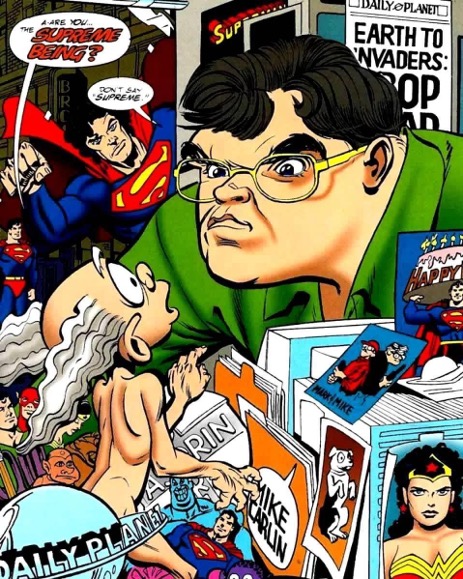
DC Editor: 1986-1991, DC Group Editor: 1991-1995; DC Executive Editor: 1995-1998, DC Vice-President/Executive Editor: 1998-2004 DC Senior Group Editor: 2004-2010, DC Creative Director Animation: 2011-2023. Retired: 2023-2058 (lol) (Essentially the longest serving Superman Comics Editor in History.)
Art Credit: John Bogdanove & Dennis Janke with colouring by Glenn Whitmore from Superman: The Man oF Steel #75.
I always hear writers say that writing Superman is hard… and I’ve never really understood that. Writing a character who tries to do what’s right is all it takes. We ALL know what the right thing to do is… even when we know we’re doing the wrong thing.
Superman with his vast powers could easily do the wrong thing for personal gain— but Ma & Pa Kent’s influence during his formative years put the “man” in Superman. What we did during my years on the books was to surround Superman with real, human characters for him to care about and protect— and to keep him honest. Also showing a Man of Steel who is capable of making mistakes as he strives to do what’s right, makes him more human, and therefore more identifiable to a reader/viewer.
Art-wise there’s much more flexibility after the 70s… more room for artists’ individual styles rather than a house style. We even did connected stories with 4 different artists every month, and folks got that even with differences in style, it was all Superman. Basically, drawing a handsome man with a muscular physique… is the job. There is an established costume and haircut to start from, and the artists’ job is to evoke that established character.
Being in top physical shape evolves over time… in the 50s and 60s Jack LaLanne was the ideal and Superman reflected that look in Wayne Boring and Curt Swan’s versions of Superman. In the 80s and 90s a more extreme Arnold Schwarzenegger-type informed John Byrne, Jerry Ordway, Jose Luis Garcia-Lopez, Dan Jurgens and Tom Grummett’s approach to Superman.
Costume-wise I personally prefer a larger “S-Shield” on his chest because it makes Superman seem broader instantly… and if the cape sits on his shoulders a little that also adds to the broadening effect (more like Chris Reeve’s look and ,unlike George Reeve, thin and attached more at the back cape).
Brandon Routh’s smaller “S-Shield” (and briefer briefs) served to make his physique seem slighter to me.
Dan Jurgens
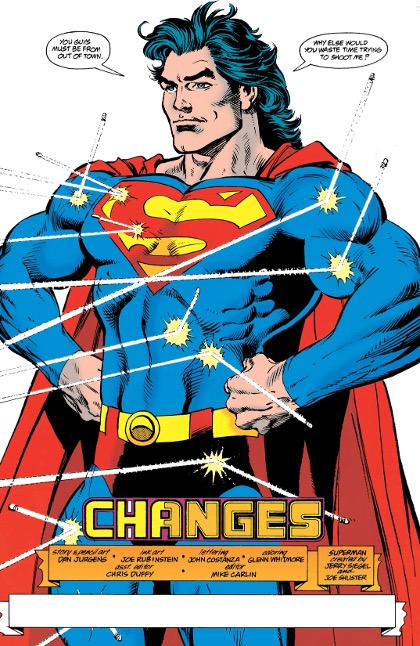
Writer and Artist, Action Comics, The Adventures of Superman, Superman, Superman: Lois and Clark, Booster Gold, Zero Hour
I think Superman has to have a certain blend of humanity combined with a type of majestic feel. He should be the most important person in the room in almost any group setting. He should have the aura of a true leader and someone that people are drawn to follow. Plus, there should always be a sense of nobility. It’s something that Superman embodies, after all. Clark is a bit different. He should feel smaller than Superman. And maybe even a bit ill-at-ease.
I think the idea of capturing different aspects of Superman is always a bit of a trick. An artist should be able to convey the sense of incredible power while also capturing the sense of humanity that is crucial to who Superman truly is.
As for my favourite artists? Well, I can’t narrow it to one, but I certainly have three. Curt Swan, Neal Adams and Jose Luis Garcia-Lopez would make my list… and it’s hard even to get it to just three!
Tom Grummett
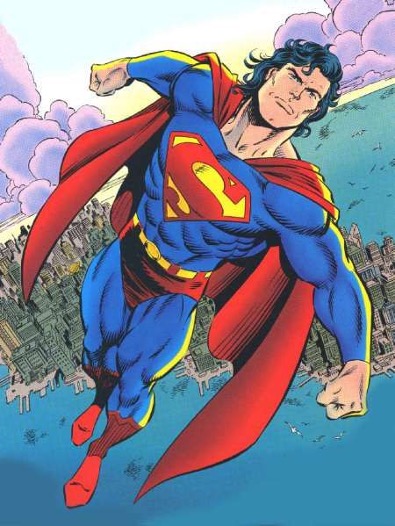
Artist, Action Comics, The Adventures of Superman, Superboy
I can’t speak to how other artists have faced the challenge of drawing Superman. I can only relate an odd situation that I encountered when I first took on the character.
I found that drawing Superman was easy, but Clark Kent was more difficult. I found I had to approach Clark as a completely separate character: otherwise, Clark always looked to me like Superman wearing glasses! Once I shifted my mindset, problem solved.
I don’t think I ever confided this with any of my colleagues at the time, or since. It would have been interesting to see if anyone else had a similar experience. I suspect it was just my own strange little artistic quirk.
My strongest influence was clearly John Byrne’s version of Superman, but I also was inspired by John Buscema’s take from the second Superman/Spider-Man team-up. I loved the physicality and power they brought, but I think my favourite Superman artist has to be Jon Bogdanove. I envied every single page he would turn in.
If your favourite Superman artist has not yet been featured please return to Tripwire’s Website in a few weeks for Part Two of Paul’s article, he promises he has a few more BIG surprises up his sleeve.












You must be logged in to post a comment.