


Feature
Throwback Thursday: Akira

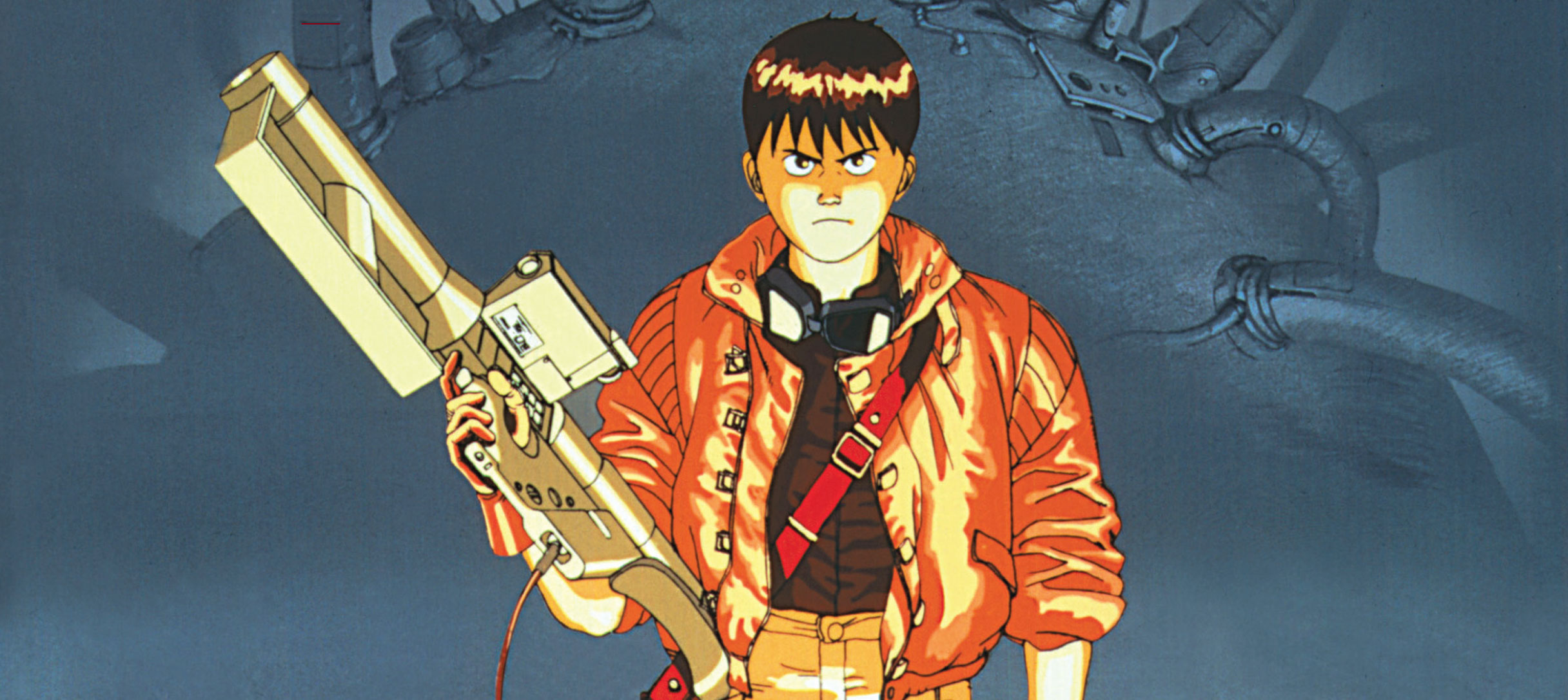
♦Back in Tripwire #55 which was published back in July 2011, our writer Peter Mann took a look at seminal anime film Akira so here is that piece again…
City of Tomorrow
TRIPWIRE takes a trip back to the 1980s to assess the impact of Katsushiro Otomo’s seminal Akira movie
The road to Akira begins with Katsuhiro Otomo, a Miyagiborn artist moving to Tokyo in 1973 to follow his dream of writing and drawing manga. His first (unfinished) science-fiction work
Fireball was in 1979, following on from earlier work writing and adapting stories, principally for the magazine Action. Although Fireball was never finished, it is thematically similar to his later manga such as the graphic novel Dōomu (1983), winner of the SF Taisho Award, and Akira.
Otomo began work on the manga version of Akira in 1982. It took him the next eight years to complete, with 2182 pages of Akira serialized in Young Magazine from 1982 until 1990.
Subsequently it was collected in six volumes by Kodansha, and was first published in English by Marvel Comics’ Epic imprint Set in the post-World War III city of Neo- Tokyo in the near future, Akira is the first cyberpunk epic, and tells the story of Tetsuo Shima, a member of the Shotaro Kaneda’s Capsule gang, who gains psychic powers after a conflict with Esper Takashi — one
of three powerful psychics who are part of a secret government project run by The Colonel. Tetsuo’s powers lead him to become the leader of the Clown gang in opposition to Kaneda, but also attract the project’s attention and threaten his sanity. Tetsuo is forced to join the government project and eventually harness the power of Akira, the project’s test subject whose
powers destroyed Tokyo. Tetsuo releases Akira, who turns out to be a little boy. Over six volumes we follow the story of Tetsuo, Kaneda, and Akira, how their powers develop, and their inevitable confrontation. Akira has no consistent ‘hero’, but Shotaro Kaneda and Tetsuo Shima are the main protagonists.
Akira was an instant success, due in large part to Otomo’s art. Akira combines the more traditional manga style with a line reminiscent of Herge’s ‘clear line’ style, but more, brings a formal, cinematic feeling of space and motion to the work in the manner of Krigstein’s Master Race. It’s no surprise that the anime Akira has a kind of hyper-real quality to it: as the manga Akira progresses it becomes at the same time increasingly formal and kinetic.
The anime version of Akira came out of other work Otomo did while working on the series. Otomo worked on the anime movie Harmagedon (1983) as a character designer, leading to him writing, drawing and directing a segment of the anthology feature Meikyû Monogatari (Neo Tokyo) (1987). This work led Otomo to decide, during the serialization of Akira, to bring it to the screen. In 1988, the anime film adaptation of Akira was released, and its success forced Otomo on a permanent move from manga to a career in anime and television. Although the anime Akira is different to the manga, altering the plot and compressing the timeline considerably, it carries the same messages and concerns about power, corruption and emotional isolation as the manga.
Akira’s high-quality animation saw it become a cult classic outside of Japan, and kick-started the increasing popularity of anime in the West. Anime of the time tended to use the same style of limited motion animation as Family Guy does today. Only portions of characters move— mouths, eyes — while faces, bodies and background remain static. Akira’s more sophisticated look was achieved by using detailed drawings, and a lot of them — 160,000 animation cels according to the Production Insights article in the third issue of Epic Comics’ run of Akira. In addition Akira, for the first time in anime, used accurate lip-synched dialogue, by recording the voices before the animation, instead of after, as was the norm. Visually the anime Akira is as distinguished as its manga original. Otomo uses a hyperkinetic camera style, taking you into every car crash and every explosion — this may actually be where ‘bullet-time’ originated and Otomo’s influence on action blockbusters has been considerable.
To some extent Otomo is cursed to be known as ‘the man behind Akira’, although he is anything but a one-trick pony. Since Akira his work ranges from the anime steam-punk epic Steamboy (2004), to mixed CGI and live action in Bugmaster (2006) and he has most recently been mooted as a possible director for a liveaction version of Akira, which is stirring up controversy.
“I don’t really mind how people regard me. You know, when I wrote Akira after Domu — which is even more SF-like than Akira — a lot of fans complained about it. Then, when I made Steamboy after Akira, a lot of Akira fans asked me why I made a film like Steamboy. It’s always the same thing. It’s useless for me to follow those kinds of opinions. I should do what I want and not repeat myself. I don’t mind what others think of me or my work. I don’t think there is anything to gain from that for me. What I hate most is to stay stuck in the same spot,” Otomo explained in an interview.
“Don’t get me wrong, I believe it’s an honour that people like my work enough to become devoted fans, but each time I feel like I’m no longer in the same spot as them.”
PETER MANN









Pingback: Akira | ohitsjuni