

Film News
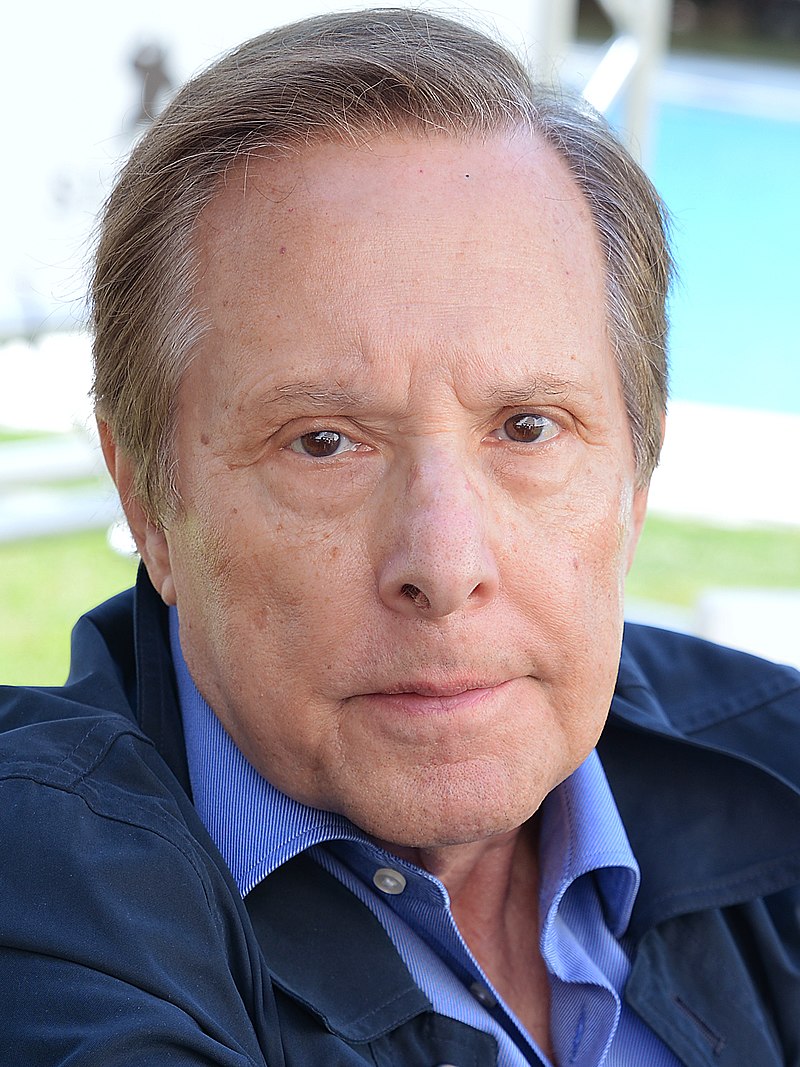
William Friedkin, Director Of The Exorcist and The French Connection, Passes Away

Farewell To A Hollywood Original
yesterday the sad news reached us that director William Friedkin, director of The Exorcist and The French Connection, has just died at the age of 87. Here’s his obituary from our friends over at The Hollywood Reporter…
William Friedkin, the Oscar winner behind The French Connection and The Exorcist who was one of the most admired directors to emerge from a wave of brilliant filmmakers who made their mark in the 1970s, died Monday. He was 87.
Friedkin died of heart failure and pneumonia at his home in Bel Air, his wife, former producer and studio head Sherry Lansing, announced.
His pictures, which also included Sorcerer (1977), To Live and Die in L.A. (1985) and Bug (2006), were marked by an exceptional visual eye, a willingness to take what might have been a genre subject and treat it with high seriousness and a sense of how sound could add a subterranean layer of dread, mystery and dissonance to his stories — a haunted and haunting quality that lifted his visceral works into another realm, conveying a preternatural sense of “fear and paranoia, both old friends of mine,” as he said in his 2013 memoir, The Friedkin Connection.
He was part of a brilliant generation of filmmakers who upended the studio system, making movies that were provocative, individualistic and antiauthoritarian. Several of its members at one time joined forces to create The Directors Company in an attempt to give themselves the independence they cherished, though internal disagreements led to its dissolution, not long after they had collectively turned down Star Wars.
One might debate who among these helmers was the most talented, but not even the bravest of them could rival the Chicago native’s willingness to tilt at the establishment. When Alfred Hitchcock told him off for not wearing a tie on the set (he had hired the young filmmaker in 1965 for an episode of NBC’s The Alfred Hitchcock Hour), Friedkin got his revenge: The night he won the Directors Guild Award for The French Connection (1971), passing Hitchcock on his way from the podium, he yanked his snap-on bow-tie and quipped: ‘How do you like the tie, Hitch?’ “
It would have surprised Hitchcock that Friedkin revered the master’s work, as he did that of Orson Welles, whose Citizen Kane he saw for the first time when he was 25. A true cineaste, he in turn was revered by a younger generation; indeed, shortly before Damien Chazelle became the youngest director to win an Oscar (for La La Land), he made a pilgrimage to Friedkin’s home high up in Bel-Air just to meet the filmmaker.
Even in a work that might have been a B movie with another helmer, Friedkin could dazzle with his skill and originality. The Exorcist (1973), one of his most admired films, begins in a Middle Eastern desert, where an old man stumbles through an archeological site toward a hole where something — who knows what? — has arrested others’ attention. The sequence is terrifying, not just because of its desaturated images and the naturalistic performances that capture the heat, sweat and humidity of the locale, but also because of a soundtrack in which a buzzing, insistent sound reminiscent of flies — perhaps the lord of the flies himself — grows ever louder and more menacing.
It is either ironic that neither Friedkin nor William Peter Blatty, author of the novel on which the movie was based, regarded this as a horror story but rather as a drama, to be as fully and richly explored as any other. Friedkin remained fascinated with the subject his entire life and returned to it for his final film, a documentary about the oldest-living exorcist, The Devil and Father Amorth (2017), in which he personally manned the camera during an exorcism.
The French Connection (which won Friedkin his Oscar) could equally have been a routine potboiler; instead, it turns the bitter cold of a New York winter into a presence as tangible as the evil spirit in The Exorcist, inescapable for the film’s antiheroes, two New York City detectives played by Gene Hackman and Roy Scheider, as they pass through an urban empire littered with debris and human detritus, one almost indistinguishable from the other. Evil lurks in these mean streets just as much as in the elegant home inhabited by the 12-year-old Regan (Linda Blair) in The Exorcist.
Good and bad intrigued Friedkin, but in many of his films a blurred line existed between them and what separated his heroes from his villains was often their intentions rather than their specific actions. The character Hackman plays in French Connection horrified the actor, even though he was based on a real-life detective, and Friedkin had to push him ferociously to get him to portray the man in all his rough-and-tumble, bullying and bigoted ways.
A deep pessimism suffused his work — even The Exorcist and French Connection, his most commercial films, end not in triumph but in partial failure, with the death of a young priest in one and the escape of the narcotics mastermind in the other — even though he was witty, funny and fully engaged in life right to the end. His films’ ethical complexity showed them to be cut from the same cloth as Chinatown (Roman Polanski), The Godfather (Francis Ford Coppola) and The Last Detail (Hal Ashby), some of the other masterworks of the 1970s, all of which grew out of the cynicism bred by the Vietnam War and later deepened by Watergate.
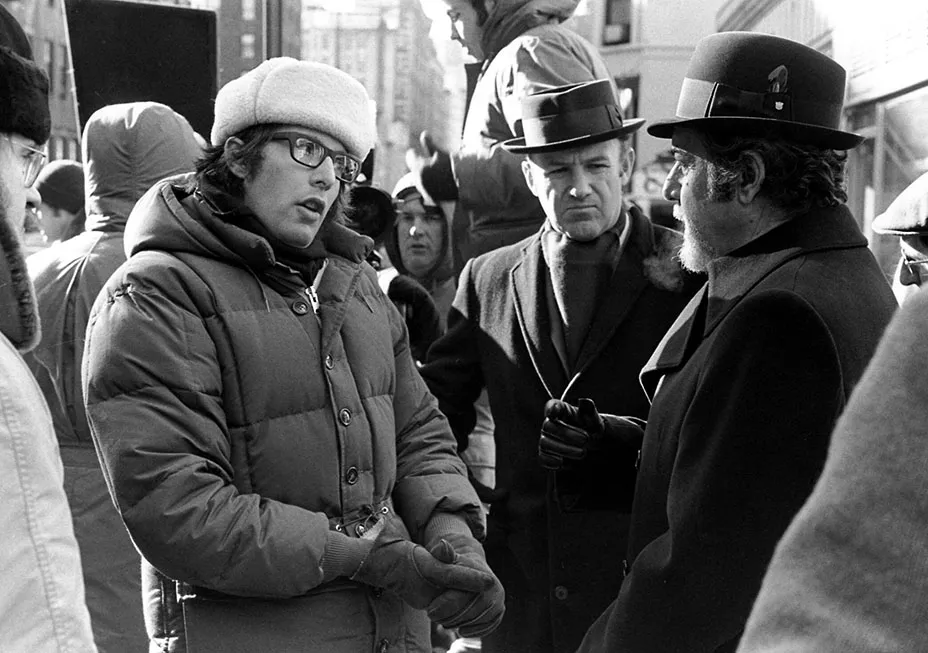
photo courtesy of Photofest
Friedkin was one of the most impressive directors who came up in the 1970s and everyone at Tripwire would like to offer our condolences to his friends and family.
Read the whole obituary here









You must be logged in to post a comment.