

Doctor Who
Tripwire’s Man In Los Angeles Reviews Episode Six of Doctor Who Season One


Rogue’s Gallery
Tripwire’s man in Los Angeles Robert Cave just reviewed Doctor Who Season One: Rogue …
Rogue
Writers: Kate Herron & Briony Redman
Director: Ben Chessell
Well, this will likely be the episode that splits opinion on multiple axes. And it’s the first one not to be written by a current or former showrunner, so, no pressure, eh?
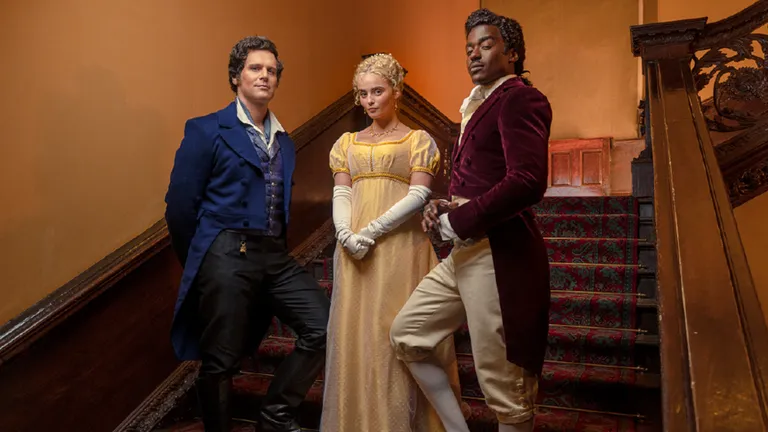
I am not a fan of regency fiction in general and have never watched an episode of Bridgeton. Consequently, this one wasn’t really designed for me. But that’s alright and does not mean there was nothing in it for me to enjoy. In fact, there is a whole lot to love. On first watch, I found it genuinely exciting. The rules of this latest iteration of Doctor Who are still so malleable at this point that I genuinely thought Ruby (Millie Gibson) might have been killed… so when it was later revealed that she had used her psychic earrings’ battle mode I must confess I was almost disappointed.
Don’t get me wrong. I love Ruby and it is a testament to Gibson and Gatwa’s acting that I was so sold in the moment. On reflection, killing off Ruby here to resurrect her somehow next week wouldn’t have been nearly as good. It would have been too similar to Clara’s fate in Face the Raven/Hell Bent. But for a few minutes there…
But let’s not get carried away with stories that didn’t happen when there was so much that did. I loved the villainous Chuldur, avian-themed aliens that were surely a not-so-subtle reference to the Featheringtons of Bridgerton? The costumes were magnificent and the Chuldur shape shifting gave the cast a lot to play with, including the moment where a vicar is apparently possessed more for his clothes than his identity. Torchwood alum Indira Varma chewed through the scenery in the dual role as Duchess of Pemberton and the lead Chuldur, and if you can’t chew scenery as a Doctor Who monster, when can you?

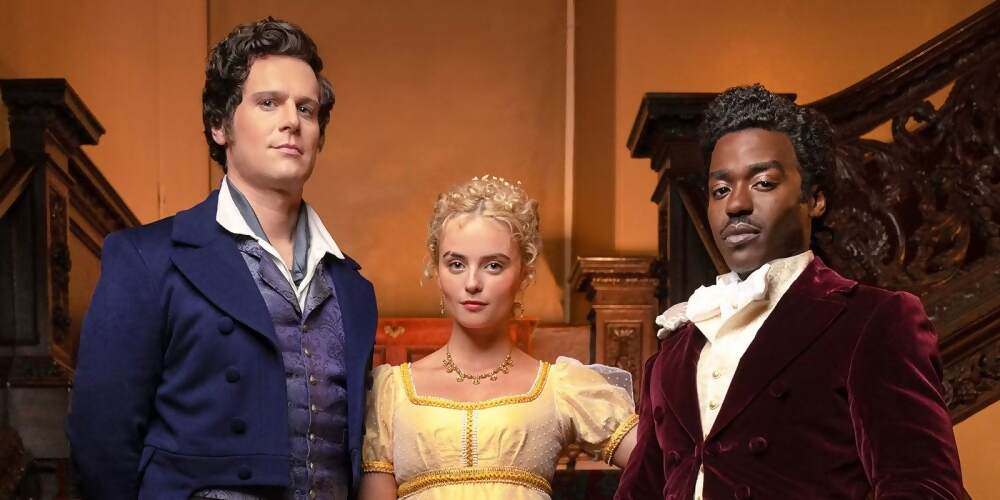
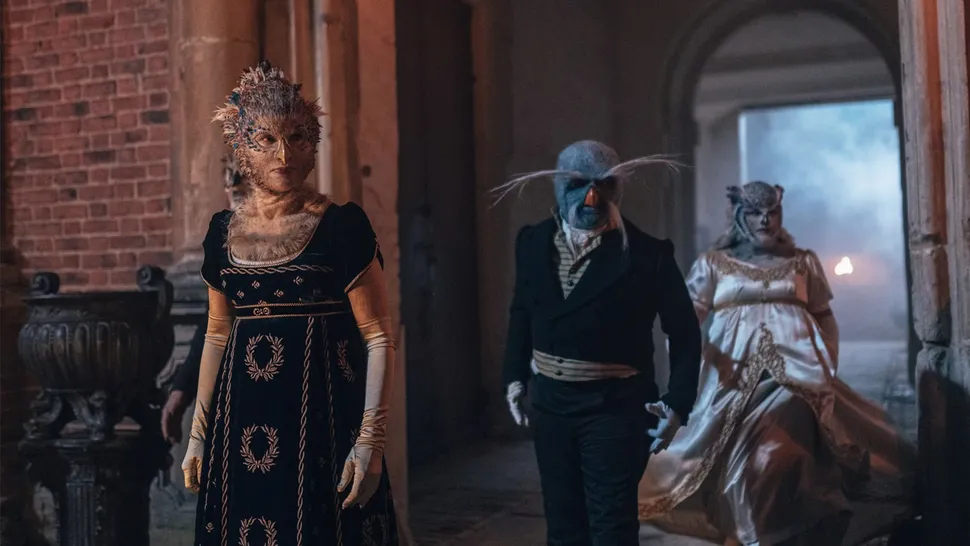
Which brings us to the central conceit of the episode; that this is Doctor Who cosplaying Bridgerton. But this is more than a pithy elevator pitch. The Netflix series gets explicitly name-checked four times as a TV show, and, like the Star Trek reference in Space Babies earlier this season, there is also the notion that this somehow IS Bridgerton, an alternative universe 1813 with slightly less racism and homophobia than the one that existed in our universe. Of course, Doctor Who has gone to alternate universes before, but it seems that now such trips might become more common. If so, I have one ask; can we please avoid doing a Stranger Things crossover?
I loved all the music. I’m a sucker for a classical arrangement of a pop tune, and Kylie is an old friend of the show at this point, so it was great to have Can’t Get You Out of my Head played repeatedly. It’s a banger, it’s a bop and it’s a queer signifier.
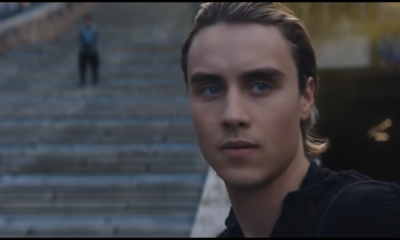
Which brings us to Rogue (Jonathan Groff) – a genuine love-interest for the Doctor. The possibility of their relationship gently unfurls throughout the episode as the pair spark off against each other. There has been so much evolution to the character of the Doctor from the show’s classic era, where he was portrayed as relatively sexless (despite having a canonical granddaughter). The relaunch era made it clear that “The Doctor Dances” and gave him a romance with Rose Tyler (Billie Piper), the first companion for this era, and River Song, the daughter of some other companions, conceived and gestated in the time vortex. But it was all still very straight. This new third Disney+ era gives us the queerest Doctor yet, first with David Tennant’s fourteenth Doctor experiencing some same sex attraction in Wild Blue Yonder, and now Ncuti Gatwa’s Doctor finding his bounty-hunting, Dungeons and Dragons-loving Rogue.

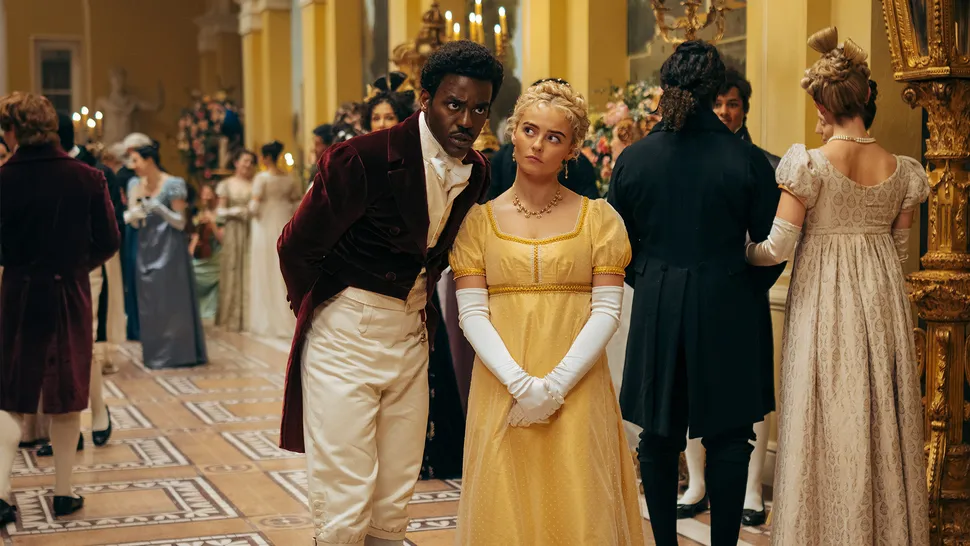
For those who don’t like it, I would suggest that Doctor Who has always had a queer sensibility. It’s been camp from the beginning. The Daleks are as camp as Christmas. If you have a problem with that, you will probably get more enjoyment watching something else. And it will be your loss. Don’t let the door hit you on the way out. Or, do, I couldn’t care less.
Ncuti’s Doctor is here and he’s queer. We should all already be used to that by now. Which is what made the ending all the more confounding to me. A relationship is suggested in all its tantalising possibilities, and in this new age anything is supposed to be possible… so when we reach episode’s-end with a restoration of the status quo ante, it all felt more than a little disappointing. That disappointment will be mitigated if we actually see Rogue again. I hope we do. And isn’t his ship gorgeous? Not sure why it too appears to have an avian theme. Could Rogue be a Chuldur too? We know so little about him. Literally everything is up for grabs.
There has been a lot of set up this season, and that is entirely understandable. But there does need to be some pay off down the line. Otherwise, it is like the Fugitive Doctor (Jo Martin) of the Chris Chibnall era all over again. So much promise, not enough delivery.
And speaking of the Fugitive doctor, we get to the part of the episode that will really have Who fans split. In there among all the different incarnations of the Doctor we see on the scanner is Richard E Grant, who played the Time Lord in the ill-fated 2003 web-animation Scream of Shalka. Does this mean the Shalka Doctor is now canon? How does this effect the numbering? These are the questions that will have all the committed Whovians arguing in the comments sections and on their multiple YouTube analysis channels. And Richard E also played the Great Intelligence in The Name of the Doctor. What does it all mean?
Maybe we will find out next week in the first instalment of the season 1 finale. It’s all gone by so quick! This week we had a painting of Susan Twist, next time we will apparently meet her as Susan Triad. S Triad? An Anagram of TARDIS? Will we get any more answers? I will see you then.
Go behind the scenes on the episode here too






You must be logged in to post a comment.