

Doctor Who
Tripwire’s Man In Los Angeles Reviews Episode Four of Doctor Who Season One

Legends Coming Back To Life
Tripwire’s man in Los Angeles Robert Cave just reviewed Doctor Who Season One: 73 Yards…
73 Yards
Written by Russell T Davies
Directed by Dylan Holmes Williams
Wow. That’s more like it. I really enjoyed 73 Yards. It leaned heavily into its vibe. It was supremely spooky and heavily marinated in a sense of the uncanny.
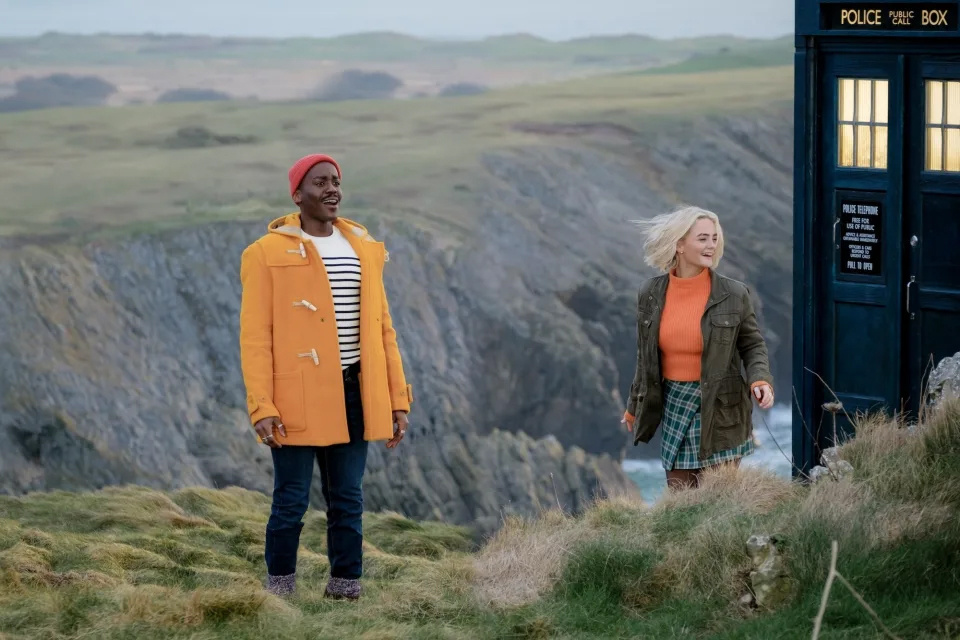
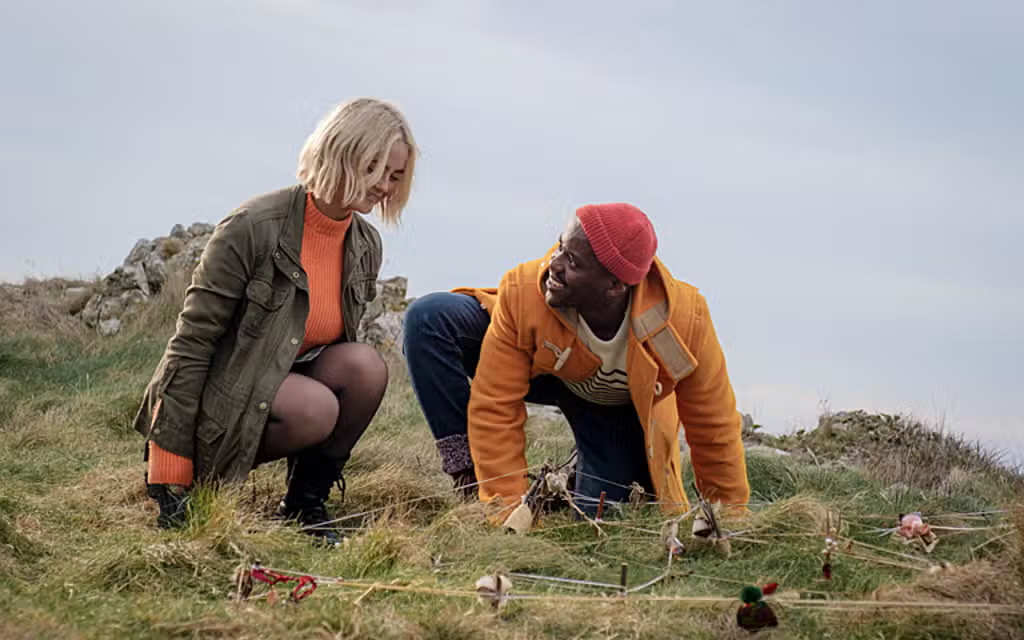
Eagle-eyed viewers would have had an inkling of where the narrative might be headed from the moment the episode title and writer’s credit appeared at the beginning of what you might have thought was a cold open, but was really, just an open. With the Doctor (Ncuti Gatwa) literally wiped from existence with a pan of the camera after breaking an intricate fairy circle. Yep, this was Millie Gibson’s episode, as Ruby is left alone to fend for herself against not one but two supernatural entities; one called Mad Jack, AKA Roger Ap Gwilliams, the apparent captive of the fairy circle and the other, an old woman haunting Ruby at a constant distance of 73 yards.
There was so much to love about this episode! The showing and telling involved. How the narrative frequently undercut its reveals but did not negate them. It invoked the tropes of folk horror, critiqued them, and employed them anyway, because the notion of a community existing that you can never be fully part of has immense emotional power. Especially in the lives of folk whose whole community is constructed rather than inherited as a birth right.
The ongoing mystery as to why the actress Susan Twist has been heavily played up so far this season so it was good to see Ruby beginning to recognise her face, and even better to see her terrified of the old woman. I love how this suggests whatever her role, the Susan Twist character might play in the grander scheme of things, she too is subject to other powers; she too can be scared.
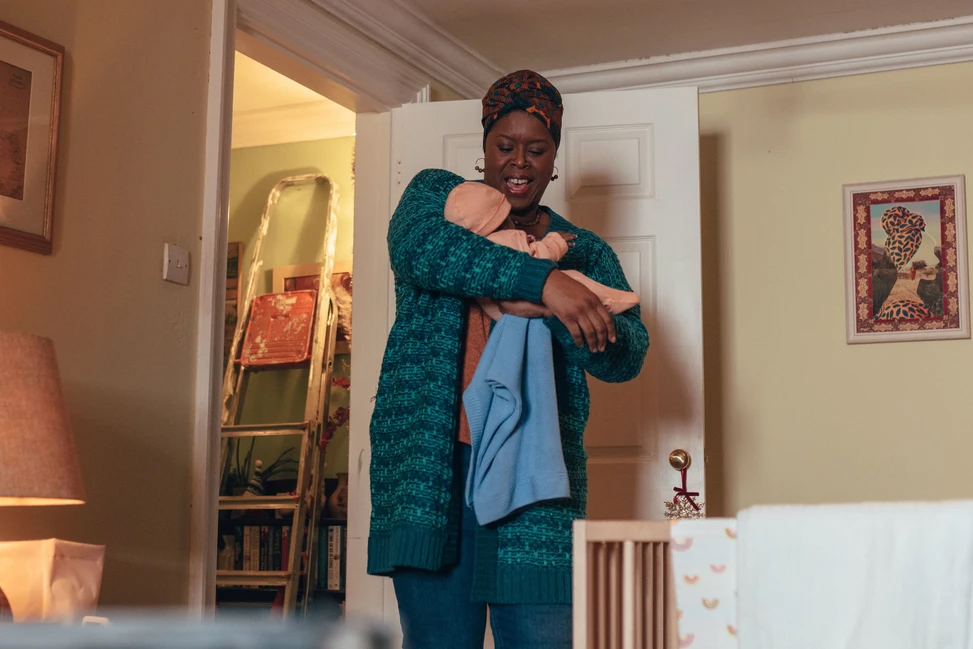
A good story needs its own ineluctable logic to be compelling. So as soon as we saw the distant old woman scaring people and causing Ruby to become further outcast, the nightmare logic dictated that her mum would turn her away too. And worse, Carla (Michelle Greenidge) didn’t just vanish, she actively shunned her adopted daughter. That look of loathing she gives in the back of the taxi! It gave me shivers.
I also deeply appreciated the reappearance of Anita Dobson as Mrs Flood, and her declaration, seemingly to the audience again, that whatever was unfolding in the narrative was “nothing to do with me.” Again, there is a wonderful sense of narrative potency there. That Mrs Flood has a greater role, but this is not of her doing.
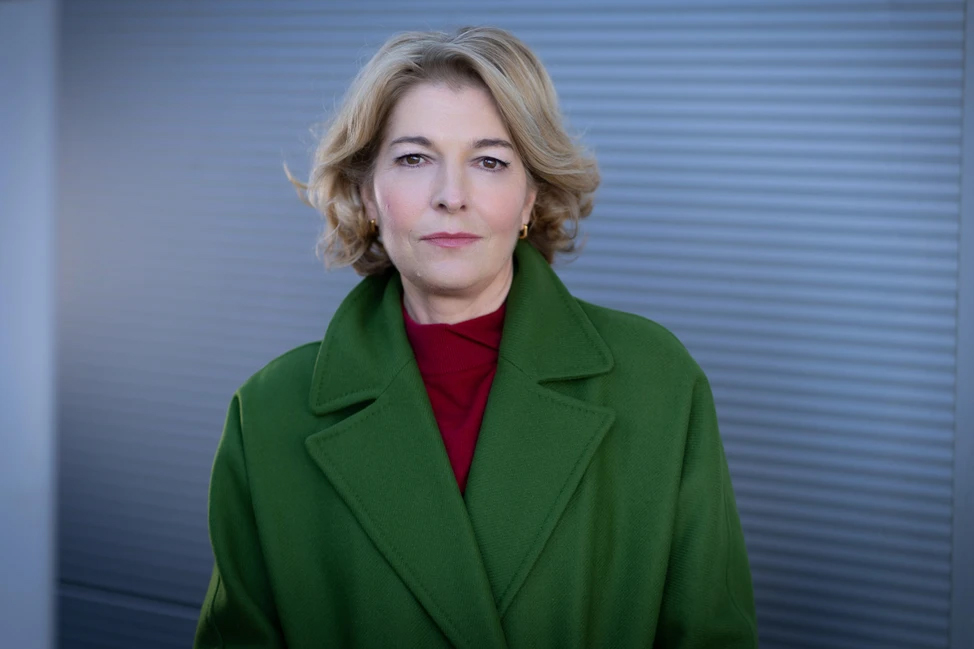
It was great to see Kate Lethbridge-Stewart (Jemma Redgrave) and UNIT, to learn that they have begun to tool up against the supernatural and to also discover that even their best is still not good enough. But that doesn’t prevent Stewart from delivering some delicious exposition that “this timeline might be suspended along your event” and the idea of the TARDIS’s perception filter interacting with the fairy circle and further the line that “we see something inexplicable and invent the rules to make it work”.


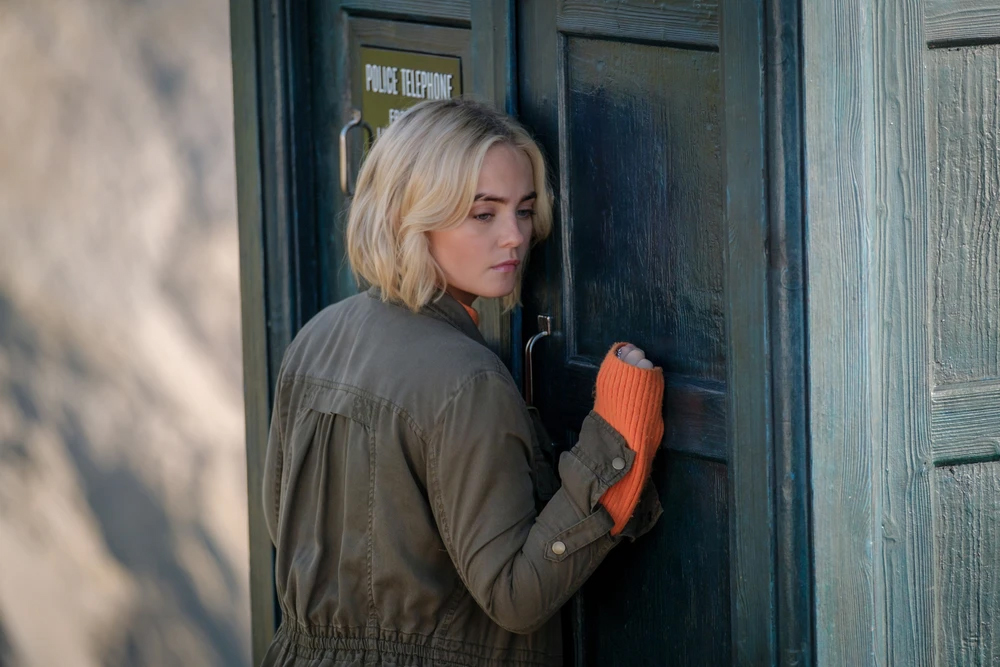
Because that’s what the audience is left to do. To observe the events as they unfold to infer and invent rules that make them work within the narrative. Perhaps creating patterns where none exist. I mean, what are the chances of this episode, which prominently features a 2046 election campaign, going out mere days after the current real-life UK Prime Minister called the 2024 general election?
And yes, I loved seeing Amol Rajan, a BBC News presenter of a ubiquity that almost parallels the ever-distant old woman, in aged-up make up to front the 2046 election coverage. I love that tradition of seeing real journalists playing themselves on Doctor Who.
It all seems like a set-up for Ruby to take down Prime Ministerial wannabe Roger Ap Gwilliam, once known as Mad Jack, the Son of Wales, and return us to the status quo timeline… which, doesn’t quite happen. Ruby does maneuverer Gwilliam next to her apparition, who terrifies Gwilliam into pulling out of the race. But the timeline doesn’t end there. Ruby lives on into old age, and the spectre that haunts her finally begins to get closer. Is it her death? We see what appears to be a montage of her life flashing before us before old Ruby appears to become the apparition that was haunting herself all her life. This time round she is able to warn herself to stop the Doctor from breaking the fairy circle. But is that really what we are seeing? Or are we, the audience “inventing rules to make it work”?
The Doctor mentions Roger Ap Gwilliam before he breaks the circle. Causation is out of alignment, but perhaps that is a feature, rather than a bug in a universe that revolves around time travel. (Incidentally, the same causation problem applies to the Susan Twist characters, the first of which occurred BEFORE the Fourteenth Doctor apparently brought superstition into the universe). Then there is Marti Bridges (Sophie Ablett), Ruby’s fellow volunteer who confirms the Mad Jack is indeed “a monster” and who takes great delight in seeing his haunting interaction with Ruby’s ghost.
For me, it all came back to the opening dialogue. The talk of liminal spaces and the never-ending war between the land and the sea. And there are a lot of names relating to the land and the sea. Gwilliams claims he is “a son of Wales” – a son of the Land? Mrs Flood? Is she a daughter of the sea? Marti Bridges? Whose side is she on? It is a question that is posed in the story itself. The TARDIS has a perception filter that might be interacting with the circle. Are we glimpsing parts of a larger story that we can’t quite yet recognise? Or am I still just “inventing rules to make it work”?

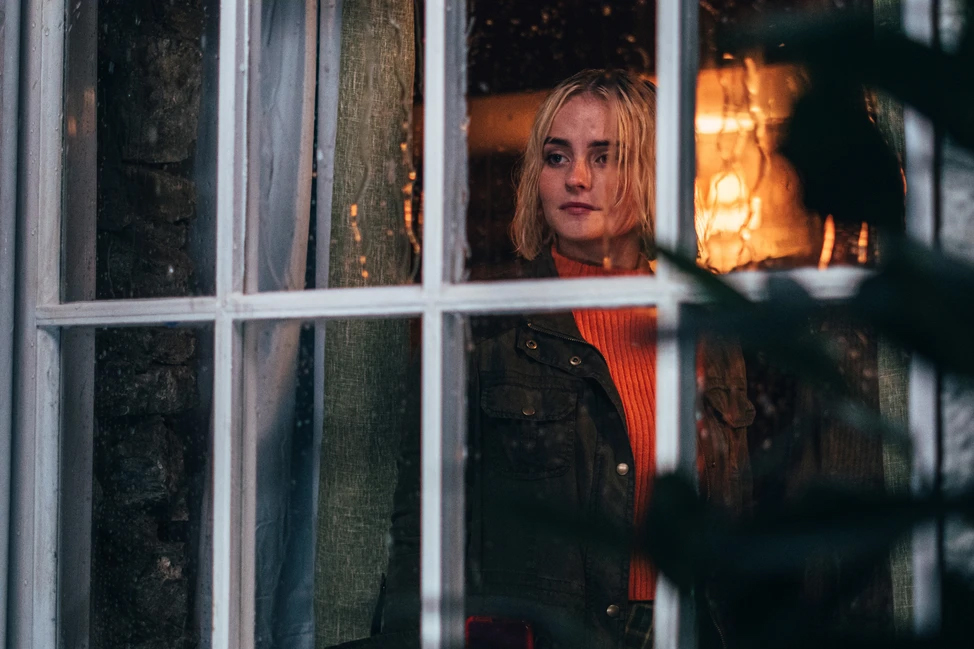

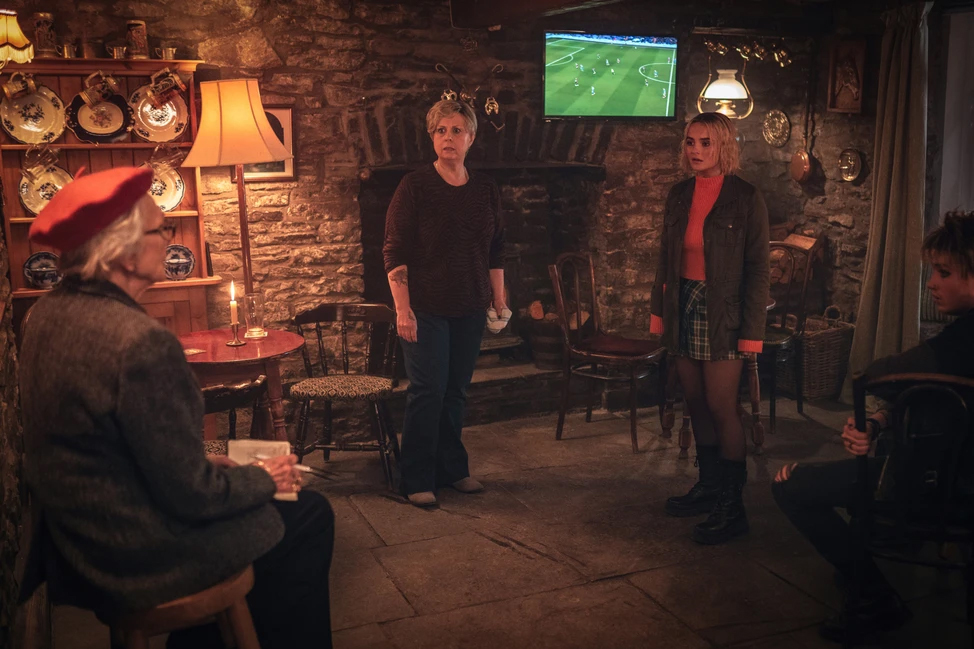
I don’t know. Perhaps, like last week’s episode, BOOM, this too is set up for more that is to come. Maybe not. But its overall vibe, its magisterial invocation of the uncanny, really worked with me. This story could not have been called 66.7 metres. Even 219 Feet would not have done it. There needed to be an appeal to a semi-forgotten quasi-mythical past. A certain vibe. A not-quite neat and satisfactory resolution that demands further work, further engagement from the audience. Yes, it all really worked for me.
I am excited to see where it all might lead and to see what we get next week. See you then.









You must be logged in to post a comment.