

Doctor Who
Tripwire’s Man In Los Angeles Reviews Doctor Who: The Giggle

An End Which Is Also A New Beginning
Tripwire’s man in Los Angeles Robert Cave reviews the latest Doctor Who Christmas Special: The Giggle…
The Giggle
Written by Russell T. Davies
Directed by Chanya Button
Well. That was slightly unexpected. But it does makes sense. And it allows the show to have its cake and eat it. This trilogy of 60th anniversary specials has been a celebration of the first 60 years of the Doctor. But The Giggle draws a line under all that has come before, while still allowing the show to continue with whatever continuity it wants to summon again going forward.
Regeneration is perhaps the most powerful tool in the Doctor Who toolbox. It allows the show to reset and renew and refresh itself for an ever-ongoing future. But the problem with continuing on is continuity itself. Continuity can be a positive force, placing each narrative chunk in some great imaginary mosaic or tapestry, but it can also a be a source of division, drawing a line between the old fans, with knowledge of the bigger picture, and the new, who need to be able to enjoy and appreciate a single story/tile on its own terms.
Few things in media are more off-putting than the need to do what appears to be a load of laborious homework in order to get “caught up.” Oh, and that’s before we get into how a bunch of the tiles are in black and white rather than color, and the special effects work on them can look either a little or a lot out of date because, well it is an old TV show I am talking about and not a tile in a mosaic at all… This metaphor is collapsing around my ears, and it is quite beyond me to fix it now, much like the weaknesses of a 60-year old TV series.
Except showrunners can, by starting over. Star Trek has done it. So has Star Wars. Maybe not with complete unadulterated success in either case, both franchises have occasionally stumbled a bit in their respective multi-series reboots, but they eventually found their feet and told some really fun and engaging stories along the way. Dealing with the less engaging ones is still a work in progress, but then again, aren’t we all?
Ncuti Gatwa’s new Doctor has earned that novel adjective by literally emerging out of his predecessor in a way than no other Doctor has done before, which is a good starting point for a new series on a relatively new platform that is going to be reaching a wider audience than the show has ever managed previously.
But, as ever, I’m getting ahead of myself. That was a really enjoyable special. The three parts are all separate, but they hang together well. And who can deny that three anniversary stories are better than one? Sadly, there was no more Bernard Cribbins. His character, Wilf Mott, was swiftly whisked back to his sheltered accommodation by UNIT, where he will now live on, albeit off-screen. The set-up for this was largely delivered in exposition the Star Beast special, a deft little piece of storytelling that allowed for the inclusion of a final cameo for Wilf (and Cribbins) despite the actor’s death.
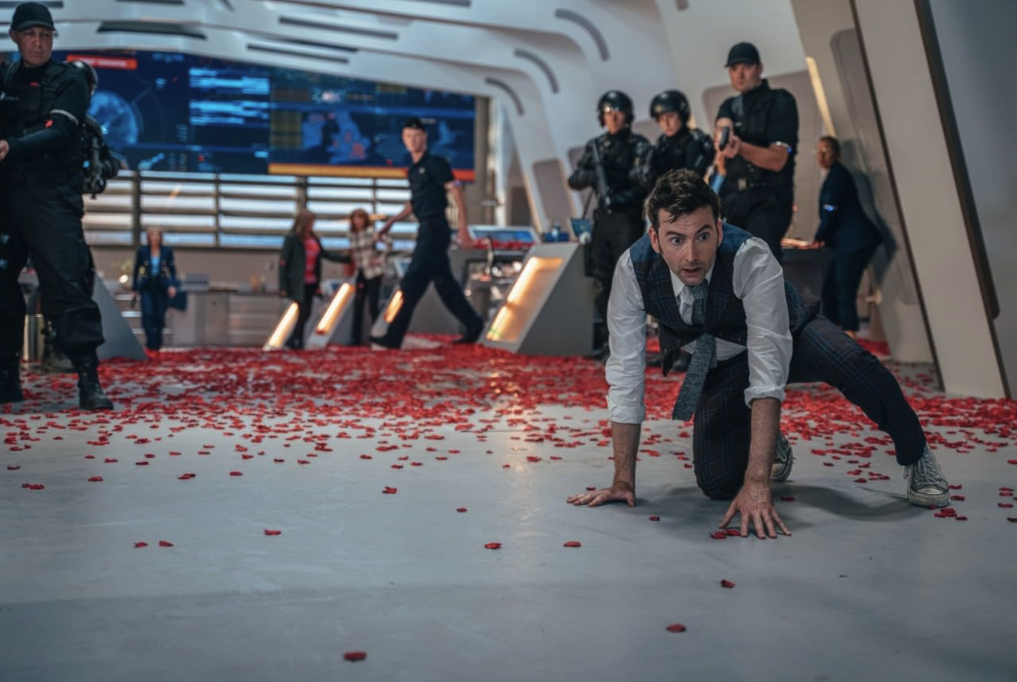
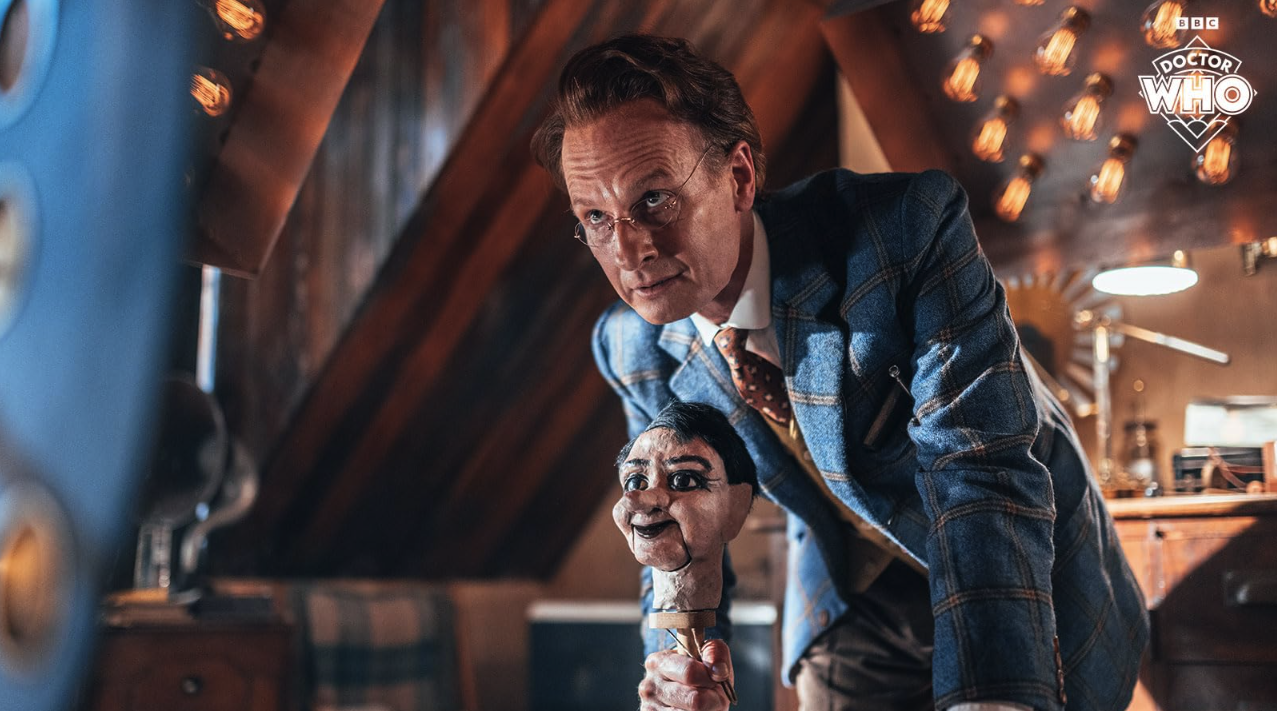
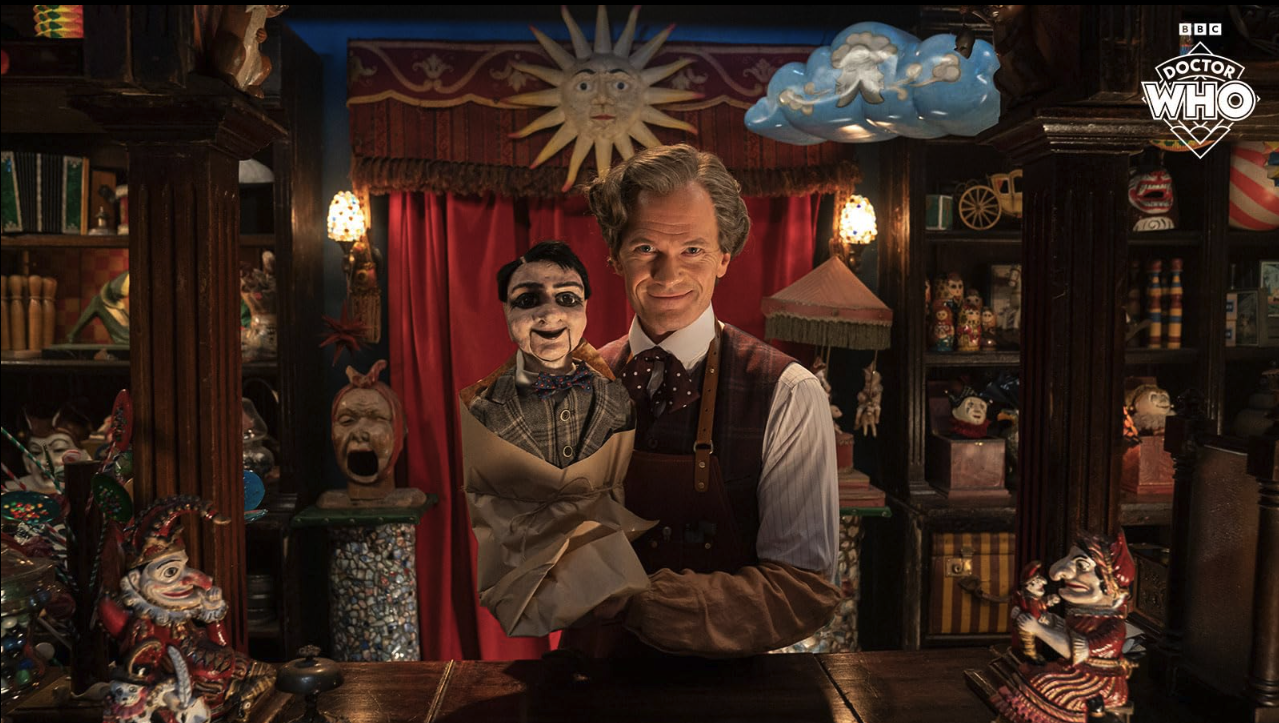
The Doctor and Donna were thrown into the plot before Wilf (or at least his body double) was even wheeled off. Almost the entire human race had been brain washed into thinking that they were, individually, completely right and everyone else was wrong. It’s a fun idea that works even better when paired with the introduction of the creepy puppet Stooky Bill, who really was used by John Logie Baird in his pioneering televisual experiments. Bill is so unnerving that he and his family could easily have supported a whole episode of screen time, although that might have been a little too frightening for younger viewers.
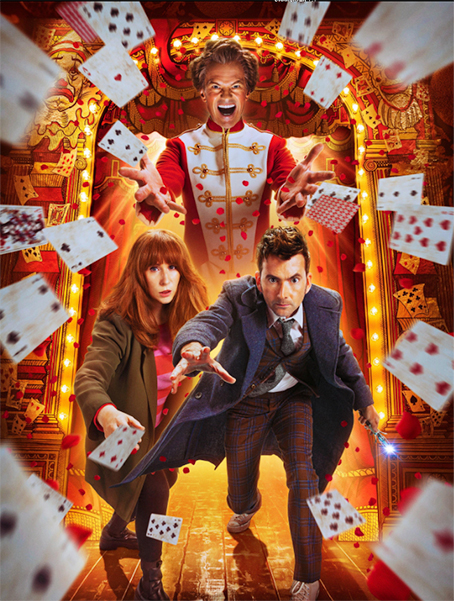
Those young viewers might not have appreciated the significance of the returning ex-companion Bonnie Langford as Melanie Bush, but at least she was a lot less scary. She served mainly as a touchstone of classic era Who in this anniversary special, but it is also great to see her given more to do here than she was ever permitted to in her five(-ish) Who adventures back in the 80s. Gemma Redgrave and Ruth Madeley put in fine performances as UNIT head Kate Stewart and UNIT Scientific Advisor Shirley Ann Bingham, respectively, and it was also great to see one more cameo from Lachele Carl as news anchor-turned-talk show host Trinity Wells, but they were all utterly and necessarily outshone by Neil Patrick Harris as the returning Hartnall-era villain, the immortal Toymaker. Balancing campness and menace with consummate ease, much as the series as a whole has done over the past six decades, Patrick Harris served up some wonderful song and dance shenanigans on top of a magisterial turn as a returning baddie. It left me yearning for more of his malevolent presence, perhaps one-day there will be a Big Finish audio adventure of his Battle with the Master.
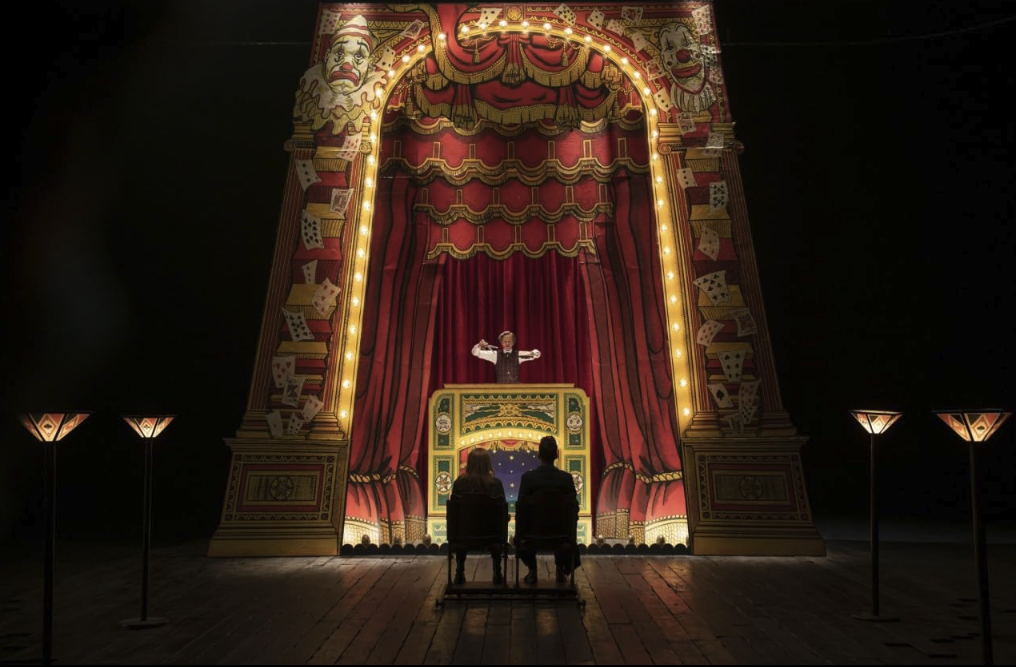
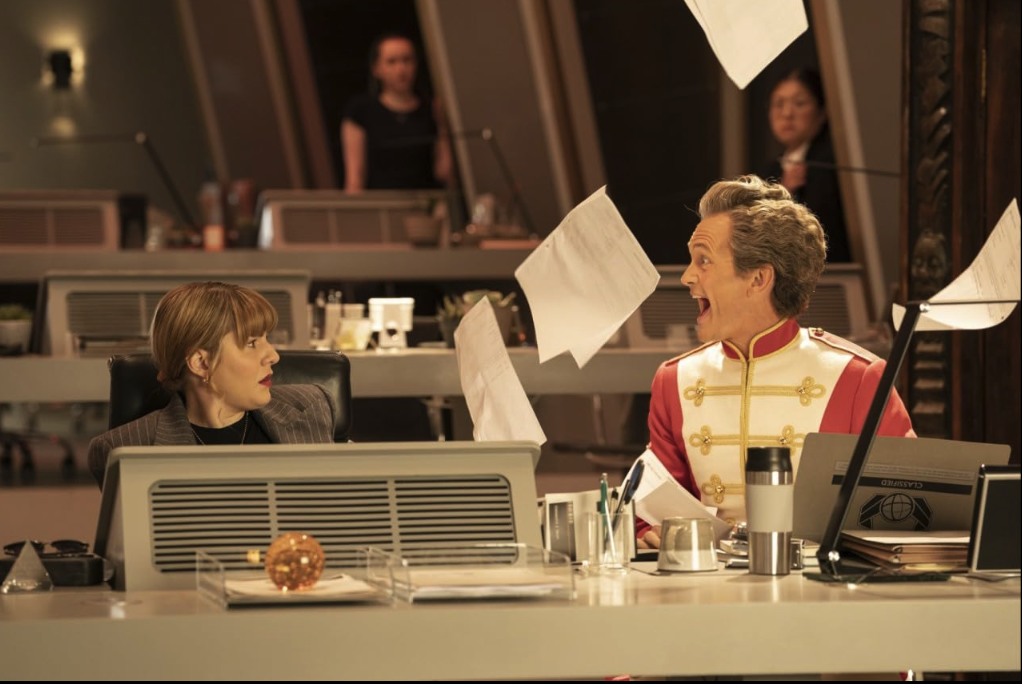
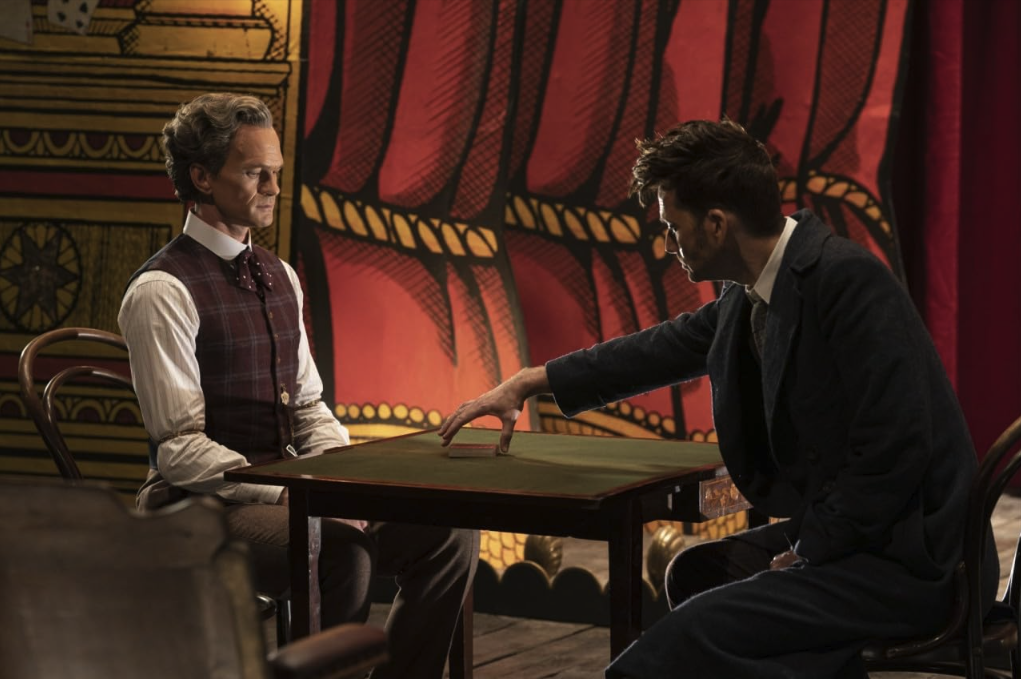
Another thing I really appreciated was the simplicity of the Toymaker’s games. One of the things Doctor Who can sometimes fail at is simplicity. Great showmanship stems from making the simple seem complicated. The Doctor choosing a losing low card was properly shocking. The subsequent high stakes game of catch worked because of the efforts of the actors, director Chanya Button and the rest of the crew to really sell the moment. The anti-climactic nature of the Toymaker’s defeat actually fitted with the disappointment one feels at losing a game.
Despite everything it packed in, the episode as a whole felt shorter than I wanted it to be. I mean, at an hour and two minutes in length, it was still longer than most modern Who. Maybe that’s how long episodes will be now. After all, the 45-minute format is largely a relic of the commercial broadcast TV industry. It is a model that the BBC pursued in 2005, mimicking American TV series like Buffy the Vampire Slayer, presumably in an attempt to ease sales to commercial partners outside the UK. The BBC never had such concerns domestically and neither does a streaming service like Disney +. That’s another benefit of reimagining and rebooting the series. Technology marches on, as do broadcast/streaming formats, Doctor Who can react as it enters its third age, whatever we eventually come to call it.
Despite their initial narrative prominence, the solipsism-triggering signals hidden behind transmissions of a creepy puppet weren’t really the main threat. Yes, they were the work of the Toymaker, but they were more of a plot device, one that was pretty much resolved after just 20 minutes of screen time, (admittedly UNIT doesn’t actually shoot down the pesky satellite carrying the signals until just over the halfway point of the episode). Well, I guess they were also Russell T.’s not-so-subtle post-modern dig at online culture, but he was almost certainly anticipating some online fan backlash to his invention of “bi-generation,” the method through which he enabled the aforementioned cake-having-and-eating of Ncuti Gatwa’s Doctor being pulled out of David Tennant’s. Never before has the handing over of the role of Doctor been quite so literal.
For anyone feeling disquiet with all the changes, Russell T. has actually already provided the prefect solution in the course of these three anniversary episodes: the advice to “let it go,” as Rose and Donna Noble let go of their access to the Doctor’s mind in the Star Beast and the happy ending the Fourteenth Doctor is given here, with his extended chosen family of friends and former companions. He even gets to keep his TARDIS and has the ability to go on further adventures if he so choses, without the weight of being the Doctor falling solely on his shoulders. It is an elegant ending and a perfect jumping off point for those who don’t like the changes that have come to their old favourite series.
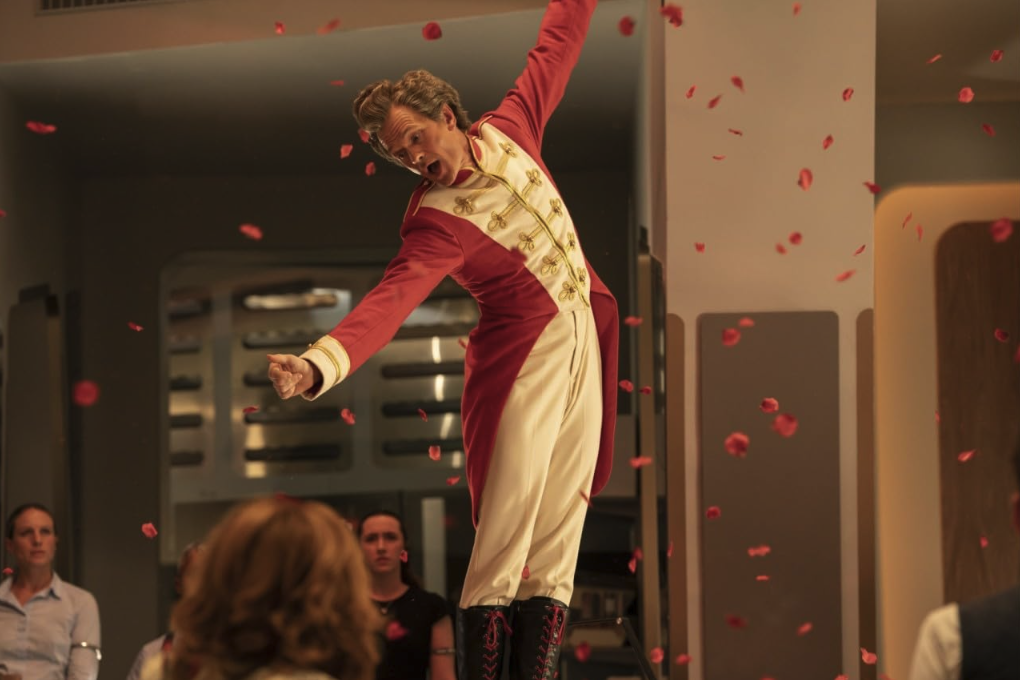
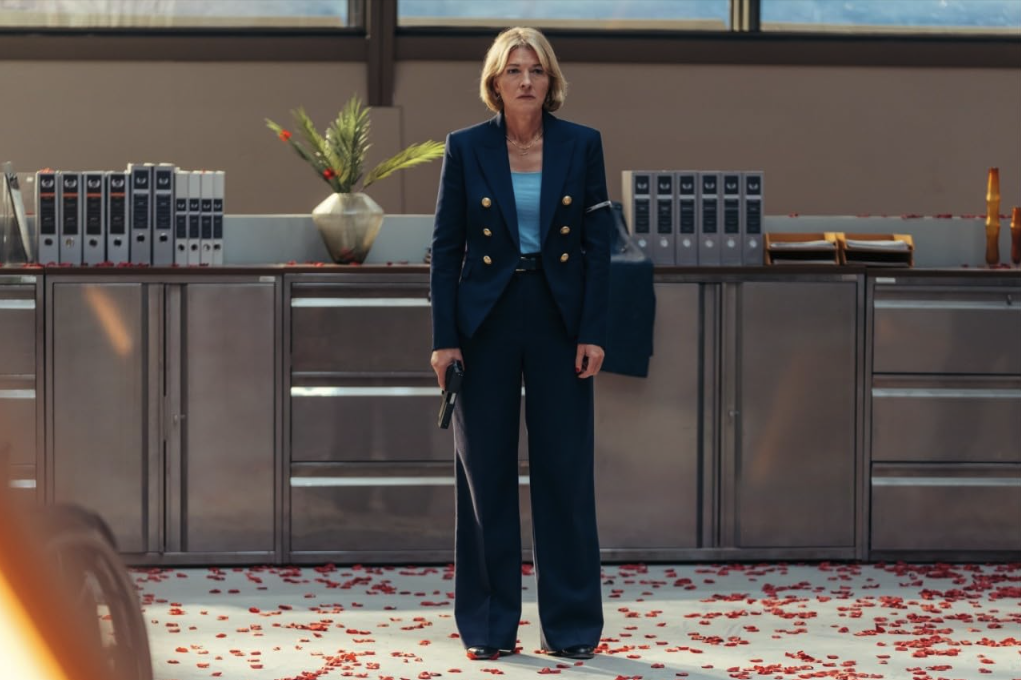
This is the ultimate piece of fan service and an important consideration that Russell T. provides as a gift to fans. Because Doctor Who will continue. It will change and change and change again as it continues to rejuvenate, regenerate and now even bi-generate into the future, long after the last of the current generation of fans have passed on. There will never be a final episode of Doctor Who, and that is important, because Doctor Who isn’t just for the fans of today. It never was. It is a show for people who like Doctor Who, past, present and future. And what that means will change over time. And if that is no longer something you are interested, in Russell T. has provided an ending here that is also a beginning. An off, and on ramp, complete with wheelchair access.
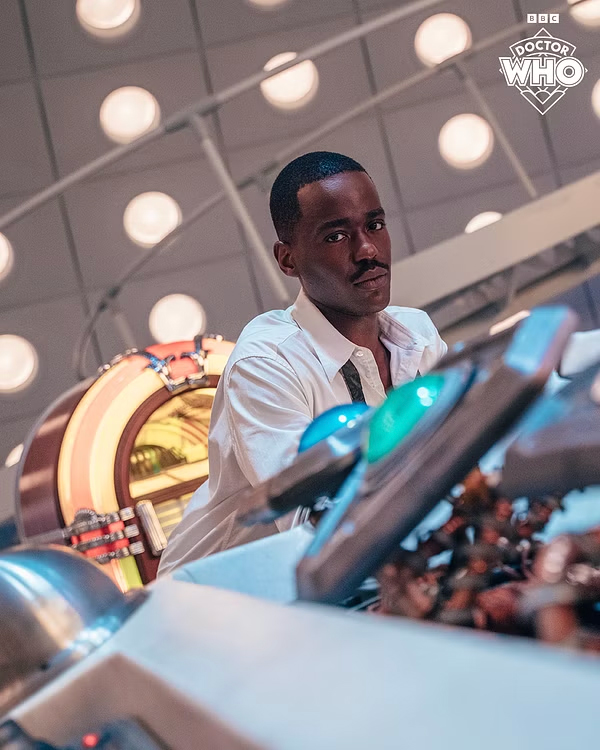
Me? I’m sticking around. I still can’t wait to see what happens next. And we only have a few weeks to wait until Ncuti Gatwa’s first full episode on Christmas Day.
Here’s the special’s trailer








You must be logged in to post a comment.