

Doctor Who
Tripwire’s Man In Los Angeles Reviews Doctor Who Season Two: Episode Two Lux

Jumping Between Two Different Realities
Tripwire’s man in Los Angeles Robert Cave takes a look at Doctor Who Season Two’s second episode Lux…
Season 2 episode 2
Lux
Written by Russell T Davies
Director Amada Brotchie

Wow. That was fun! Such a singular episode! Animation, breaking the fourth wall, metafiction, autocriticism, spectacle and all of it coalescing into a single story the likes of which we genuinely haven’t seen before on Doctor Who!
Novelty is such an overhyped and much-touted commodity, but newness still has the power to surprise and excite, and this week’s episode certainly surprised and excited me, and then some.
There is so much happening, and somehow, so little, too. Lux is, at its heart, a simple tale about a cartoon, Mr Ring-a-ding, that is animated by the god of light, Lux Imperator, but is ultimately drowned out in the infinite light of the universe. As narratives go, that isn’t any more slight, or complex, than the Robot Revolution, (or indeed most other episodes of Doctor Who, as the show itself kind of acknowledges halfway through) but RTD’s razzle dazzle and showmanship delivery gives the whole ensemble a special sparkle over and above what is achieved by the animation. And the animation is pretty spectacular in its own right.
Good animation is expensive. It takes time and money, which probably explains why there has been so little of it in the show’s history to date. What animation we have seen, has either been used to recreate missing episodes of the show’s classic era, or as standalone stories that suffer from not fully fitting in with the rest of the series, and subsequently occupying a less certain place in the show’s canon.
That’s not the case with Lux, which mixes animation with live action, bringing a range of animation styles into the heart of the series in a way that has never happened before. I would go so far as to say that Lux literally could not have been created at any other point in the show’s history. It needed the time and money Disney invested to realise this as an episode within the wider season. Star Trek: Strange New Worlds attempted something similar in the episode Those Old Scientists, which had various animated sequences and crossed over animated characters into live-action, but it didn’t have animation and live-action elements interacting within the same scenes.


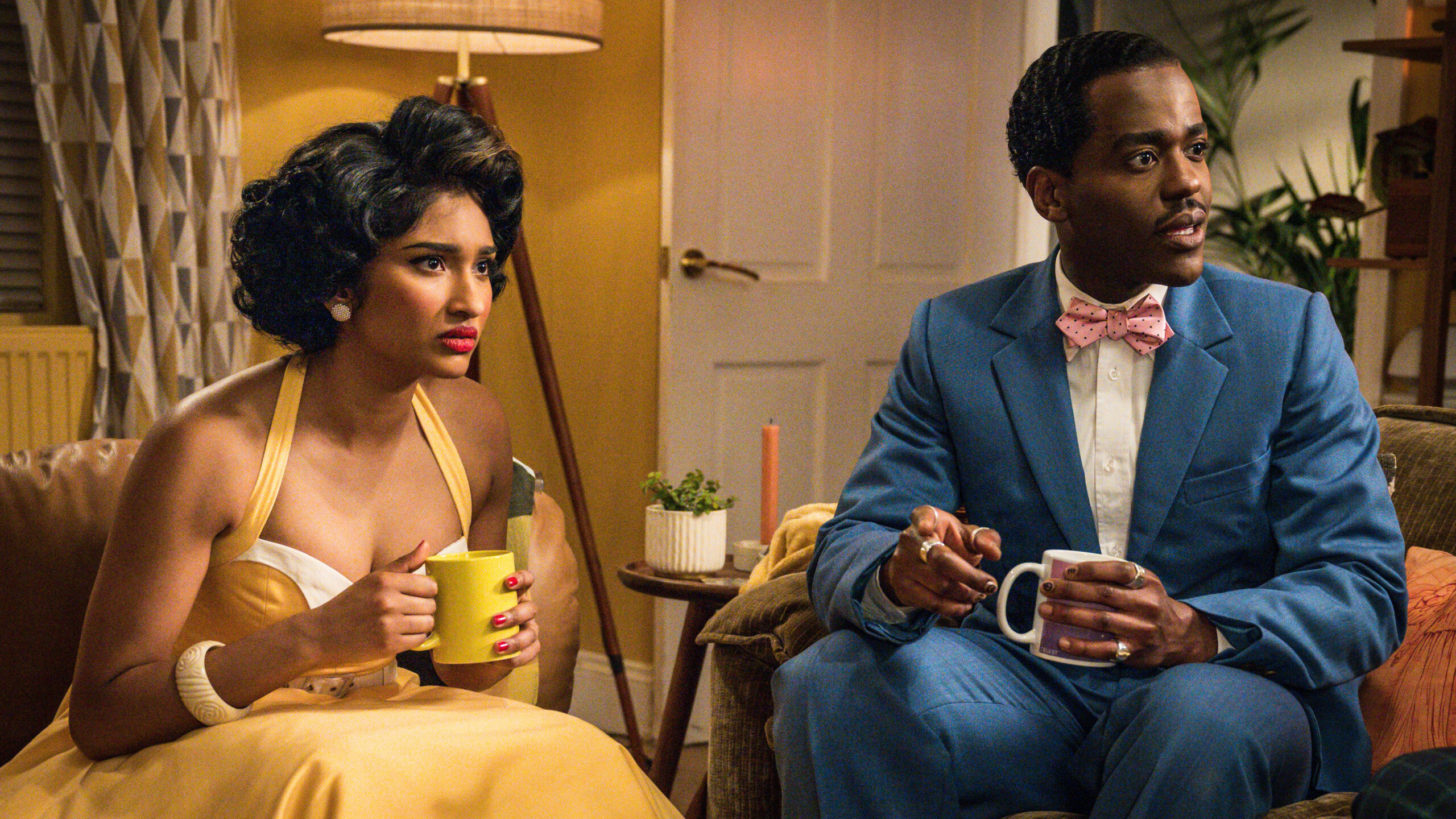
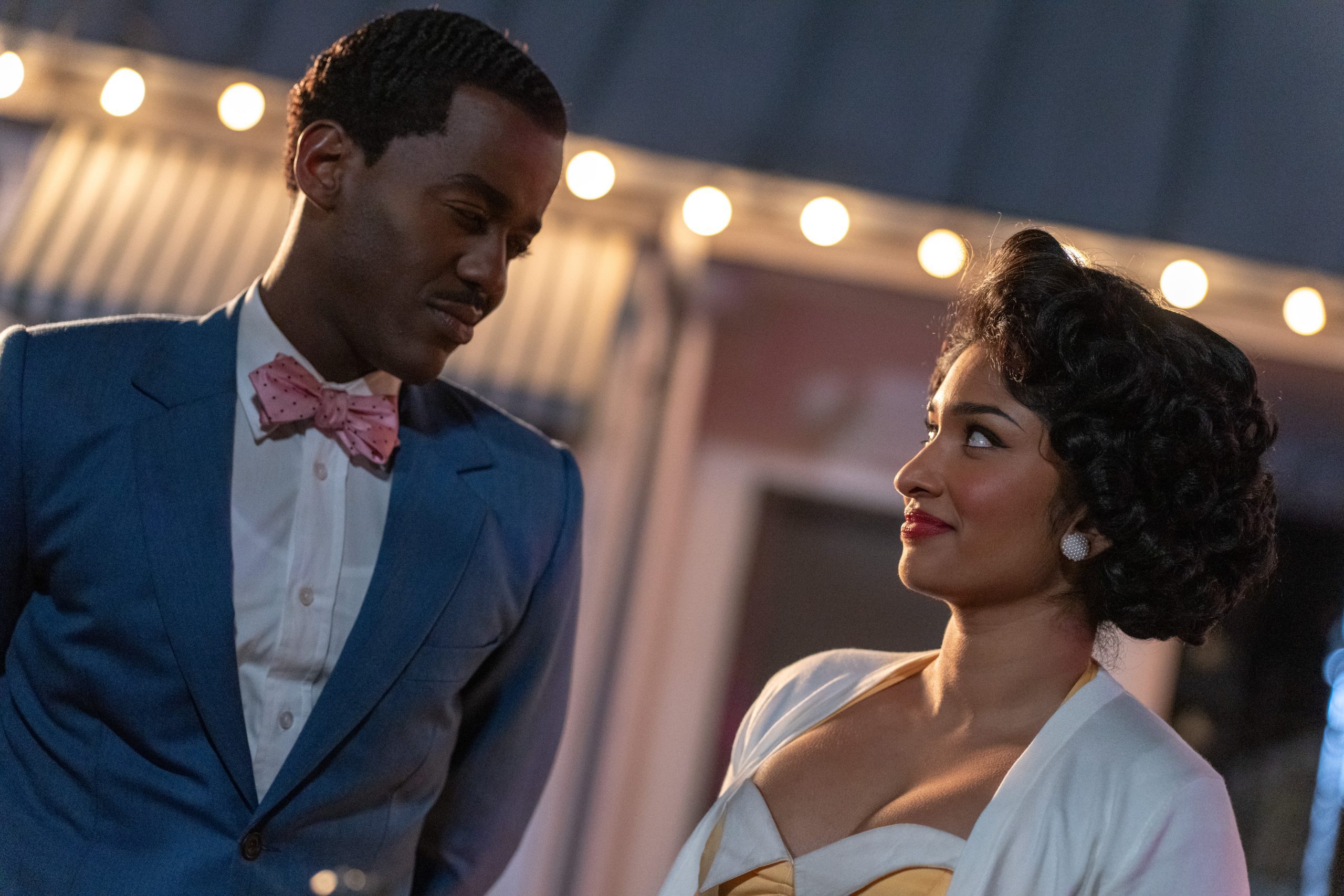
The interaction of the two levels of reality is a massive part of the episode’s success. The Doctor has messed with different kinds of reality and dream states before, countless times in fact, but here it feels different because it IS different. There is a wonderful playfulness as the Doctor (Ncuti Gatwa) and Belinda (Varada Sethu) are turned into cartoons and manipulate their reality, giving themselves more narrative depth, and therefore more apparent dimensional depth. From there the next logical step is to full on metafictionality, which this episode achieved through our heroes pushing through the fourth wall, in this case our TV screens, and literally stepping into the living rooms of Doctor Who fans.


That’s what I found really exciting. The show breaking out of the screen was something far more than the simple joke it might first have seemed—it was a metaphor for the changing way in which we engage with TV in 2025.
Doctor Who began as a series that was broadcast on TV and watched passively. And you can still watch it this way if you want, at least in the UK and Ireland. But that model has largely been superseded by on-demand streaming, where the audience is required to be more active. And that is where Lux really works its magic. Because Doctor Who IS a series with fans not totally unlike the ones we saw in the episode. It exists in rich meta narrative between those fans, and others, a meta narrative with its own value judgements and lore about the best stories (Steven Moffat’s Blink, which I suspect RTD actually finds hilarious) and actors who appeared in various roles. At the core of all this is the primal anxiety shared by all Who fans; that the show will go away again, will be cancelled (or “rested”), as it was once before.


And I think that that’s the real story here. The interactive metanarrative of the Doctor Who Disney deal possibly ending is intersecting with the in-story narrative of the Doctor not being able to get to May 24, the release date of the first instalment of this season’s two-part finale. How audacious! Could it be that RTD has been playing us all along? #RIPDoctorWho, indeed! Was it all just a metanarrative scam all along, albeit one that was “leaked online” by the showrunner himself!? I sure hope so.
But, whether or not this theory proves out, there really was so much else to love about this episode. The TARDIS’s interior doors! Such a small thing, but it adds so much to the conceptual sense of the old girl’s internal scale. And the way the Doctor and Belinda walk in one door and walk out another in new costumes is so narratively efficient, facilitating snap costume changes while also suggesting that time really is relative within the TARDIS; travelling at different speeds in different rooms.
The Doctor’s “vindicator” gadget, which is ostensibly there to help guide the TARDIS to its May 24 destination, helps give a certain amount of narrative unity to the upcoming adventures. It all felt very evocative of the Key to Time arc from season 16 to me. The scenes acknowledging racism of 1950s Miami worked wonderfully without overpowering the rest of the narrative, it was also good to see the Doctor stating that he doesn’t, shouldn’t, and could not reasonably be expected to, fix all the problems of world history. Anita Dobson’s Mrs Flood, underlining the “limited run only” of this series was a great further tip of the hat to the narrative/metanarrative crossover and, hey let’s just take another second both to appreciate Alan Cummings as the voice of Mr Ring-a-ding, and all the animators and all the different styles of animation they deployed—Max Fleischer for Ring-a-ding, Hanna-Barbera for the Doctor and Belinda’s sequence, CG animation for when Ring-a-ding is becoming more solid. A veritable animation feast.
And then there was that final in-credits sequence demonstrating that Lizzie, Hassan and Robyn, the metatextual Who fans supposedly so insubstantial that they didn’t even have surnames. They got to live and escaped the end of the story. Yay! I particularly appreciated how their chatter first cuts in to the credits in audio only, just like a BBC One continuity announcer. That might be lost on most Disney+ viewers, but it really worked for me.
I only hope that the next episode lives up to everything this week’s achieved, maybe not in terms of the sheer joy and exuberance, but certainly in a sense of fulfilment when we get to the end. I guess we will all find out, next week.
Doctor Who is available on BBC iPlayer in the UK and on Disney Plus in the US










You must be logged in to post a comment.