

Film News
Tripwire Reviews Donald Cammell And Nicolas Roeg’s Performance 4K Criterion Edition


Roeg’s Gallery
Tripwire’s contributing writers Gabriel Gribbin and Mark Lascelles took a look at Criterion’s Performance 4K Edition, directed by Nicolas Roeg and Donald Cammell out now…
Performance
Directors: Donald Cammell, Nicolas Roeg
Stars: James Fox, Mick Jagger, Anita Pallenberg
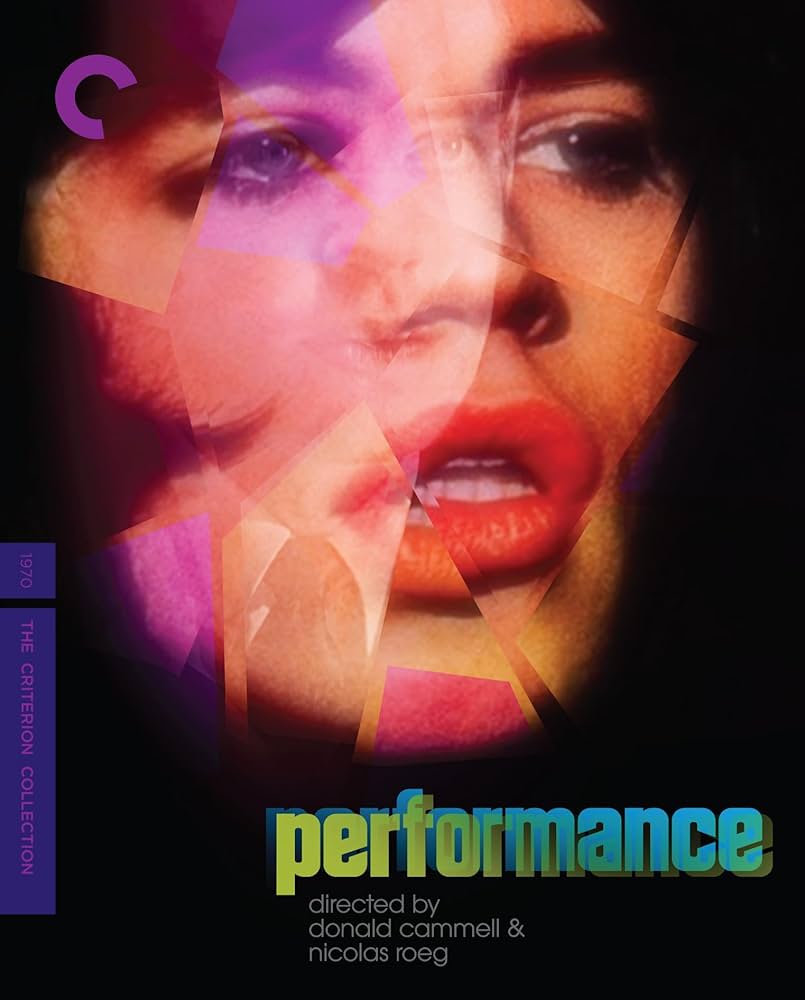
Criterion has released a new digital restoration of the 1970 cult movie Performance, approved by the film’s Producer Sandy Lieberson. The package comprises of two discs, a Blu-Ray with mono UK version soundtrack and several special features, and a 4K UHD disc in Dolby Vision HDR. There is also a high quality colour booklet, which features fabulous images from the film. Criterion has an excellent reputation for high quality restorations and this promises to be something very special.
The movie focuses on the story of Chas Devlin (James Fox), a sadistic, narcissistic underworld enforcer who is on the run from his vengeful boss Harry Flowers (Johnny Shannon) after killing one of the Firm. Chas seeks sanctuary in the hedonistic and bohemian Notting Hill home of reclusive retired rock star Turner (Mick Jagger), Pherber (Anita Pallenberg) and Lucy (Michele Breton). They come from different worlds, and as the drugs kick in they take Chas on a psychedelically enhanced journey of transformation and enlightenment.
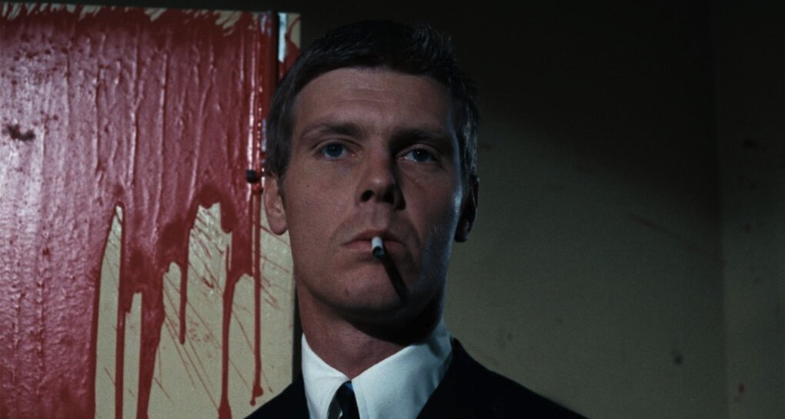
Performance captures the essence of London in the swinging 1960s with rock-stars, gangsters and the Chelsea set mingling with one another, their interaction underpinned by mutual fascination.
The story was initially developed by Donald Cammell and then evolved with considerable (and key) input from David Litvinoff. Litvinoff was a very interesting character and inhabited the worlds of both organised crime and the hedonistic counterculture of the late 1960’s. Donald Cammell and Nick Roeg co-directed the film, Roeg’s mastery with the camera, lighting and composition being abundantly clear to see. Roeg after all had already established himself as a very successful DP and had worked on classics like Truffant’s Fahrenheit 451. Cammell’s role was to block the actors and visual storytelling. The cast includes many classic English character actors, such as Anthony Valentine, Stanley Meadows, Anthony Morton, Allan Cuthbertson, Ken Colley and also contains the first appearances of Billy Murray and La-Rain Wickens. Infamous London gangster John Bindon’s presence adds additional edge to the proceedings.
Much of the authenticity of the film’s gangster element must be attributed to Litvinoff, from his own lived experience. He was key to scripting the gritty realism in the violence meted out by, and then ultimately to, Chas. Litvinoff was an enforcer for the infamous slumlord Peter Rachman and an associate of the Krays, as well as being a friend of Soho denizens Nigel Waymouth and Lucian Freud. Litvinoff had also shared a flat with Bindon. Litvinoff was Cammell’s bridge between the criminal underworld and the then burgeoning hippie movement. He introduced Johnny Shannon to Donald Cammell, initially as a dialogue coach to James Fox, with Shannon ultimately taking the role of Harry Flowers. It is difficult to overstate Litvinoff’s importance to the development and verisimilitude of the film.


The key to the movie’s importance lies in its multifaceted and progressive stance, as it tests the boundaries between fantasy, reality, gender and identity. It has the motif of transformation and merger running through it. These themes echo and indeed borrow from Ingmar Berman’s classic, Persona. Ultimately Turner’s and Chas’s personas fuse together, as the movie reaches its coda. A controversial ending, but would we have expected anything less from Cammell, Roeg and Lieberson? Performance has several references to the works of Jorge Luis Borges (celebrated Argentinian magic realist author) – in fact Turner’s destiny is not dissimilar to Dahlmann’s embrace of certain death in Borges’ El Sur. The surrealist painter René Magritte’s works also feature, evoking an extra layer of off-kilter weirdness. There are also references to Hasan al-Sabbah and The Old Man of the Mountains. In a flashback scene the directors cleverly make use of footage from Carol Reed’s Odd Man Out, a seminal movie about a man on the run seeking sanctuary and embracing his own death. All of these Easter eggs and nods to influences and earlier cinema are a treat for cineastes.
Performance boasts possibly the first ever music video in Memo from Turner.
Whilst the soundtrack as a whole is immensely important in terms of how it works alongside the screenplay, it’s often overshadowed by Jagger’s transcendent moment, where he regains his mojo, and where Jagger himself is masterfully inhabiting his character. A powerful psychedelic masterpiece that may be but there’s so much more to the film’s music. The majority is composed by soundtrack luminary Jack Nitzsche and features such musical talent as Randy Newman, Ry Cooder, Lowell George, Buffy Saint-Marie and Gene Parsons. The filmmakers’ musical intentions are firmly set out during the opening titles as Randy Newman’s dark blues classic ‘Gone Dead Train’ fades in as the movie begins. There’s psilocybin infused throughout the score, while Ry Cooder’s compulsive bottleneck picking forces the issue on more than one occasion. On ‘Natural Magic’ and ‘Poor White Hound Dog‘ his masterful guitar work is truly unsurpassed. Merry Clayton, notable for the backing vocals on the Stones ‘Gimme Shelter’, features prominently on the latter. Pumping rock n roll gives way to chant like mantras alongside tripped out muzak and rippling psych – it’s a complex, heady mix of musicians, styles and effects, and a superb accompaniment to the action that’s actually a strong album in its own right.
Mark Cousins said of Performance that it was “The most imaginative shooting in the story of film” clearly referring to Nick Roeg’s expertise with the camera and composition. Cousins goes on to say that “If any movie in the story of film should be compulsory viewing for filmmakers, maybe this is it”.
Turner’s character has elements of Brian Jones, perhaps the ultimate 1960’s rock hedonist, while Chas is highly likely to have been the inspiration for Paul Bettany’s character in Gangster No. 1.
The movie had a very difficult birth with both Warner Bros and the BBFC demanding the film to be edited numerous times. Indeed, there is anecdotal evidence that several cuts of the film containing censored material, have done the rounds in the past.
So what does the Criterion edition provide for the dedicated? Well visually it’s stunning, the restoration has really cleaned up the image quality and the colours and clarity are simply spectacular now. Christopher Gibbs’ interior of Turner’s house in Powis Square (actually filmed in Lowndes Square) adorned in his characteristic North African chic and decorated with Martin Sharp’s artworks (Sharp was a resident of The Pheasantry, 152 King’s Road at the same time as David Litvnoff) looks stunning.
The audio has been cleaned up and appears to have been enhanced. However, some of the initial criticism that was levelled at the DVD release applies to this release too (Blu-Ray version reviewed). Specifically, at about 1hour 25 minutes we have the sequence with Turner and the Moog synth. Some of the music (the wah wah sound in particular) is very muted. Additionally, during Memo from Turner the line “to ol’ England” sounds gritty and processed. Minor gripes perhaps, however music, as mentioned before, is a huge part of this movie so it’s a shame these issues have not been fully addressed in this restoration.
In addition to the visual enhancements the second area where the Criterion edition becomes essential is the special features. These extras are a very welcome addition and I would highlight Keiron Pim’s visual essay on the very colourful David Litvinoff. Litvinoff seems to have been a pivotal figure in the development of the movie, as Pim’s feature adeptly explains. Pim’s book Jumpin’ Jack Flash, his biography of Litvinoff, is also strongly recommended.
As for the other extras, Donald Cammell: The Ultimate Performance (1998) and Influence and Controversy: Making Performance (2007) have been available previously and provide some fascinating insight into the characters involved with the evolution and production of the film.
Performers on Performance, is another worthwhile documentary showcasing some of the material that wasn’t included in the Cammell doc.
The Two Cockneys of Harry Flowers compares the dialogue on the UK and US versions – very much for the diehards, it is still an interesting exercise, as it details the alterations that were made for American audiences (similar voice edits were made with Get Carter).
And finally there’s Memo from Turner, which includes some interesting behind the scenes footage.
In conclusion this is a fantastic restoration of a peerless 1960s cult movie, while the special features will certainly be appreciated by aficionados of the film. It is just a pity that some of the audio issues remain unresolved.
Performance 4K Edition is out now from Criterion







You must be logged in to post a comment.