

Headlines
Stephen Dalton On Joseph Losey’s The Servant And Beyond


A Class Act
Tripwire’s DVD and Blu-ray editor Stephen Dalton takes a look at the restored The Servant from Joseph Losey and looks beyond to the rest of his film career…
THE SERVANT (Studiocanal)
Director: Joseph Losey
Stars: Dirk Bogarde, James Fox, Wendy Craig, Sarah Miles
Director: Joseph Losey
Stars: Dirk Bogarde, James Fox, Wendy Craig, Sarah Miles
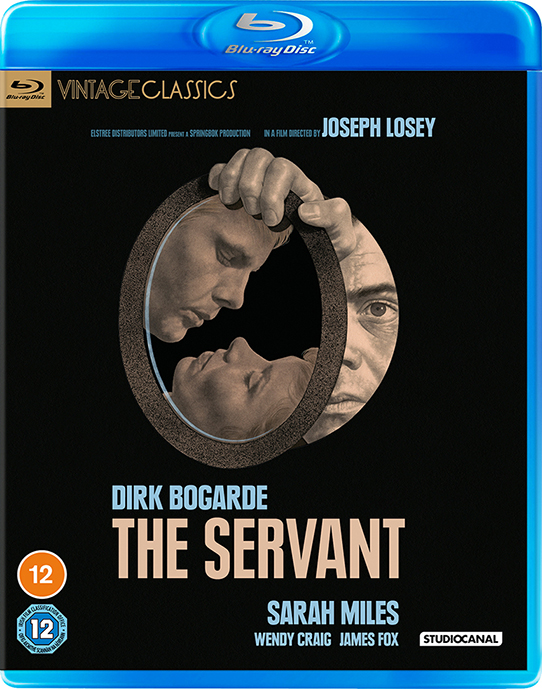
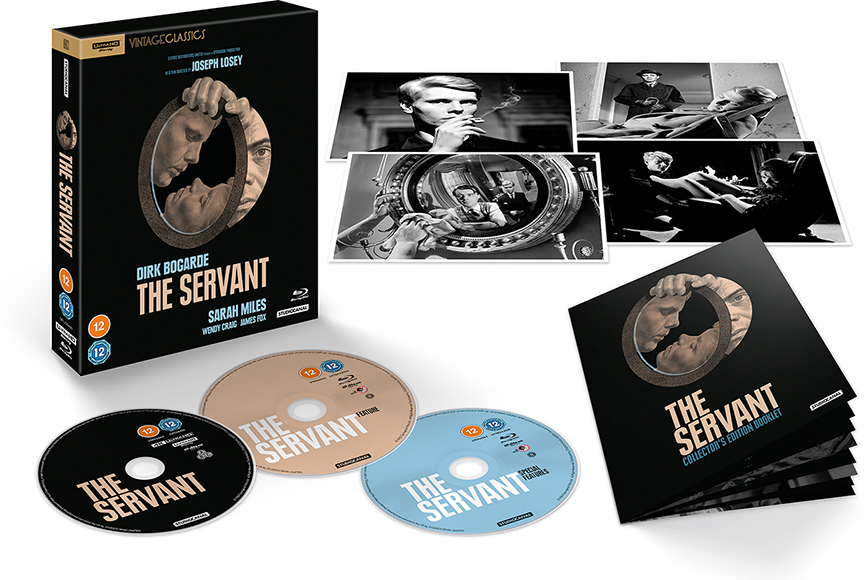
A cold-blooded psychodrama that takes a scalpel to the British class system and its unspoken subtext of sexually charged sadism, Joseph Losey’s classic 1963 thriller The Servant still radiates a darkly hypnotic power almost 60 years later. Reissued this week in a beautifully restored 4K makeover, which lends a pin-sharp crispness to Douglas Slocombe’s ravishing monochrome photography, this rivetingly nasty twist on kitchen-sink chamber-drama tropes features a career-best performance by Dirk Bogarde. It also began a long and fruitful association between Losey and caustic playwright-turned-screenwriter Harold Pinter.
Losey, Bogarde and Pinter make a pretty potent combination, with their intersecting interests in repressed desire, establishment hypocrisy and rotten ruling-class elites. The left-leaning director was a former Communist Party member who spent the latter half of life exiled in Europe after being blacklisted by Hollywood during the McCarthyite 1950s. He initially resorted to making pulpy B-movies, sometimes under an alias, but this mid-career rupture also inspired him to makes his greatest films.
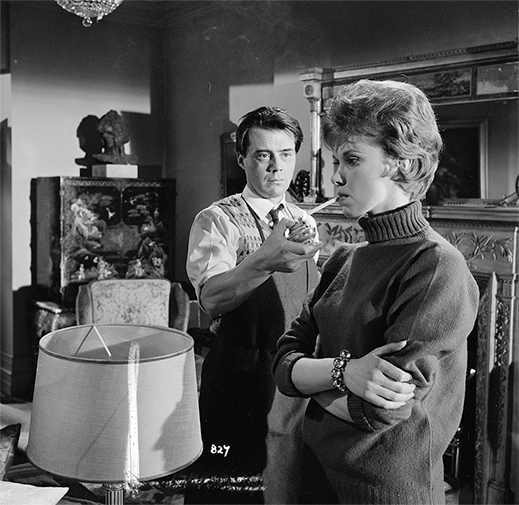
The Servant stars Bogarde as Hugo Barrett, a wily Mancunian manservant who takes a live-in job at the London townhouse of louche upper-class playboy Tony, played by James Fox in a breakthrough leading role. Initially cordial, the unspoken tensions between the two men become increasingly prickly. After the Machiavellian Barrett succeeds in alienating Tony’s snobbish girlfriend Susan (Wendy Craig), he enlists the young woman he calls his sister, Vera (Sarah Miles), to seduce his employer. In fact, Barrett and Vera are lovers, a kinky twist which leads to an explosive confrontation. Barrett and Tony later reconcile, but their diabolical power struggle soon begins again and spirals into a deranged, orgiastic finale.

©StudioCanal. All Rights Reserved
©StudioCanal. All Rights Reserved
Losey’s film is based on a slender semi-autobiographical 1948 novella by Robin Maugham. Nephew of Somerset Maugham, friend of Winston Churchill, the author was an openly gay aristocrat who embraced socialism in his anti-fascist youth. The novella featured overtly homosexual elements, which Pinter’s screenplay dilutes without fully erasing the subversively queer subtext. Bogarde, who spent much of his career dropping hints about his closeted sexuality in groundbreaking films like Victim (1961), gives Barrett an edge of sharp-tongued northern camp that is pure Alan Bennett at times. His tortuous love-hate relationship with Tony also takes on a strongly homoerotic texture, especially in the later scenes where they bicker like an old married couple.

©StudioCanal. All Rights Reserved

©StudioCanal. All Rights Reserved
Powered by electrifying performances, especially from Bogarde, and knife-sharp dialogue from Pinter, The Servant continues to resonate today on many levels. With Old Etonians still running the country, the class-war themes echo down the decades, most recently in Korean director Bong Joon-ho’s Oscar-winning upstairs-downstairs home-invasion thriller Parasite (2019). The fact that Fox’s actor-turned-activist son Laurence is most famous today for denying the kind of toxic upper-class privilege that his father so skilfully skewers here adds an extra frisson of deliciously bitter historical irony.
Looking beyond The Servant, Losey’s other collaborations with Bogarde and Pinter are all worth revisiting. Although the comic-strip spy spoof Modesty Blaise (1966) was widely deemed a misfire, it still boasts a dazzling psychedlic Pop Art look, plus Bogarde in uber-camp ice-blond Bond-villain mode spouting sardonic lines from an uncredited Pinter. Accident (1967) is a savage depiction of infidelity, casual cruelty and creepy sexual misbehaviour between two outwardly respectable Oxford dons and their young students. Bogarde does not appear in The Go-Between (1971), which stars Alan Bates and Julie Christie, but this exquisite snapshot of lost innocence and class tensions in Edwardian England is widely considered the peak collaboration between Losey and Pinter, and certainly on a par with The Servant.
Outside his revered work with Pinter, Losey also directed some underrated cult gems that are worth seeking out. Made for the fabled British horror studio Hammer, The Damned (1963) is a fascinating curio, an apocalyptic Cold War sci-fi thriller shot in sleepy Weymouth and starring Oliver Reed as a juvenile sociopath. Despite clashes with Hammer, which delayed the film’s release by two years, Losey turned this pulpy premise into a haunting, eerie, beautifully shot nightmare.

The Damned
Another Losey classic newly reissued in digitally restored format on DVD and Blu-Ray this month is Monsieur Klein (1976), a paranoid thriller starring Alain Delon as cynical art dealer mistaken for a Jewish man of the same name in Nazi-occupied Paris. A Kafka-esque depiction of poisonous anti-Semitism and complicity in genocide, this chilly beauty was Losey’s late-career masterpiece. Ultimately, exile in Europe proved to be the making of him, sharpening his eye for injustice and alienation. Shortly before his death in 1984, Losey insisted he had no regrets about being cast out of Hollywood. “You can get trapped by money and complacency,” he claimed. “A good shaking up never did anyone any harm.”
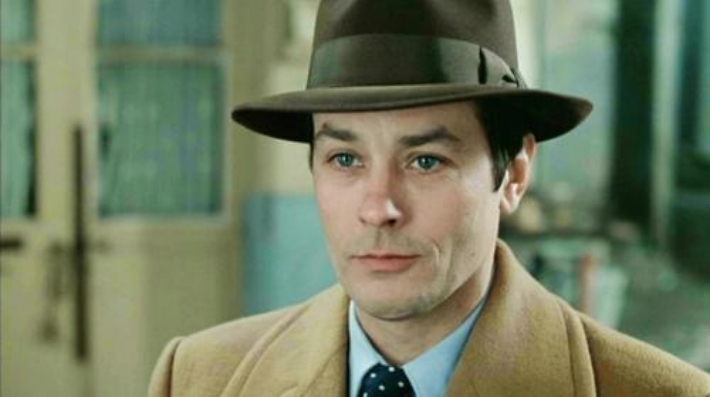
Mister Klein
The Servant restored edition is out now on Blu-ray and DVD











You must be logged in to post a comment Login