

Headlines
Peter James Talks About Grace Series Three

Sense Of Grace
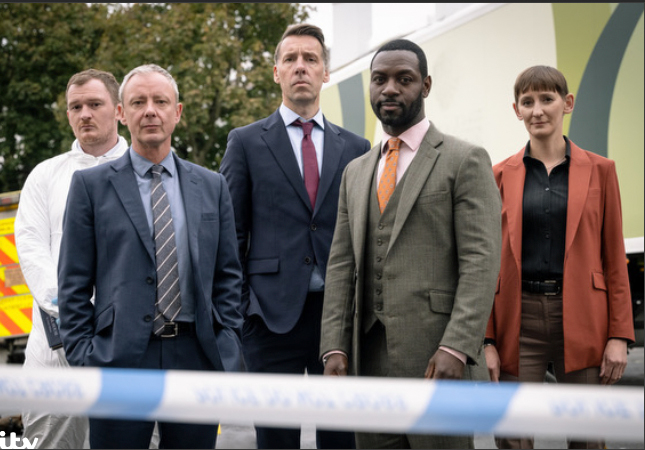
Grace, adapting Peter James’ successful series of books with John Simm, just returned for a third series and here’s James himself on the new run…
Was your starting point for Dead Like You a crime that would take you back to a time in Grace’s life when he and his missing wife Sandy were together?
Pretty much my starting point with every book is what my publishers call ‘the everyday sinister.’ I love writing about things that could happen to anyone. My idea for this novel gave me a chance to go back in time. Grace has always idolised Sandy but what I have gently shown through the books is that maybe she wasn’t quite the perfect wife that he always thought. I’m writing Sandy’s story as a standalone novel at the moment, which is from her perspective from the day she leaves him and the real reason that she leaves him!
Has Grace come to romanticise his marriage because she is gone?
Yes. Also, the police do have a very high divorce rate. I remember talking to a senior officer who was a great friend and a bit like a Roy Grace. A Superintendent called Steve Curry. He was Commander of Crawley and then Hastings. We were having a meal one night and I said to his wife Tracey, ‘What’s it like being married to him?’ She said, ‘He drives me nuts! We were going out for our wedding anniversary three months ago. Steve books a taxi. We’re going to our favourite restaurant. We’re going along Church Road and then he yells at the driver to stop. The driver pulls over. Steve says, ‘Meet you in the restaurant. Order me a gin & tonic’ and then he legs it after some villain he’s been looking for. I’m sitting there at 11 o’clock at night and he’s still stuck in custody with this guy.’
Those problems impact on both Roy’s and Glenn’s personal stories in series three, don’t they?
Totally. You do get quite a lot of marriages where you have a police officer married to another police officer or a paramedic or a nurse, wherever they are doing shift work together, and they understand that the job is going to come first. Roy will turn to Sandy and say, Sorry, my darling, are we going to go out and have a nice meal while I let somebody who has just murdered a child have a few more hours of freedom?’ It comes down to that.
Does that make Cleo as a senior anatomical pathology technician a better fit for Roy than Sandy?
I think it does because she must go out sometimes at three o’clock in the morning and recover a body from a house or from the seashore or a river or whatever it is. She understands that sometimes you just have to do it. She is a lot more tolerant than Sandy.
There appears to be a shift in what viewers want from crime dramas in recent years. Are they now more fascinated by the behind the scenes and day to day authenticity of the job?
I think there is a kind of hidden veracity in both writing and in viewing that if something is accurate it feels right and if it’s not the readers and audience can tell. It’s a very strange thing. There’s that old adage, ‘never let the truth get in the way of a good story’ but actually I think it does need to get in the way. Apart from anything else there is a quarter of a million people working in the police just in the UK alone, police officers and support systems, so you don’t want that core shouting at the screen going, ‘You don’t know what you’re bloody writing about!’ I’ve got a big ally in John Simm because John’s father-in-law was 35 years a Met copper. He shouts at the screen if anything in other dramas isn’t right. John said to me recently, ‘I think we’re getting it right. My father-in-law hasn’t shouted at the screen once!’
What questions did John Simm have for you about these three stories? Do you meet up?
I loved that one of the first things John did when he got the role was read through all the Roy Grace novels, to better understand the character. We meet up quite regularly. John heard about The Crime Museum at Scotland Yard. He wanted to go there so I managed to fix it. We had a whole morning there together. My wife and John’s wife went along too. They use the museum for training detectives.
Everything they have got there is seized from crime scenes and not cleaned. There is a bottle of tomato ketchup because after the Great Train Robbery they were holed up at this farmhouse and one of Ronnie Biggs’ fingerprints is on the ketchup bottle. One thing that John and I discuss a lot is Sandy and her disappearance. It will ultimately resolve, and I think the audience will love it. Where I feel really blessed with John and with Glenn and Zoë is that the three of them are just amazing together, the chemistry.
There is a scene in Dead Man’s Grip where we see how good Cleo is at her job attending to a victim’s grieving parents. Is that a key part of the job that you’ve learned about anecdotally?
I’ve been very lucky in that the team at the Brighton mortuary have always welcomed me over the years. I even get to go to their annual Christmas dinner – and you can imagine the conversation!! They’ve let me be behind the scenes quite a lot. If it is anything delicate they will ask the relatives’ permission. Obviously, I don’t want to intrude. Often the time when a relative comes to the mortuary is their very darkest moment, when I keep out of the way, so much of what I hear is just anecdotal.
Are you making any guest appearances in series three? You were keen to play a traffic cop…
I am. In this one my wife and I are in the third episode, Not Dead Yet. We are literally the first sight as the credits end walking down the pier towards camera. In the next series which starts filming in April I am going to try and be a cop. I want to say to somebody, ‘You’re nicked!’
There is a very creepy cab driver in Dead Like You played by Save Me’s Thomas Coombs. Did that character come from any personal experience of local cab drivers or end of pier rides?
Thomas is wonderful in this. I remember in the late 80s getting into the back of this taxi in Brighton and there was this creepy little guy. He turned to my then wife and said, ‘Dior Poison.’ He told her what she was wearing. Then he said, ‘Would I be right in guessing you are a size 6 in shoes?’ She was quite a frosty lawyer, so she said to him, ‘Mind your own damn business.’ I bank characters so I tucked him away. I had a very scary cab driver in Manchester once who I thought was going to murder me. You put your life in your hands when you get in a taxi. I’ve had one or two weird ones in New York over the years as well.
What is it about Brighton that makes it such a perfect setting for criminal activity?
I grew up in Brighton and its crime background is second to none. It’s got what every villain wants: a major seaport on both sides so great for escaping. Gatwick airport is 25 minutes up the road. A fast train to London, 50 minutes. The largest number of antique shops and second-hand jewellery shops that are perfect for fencing stuff. It’s a huge party town with two universities, very diverse. There is a massive recreational drugs market. It has got everything to attract villains and is a lovely place to live, to boot!
How would you say the stories in series 3 reflect the British police force in 2023?
When I was writing and researching Dead Like You, Sussex and all other police forces in the UK were institutionally sexist. If a woman was raped, she would go into a police station and the sergeant would take one look at her and say, ‘Well, you went out wearing that mini-skirt, what did you expect?’ Sussex Police were pioneers. They were the first police force in England to have a dedicated rape suite. It’s called a SARC. It was adjunct to Crawley hospital. A female rape victim would be treated entirely by women. From the moment she reported the rape she would be put in a sterile corridor, taken straight to the SARC where she would then be forensically examined and with huge sympathy. The amount of clear-up for rape 30 years ago was appallingly low. Sussex Police made a dramatic difference.
The Grace scripts emphasise that we should see as little of the actual horrors of the crimes as necessary. Is that something that you have become more conscious of with viewers?
Very much so. I’m very conscious in what I write that I don’t want somebody throwing up their lunch after reading it. I’ve always felt that the writer’s primary role is to fire the reader’s imagination, not to put it all in front of them in Technicolor. I think the same thing works in TV drama. The monster that you can make the viewer think is standing behind the victim is always going to be scarier than what you show.
Also the world is a dark enough place, particularly at the moment. People love the thrill of being frightened by a thriller but in a kind of safe way. You know that at the end of Grace, the world is going to be put back into order by Roy and his colleagues..
Which other TV crime dramas have you admired recently?
Obviously, I think Happy Valley did a good job. There was a lot of realism in that. I think the first couple of series of Line of Duty were good before it started going kind of off the wall. Endeavour is great. I really loved the American series Mare of Easttown with Kate Winslet.
She’s superb in that. Mare is like the American Sarah Lancashire. We were flying back from a holiday in the Maldives this time last year and my wife said, ‘Watch this.’ I sat and I watched five episodes in a row on the plane. It was so good.













You must be logged in to post a comment Login