

Comics News
Michael Stradford Talks Graphic Samurai: The Art Of Denys Cowan


Shining A Light
Tripwire just caught up with Gizmoe’s Michael Stradford to talk about their latest book funding on Kickstarter: Graphic Samurai: The Art Of Denys Cowan…
TRIPWIRE: What was the genesis of Graphic Samurai?
MICHAEL STRADFORD: Denys has been around a long time and has a varied body of work but he stays busy on different projects, so he rarely looks back to past accomplishments. His wife Kathy convinced him that it was time for a retrospective look at his career. Fortunately for me she recommended me to write and assemble the book given my long-standing friendship with Denys and appreciation of his work.
TW: You have run another crowdfunding campaign, Fargo: Hell on Wheels, on Zoop last year. What did you learn from running this?
MS: I learned that there are endless ways to approach a campaign and Zoop was a great partner for my first crowdfunding experience, having someone that I could talk with regularly to determine the best ways to move forward. I also found that it makes sense to try to match the right project with the right crowdfunding engine. Given Kickstarter’s significant success with a number of ‘Art of’ books, they seemed like the right vehicle for Graphic Samurai. That said, I expect that I’ll work with Zoop again in the future.

TW: What are the pros and cons of using crowdfunding rather than publishing through more traditional means?
MS: That’s a difficult question for me to answer as the only publishing I’ve ever done is self-publishing. While there are benefits in being a one- or two-man shop, traditional publishing generally has a broader support system when it comes to producing, marketing and distributing a book, which helps lighten the load. I think the biggest ‘pro’ is that I’m my own boss, along with my Gizmoe partner Michael Polis. When one of us finds something that we want to do, there’s only one person to convince, which saves a lot of headaches. We find passion projects that we can chase and hope that there’s an audience for whatever the book might be.
TW: How different is it to create an art of book rather than an original graphic novel?
MS: The creation of Graphic Samurai was much easier than Fargo: Hell on Wheels because it was a smaller team, focused on one creator. Once I mapped out the gameplan with Denys and my book designer, it was a matter of doing weekly interviews with Denys for about 10 weeks and about a dozen interviews with people that have worked with him throughout his career. After each interview I would take home a stack of his original artwork from his archive, scan and catalog it and return it the following Saturday.
Since most of the material was already in existence we could stick to a schedule and not get hung up if someone got sick or was unable to make a creative deadline for whatever reason. However, while the process for both projects was completely different, I loved both experiences. Working with creative talent like Denys and Howard Chaykin was both fun and inspiring. Having a chance to look at miles and miles of their original art never got old.
TW: With a man with such a huge career, what was the selection process like?
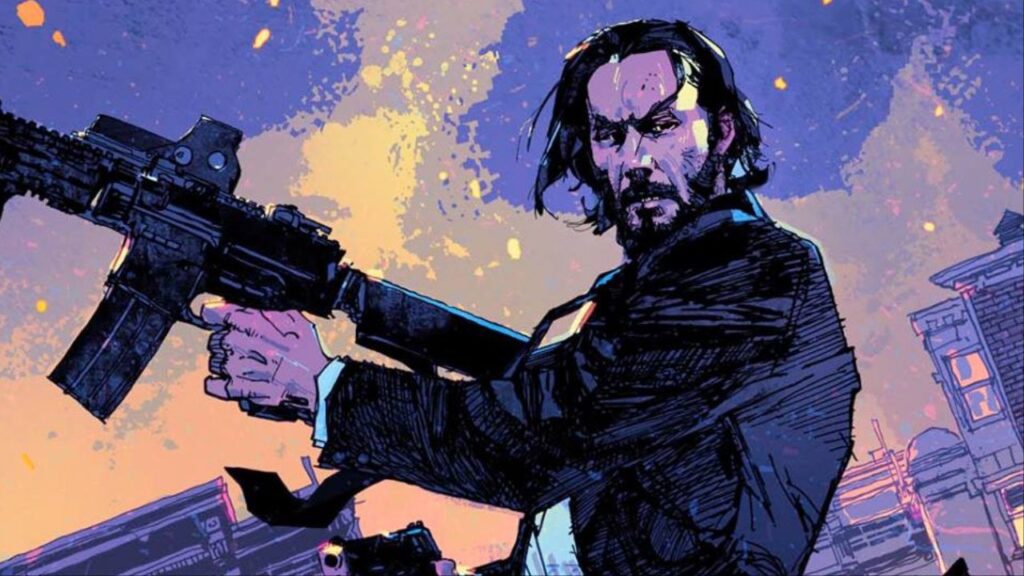
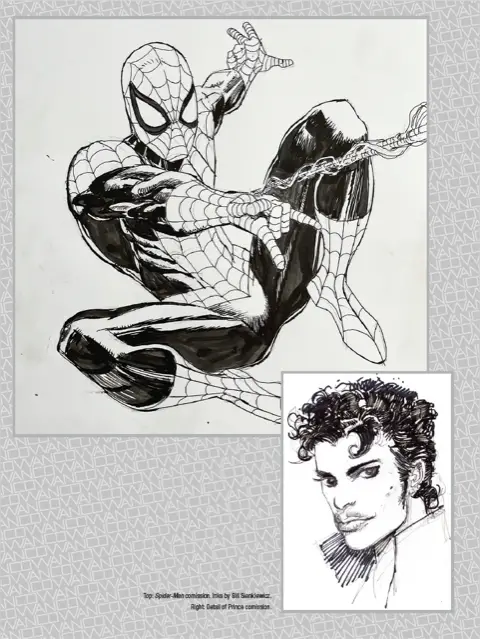
MS: I tried to scan everything that he had and as I catalogued the art I would highlight pieces that I thought should be in the book. My designer, Jason Medley went through the art and made his selects while scouring the internet for some of Denys’ earlier work.
Jason then took the interviews and art and came up with a rough assembly for the book and would send it over to me for review. We’re on version four now. There will be several more versions before we lock it down to our satisfaction. Then I’ll send it to Denys for his feedback and make adjustments based on his preferences and suggestions.
TW: How closely did you work with Denys Cowan?
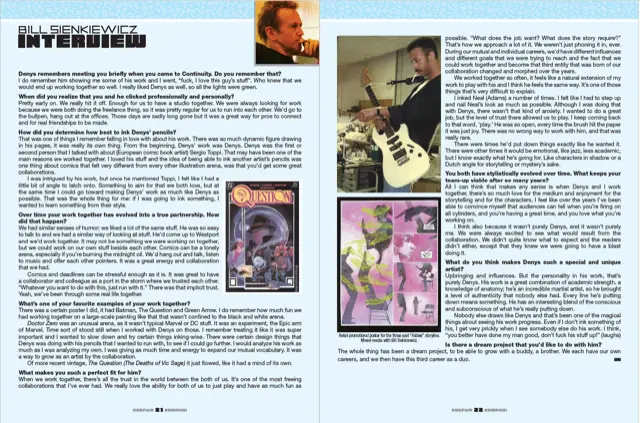
MS: Very closely. Denys and I have been great friends for more than 30 years, so we’ve always been able to be candid with each other about almost anything. What was important to me was to create a space for him that didn’t feel overwhelming or tedious. So, I suggested that we meet for at least an hour every weekend until we finished. He thought that was manageable, so that’s what we did and we’re still friends!
For whatever reason he trusts my tastes and approach so he’s given me plenty of room to assemble the book as I see fit, and I approach that with him in mind and also thinking about what the reader would be interested in seeing and reading.
TW: And how did you work with the graphic designer to create this project?
MS: I’ve known Jason for a long time. I met him when he was a young whippersnapper during the first iteration of Milestone in the 90s. Flash forward many years later and we were both working in the Home Entertainment division at Warner Bros. He was in the creative marketing department creating packaging for DVD and Blu-ray discs and designing advertising campaigns. I was creating supplemental content (Special Features) for those same discs.
We kept up with each other and when I told him about this project, he volunteered being a fan of Denys’ work and having known him for so long, it felt like a perfect fit. Denys was excited to find out that Jason would be designing the book, so I knew we were starting in the best way possible.
I told Jason that the spine of the book would be a long interview with Denys where he walks the reader through his entire career, warts and all. We discussed using the interview as guide marks for what art should go where. Then I would give him elements with whatever thoughts I had regarding them and let him work his magic, which I always looked forward to reviewing.
TW: Are there plans afoot to launch other books with a similar approach as part of Gizmoe’s future line?
MS: We plan to mix it up, but the graphic novel business is core for us. We’ll be kicking off a campaign for the next Fargo book, Panama Gold, next year with Howard Chaykin returning to adapt the story from John Benteen’s novel, but Butch Guice will handle the drawing this time around, which has me, Michael and Howard giddy.
I would like to do more ‘Art of’ books in the future. Lee Weeks, Ron Garney and Butch are just a few of the artists whose work deserves that kind of spotlight, and I’d love to be able to give it to them.
They say you don’t get into publishing to get rich, but for a love of the books. Having had a varied number of successful careers in radio, records, home entertainment and the movie industry, I can say while this isn’t the most money I’ve ever made (yet) by a long shot, I don’t think I’ve ever enjoyed myself more and I’m grateful for the initial response our projects have received. More to come!
support Graphic Samurai: The Art Of Denys Cowan here









You must be logged in to post a comment.