

Film News
John Wick: Chapter 2 Director Chad Stahelski Speaks

Orchestrating The Mayhem
♦Over at slashfilm this week, they spoke to John Wick: Chapter 2 director Chad Stahelski and stunt arranger JJ Perry, so since the film is out now in UK cinemas, we thought people might like to read it…
One of the things I admire about John Wick: Chapter 2 is that it doubles down on what worked the first time around rather than get bigger for the sake of getting bigger. What were those conversations like?
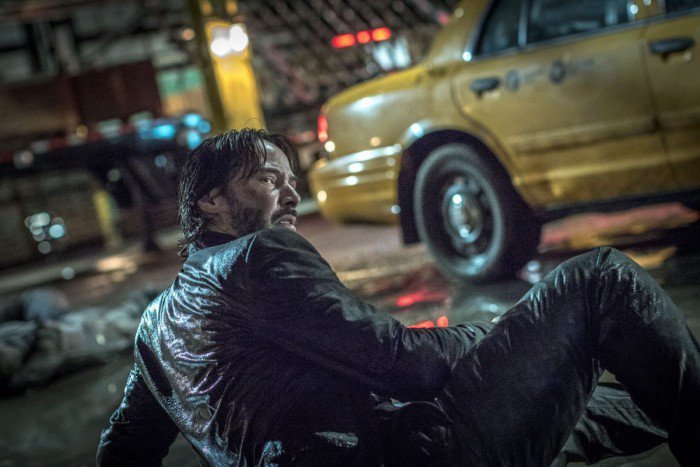
Stahelski: We just kind of talked about it. When you do a world expansion… The first John Wick, we tried to keep it grounded. There’s gravity, he didn’t do superhero stuff, we didn’t want him saving the world. When you expand, you want to have expansion with tension. You should always try to be better. If we want John Wick to go to eleven, like we tried to do in this movie, you have to feel like he’s just barely hanging on. Without that, it becomes an unearned skill set. Like, you can’t just have John Wick come back. He’s all beat to shit. He’s been shot, he’s been stabbed. We always hate the gadget gimmick. “I don’t know what to do! Call Scotty!” Or “I don’t know what to do! Look it up on the internet!” We don’t have any of that. It’s pretty much just Keanu Reeves going “I’ve gotta get up, I’ve gotta get up.” It’s the Rocky thing. You just gotta get up.
In order to do that, in a bigger the scenario, it’s got to feel earned. It’s got to feel like the character was capable from what you’ve already seen. You’ve seen John do some great stuff in the first movie and hopefully in the second one we’ve ramped up to show that John, as a character, has restraint. He could have shot all those guys in the head at the beginning, but he wanted peace. “I just want my car back!” He gets his car back and he’s all good! It doesn’t matter the state of it. It’s good. He’s satisfied. So by the end of it, he just does what he can to survive. The first movie has John charging forward. This one has him back on his heels, trying to get out of the mess that he’s in. Again, I think there has to be an honesty that’s earned between the character and the audience. We get it. It’s ridiculous. No one gets it more than me. But you still have to feel, in our world, in this ridiculousness that we’ve created, is this a believable cause and effect for our character?
I love the way John fights in these movies. It’s all about ending fights as quickly as possible. How do you make fights like this exciting?
Perry: We mix Jiu-jitsu, judo and Sambo with tactical three-gun, which is rifle-shotgun-pistol. We’re also searching for targets of opportunity based on location. I always think of it as worst-case scenario. What’s the worst thing you can do to somebody? I’m looking around this room right now and there’s a corner of a table right there. I could break one of those glasses, one of those coffee cups. That’s my approach. I try to create a pool of that. Then we’ll film it on our cameras and cut it together and present it to Chad as a library and he’ll sift through that.
Stahelski: I have to sift through the sadist stuff and get back to the characters.
Perry: That’s where we go with it. We train [Keanu Reeves]. He had three and a half months of prep. I surround him with a bunch of the best martial artists in the world, the best three-gun guys in the world, some ex-military, special forces, Navy SEALS. Surround him with a bunch of killers and that’s going to rub off on him. Because he’s going to want to hear about it and learn about what you tactically, practically would do. And then we add a little ten percent on there of over-the-topness, just a little sprinkle here and there. There’s no way you’re going to get in a gunfight with that many people in hallways and not get shot a few times. That was one thing we talked about in the beginning. He’s got to take some rounds. Hence the bulletproof clothes.
Stahelski: That’s the nuts and bolts of how we do it. Straight brutality or straight violence sometimes has a character trait to it, but we knew the amount of action we were going to have and that can be very numbing. So we look for the cinematic rhythm of it. If you hear the gunshots, whether it’s a double-tap or a triple-tap… [imitates a burst of gunfire] There’s a rhythm there. Our composer Tyler Bates actually took the gun rhythms and designed the score and soundtrack based on them. Just because there were so many gunshots. We couldn’t ignore it. You don’t want the music to be in conflict with the actual, practical onscreen sounds. We also want to do our longer takes and show Keanu Reeves in wider shots. There’s a way to do that. You can’t do wire gags and use stunt doubles. It’s a big thing when you sit down with your stunt team and start designing action. I have to tell them “This is the aesthetic. I’m going to do long pulls.” We call it reverse first-person shooter. As opposed to being the shooter, I want you to see the shooter the whole time. I want to pull you through the maze, reveal the bad guys as we go so you don’t see all the stunt guys sitting there, waiting and waiting and waiting. We don’t want you to see anything until it’s time to see it. We want you to see Keanu Reeves doing it. Everything’s connected. It’s very much like a live dance performance.
We saw footage of Keanu Reeves training with his weapons last year and he really appears to know what he’s doing.
Stahelski: Oh, he does.
Perry: He could compete in three-gun, if he wanted to.
Stahelski: The best way to fake being good is to just–
Stahelski and Perry: –be good.
Stahelski: Ninety-nine percent of stunt teams out there will train the cast to memorize moves or train them in a small skill set. We’ve done that so many times and we’ve done it the “Fuck it, we’re just going to train this guy” [way]. It’s real jiu-jitsu. We’re just going to start there. We’re just going to make you good. And then we’re going to teach you how to choreograph with it.
Perry: The guy we used [to train Reeves] is Taran Butler, a fourteen-time three-gun champion. Rifle-shotgun-pistol. Each one of those has its own vibe. Each one of those has its own discipline. Not just how to use it, but how to reload, how to correct malfunctions. It’s an interactive range. He’ll run a course five times and we’ll change it, which lends itself to choreography. It’s constantly changing. We’re always looking for targets of opportunity. When you go down a hallway and you have six sets of doors. Here, here, here, here, here, here. So you’re reaching [your target], hitting him with a pistol, and maybe getting a reload in that melee. We were getting [Reeves] as good as he could be with those weapons, just grinding it into him. Because it’s…people say “Oh, it’s easy.”
Stahelski: It’s not easy.
Perry: We deal with this a lot with actors. We deal with this constantly. You can or you can’t. And if you can’t, we have to cut around it and figure out a way to make it. But we wanted to show long takes of Keanu Reeves as John Wick ripping the place up. You have thirty rounds in an AR magazine and you have eighteen rounds in that Glock with the magazine extension. We were counting the rounds. When he get to that number, we’d do a reload. We weren’t going over. It’s not like a John Woo movie, which I’m a big fan of! But it’s not like he had an eight round mag and forty-six shots. We kept it tactical, practical. Reality plus ten percent.
What was the big pain-in-the-ass stunt? The one that was just plain difficult to design or shoot?
Stahelski: Every set piece has its process. When you’re doing car stuff, you have to prep, there are a lot of safety factors that go into it. There are resets. If a stuntman misses a punch, everybody resets and we’re back up. You miss a car jump and it’s “Okay, let’s tow this one out of the way and bring in the next car.” Creatively, the mirror room was probably the most difficult. Not just the shoot, it did have its own pace, but it was me dealing with my cinematographer about how to shoot it. It was me dealing with the production designer about “What do we even make? How does this even look?” How do we outdo Enter the Dragon and add our own flavor to it? And then it’s going to the stunt team. “Okay, you have to think differently.” I can’t shoot this like I normally would. I’m going to be looking in reflections, I want to look up here and find the character in the ceiling. It’s a dance. Choreography is very much like a live dance. We get all of these mirrors in the rehearsal hall. It’s that goofy. It’s a bunch of guys holding mirrors going “That looked pretty good! This looks like shit! This looks great!”
Perry: Looking for the reflection, to the reflection, to the reflection, to the real guy!
Read the rest of the interview here
Read our review of John Wick: Chapter 2 here











You must be logged in to post a comment Login