

Comics News
George Pratt Talks His Studio Space And His Creative Approach To Enemy Ace: War Idyll, Batman: Harvest Breed And Wolverine: Netsuke


A Unique Approach
Back in 2005, myself and my colleagues Gary Marshall and Andrew Colman interviewed 20 prominent comic artists. These interviews were published in Image’s Studio Space book and one of the interviews I did was with George Pratt. So I thought it would be fun to run the second part of that interview here…
Most of the stuff in my studio is here for comfort. I’m happy because most of my crap is here. But hoarding this stuff can be bad too. Sometimes I think: “Wouldn’t it be cool to be able to just walk away anf not have this stuff around?” But I’m a book maniac. I have books on World War I, European graphic novels by artists like Pratt, Battaglia and Munoz and graphic novels by people like Kubrick and Eisner. I’ve also got all the Doc Savage books, books by John D. Macdonald and Jim Thompson. I also have quite a collection of original art by Jeff Jones, Bernie Wrightson Swamp Thing, Toth, Barry Smith and Mignola, to name but a few. I’ve even got copies of National Geographic going back to 1824 and photography books by people like Weegee. I’ve even got the plane model I built for Enemy Ace here, which suffered a bit of damage.

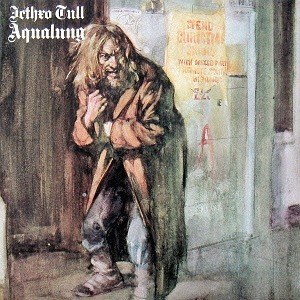
When I was in school, my anatomy teacher, Sal Montana, was excellent.He looked like Dustin Hoffman in Papillon. And he was the guy who would do the dissections for Columbia Medical University. So we actually got to go to the morgue and look at the cadavers and all. But whenever we drew in class we put music on and we just thought that was the coolest thing in the world. So now if I’m doing layouts I can’t have anything on because that’s like writing. I can’t have music on when I’m writing because I’m actually having to create something new with words. But once I’m past that stage and I go to just draw and paint and work on the finished art, I’ll put something on. It could be mood music about trying to get into that time period or the feeling. If I need energy I’ll put on some headbanger stuff while other times it’ll be Cat Stevens or Jethro Tull.
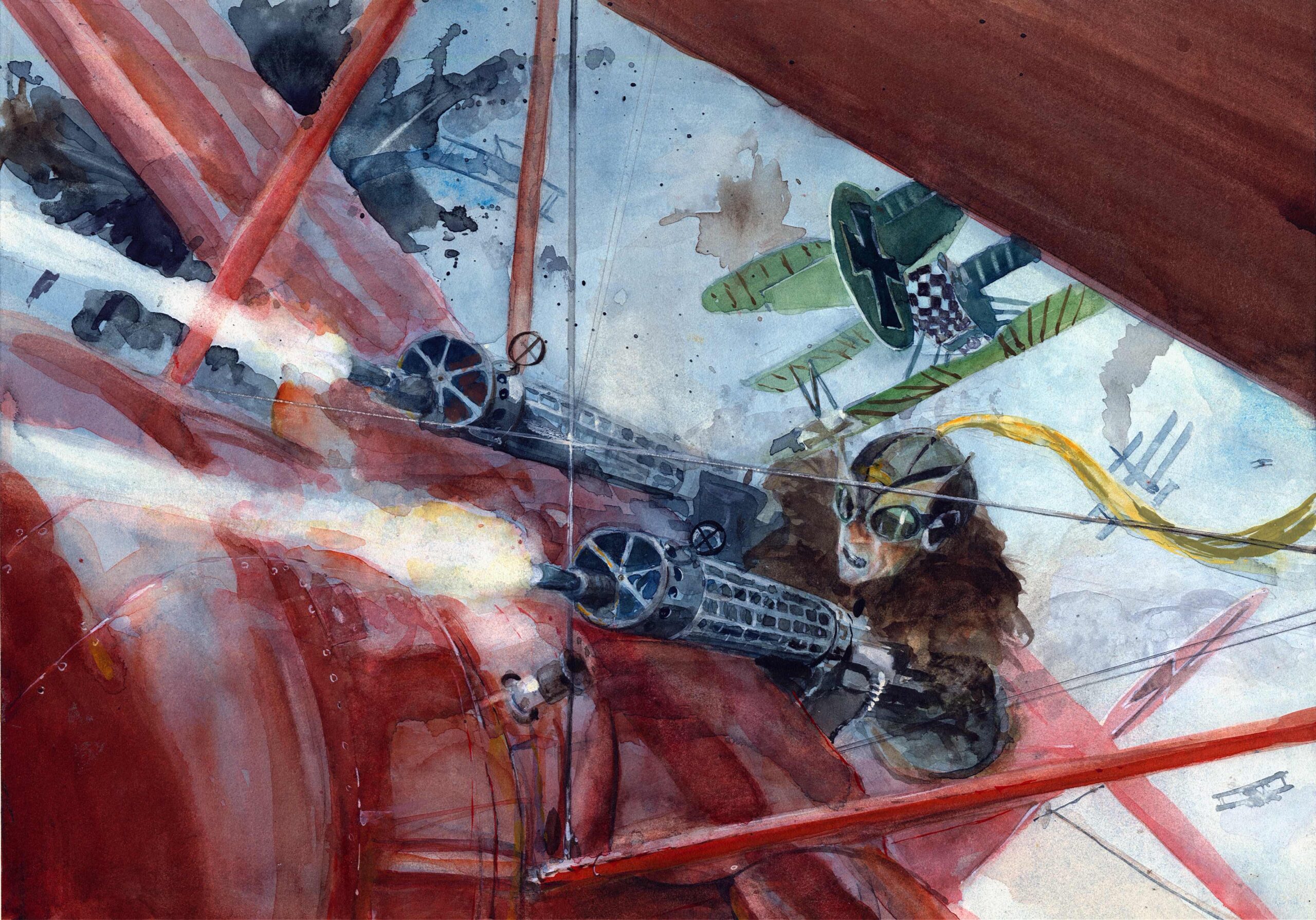
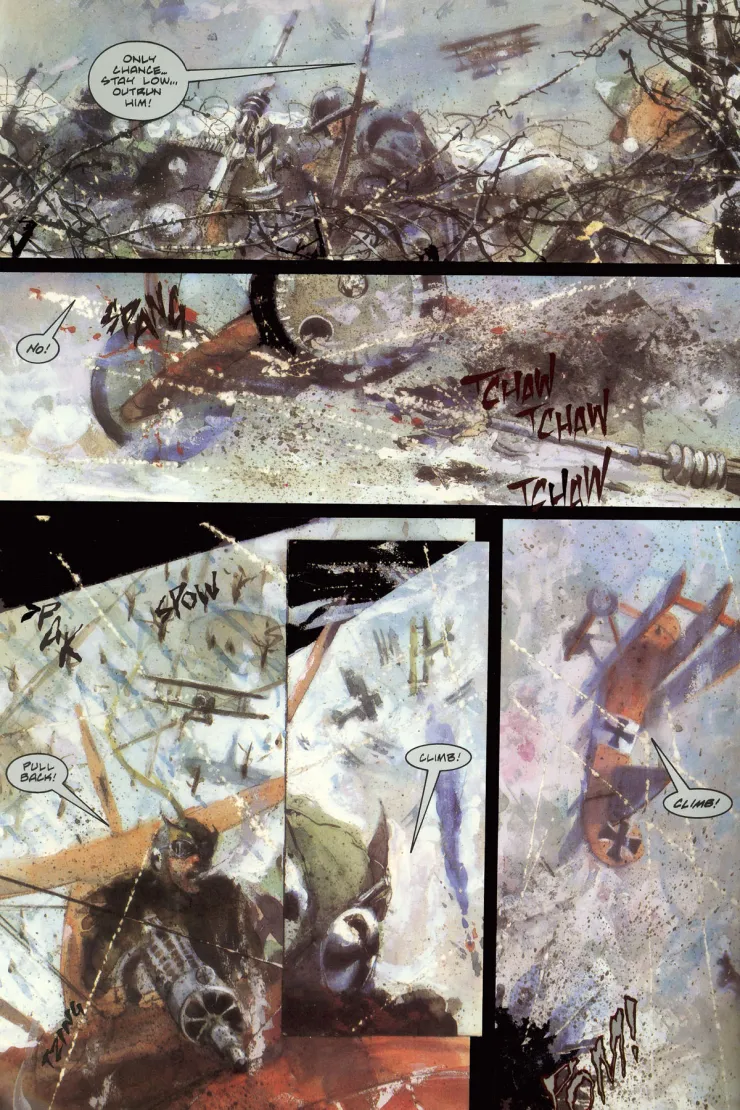
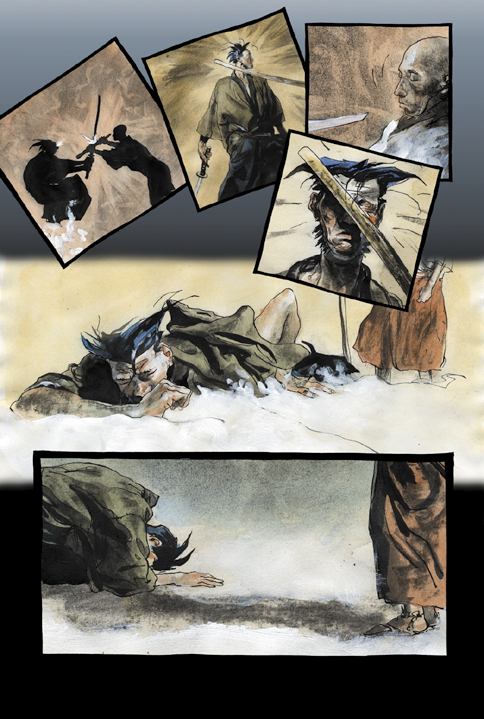
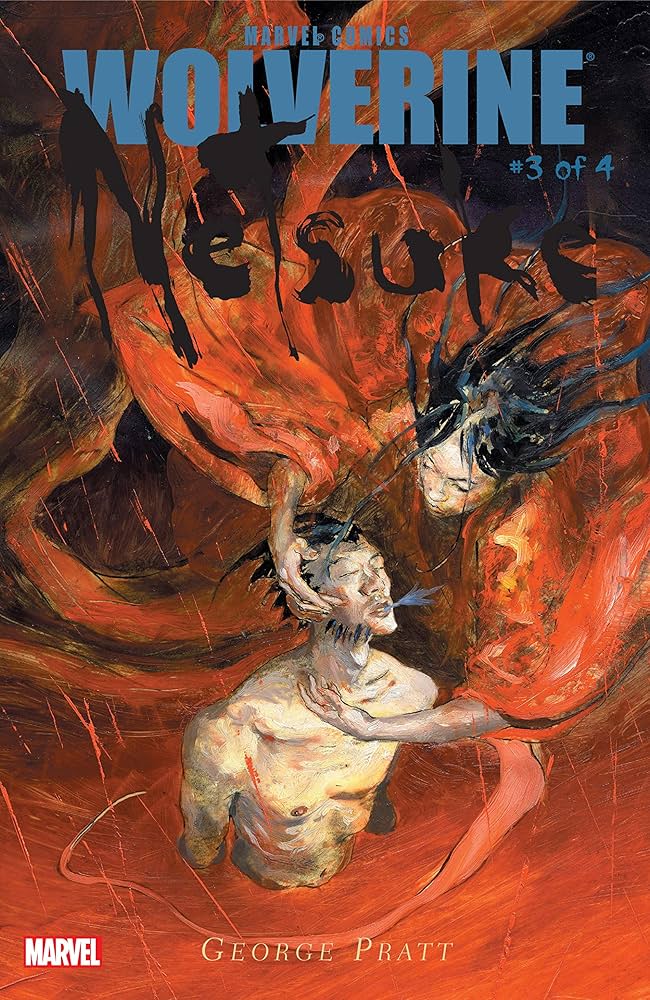
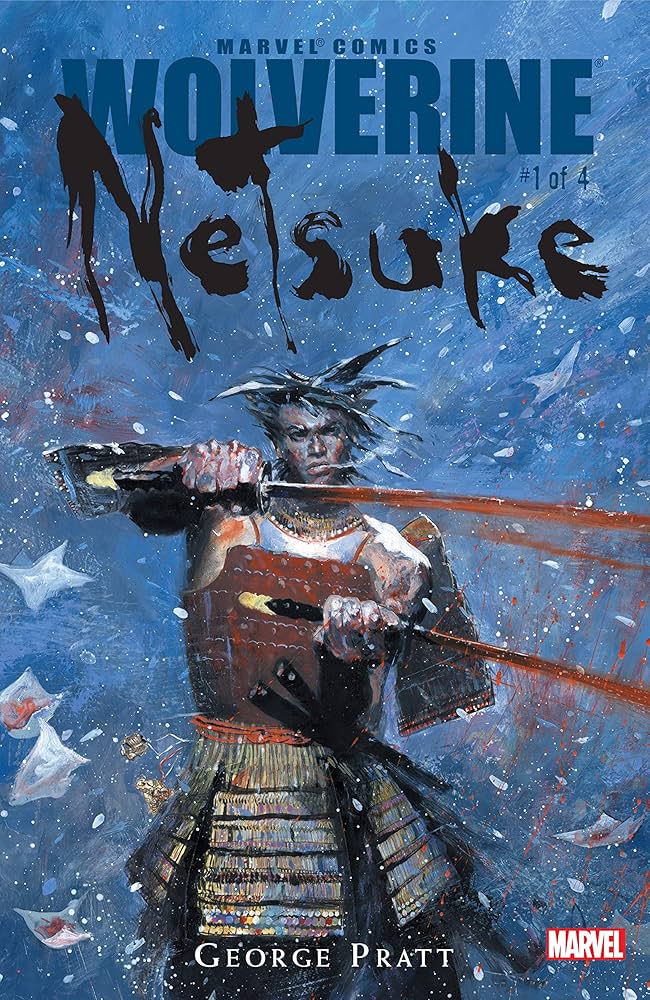
When I begin a project or a commission I’ll start doing some small idea sketches. The typical process in comics is that you pencil it, ink it and then it’s coloured. And that would piss me off because I would do this pencil drawing and for me that’s done. So if I’m going to ink that drawing, it would be like tracing it. So what I learned for myself is I just need to dive in and go straight with a pen. Just let things happen. Now the beauty of working with all the computer stuff is that I do everything as separate panels, which are fairly large, and then bring them together electronically. When I worked on Wolverine Netsuke, I was working on small pads, so I could just sit down, draw with a pen, and then compile them as a page on the computer based on my layouts. It was liberating because I could have fun drawing again. If it’s a little wrong, I’ll rip it out and do another one. I like the idea of the spontaneity that comes out of that, and the happy accidents. I don’t like knowing what’s going to happen. Why should the viewer or the reader have all the fun from a project? I do plan what’s going to happen in the panels, but I keep it very loose. The drawings are quite gestural, and then I’ll open the laptop and draw off the monitor like it’s a model standing in front of me. When I did Enemy Ace, I built all the models and crawled into the cockpit of a triplane and took pictures. The mood is much more important for me than the actual nuts and bolts. The toughest thing about painted comics is that people are caught up in the beautiful art, and if you’re lingering on that and the reader isn’t moving that’s where the line art in some ways is more effective because it is a pure symbolism. I get overwhelmed in the research for a project and the funny thing is I hated school and I hated history at school but now the research is one of the things I look forward to but it does become this overgrown beast.
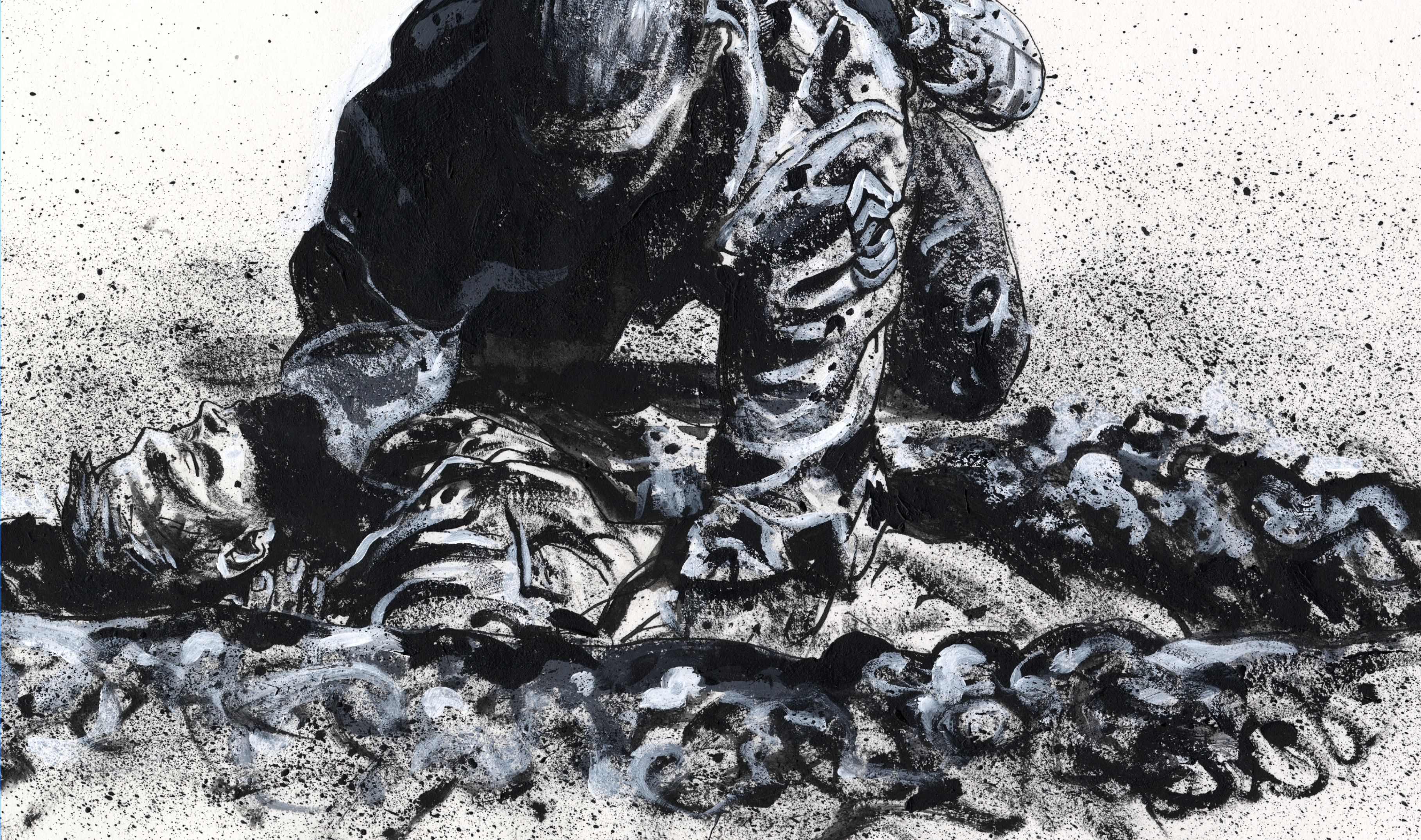

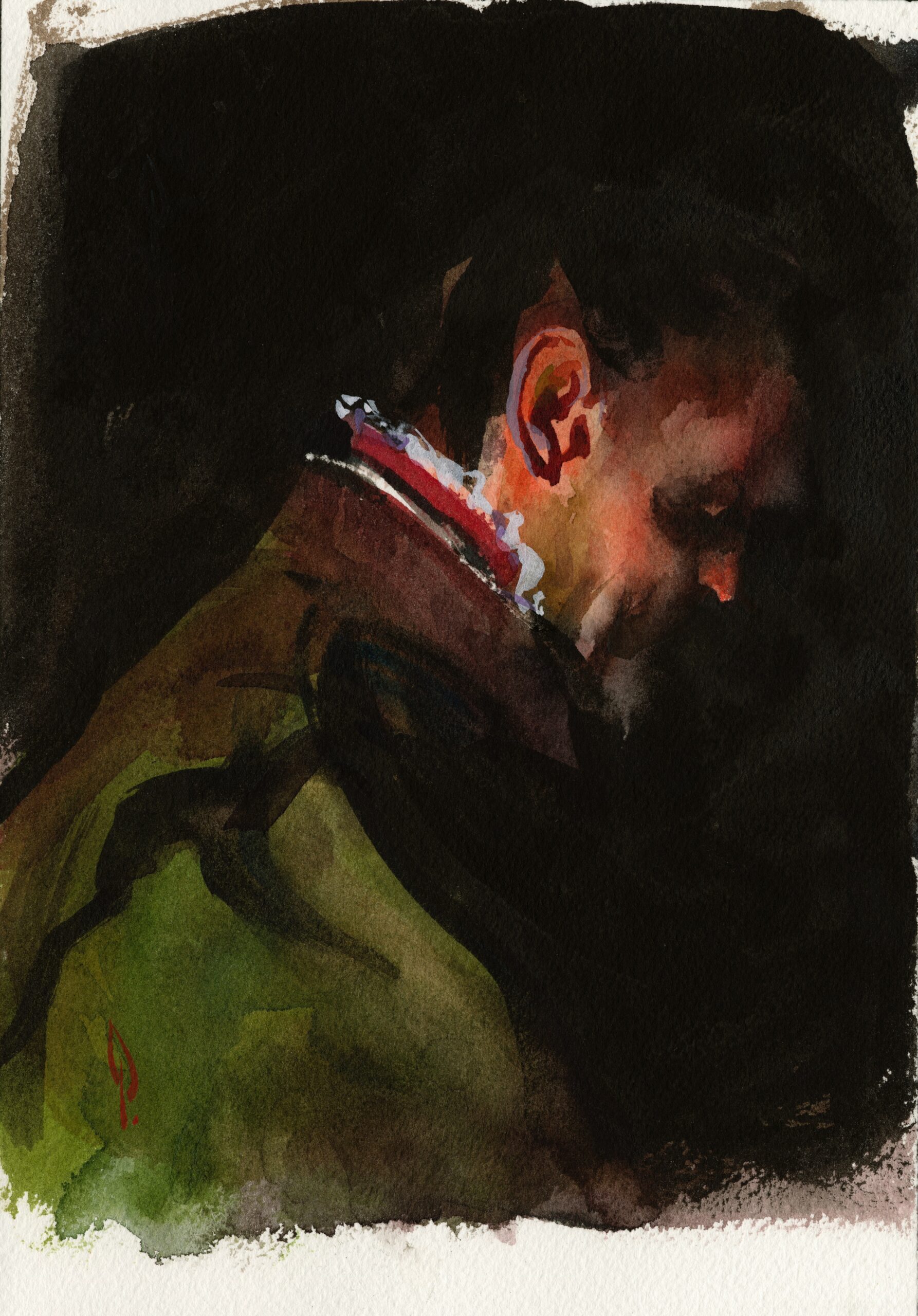
Enemy Ace War Idyll. That book was a total labour of love for me. They gave me pretty much carte blanche to do what I wanted. It was a great heady time because I was nervous as hell since it was my first real comics project and the fact that it was a Joe Qubit character that I read as a kid. That project was total immersion in not only my childhood love of something, Enemy Ace War Comics, but childhood fears, Vietnam. I was born in 1960 and that war was constantly in the background. It used to scare the shit out of me. I really thought I’d have to do army service and had it dragged on a few more years it was a possibility. After I came out of art school I began to read a lot of the books that were coming out about the Vietnam war to learn more about this terrible conflict that scared me as a kid. I became enthralled again by war, by its destructive nature, how it shatters everything we know about society and how we’re supposed to act, and I lucked into working for some Vietnam Veterans magazines, illustrating the soldiers’ tales of that war and other conflicts. That’s how I started to work on my idea for Enemy Ace as a vehicle for understanding it all for myself.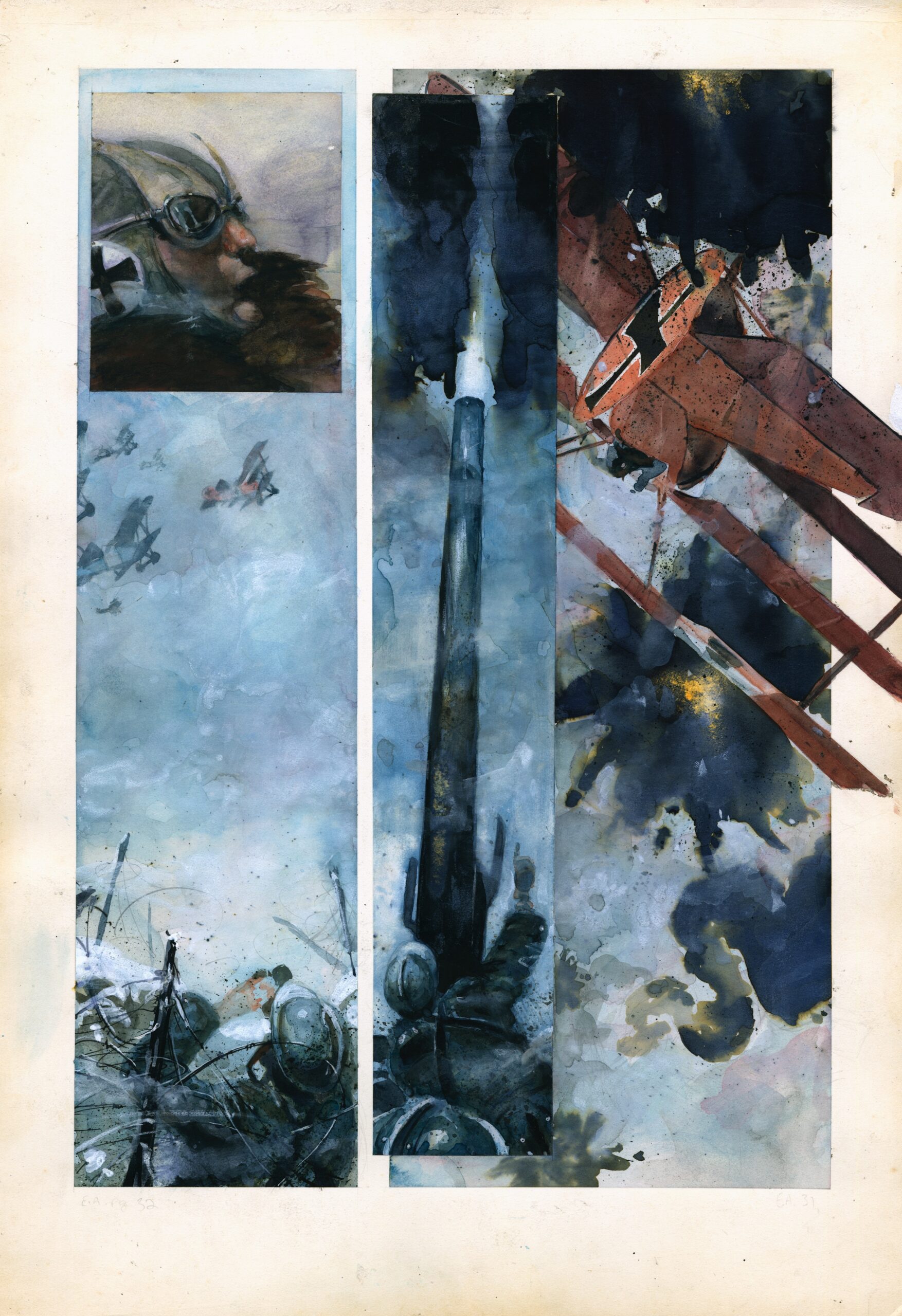

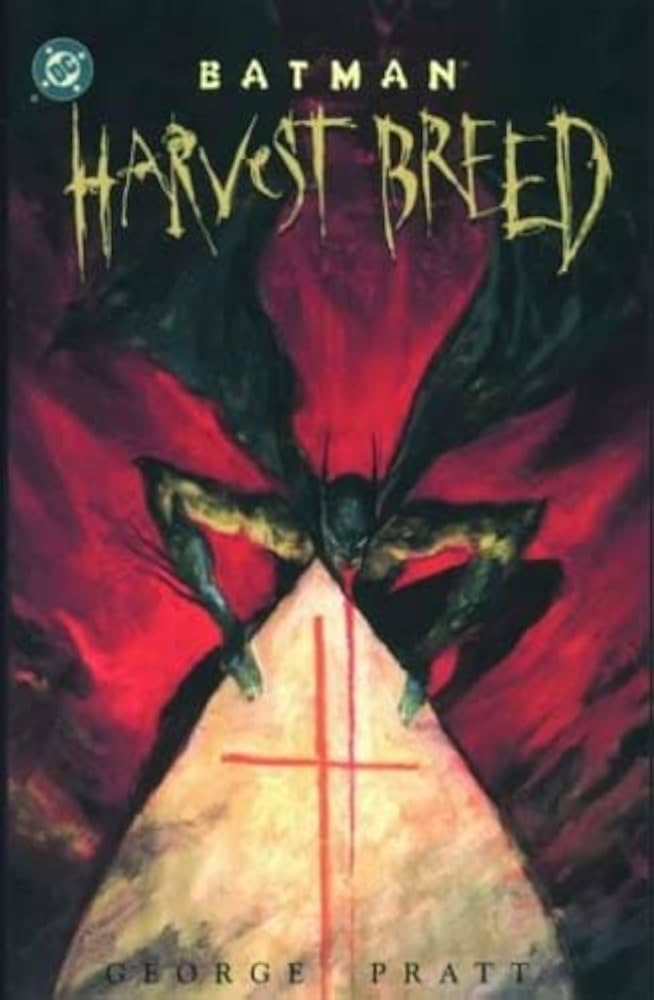
Batman Harvest Breed
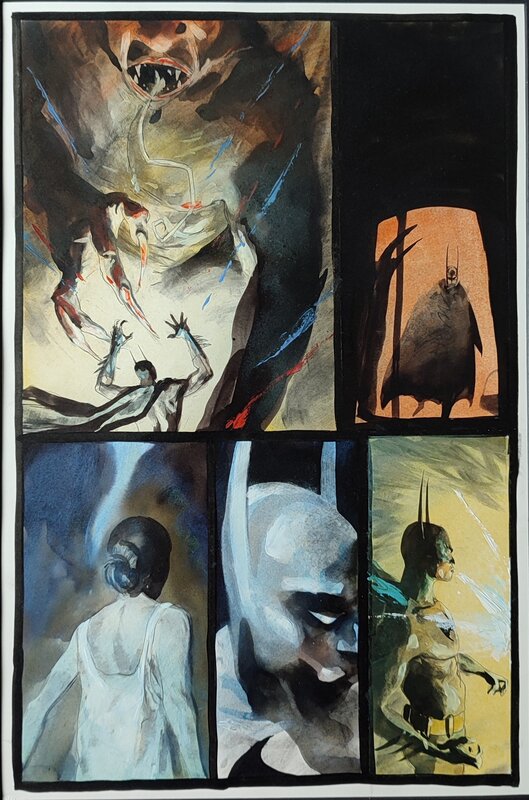
It really was trying to get back to a little of the O’Neil Batman, where he’s got some detective in him. Unfortunately for me, I didn’t really get to go where I would like on that book. Where I wanted to go was more graphic, like the Wolverine material, and less painterly. But the original editor and I had some disagreements on that issue, and well, in the end end he’s the boss. And what he wanted was a revamp of Enemy Ace. I tried to explain to him that Ace was supposed to be real. It fits into the real world and was an effort to be truthful. Batman lives in Gotham City, he’s not real. He’s a fictional hero that’s larger than life and needed to have that kind of treatment. I wanted the art to be more linear, more graphic, less real. But no go. Batman is pretty pervasive in my mind, he’s full blown, so it’s not hard, but I have to say that Scott Hampton, who lives here in town as well, has always been one of my greatest sounding boards. He has a great eye for the plotholes and an incredible talent for structuring a story. He usually listens pretty respectfully to my story, then pulls the pin on a grenade and hands it to me with the problems he sees, but he’s usually right and it makes my story stronger.

Wolverine: Netsuke
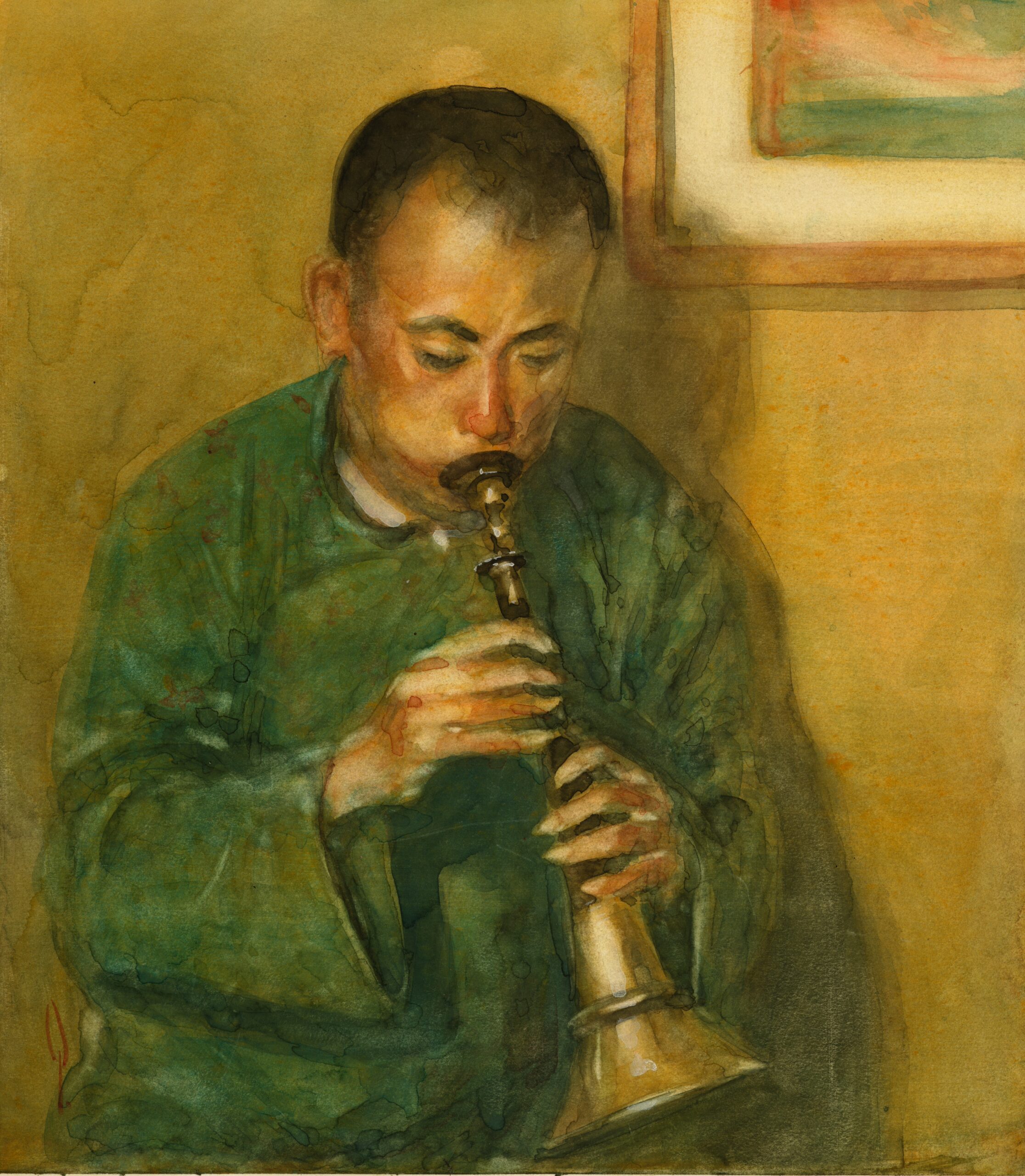
I was walking in my neighbourhood in Brooklyn and bumped into Chris Claremont, who lived a couple of blocks away from me. He asked what I was up to and I sort of vomited out my feelings about the Batman book and how upset I was with the work and the direction, etc. He was surprised to hear that and said it didn’t make any sense. If he hired me to do a book, he trusts I would deliver a good product. He then told me that he’d just been hired to be the editor of the editors up at Marvel and if I had a project, I should bring it in. I asked him if it would be alright to do a Wolverine book, and he told me to do it up. That was on a Friday and he made an appointment for me to come in on a Monday. I took the weekend and basically came up with the Netsuki ideas. I’ve always been enamoured with Japanese culture and art, reading piles of Japanese literature and tales, so this seemed a great way to bring all that interest to bear. All my projects are about things I have an interest in and enjoy sharing with others, so I sort of wrapped up all my interest in Japanese prints and literature into a tale that took advantage of the Wolverine, Logan and Mariko affair, basically a ghost story. I got to play with Wolverine and have fun drawing all this great Japanese material. Chris liked the idea and really championed it at Marvel. Without Chris, I got to play with Wolverine and have fun drawing all this great Japanese material. Chris liked the idea and really championed it at Marvel. Without Chris, that book would not have seen reality.







You must be logged in to post a comment.