


Animation
Find Out More About Netflix’s Blue Eye Samurai


Going Old School But High-Tech At The Same Time
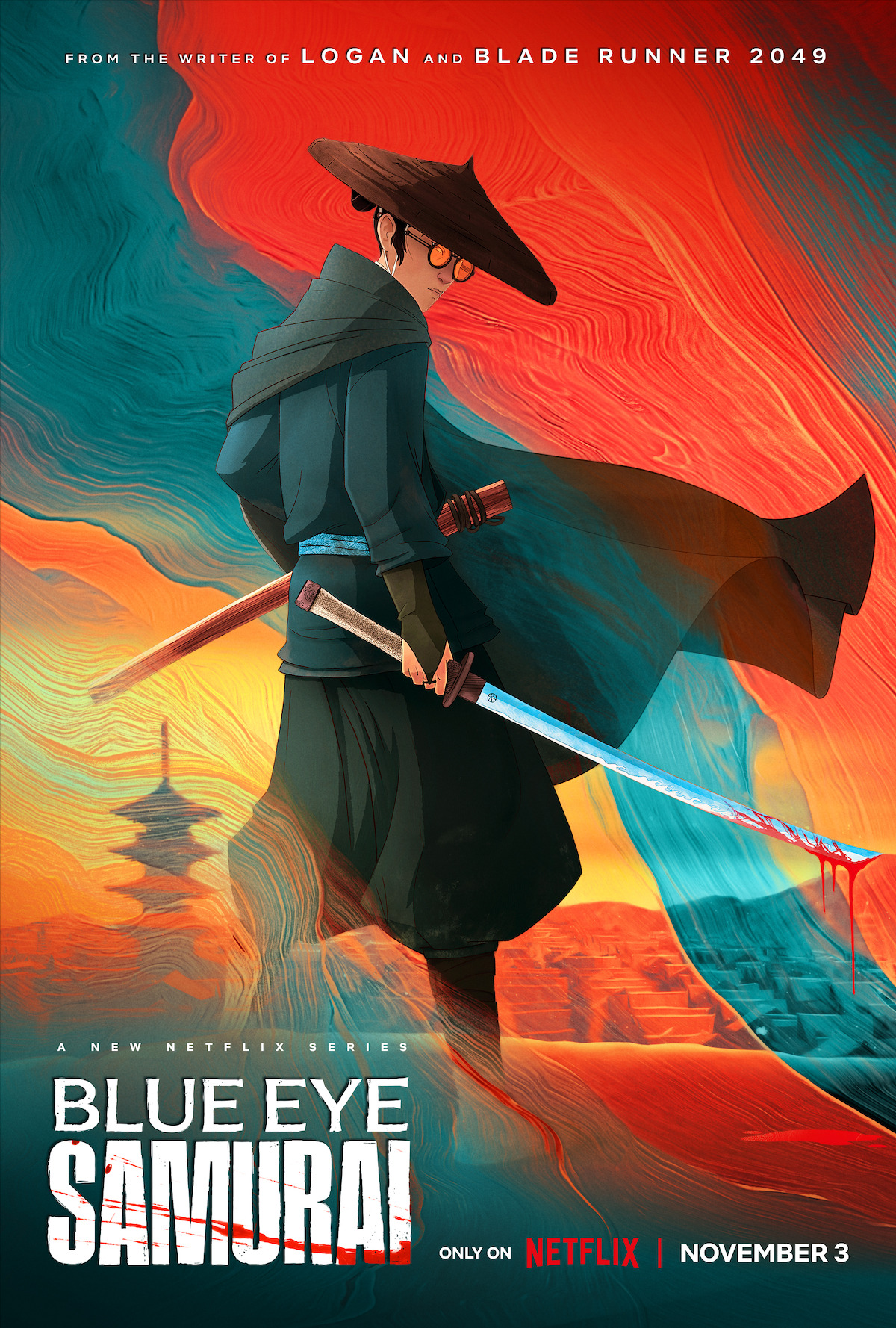
Netflix’s Blue Eye Samurai drops next week and it looks like a proper animated series. Here’s what people need to know about it courtesy of Netflix’s Tudum website…
Who created Blue Eye Samurai?
It’s the brainchild of Noizumi and Green, who came up with the idea after the birth of their child — who has blue eyes. Noizumi is half-Japanese, and she found herself thinking, “Why am I so excited that my daughter has blue eyes? What’s the big deal about that? And why am I so excited that I have a baby who looks more white?”
In their early creative conversations that would eventually span 15 years, they started spinning a tale about how “back in the Edo period starting in 17th-century Japan, it would’ve been illegal to be white. Nobody would’ve wanted to look white like that,” she said. And at some point in those initial talks, “We said something like, ‘She’s like a little blue-eyed samurai,’ ” said Green. “I wrote that down, knowing it was a good title.”
Alongside Noizumi and Green, Jane Wu (Mulan, Spider-Man: Into the Spider-Verse, Shang-Chi and the Legend of the Ten Rings, Game of Thrones) served as supervising director and producer, Erwin Stoff as executive producer, and Blue Spirit as the animation studio.
Like Noizumi, Wu shared a personal connection to Mizu — Wu understood Mizu’s decision to disguise herself as a man, since in the early Edo period she didn’t have much choice as a woman. “Describing Mizu is almost like describing myself in the way that her journey of self-acceptance was a journey I had to go on,” Wu said.
“Starting in this industry, I was in a very male-dominant industry, and I noticed that if I put in my portfolio with my name on it, I generally wouldn’t get the job because I was female. Often enough, my portfolio wasn’t looked at because I was female, so then I just started using my initials so you couldn’t tell whether I was male or female, and you would have to judge me by the work. That’s kind of what Mizu went through to complete her revenge, and I guess that’s what I’m doing — completing my revenge.”
Is Blue Eye Samurai anime?
No, it’s decidedly not anime. As much as Green and Noizumi are fans of anime, this series is a very different aesthetic. “It’s a 2D/3D hybrid, utilising technologies of both,” clarified Green. “But even when we use 3D, we wanted it to have a 2D handcrafted feel.” Green noted that they did use a lot of filmmaking techniques that don’t always show up in animated television though, including a pre-visualisation department, a stuntvis department and a wardrobe department.
The duo came to animation totally green, and they praised Wu for educating them every step of the way on how to build out their vision for the Blue Eye Samurai world. “Jane is a once-in-a-generation talent who can see a story visually, put it down on paper, and then teach everyone around her how to make that vision a reality,” said Green. “She not only assembled the team that made this show, she then patiently taught everyone how to make a show like this.”
Wu appreciated Noizumi and Green’s trust in their collaboration — they told her, “You do anything you want,” because they weren’t from the animation world. But when Wu started thinking about the visuals, she knew she couldn’t do anime. “Not because I’m not a fan, but because there’s been such great samurai animation out there that I was just going to get lost in that voice and I couldn’t do better,” she said. “I didn’t want this to look like a game. I knew that I didn’t want this to look like a Pixar- or a Disney-animated story.”
The visual language of the show is really drawn from Japanese art. “I designed the characters after Bunraku puppets, which is a traditional Japanese puppet performance that dates back over 300 years, and these puppets are about 3-feet tall. They aren’t for children,” said Wu.








You must be logged in to post a comment.