

Comics News
Dean Haspiel Talks A Life Of Indie Comics To Tripwire

New York’s Finest
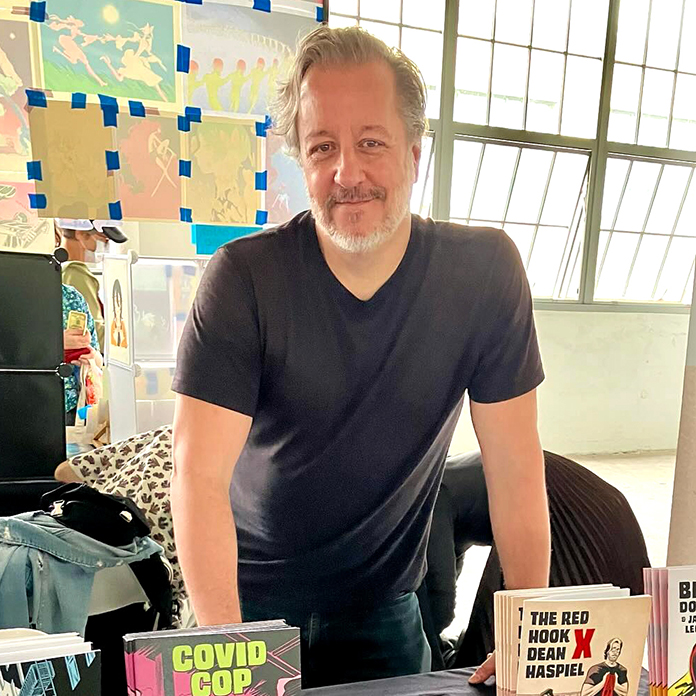
US veteran indie comics writer and artist Dean Haspiel spoke to Tripwire about his years as a comics creator and how he got started…
TRIPWIRE: Which comics did you read as a kid?
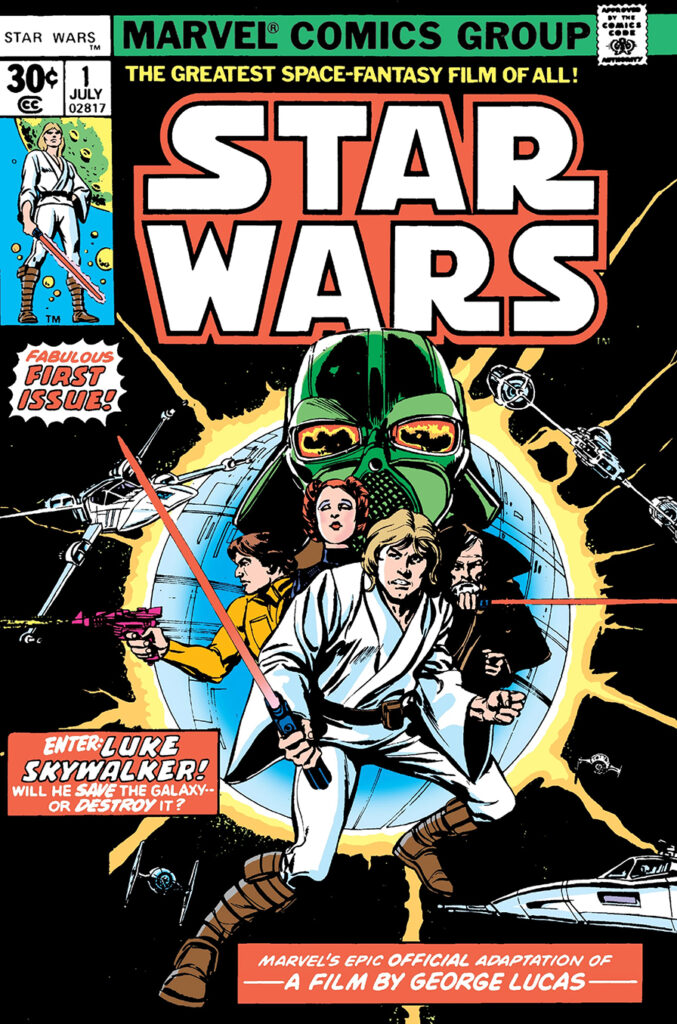
DEAN HASPIEL: In the 1970s & 80s, I devoured most Marvel Comics including The Fantastic Four, Marvel Two-In-One, Spider-man, Daredevil, X-Men, Iron Man, Hulk, Thor and Star Wars. I sometimes cheated with DC Comics and read Shazam, Batman, Green Lantern, Teen Titans, and The Legion of Superheroes. I was aware of Archie Comics’ Red Circle line, specifically, The Mighty Crusaders and Alex Toth’s stint on The Fox (which eventually inspired me to produce two THE FOX mini-series with Mark Waid). But everything changed when I discovered Chester Brown’s Yummy Fur, Harvey Pekar’s American Splendor, and Howard Chaykin’s American Flagg!
TW: When did you first connect with the work of Jack Kirby?
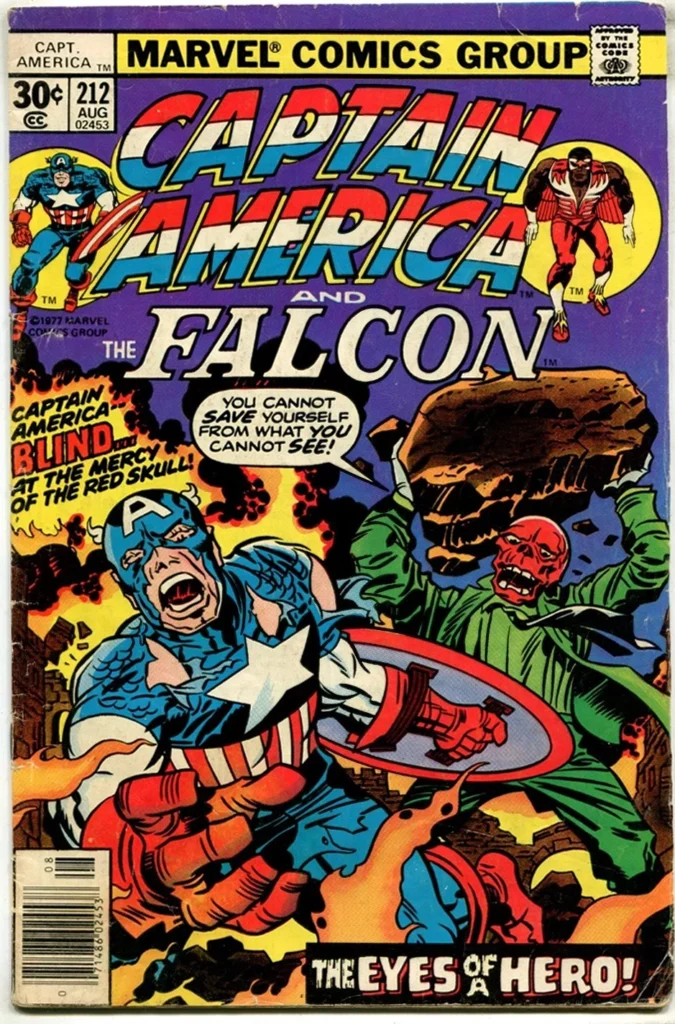
DH: I think my first encounter with Jack Kirby’s work might’ve been when he returned to Marvel to write and draw that “Mad Bomb” story in Captain America. I distinctly remember the startling cover to issue #212 where Captain America is blinded by The Red Skull and freaking out. It was grotesque yet captivating. When I started to buy back issues, it opened up the floodgates to a metric ton of Kirby work. From Captain America to OMAC to Captain Victory. From The Fantastic Four to Thor to The New Gods. Jack Kirby is the gift that keeps on giving.
TW: What is it for you as a creator and also a reader about Kirby’s work that marks him out as something different and unique?
DH: Jack Kirby’s unbridled imagination rooted in human desire and fear never fails to turn melodramatic pages. Kirby questioned the idea of god and then dared to answer it. His villains were as complex, if not more, than his heroes. Once I learned about Kirby’s personal experiences with the horrors of war, I viewed the majority of his work as PTSD comic books. Not only do comix allow for great artistic freedom and expression, but they make for low-income coping mechanisms, too.
TW: How did you get started in comics?
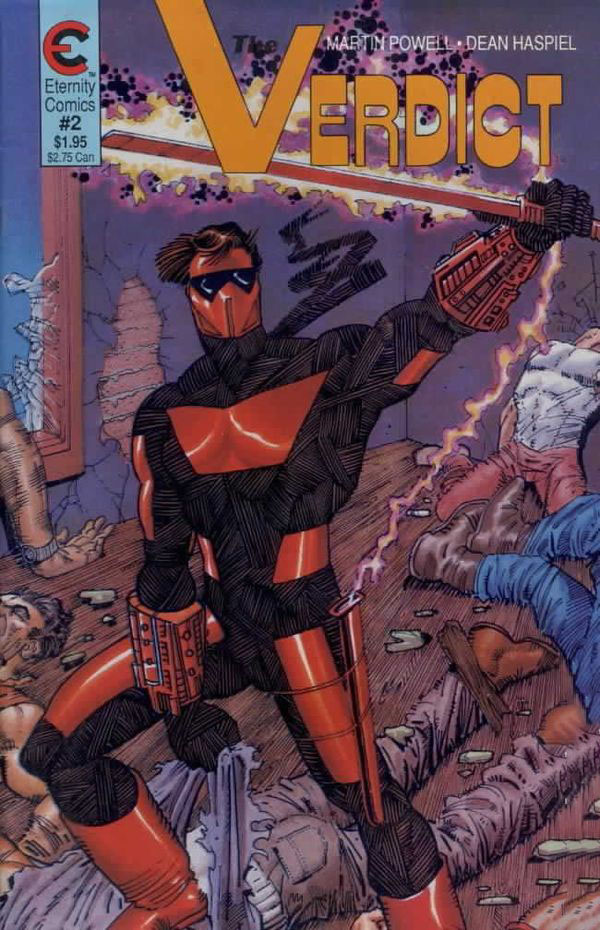
DH: After assisting Bill Sienkiewicz, Howard Chaykin, and Walter Simonson my senior year at La Guardia high school in 1985, I co-created The Verdict, a vigilante revenge comic book with writer Martin Powell for Eternity Comics in 1987. It took a good 13-years working odd jobs and waiting tables before becoming a full-time freelancer producing comics.
TW: Do you create your work physically or digitally? What are the pros and cons of each?
DH: I mostly type what I write but I’ll scribble ideas and lines of dialogue into a cheap note pad during subway rides, etc. I use blue pencil and ink with Japanese pens and brushes on paper. Sometimes it’s on 2-ply Bristol board. Other times I use crappy sketch paper. I color and mostly letter in Photoshop. I’m old school. I like how a pencil and brush feels on paper. I don’t like how cold hard plastic feels.
TW: You are an artist but also a writer. How do you see yourself when describing what you do to people who may not be familiar with your work?
DH: I see myself as a cartoonist and a playwright with cinematic leanings. Some people mistaken “cartoonist” for animator and I quickly disabuse them of that.
TW: Are you an artist who writes or a hyphenated writer-artist?
DH: Not certain of the distinction but I’m probably an artist who writes because I often think of visuals first but I won’t begrudge a writer-artist description. I dig purple prose.
TW: In recent years, you have been putting out your work via crowdfunding rather than more traditional publishing. What are the advantages of using something like Kickstarter rather than the more old fashioned methods like taking work to a publisher?
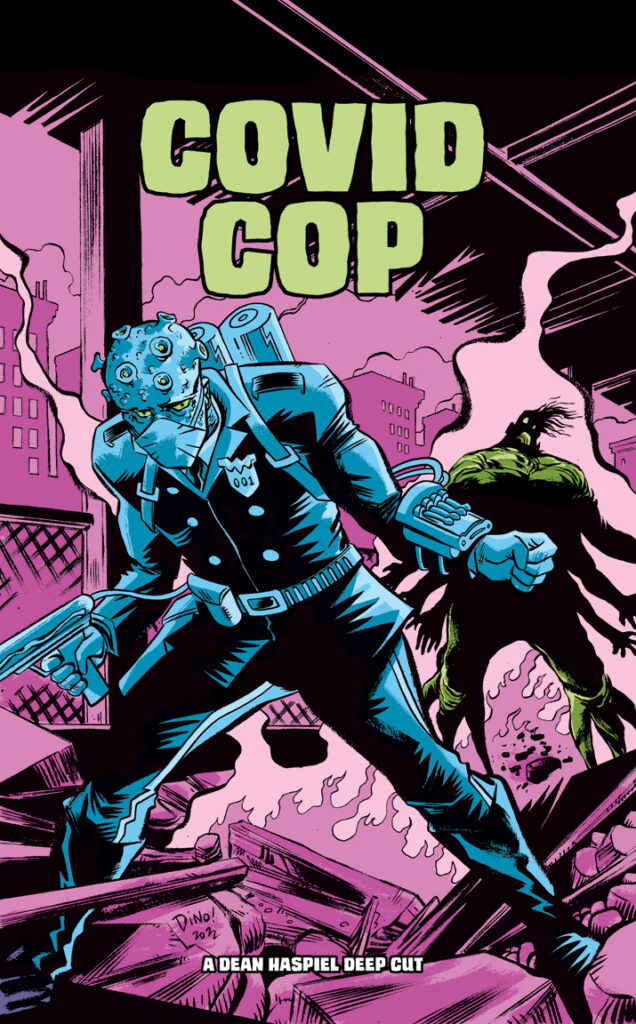
DH: After decades of hustling for work, I became allergic to pitching to publishers. The business of comix dispirited me. In 2023, I kinda quit comic books. I looked back at my career and wondered where I went wrong and where I went right. My career was schizophrenic. I was spinning too many plates. I wasn’t known for anything more than taking off my shirt in public. Something I haven’t done in years. And having become a veteran cartoonist, I had less tolerance waiting for a greenlight to draw my stories. Only to be offered a low advance you cannot live on — with more than half of your creator rights taken away. All the while doing most of the promotion for the possibility of chasing a royalty. Some people “never got a dinner.” I never got a Dark Knight. And that’s when I decided to put on a publisher’s hat and crowdfund my first “Deep Cut” comic book with COVID COP.
TW: You have been in the US indie space for many years now. How has it changed and how have you had to adapt to your place in it?
DH: I started out in the black & white comix space when we published The Verdict mini-series in 1987. But my dreams of one day drawing The Fantastic Four got in the way of me developing and growing creator-owned characters not unlike Matt Wagner’s Mage or Grendel, Mike Allred’s Madman, Don Simpson’s Megaton Man, Bob Burden’s Flaming Carrot, Mike Baron and Steve Rude’s Nexus, John Ostrander and Tim Truman’s Grimjack, Jim Starlin’s Dreadstar, Mike Mignola’s Hellboy and, most recently, Michel Fiffe’s Copra.
In 1995 I created Billy Dogma + Jane Legit and should’ve stuck with them but I didn’t. I wanted to draw The Fantastic Four but I wasn’t good enough, not ready for prime time, until a few kind editors threw me a bone years later (and I got to draw canon Fantastic Four and many other franchise characters). But when I first discovered one-man anthologies like Dan Clowes’ Eightball, Adrian Tomine’s Optic Nerve, Jessica Abel’s Artbabe, Paul Pope’s THB, Sam Henderson’s Magic Whistle, Nick Bertozzi’s Rubbernecker, and non-superhero series like The Hernandez Brother’s Love & Rockets, Bob Fingerman’s Minimum Wage, Evan Dorkin’s Milk and Cheese, and Dork, Peter Bagge’s Hate, Chris Ware’s Jimmy Corrigan, Tom Hart’s Hutch Owen, and semiautobio comix like Harvey Pekar’s American Splendor, Joe Matt’s Peepshow, Joe Chiappetta’s Silly Daddy, David Greenberger’s Duplex Planet Illustrated, and Julie Doucet’s Dirty Plotte, my mind was blown. Comix could be about anything.

Even though my high school buddy, Josh Neufeld and I intermittently produced Keyhole Comics, a two-man anthology, we never got the same traction as those comix published by Fantagraphics, Drawn & Quarterly and Kitchen Sink Press. Back then, those were the publishers to hitch your wagon to. Luckily, I’ve had spirited and educational relationships producing my comix with Top Shelf, Alternative, IDW, Dark Horse, Image, Webtoon, etc./etc. And recently Kickstarter.
These days there is a deluge of indie/alt publishers and one-man shops like myself. And now with Diamond Distributors collapsing, the playing field has been officially leveled and everyone is scrambling to figure out next steps. A lot of creators like Dan Goldman, Charlie McElvy and Vito Delsante (who I co-produce a weekly podcast called VITO x DINO with) are being forced to wear publishing, marketing, and distribution hats while others are allying and forming umbrella-style companies just to get their comix in stores. Gone are those sweet black and white comix from the 1990s. We’re all trying to figure out where we stand.
TW: You have written and drawn for more mainstream publishers over the years too. How have you found that experience?
DH: I’m a true blue fan of Marvel and DC Comics characters. I naturally want to create some of their stories. And I believe I put a healthy mark on Archie Comics’ The Fox. But the older I get (I’m 58), the less compelled I am to put my stamp on other companies properties. Would I like to rock The Fantastic Four and Batman? Sure. Do I need to anymore? Nope. Would I rather perpetuate my creator-owned comix? You know the answer.

If I learned anything from working for the mainstream is that it comes with constraints and corporate concerns and sometimes that kind of editorial challenge can grow you as a professional story-maker. And sometimes those constraints can feel a lot like restraints and that can be a drag. And you own none of it. Alas, for all my freelance experience the last 25+ years, I don’t think I’ve hit the page count nor put enough proverbial asses in seats to be invited to a corporate retreat to hash out next years mainstream superhero stories. And that’s okay. I can help change the comic book industry for the better in other ways.
TW: You often attend comic shows and conventions. What do these do for you as a creator?
DH: Why do we make comix? To make human connections. And there’s no better way to connect with people than to show up to the party. Be part of the community and galvanize it. I’ve been fortunate enough to be a guest at many of the shows I’ve attended, from SPX to APE to MoCCA to BICS to IC3. From San Diego Comicon to New York Comicon and so many more. And my favourite is Baltimore Comicon, our family show. But no amount of money in the world beats the currency of parlaying with your peers and meeting and talking to people who appreciate your work. And I always make sure to thank the creators I admire, too.
TW: Do you always try to push yourself as a creator?
DH: I’ve yet to make a great comic book. I have no idea what that looks like. What that reads like. So I try and try again. I believe there’s a fail safe switch inside all creators that makes damned sure you never create the perfect thing. Because, if you did, it would be game over. Nighty night. Sayonara suckers. So, you strive to hone your skills, energize your talent, learn your craft in real time and in public, warts and all. And be aware. Don’t get too stuck in your head. Look around. Look up. Open your heart. Open your mind. Experience new things. Find joy.
TW: Do you have a plan for what you are going to be creating and publishing over the next few years? What do you hope to achieve as a creator in the short term?
DH: I have more “Deep Cut” comix planned. Sequels to COVID COP, CHEST FACE and THE RED HOOK. Possibly my own one-man anthology.


And I’d like to publish a few collections and omnibus I have in mind. Expand my pantheon into a proper library. I’m currently curating a Comix Block for The Red Hook Star-Revue, featuring new comic strips by me and Brooklyn cartoonists Whitney Matheson, Nick Forker, Adam Suerte and Ariel Kahtan. I’m co-curating/co-editing an exciting as-of-yet-announced anthology featuring NYC stories with writer Doug Latino. And then there are the new plays and screenplays I’ve written that I’d like to direct.
sign up to his substack here
https://deanhaspiel.substack.com/
subscribe to the VITO x DINO podcast: https://www.youtube.com/playlist?list=PLQA1bse54y5tbjouiIcLAvkijGnNKvYKV
Here’s his Etsy store too https://www.etsy.com/shop/deanhaspiel/









You must be logged in to post a comment.