

Headlines
BBC’s Time Series 2 Cast And Creatives On Telling Stories Of Women In Prison “With Integrity And Brutal Honesty”


Still Doing Time
Told through the lens of three very different inmates, Time is a moving and high-stakes portrayal of life inside a women’s prison.
Arriving at Carlingford Prison on the same day, Orla (Jodie Whittaker), Abi (Tamara Lawrance) and Kelsey (Bella Ramsey) are thrown together to face an unfamiliar world. But even with the ever-present threat of violence within its walls, they discover that an unexpected sense of community, and a shared understanding, still might be possible…
Jimmy McGovern (Writer and Executive Producer)
There’s only one wing in our prison. By “wing” I mean one of those long, stone-walled corridors with cells down each side in which you can lock people away. In our prison, that one wing is used mainly for induction and occasionally for punishment. For the rest of the time the women are housed in large units and within them they are free to wander: to the showers, to the television lounge, to the kitchen. The front door, however, is locked.
There is no VP wing in our prison. By “VP” I mean “vulnerable prisoner” and by “vulnerable prisoner” I usually mean “sex offender”. Well, if you’re a sex offender in a British women’s prison, you have to mix with the other prisoners. No matter what you’ve done, no matter how grievous your offence, you have to mix with the other prisoners. That can be dangerous.
In our prison, and in all British women’s prisons, there are no full body searches without reasonable suspicion. That means women can hide drugs in their bodies and carry them around the prison. Many do so. Women’s bodies are more central to this drama than any other drama I have written. That’s why I needed a woman to work with. And that’s why we got Helen Black.
Helen Black has been a joy to write with. Andrea Harkin, our Derry born director, has been wonderful. So too have been the cast and crew. It’s a tough drama, this, but it is full of love. I hope you enjoy it.
Helen Black (Writer)
In the Spring of 2022 I was on holiday when my agent emailed saying Jimmy McGovern was planning to write season two of Time. Excellent, I thought, loved the first one. This series was going to be set in a women’s prison. Even better, I thought. Can’t wait to watch it. As such the email continued, Jimmy wanted a female writer on board and ‘would Helen be interested in having that conversation?’ It took me six seconds to say yes.
And that’s how I found myself a few weeks later in a room above Radio Merseyside meeting one of this country’s greatest writers. A room we would return to again and again with our fabulous producers Andrew and Michael. A room where we set out to tell the stories of women serving time with integrity and brutal honesty.
Jimmy has no room for artifice in his work, there is nowhere to hide, which is why we are all drawn to these challenging yet glittering stories. We may be watching something well beyond our own experience, but it is always the humanity that leaps out at us.
I hope you enjoy this series. It has been a privilege and a pleasure to write it with Jimmy. We’ve laughed and we’ve cried and when you watch it, I know you will too.
Meet The Cast

Jodie Whittaker (Orla)
Where do we meet Orla in at the start of the series?
Orla is a single mother of three and we meet her in a stereotypical domestic scenario that any mother can appreciate where you’re just trying to get your kids ready for school. But for Orla it’s particularly heightened because she’s in a rush to get somewhere that nobody knows she’s going.
The beauty of Helen and Jimmy’s writing is that the audience isn’t completely spoon-fed every scene. So you then have a very hard cut with them realising that she’s gone to court and is then sent down for six months. In law there are very clear lines on what is legal and what is not legal – but then there are very blurred lines of what warrants prison sentences and what warrants fines. In Orla’s situation, the crime doesn’t necessarily merit the sentence. The cost of living crisis has absolutely contributed to Orla’s situation.
The first season of Time was widely praised, what has it been like working with Jimmy and telling this story off the back of the success of the first season?
As an actor, whenever you’re sent any script, it’s incredibly exciting because you are sat in a position where you’re lucky enough to read all that hard work, especially when it follows something that has been so impactful, important, and of such high quality like Time series one. The fact that this is being told, not as a season two, but as another unique standalone piece covering different storylines and characters has been amazing. I think for me growing up, Jimmy’s writing was hugely impactful on my love of television and screen, and hearing things in a voice that I understood. And so, when he came on set, I was pathetic. You know with both Helen and Jimmy that the research has been done and we’re in safe hands. There’s an incredible ensemble of stories and I felt very lucky to be on set.
How will watching Time series two change people’s perspectives on female prisons?
I think what Time series one did, and hopefully what this series is doing, is giving a face to the statistics or the problems. You can say there’s a there’s a wrong or a right, there’s a baddie and a goodie, or there’s a situation where there’s a bad decision and a good decision, but we all live in a grey area. Some of us are in a lucky position – wherever we’re coming from or are going to we are helped in many ways by society or the financial bracket you’re in. All these things are contributing factors to your daily ability to choose certain things. For Orla, the domino effect of her being in prison shatters everything for her.
What’s it like working in an ensemble cast?
The thing that’s been wonderful filming is just being in an environment of so many actors, in such an ensemble. You’re supported all day and given the space to work, to be challenged and to discover really brilliant details because there are other people in the scene. Sometimes when you play characters like Orla that require such an emotional journey it can make you a little bit insular, whereas Time is all about the ripple effect. It’s been brilliant, it feels like the epitome of working on a team – you feel like you’re in a football team or something, and as characters you’re not always playing on the same side so it’s quite complicated and there are a few screams at the referee.
What research did you do to prepare for the role and did you utilise that for your performance?
What has been wonderful is learning from other actors, the wealth of knowledge within us that’s been so openly shared.
Tamara Lawrance (Abi)

Tell us about Time series two
Time is a series that follows predominantly the storylines of three women who have come into prison for very different reasons and who, for most of the show, share a cell and interact with each other. It’s about loss, it’s about redemption, it’s about grief, and family, and friendship, connection and the lack of it, and also transformation – I think every character sort of evolves through their circumstance. So I think resilience is probably the salient theme and I hope that compassion, understanding and a new perspective is what people take away from it the most.
Tell us about your character, Abi
Abi is an inmate, she’s doing a life sentence for a crime that she is trying to keep under wraps. She has served three and a half years in a different prison and she’s in quite an anxious space because the nature of her crime was revealed in the previous prison and the inmates turned against her for that. So she’s trying to keep herself to herself, but also looks out for other inmates as well because she knows what it feels like to be ostracised.
What did you love about the first season and what attracted you to come on board?
I was on the BAFTA jury actually that year and watched for Best Actor – I voted for Sean and it was actually a unanimous vote for Best Actor. Similarly from the last season to this season, what I loved about it was the subversion of stereotype and recognising how sometimes people do things that people might see as reprehensible not because of who they are, but because of the circumstances they’ve been put in. I think there’s an amazing arc from the first to the second season, even though it’s entirely different people and stories.
Societal and class issues often play a part in Jimmy’s work, how is this illustrated in Time series two?
The writing was the main thing that struck me when I first read it. Just how human and real and timely these storylines felt, particularly Orla’s storylines – somebody who can’t afford to pay for gas and electricity, and ends up being imprisoned for what most would see as quite a minor crime compared to some of the other people she’s inside with. I think a lot of people will be able to resonate with struggling to afford things right now.
Also, I felt like characters that would ordinarily be vilified or people that would ordinarily be seen as the lowest of society, for example, Kelsey, or somebody who’s done something like what Abi has done, we get a chance to empathise with them through this show. Especially with the nature of flashbacks for Abi. Hopefully that will give a lens into the pressure she was under which led her to do what she did. It gives honour to people who otherwise are dehumanised by the criminal justice system. It can be unkind to some of the people that go through it. I think that this this show allows the audience to connect with them rather than the system.
What research did you do to prepare for the role and how did you utilise that for your performance?
I did lots of research into stats around women’s prisons, their quality of living, and watched lots of documentaries on women’s prisons and the dynamics there. The stakes are interesting when everything becomes so myopic, particularly for people who are doing long sentences, the importance of your belongings, everything becomes heightened. If all you have to your name is the hair oil you own and the hash browns you eat for breakfast, those things become currency, and so it’s interesting to see that through those documentaries.
How will watching Time series two change people’s perspective on female prisons?
For all the characters, what this show brings is context. People find it very easy to cast judgement on the final result, as it were, but this series shows the relationship with Orla and her kids and how well-meaning she is, it shows how Kelsey is in an abusive relationship and is being groomed into this addiction, and how Abi has a complete lack of support and how loneliness is a massive trigger for a lot of illnesses. I hope people can clue into that detail in the writing and feel that these people are fully fleshed. Even if they don’t obviously condone what they’ve done, I hope people come away with a level of understanding of how people end up where they are.
How do inmates’ experiences differ due to their crime and other prisoners’ perceptions of crime?
I think the level of ostracization Abi faces hardens her. I think from the flashback, you can see that she’s the average woman that came actually from a level of privilege, which most people in prison don’t, which is part of why the other inmates struggle to sympathise with her. Effectively, there’s a fall from grace, and then coming into a landscape which she had no connection to in her history before, she recognised in the previous prison that you have to harden your demeanour. It’s a very eat or be eaten dynamic in prison. She comes across quite tough and there’s a symbiosis there – everything feeds into itself, the more people isolate her, the more she withdraws, and then the less people want to connect with her.
On top of that, there’s a moralistic hierarchy where the inmates feel a level of superiority because of the nature of their crimes compared to hers. Abi is dealing with guilt which they don’t realise at first and that seeming remorselessness is part of why they hate her. But she is riddled with sleeplessness and oral and visual hallucinations and struggles to forgive herself. I think her persona is that she doesn’t care, but I believe that she’s deeply sensitive and she shows that in the ways in which she steps in and steps up for people around her, particularly Kelsey.
With women working both on screen and behind the camera, has this felt different from working on previous sets?
It is a lot. It’s a lot for everyone. I think the crew have expressed that they’ve been affected by every storyline as well. I’m grateful that there’s a cast full of people that are compassionate, understanding and also very funny. On jobs where the subject matter is really heavy, there’s often lots of levity in other areas because you have to find things to laugh about to shake it off. There’s a lot of support and admiration in the cast. I think we all learnt from each other and enjoyed the bits in between the takes.
Bella Ramsey (Kelsey)
Tell us about your character, Kelsey
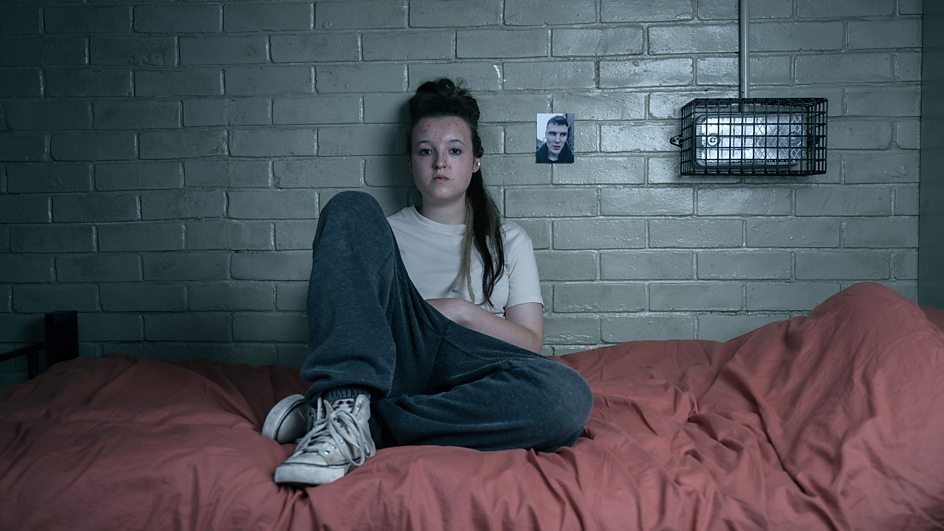
Kelsey is full of life. She’s a bit of a joker and very young, immature and lost. But, on the other hand, she’s seen far too much. She’s 19 and faced a lot of difficulties in her life which sends her to where she is now. When we meet her, she’s a heroin addict and she finds out she’s pregnant. Her story evolves and she comes into herself. This addiction and the state that she’s got herself into is largely informed by her boyfriend, Adam, but she’s just a bit of a lost soul who ends up working things out and finding herself.
In lots of ways, Kelsey is very far removed from me, but as we’ve been filming and going through this I’ve found a lot of similarities and it was so natural for me to play her. But initially, when I read the script, I was genuinely afraid I wouldn’t be able to do it. I’d get on set and then it just wouldn’t work. But thankfully it did, I think.
Tell us what it’s been like working with the other actors that you’re with
Time is such an ensemble. Everyone’s so giving and generous – we just immediately got on and are there for each other, supporting each other, and messing about. The big group scenes with all of us are a nightmare for everybody because right up until action we’re gabbing!
How has it been filming highly emotional scenes?
There have been a lot of traumatic scenes on this and they stick in my mind because of how gruelling they were, but also how supported and safe I felt during all that. It’s also fun between takes, I think when something really funny happens during a really emotional scene it’s 1000 times funnier than it would be at any other time – the moments where you shouldn’t laugh are just the funniest. What I love about doing this is that every take you find something different. The Time storylines are so real and alive and the stakes are so high.
I’m quite good in between takes, I’m good at not carrying things with me. One of the things that I’ve done since I started in this industry is, after an emotional scene, as soon as they say cut I pull a stupid face or do a massive smile to let everybody know I’m fine. With the bigger, more physical scenes, it’s much easier to snap in and out of because you have so much adrenaline. But with the more quiet and introspective, ones, I really tried to stay in a bit more.
What research did you do to prepare for the role and how did you utilise that for your performance?
I was keen to do research for this. I got to go to visit a prison. I didn’t realise that women’s prisons tend to work differently in that there isn’t just one building that everyone’s in, it’s more of a complex of residential units where groups of women will stay. I talked with somebody who was about to be released in five weeks – she’d been in and out of prisons since she was 15 and was addicted to cocaine and alcohol. Although her story was different, hearing her talk about addiction and how it feels in your body was really helpful for me. It was amazing that she was so open and shared with me – I don’t think I’ll ever forget going there and hearing her story. She said something that I carry with me, especially into the scenes where Kelsey is really struggling and really needs the drugs. She said that you feel addiction everywhere in your body – if you want the hit and the whole of your body wants it, it’s almost like electricity coursing through you.
What did you love about the first series?
I watched the first series during the first week of filming and it really affected me. I thought it was amazing. I love the fact that it’s just three episodes, but within those three episodes so much happens. The performances of Stephen Graham and Sean Bean were just phenomenal. Watching that just made me feel so honoured to be working on this second version of it. I love the humanity that is given to the prison staff. They feel like real people, not caricatures or stereotypes.
Tell us about Jimmy’s writing and the process of reading the scripts for the series
Jimmy’s writing is very nuanced. What’s really struck me about his writing is the confidence that he has just to have really simple dialogue, just be like: ‘Yeah, that’s what would happen, it’s not elaborate or fancy, it’s just real people having real conversations.’ He’s created really nuanced characters with so many layers beneath them that so when you read the script, you are suddenly piecing together this character that he’s created. He’s amazing.
Siobhan Finneran (Marie-Louise)
Tell us about your character, Marie-Louise
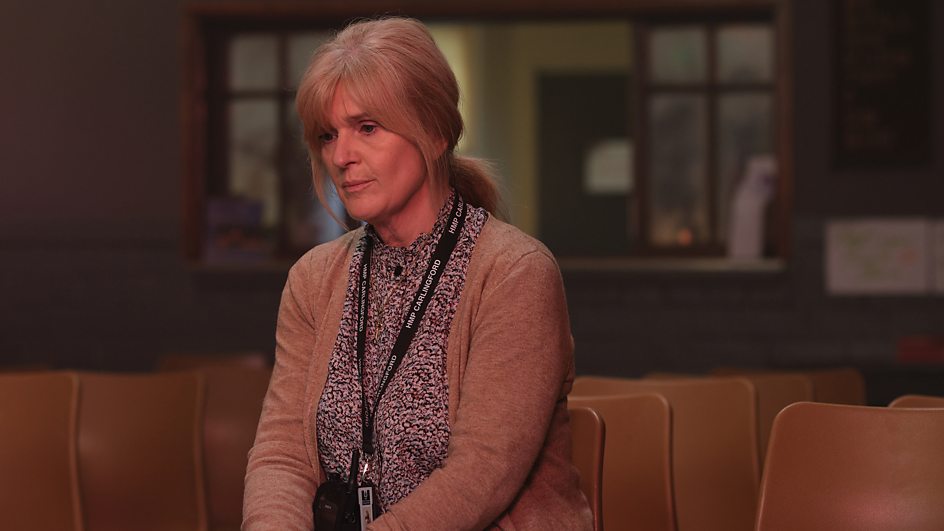
Marie-Louise is a nun with the chaplaincy team in Carlingford Prison. I’ve just felt very privileged and very honoured to be part of this cast, although you can’t say you’ve enjoyed the filming process because the content is really quite dense and brutal. For me, being able to sit and watch the performances has been really quite breath-taking and brilliant. My character’s is that little glimmer of hope for some of the inmates. She’s supportive and doesn’t judge any of them. She offers a little bit of help when she can, and hopefully encourages them to tell their stories because she understands that in some way this may go towards them healing.
The first season of Time was widely praised, what has it been like working with Jimmy and telling this story off the back of the success of the first season?
Well, Jimmy McGovern’s writing is legendary and I think you would be hard pushed to find an actor who wouldn’t want to do his work. He writes about the characters and you’re desperate to find out how these people are going to get through whatever they’re going through. You’re supporting them and you’re also heartbroken for them. That’s what he does so brilliantly, he gets you by the scruff of the neck and drags you along. But that’s because he writes truthfully, and that’s usually what we all want as actors. We want to turn up and do something that’s really rooted in some truth.
There are similarities in this series in that there are characters who are trying to do the best for their family, and if that means they’ve got to break the law then they will do that because their family is the most important thing to them. There are others who are really struggling with addiction or their mental health and how they then cope after a mistake been made or something has happened.
What research did you do to prepare for the role?
I had a brilliant conversation before I did series one with a woman who works as a chaplain in a prison. She’d worked in schools and the reason she’d gone into the chaplaincy team was because she was seeing a lot of children in the schools she worked in who were very affected by one or both maybe of their parents being in prison. She said a great thing to me which just stayed with me, she said: ‘you will never be more needed than working in a prison.’ I think that this is probably the reason why a lot of people who work in prisons keep going back, because they know they are helping at least one person. I found her humbling to speak to because she had a real understanding of people’s mental health and people’s way through life, and that it’s not always easy.
What attracted you to come on board for series two?
I love the script. That’s why I do any job, if the script’s good, I just felt very honoured and flattered to be asked back to do this again. I think there are a few times in this series where I tell a few different characters they need to tell their story or need to be honest. Everything she does is with kindness and care.
Tell us about the process of reading the scripts
The scripts and characters are very believable, and that’s it for me. The reason why you want to watch it is because you believe it, you believe what you’re watching and you believe the stories. We all like to escape, but it’s important to watch something that’s truthful. It’s difficult to watch but hopefully we’re learning something when we watch it. The great thing about television is we have a direct line into everybody’s home and, even though this is a drama and not a documentary, these stories are very real. It’s hard-hitting, some of the stories in this are heart-breaking.
Time series two is a women’s story, with women working both on screen and behind the camera. Has this felt different from working on previous sets?
It’s been an absolute treat to work with this group of women. It feels like a really good, creative atmosphere, and also very supportive. It’s been a real privilege to sit and watch everyone do their work.
- Time series one is available to watch on BBC iPlayer now











You must be logged in to post a comment.