

Interview
Heroes Interviewed: Tim Kring and Jeph Loeb

No More Heroes
With Heroes: Rebo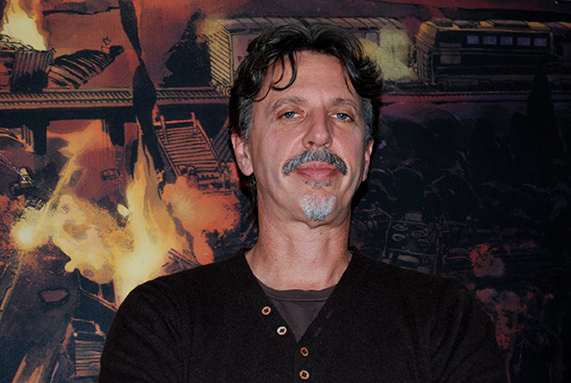 rn on television currently, we thought it would be a perfect opportunity to revisit our classic Heroes feature from Tripwire Annual 2008 with series creator Tim Kring and producer at the time Jeph Loeb…
Heroes creator Tim Kring. Photo©2015 Joel Meadows
The writer’s strike had affected every US TV series and Heroes was no exception. I was lucky enough to visit the show’s office and backlot in Hollywood back in February just after the strike wrapped up. I spoke to its creator Tim Kring and one of the show’s writer/ producers, Jeph Loeb, on plans for the third season, its general ethos and much more…
TW: How did you feel entering Season 2?
TIM KRING: There really wasn’t a whole lot of time between the two seasons for us. We segued from one season into the next and tack another year onto that for me because I’d been on the project for a whole year before; coming up with the idea, then writing the script and then producing the pilot before it was a series. So I guess in a word, pretty tired by that time. A normal season allows for a hiatus that is usually a couple of months off and I think we took about a week off and went right back into the writers’ room. So because of that it was kind of a tough transition between Season 1 and Season 2 just internally. So for us we never really stopped.
TW: But I presume you had written treatments for Season 2 episodes, even before the first Season started?
TK: No not at all. The show is not really written that way and it can’t be written that way. There’s too much story to tell and I’ve often said that it’s a big mistake to know too much about where you are going in advance with a show like this because the danger is that you’ll arrive there way too quickly. The show eats up story at such a rate that by planning too much you often arrive before you intended and you’re left trying to figure out what to do from there. We built an entire show around a simple philosophy of storytelling and that was brick by brick, telling a story based on a simple query which was: What happens next? It’s a very interesting way to tell a story because it allows for a tremendously dynamic form of storytelling, it allows for mistakes and accidents and coincidence. All those things become elements in the storytelling that I think translates to the audience and provides the audience with a kind of thrill-ride quality. There’s a sense that they never know what’s going to happen next and in many ways we often don’t either. There are big signposts that we have placed along the way and we definitely knew where we wanted to end and we knew where we wanted to get to by, let’s say, episode 18. But you just try to write from tentpole to tentpole and you reassess and you fill in the gaps.
TW: I heard somewhere that the actors don’t get the scripts until you’re shooting.
TK: No they get ‘em…we prep an episode for between 7 and 10 days before we shoot and production and directors all get the early drafts. Then what’s called a production draft comes out, and before that they’re called limited production drafts, studio drafts or network drafts. A production draft goes wide to everybody and that’s almost always several days before we shoot. But this is not a show where scripts come in late because, on a show like this, preparation is everything.
TW: Is there much writing done while you’re shooting?
TK: Oh sure, a script is always a really dynamic thing but the truth is on this show, it’s not usually because it’s unfinished. Often series television is like an assembly line, you can get behind and you find you have to play catch-up all the time so scripts start coming in later and later. We’ve somehow avoided that, as we’ve been disciplined enough to get scripts in in time enough to prep. But the dynamics of making a show mean that you have to constantly juggle and move in different directions based on locations and actors’ availability.
TW: I know there wasn’t much of a gap between the first and second season but some of the dynamic changed. Bryan Fuller left, who was one of your writing team and obviously the cast changed and the structure of the show changed. Did they throw up any particular problems?
TK: There’s always changes along the way, and there were changes in the first season. Bryan actually left before the end of the season, as he went off to do his pilot for Pushing Daisies so while, to the rest of the world, it looked like it was a clean break between seasons, he’d already left months before. So no I don’t think there were problems presented by anything.
TW: But you did have some new blood in terms of writers for the second season?
 TK: Yes we had two or three new writers but everybody folded in fairly seamlessly. One of the problems with joining a writing staff on a show like this is the amount of story that has been told already pales in comparison to the amount of story that’s been thrown out and so the sheer numbers of hours that have been spent just discussing things can never really be made up by a new person. They’re constantly playing catch-up to countless conversations that we’ve had about directions that we jettisoned along the way.
TW: But in terms of the writing team, when you’re sitting down and you’re forward planning for a season, is the choice of particular writer for a particular episode quite conscious? Do you think: ‘Okay this guy’s really good with this sort of episode so we’ll give him this particular episode in the run’ or is it down to time management?
TK: One would think that it works in a more selected way where each writer is chosen because of their particular strengths but it’s not really done that way. The show is so mercurial and so fragmented and because of that, we write together as a group almost exclusively. The writer of record of each episode is really just based on their turn in the roster. You get paid for your credit.
TW: How big is the writer’s team? Is it about a dozen people?
TK: It’s under that, it’s ten. There’s a writing team so there’s two and one but there are ten writing ‘entities’. But the style of group writing was based on necessity because we needed to crank out a lot of script in a short amount of time. The lag time between the time we got picked up to go to series and the time we had to be on the air was so short. So we determined that the best way to attack the problem of having that many scripts written was telling people ‘You take this and I’ll take this and you take that storyline and you take this storyline’ and because of the modular aspect of the storytelling, it worked out perfectly that people could go off on their own and write separate storylines and when you put ‘em together, lo and behold, they fit together like pieces from a jigsaw puzzle. Because when you go into production, you’re not just shooting one script, you’re often shooting two, while prepping another one and with one in post-production, so you need to have several in the pipeline when you start and we needed to have five scripts up and running, ready in five or six weeks when we first started.
We decided that style of writing really helped us for many reasons but not the least of which was that it added a kind of camaraderie to the staff that can’t be replaced with any other system. I think there is a real sense of ownership by every member of the staff that’s hugely important on a show like this. On most shows, episodes tend to ebb and flow in quality, some shows look better than others, some episodes look better than others and some are better written and some are better directed and I have to admit that in looking at our first season and our second season as well, but especially our first season because it was longer, there was a tremendous amount of continuity in quality from episode to episode. This really helped with the serialised aspect for the viewer especially when watching it on something like DVD where you see them back to back, that I think really benefitted by this group approach to writing.
TW: Would a particular writing pair take the scenes for a particular set of characters or is that perhaps a little bit too simplistic?
TK: It’s a little bit simplistic because it’s usually just by necessity that it gets all mixed up. Once a writer has written an episode, they’re lost to the room for a few weeks because on this particular show, writers also produce their own episodes.
So the writer then goes into prep on his or her episode, goes into production and post-production, so often when you’re up and running on the series and you have a show in prep, a show in production, a show in post-production, and a show mixing, the room can dwindle down to four or five people because writers are off in meetings. So having that guy who writes Claire’s voice really well available might not be possible at the time so we have a lot of utility players.
TW: I have to ask about the writers’ strike obviously. When you went into doing the second season, I imagine that, as the weeks progressed, your head must have been filled with thoughts like: ‘Are we going to have to cut this in half? Is it going to continue?’ It must have been very hard to work under that sort of pressure?
TK: I have to admit the threat of the writers’ strike didn’t really take shape until fairly late, and it was pretty sudden actually. People in writer’s rooms across town wondered when it was actually going to be called for and most people’s guess was that it was going to be June of this year. It wasn’t until a few weeks before that there was a collective realisation that November was perhaps going to be a more powerful time to start and so it wasn’t really until those last few weeks and then literally the last seven or eight days it became very serious.So we started really jiggering the story and masterminding this strategy, which was tossing out some story and wrapping up Volume Two. This idea of volumes is much more how we want to talk about this show rather than seasons or as you call them series. The volumes concept in this case really turned out to be extremely beneficial for us because we had always intended that Volume Two would end at episode 11 of Season 2 and so we were able to take that volume ending and turn it into a season ender with a little bit of rejiggering that we did literally at the last minute. We tossed out the last five minutes of the show that had already been scripted and had already been shot and we rewrote an ending that would give us a cliffhanger ending that could sustain a longer break than what we were going to normally have.
TW: Do you feel in hindsight that the writer’s strike might have done you a little bit of a favour in that it forced you to rethink the structure of the second volume?
TK: I do and it is one of those strange things in life where you look back and you realise that the cards have been laid out in a way that really worked out well for us and in a way, I think it’s yet to be seen but I have full confidence that we will look back at the strike as a kind of blessing for many reasons for this show. The time away from the show has been really energising for the writing staff and allowed us to do the assessing that you need to be able to do. It’s just an impossible task to make a show like this 12 months out of the year without taking that time to reflect on what works and what doesn’t and it’s allowing you to re-ask yourself lots of questions that you were asking at the very beginning and that has become a kind of blessing to be able to have that time away.
TW: Did it give you a little bit of an extra adrenaline buzz, with you on tenterhooks the whole time, thinking ‘Bloody hell, is the strike going to happen?’
TK: I’ve got to tell you, looking back, that last week before the strike was a very exciting week, and it was kind of an adrenaline rush. We had to wrap things up where the series was capable of taking a long break and feel like it was meant to be taking a longer break. We asked ourselves and the studio and network, to be honest, asked us that if episode 11 were to be the last episode of this season, could episode 12 be the season opener and as prepared and as written, the episode 12 that we had was unequivocally not. We did not want that to represent our season premiere: it would have felt flat and lacking in any new directions or lacking in big enough new directions to warrant it being a season premiere. .
TW: So what is the thing you’re most proud of with the second volume in terms of what you introduced structurally or in terms of character development?
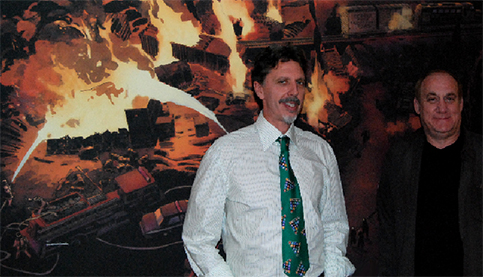
Tim Kring and Jeph Loeb©Joel Meadows
TK: In so many ways, when you really assess Season 2, there were lots of similarities to the way it laid out. With Season 1, there were the same frustrations and criticisms early on, it’s just that nobody knew that it was going to reach the heights it did later on in the season and so they weren’t as condemning of it. I think we learned some lessons about needing to tell the audience where we were going earlier on in the second season. I think we were a little clever by half with starting the season four months later and letting you catch up with things. One of the problems with a show like Heroes is that there’s a zeitgeist quality to the freshness of the show and it’s a show that asked very big, archetypal questions and its mysteries were big and archetypal. ‘What’s happening to me? What are these powers? How are we all connected?’ Those were these huge questions and it becomes very hard to ask them over and over and over again. Once you’ve answered those questions, you’ve got to come up with a new set and those new questions are oftentimes not as primal and as pristine as the original ones and so the quest constantly becomes: ‘How do you reframe those original questions so that they constantly change?’ and something we’re going to do in Season 3 is literally reframe all those original questions.
I think that’s something that we really learned from Season 2 is that questions like What happened in the intervening four months or who killed Kato Nakumura are maybe not as primal as what’s happening to me and what are these powers? But like anything else in life, you can only do it once and it’s only fresh the once. Therein lies a certain rub for a show like this which is how to keep the audience continually having a fresh experience.
TW: But the character of Hiro has changed quite dramatically. He started off as a comic relief figure and he’s become a lot deeper with the Second Volume. I presume that was your intention from the very start?
TK: Absolutely and one of the problems that you have with serialised storytelling is that the characters have to progress, they have to move forward and they have to learn and as they learn, then they’re no longer as innocent and when they’re no longer as innocent, maybe they’re not as fun or as charming, so the quest then becomes to figure out ways to have characters unlearn things that they learned. Those are things that continue to be a challenge with a serialised show because if you don’t move forward with the character, the audience senses you are treading water and if you do move forward too much, the audience still wants the character to be what they originally fell in love with.
[Jeph Loeb enters the room]
TW: Jeph, How did you feel going into the second season? Tim was saying that there wasn’t much of a gap in terms of moving from the first season to the second but did you feel a lot more confident as a writer / producer because you’d already gone through the first season?
JEPH LOEB: Absolutely but as Tim pointed out, for our hiatus, there’s two gates here at the studio and the joke was that we went out that gate and went around the block and came in the other gate. So prior to the strike it simply felt like we produced 34 episodes straight. They all blend together in a good way and that we maintained the quality, our cast had the same kind of continuity going on and as writers that’s something that Tim has continually instilled in us; that we know how to make the show. The challenge is how do we continue to make the show in bold and reinventive ways. But that’s a challenge on any show. I spent three years on Smallville, I spent a year on Lost and because it was the second year on Lost, it was the challenges of meeting the same demands as the first season. What we are looking forward to is that we didn’t really have a break before the second season so by having this three months off, in many ways it was a hardship but it was also a gift for all of us to be able to sit back and reflect. I know that Tim in particular has been grateful since this is the first time since the pilot he was able to sit back and look at this gigantic world that he created and how we can make that even bigger or newer.
TW: What were your feelings about the abrupt end to the second season?
JL: I was writing what turned out to be the last one, where literally Jesse Alexander, Tim and I sat down and said: ‘Okay let’s pretend this is the last episode of the season. What can we do to make people feel like it was both fulfilling and that they want to come back next year’ and the funny thing about it was that we didn’t change very much. Basically because we were doing volumes, the original concept of Villains which was going to be Volume Three and it turned out to be Season Three, was that we had a lot of baggage that we were going to have to fix up. Also we didn’t know whether it was going to be six episodes and we were going to have a bit of Volume Four, so generally you start on this show at 60 miles an hour and you get up to about 250 miles an hour. If it was a season opener, we would have wanted to have come out of the gate at at least 100 miles an hour and now with this new high-octane version, we may just be breaking the sound barrier and keep going on from there.
TW: As a comic writer, did you enjoy some of the extended comic parallels in Volume Two with things like the previous team which is an archetypically comic concept…
JL: It’s funny because I get asked that all the time but we didn’t think of it as the previous group. We looked at it in the same way as veterans who came home from World War II who have a certain kind of empathetic reaction with the veterans who are coming home from the Iraqi war. But they’re not the same, they didn’t fight for the same things and even believe in the same things, so how do those two things match with each other? Interestingly enough I think that’s true whether that’s the Justice Society or the Justice League or Watchmen or whatever, where the older team and the younger team come into contact with each other but really more than anything else, this is a show about generations and about fathers and daughters and about mothers and sons, so it just felt very right. I don’t know that we’re entirely done looking backwards and it’s a show that takes place in whatever time period we want it to take place in.
And I think in fairness to the people who work in the comicbook industry, if anything we are hypercritical of duplicating any of those things and Tim often looks at us and goes ‘what are you guys talking about?’ when we go ‘we can’t do that’. It goes all the way back to the first conversation I had with Tim and when he was talking about a character being able to manipulate steel through his magnetic ability and I described Magneto to him. We often do that in the room and there has been more than one time when Tim has said ‘wait, we can’t do that? I kind of like that idea’ and then we’ve thrown it out because it does come from that world. When you start looking at Greek Mythology and Roman Mythology and the notion of Mercury as a speedster and Zeus threw lightning bolts so the fact that Elle throws lightning bolts, you go ‘well that’s where it’s come from, it’s not from anywhere else’. Often we also talk a lot about Joseph Campbell, The Odyssey and The Illiad. Those are the things that really set the tone for the room much more because as much as I would love to be able to say ‘It’s nine people from comics!’, there’s really just three of us and the rest of the room are people who came from all different kinds of businesses and experiences and they bring their own kind of lore.
TW: As writers, did you enjoy things like the time travel stuff in Volume Two? It must have been fun to have gone in and played around with some of the Japanese historical archetypes?
TK: That stuff was very fun to conceive…
TW: Because it brought a different tone into the series…
TK: It was very fun to conceive and very much a pain in the ass to shoot [laughs]. It was complicated to shoot that stuff and time travel just brings with it a tremendous amount of conversation. It’s a real, no pun intended, time bandit in the room because you just get bogged down in the rules and the layers and the constant rabbit holes that you have to go down.
TW: Do you have specific rules for the paradox?
TK: Oh yeah, probably less so now that Bryan Fuller’s no longer with the show [laughs] because Bryan was very much a stickler for the rules of time travel but you have to make rules otherwise time travel is one of those powers that’s just too large and too all-encompassing. It’s too much of a crutch to fall back on and so clearly one of the laws is that Hiro can’t really change destiny, so the lesson was that he was the historical figure and he couldn’t save Charlie, the girl that he was in love with. We wanted to set that up by the way in Season One with an emotional storyline that really tugged at your heart.
TW: So he wasn’t just a comic guy but someone who had serious depth to him?
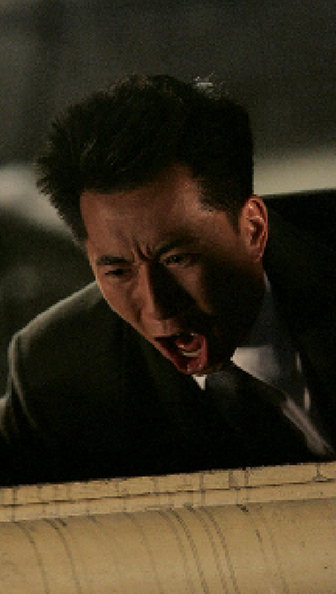 TK: But we also wanted to make sure that the audience knew that it wasn’t going to be that easy for him so we killed off somebody who was quite beloved…
JL: So whenever he went back in time, you would instinctively ask yourself the question, ‘well he couldn’t save Charlie so…’
TW: So what’s going to happen here? ‘He couldn’t possibly do what he set out to
do …’
JL: Exactly and he started to learn the lesson we’ve tried to adhere to which is: You can’t change the past but you can change your future. That’s just a good lesson for you on an emotional level: you’ll never be able to go back and fix something that you did in your own personal life but how you behave as you go forward can absolutely make a difference. Whether or not our hero has jumped ahead five years and made a difference, that’s just the fun of the show. Again it’s always trying to tie it down to character and emotion so that if there’s any success that our show has, it’s that people aren’t sitting at home thinking ‘I don’t even know how to understand somebody that can fly’. You probably can’t but what you can do is understand a man who is continually running away from his problems and that metaphor is then translated as a man who wants to fly away, for example.
TW: How accurate were the Japanese flashback sequences? ’
TK: The short answer is wherever and however possible you try to be as accurate as you can be. Once you throw a challenge like that out to 35 people in an art department, it brings out the inner geek in everybody. Everybody wants to be as accurate as possible so that kind of stuff was really fun but for a show like ours it’s a three ring circus anyway because we’re not a hospital show or a cop show that has one set that we work in all the time. Shooting one storyline that takes place in a separate time period with a wholly different look and costumes and props and livestock was a real stretch for a production like ours.
TW: How much of it was done digitally and how much of it was done physically?
TK: Obviously we used some digital extensions, some of the best that we’ve done on the show. It’s all shot here in Southern California. So 99 per cent of this show is shot within a 25 mile radius of where we’re sitting right now and all of the feudal Japan stuff was shot in the Santa Monica Mountains. So it’s about pointing the camera in the right direction and putting set extensions, digital extensions in the background.
JL: For example the scenes where the people were marching out of the village, we just had hundreds of extras and all those animals. It was insane! It was literally 105 degrees and we just kept making the joke: name a show that has an ox on it that hasn’t done well [laughs]. But one of the things to take into consideration is that we’re now making a show for the worldwide audience so, if we’re going to go into someone else’s culture, we want to have the opportunity to say ‘Look, we did do our homework, we’re trying our best to make things look the way they do.’ Is it always going to be historically accurate? Probably not…
TK: But we really try not to offend an entire nation with one particular storyline.
JL: When David Anders first appeared and he’s wearing all that armour, he was walking across the set and it was as though he was wearing pots and pans. They were clanking into each other and the sound guy said: ‘We need to do something, we can’t hear anything other than the pots and the pans’
TK: But it’s historically accurate…
JL: So they had to put tape on each of the pieces so that when they hit, they hit cloth instead of the other metal.
TW: What about the scenes that took place in Ireland?
TK: We shot some of that here in the parking lot, some in the back lot and some in the European streets of the Universal backlot…
JL: When they were down at the seaport, we took half a dozen of those big containers, put them in the parking lot, put up a huge green screen and then the guys in digital effects put in the shipyard…
TW: I was quite struck by scenes like the trip back to India.
TK: There was a shot in the pilot where Suresh and his father’s friend are walking across in the rain and they come all the way across and go up a flight of stairs and as he goes into the apartment, the camera tilts down and there’s this procession walking through and these two incredible temples are there in the background. It’s digitally extended and then the actual procession of people was about a third the size because we took that same procession and digitally enhanced it by three so they walk by for longer. It’s one of my favourite scenes.
JL: The moment I loved was also in that India section was when we were down at the beach when he was putting the ashes in and you turn back around and there was the temple and the city behind him. We were out at Malibu and basically there was a platform that we stood on that sat in for the temple, a huge rock that was next to it that they turned into part of the temple with nothing behind it. It was a parking lot where the trucks were and they just took all that out…
TK: And put in India, really flawlessly, and this is all stuff that couldn’t have been done a few years ago. You could do it but not on a television budget. I’ve worked with the same effects company, Stargate, for the past 7 years in my previous shows and so I’ve gotten a firsthand view. People talk about things that they can do now that they couldn’t even do two weeks ago.
JL: But getting back to the special effects, the best ones for me are the ones that you’re not even aware of. For example, people really think that we’re on a roof when we go out to that rooftop where Peter flies off and it’s a set. The entire city that you can see around from that rooftop, all of that is fake.
TK: Just a big blue screen around the entire thing and we get the biggest kick out of a pigeon flying by that nobody reacts to and it just looks like normal life but when we edit it, we go ‘look it’s a pigeon!’ It’s that sort of thing that really adds to the reality of it. But the audience never suspects, and as with most special effects, the best is the stuff that you really don’t realise it’s there.
TW: Are there any plans to bring back Christopher Eccleston’s character?
TK: We would love to bring back Christopher Eccleston. He’s such a great character and if we can make that happen, we’d do it in a heartbeat.
 TW: And I presume with Volume Three there’s going to be more globetrekking?
TK: Yes. As the show has become a more international hit…
JL: We like to think of it as a worldwide phenomenon [laughs]
TK: It’s really become important to honour this idea of the message of the show, a global consciousness that the show has, plus it continues to be a really fun challenge for the various departments, to depict these different parts of the world.
TW: Do you feel relieved that the show has made it to a third season?
TK: In the midst of the strike, it was hard to say what any of us were going to come back to but I have to admit that I knew if NBC was going to come back intact, that we would be a part of it. By all accounts we were a very important part of their schedule and so no I wasn’t relieved in that sense. But we also didn’t know when we came back from the strike whether we’d be coming back to a truncated Season 2 or a clean break and Season 3 and thankfully I think the decision was to bring us back for Season 3, which I think will prove to have been the smart move.
TW: Are Tim Sale’s paintings still going to be utilised in Volume 3 in some way?
TK: One of the real challenges is to continue to find a way to keep the signature of these paintings which I love and I think has been really fun for the audience and for the show. I will just say that I think we’ve come up with a really interesting way to reenergise that idea.
TW: What can you say about Season 3?
TK: One of the things we were talking about was lessons learned along the way and, after making 34 episodes, you look back and you see things that worked and things that didn’t. One of the things that we really want to stress in Volume 3 is the thrill ride quality of the second half of Season 2, the high points along the way. We really have looked at assessing those qualities and tried to design a volume that’s going to be just a little bit more cranked-up version of our show.
JL: One of the things that we’re doing is that we’re going back and looking at each character’s story, where they started, where they’re headed and how can we, it’s what we did at the beginning of the second season as well, like what are the interesting pairings, who are the characters that haven’t been together, how their stories intertwine together and coming up with really unexpected answers to that.
Heroes Season Three starts in summer 2008
JOEL MEADOWS











You must be logged in to post a comment Login