


Headlines
Tripwire’s Man In Los Angeles Reviews StudioCanal’s Daleks Invasion Earth 2150 AD

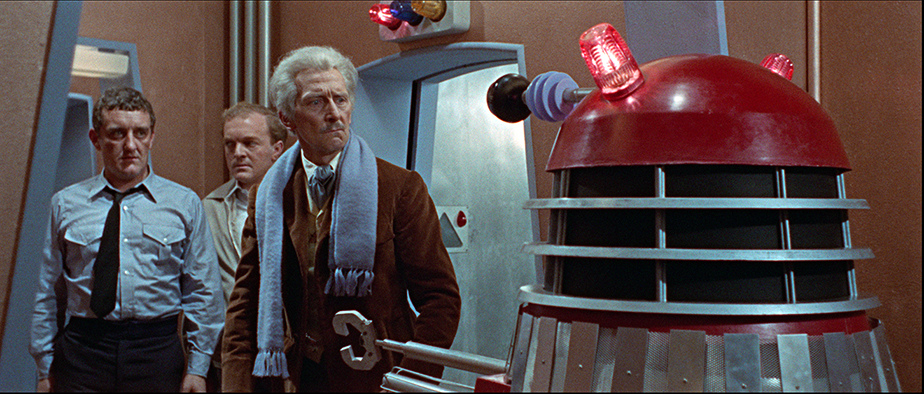
Invasion Ahead
Tripwire’s man in Los Angeles Robert Cave reviews StudioCanal’s restored Daleks’ Invasion Earth 2150 AD…
Daleks’ Invasion Earth 2150 AD
Directed by Gordon Flemyng
Written by Milton Subotsky
Stars: Peter Cushing, Bernard Cribbins

No matter where in the world they live, most fans of genre television have at least heard of the name Doctor Who. Since its successful relaunch under by Russell T Davis in 2005, the long-running British TV series has been reborn as a globally recognised brand in its own right. But, contrary to what you might think, the notion of a Police box that can travel through time and space is not the exclusive preserve of the BBC show. In 1965 and 1966, the British Film company Amicus Productions put together a pair of movies (under the banner of Aaru Productions) based on the BBC series that featured not the Time Lord we are all now familiar with, but a human inventor named Doctor Who, played by British screen stalwart Peter Cushing. Despite his decidedly earthly origins, Cushing’s character nonetheless still adventured through time space in blue box that was bigger on the inside than it was on the outside. What’s more, these films also featured those most iconic of Doctor Who villians, the Daleks. Created by the Welsh screenwriter Terry Nation for Doctor Who’s second televised story, the Daleks quickly became something of a phenomenon in mid-60s Britain. Kids couldn’t get enough of the evil pepper pots; there were various toys and books and even Dalek costumes. Move over Beatlemania: this was Dalekmania. The craze was certainly not lost on Amicus’s American founders, Milton Subotsky and Max Rosenberg, and they soon inked a deal with Nation and the Beeb to adapt the first three Dalek stories and bring Doctor Who to the big screen. The pair then recruited Gordon Flemyng, a Scottish film-maker who had to this point chiefly directed second features, to helm the project.
The first movie, entitled Dr. Who and the Daleks, was released in the summer of 1965 and was enough of a success to warrant a sequel, Dalek’s Invasion of Earth, 2150 A.D., the following year, Unfortunately, after a summer of sporting excitement that saw England winning the World Cup on home soil, the second movie failed to attract enough cinema-goers. Plans for third film based on the TV serial The Chase were cancelled and to date these two Dalek films remain something of an oddity; out-of-continuity adaptations of TV stories. Nevertheless, the Aaru film expanded the show’s reach. In 1977, Walton Sound and Film Services released Super 8 mm version of Dr Who and the Daleks for the home viewing market, and in 1982 both films were released on video, which was where I encountered them at my local independent video rental shop. From my first viewing I was entranced, which was why I was so glad to see StudioCanal rereleasing both films in spiffy new 4k restoration format that offers even higher definition than the Bluray released in 2013. Even better, they are untainted by the unfunny commentary that is the hallmark of Rifftrax version.
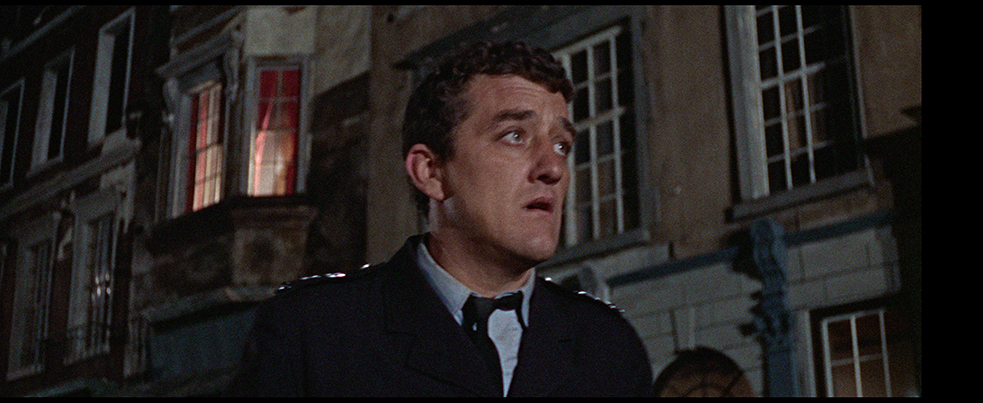
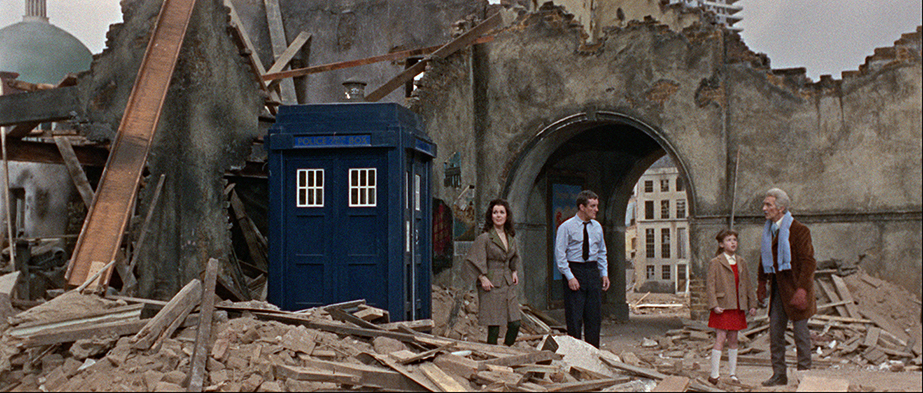
I should probably come clean at this point and admit that I love Daleks’ Invasion of Earth and its lean 80-odd minute running time so much that I have never felt the need to watch the BBC version. I know, I know. I am aware that there are differences, but the film had my heart from the outset. Moreover, it’s got Bernard Cribbins too! Of course, these days it is Bernard Cribbins OBE, one should note that this is the exact same honour that his character, Tom Campbell, dreams of attaining at the end of the film!
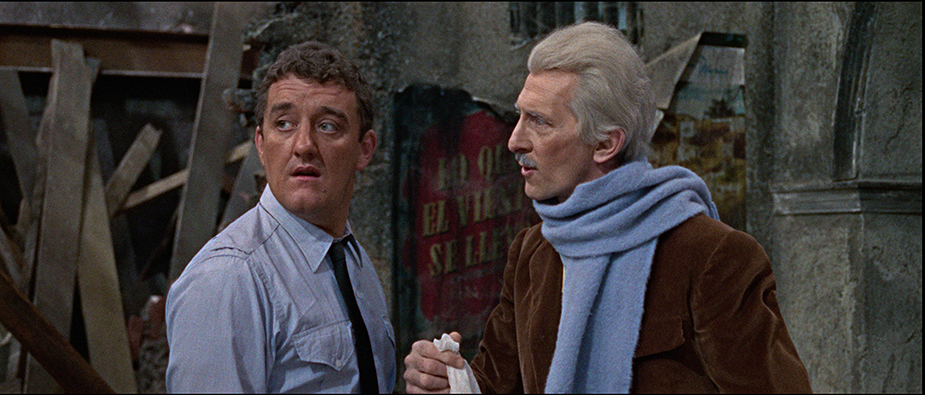
Is it perfect? Definitely not. In many ways, Daleks’ Invasion Earth 2150 A.D. is a ridiculous camp mess, but that is also much of the reason that I have such a strong attachment to it. The Daleks’ lobotomised Robomen slaves (and they are all older white men) are dressed in loose, shapeless PVC overalls and come equipped with whips, a detail that sailed right over my head when I watched as a child. It’s almost as if someone in the crew had a highly specific kink they were exploring.
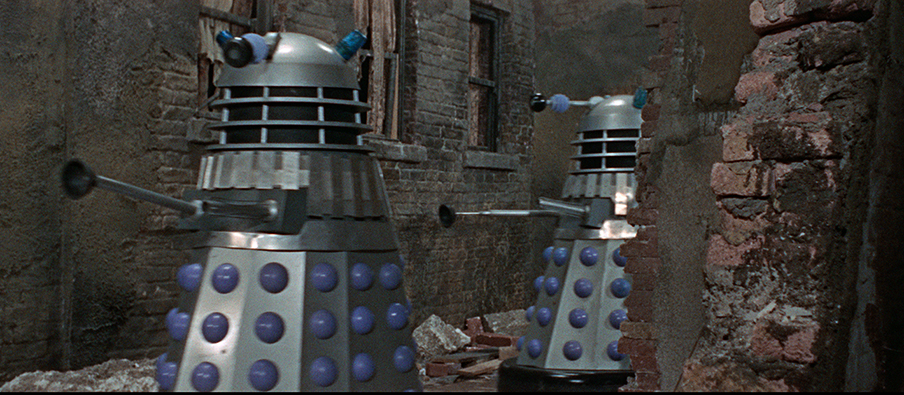
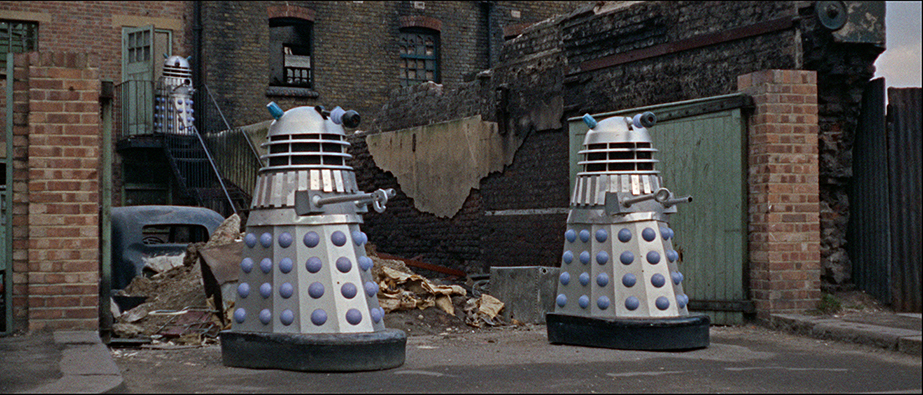
Outside of the costumes, there are plenty of other details in this 4K restoration worth keeping an eye out for; the Dalek in the Thames that wobbles visibly in the river’s current, the various adverts and maps that are evident in the background throughout the film, the Morris JB van that would have still been relatively modern when the film first came out, but seems so utterly antiquated to modern eyes and the crowbar that Tom and Doctor Who had been so intent on locating at the beginning of the movie that literally disappears moments after they find it, never to be mentioned again.
Then there is the whole comedy protein pill consumption sequence, that feels at odds with the tone of the rest of the film, filled as it is with hunger and desperation. There are collaborators and black marketeers, all willing to sell out their fellow humans for a bag of veg or a few bits of jewelery.
But the Aaru films do so much that is wonderful too, not least is the inclusion of Bill McGuffie’s trippy jazz-infused score that perfectly match the psychedelic colours of the film’s title sequence. This other-worldliness is further enhanced by the electronic sound effects created by frequent Gerry Anderson collaborator, Barry Gray. Bernard Cribbins’ Special Constable is fantastically relatable working-class character gazing forelornly in the windows of a travel agent, dreaming of entry into an inaccessibe world of exotic foreign holidays – something he can only dream of as he walks his lonely beat. It is a poignant point of departure for the character before he takes his first steps into a larger, big screen world that is at the same time both much brighter and darker than his dowdy workaday life.
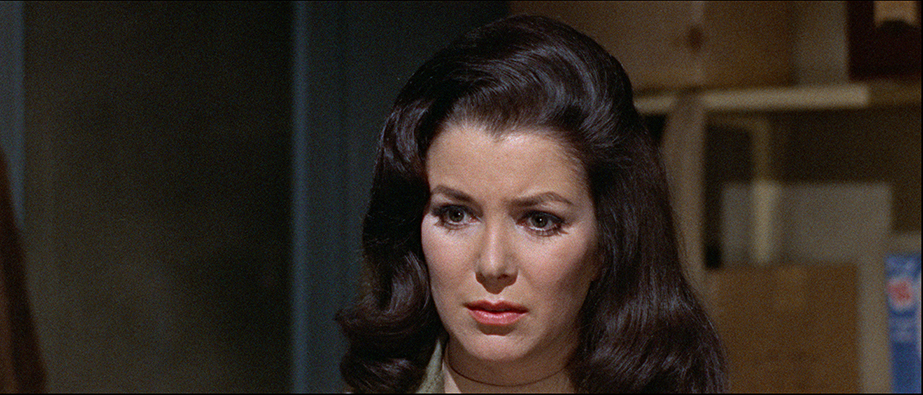
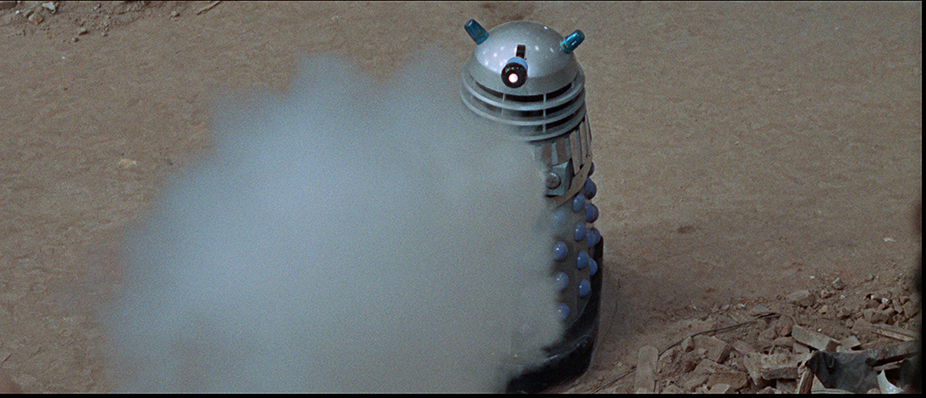
That larger world is also in evidence for the Daleks themselves – with the production revelling in the opportunity to put far more Daleks up on the big screen than the TV series could ever hope to. It genuinely feels like we are seeing an occupation force of Daleks that can swarm the streets at will.
Some of them even have pincer like claws instead of the traditional, vaguely absurd, plunger. This always struck me as more practical somehow, an outward sign that these Daleks were both better equipped and meant serious business. The use of colour to denote a clear hierarchy in the Dalek ranks pops on the screen even harder in 4k, as do their fire extinguisher-like smoke guns, a futher improvement that the vague negative effect of the TV series.
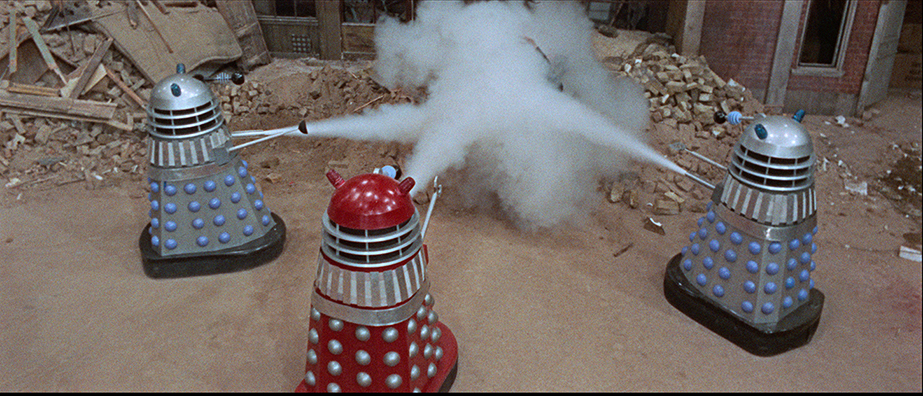
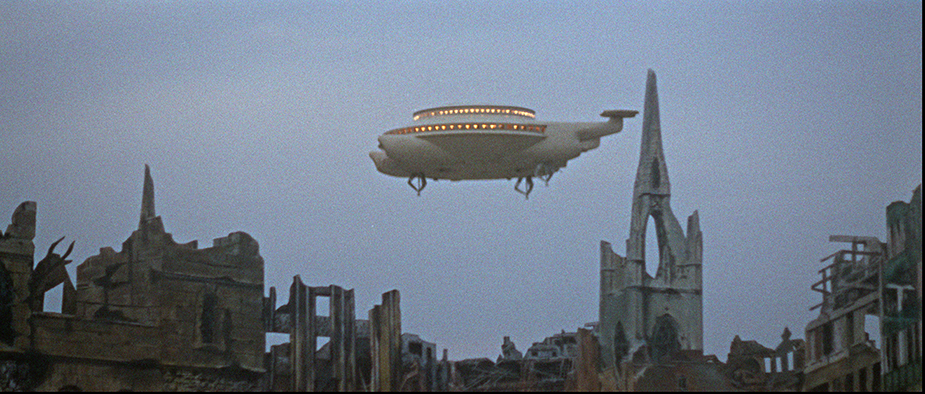
The model shots might be obviously model shots, but they look great in high definition, as do the various Dalek death scenes. Watching the props fall apart as the Daleks fall into the mine shaft is incredibly rewarding, as is the few seconds we get of what looks like a melting Dalek down in the mine. Why is this Dalek melting? Who knows? But it is gorgeous.
They might not be essential to Doctor Who continuity, but the Peter Cushing Dalek films are great fun and StudioCanal’s 4k restoration gives fans access to the brightest, most detailed and colourful version yet produced of these wonderful Doctor Who peculiarities. Together they capture not just the cultural moment of Dalekmania, but a whole vibrant slice of sixties silliness. Go and watch them: they are great!
Boxout: Bringing in the Colour
While Doctor Who’s television adventures in the 1960s were all recorded in black and white, the two Peter Cushing Dalek movies were filmed in Technoscope, a cheaper 35-mm film format that required about half as much film stock as standard 35-mm films, and in glorious Technicolour. This last detail was a key sales point on the posters and other promotional material for the first film, Dr. Who and the Daleks. By contrast, colour was absent from the Doctor’s small screen adventures until Jon Pertwee’s first season in 1970. Oddly enough, Pertwee’s first story, Spearhead from Space, was also recorded entirely on 16-mm film. This was largely due to industrial action at the BBC that briefly prevented studio recording.
STUDIOCANAL will release DR. WHO AND THE DALEKS and DALEKS’ INVASION EARTH 2150 A.D. theatrically in the UK from 10 July 2022 following a special double-bill preview at the BFI in London on 19 June. Both films will be released on 4K UHD Collector’s Editions, steelbooks and digital platforms on 20th June (DR. WHO AND THE DALEKS) and 18 July (DALEKS’ INVASION EARTH 2150 A.D.)














You must be logged in to post a comment Login