

Comics News
Tripwire Talks To Bob Bretall, Owner Of The Guinness World Records’ World’s Largest Comic Book Collection

Talking to a Record-Breaking Comic Fan
Tripwire’s contributing writer Paul Neal recently had the opportunity to speak to Bob Bretall about his incredible comic collection…
TRIPWIRE: Bob, am I correct in saying you still hold the Guinness World Records title for owning the world’s largest comic book collection? How long have you held this title?
BOB: Yes, I’ve had the record since I established it as the 1st record holder in 2014. There are a lot of hoops to jump through with Guinness to establish the record and while there are likely people out there with more comics than me (including several comic book dealers), to my knowledge nobody with more comics than me has jumped through those hoops to break my record. In fact, when Guinness re-interviewed me and sent a team out to make a video in 2023, I investigated updating my record count. The evidence they required would have taken me more than 200 hours to gather, so I decided to pass.
TRIPWIRE: Without going into detail, can you broadly describe what sort of hoops you had to jump though? Did you at least get a certificate or a plaque to proudly hang on your wall?
BOB: I could pay Guinness to send people out (which I didn’t want to do) or I could do it myself using lots of validation, video and following a big list of rules they provided as well as sending them loads of evidence.
I had to provide a listing of the books (no duplicates), which was the easy part.
I had to have 2 “experts” to validate that Guinness approved of that who would verify the count. I used a local comic shop owner who had been in business for 20+ years at the time and a guy that was a comic book blogger in his spare time, but who was a forensic accountant for his day job. I had to have a “public” event. I advertised it at the Long Beach Comic-Con that year at a panel I was hosting, and I also had flyers I handed out. I had to shoot video of the event and provide it to Guinness (I had a college friend of my 1 kid who was an A-V major do that). Count validation used accepted auditing techniques (which i knew because I had been a certified quality auditor and the accountant also knew), and happened at the event, and was done on video. We had to have a log that all the event visitors signed that I sent in as well.
All in, I spent maybe 2 calendar years and 100s of hours of effort from my 1st contact until I got the record validation.
To update my count, I had to send a new listing. I did that…. 150k books in a spreadsheet.
Then they asked me to shoot video of me pulling every 500th book on the list out of its box. That would be 300 different comics…. and the time it would take to pull those… shoot the videos, organise the info, etc… I estimated it at about 200 hours.

TRIPWIRE: Before diving headlong into too many details, when did you start collecting? How did it all begin? Indeed, can you even remember the first comic you bought? Perhaps even how much it cost and maybe where it was from?
BOB: The 1st comic I bought for myself was Amazing Spider-Man #88 by Stan Lee (writer) and John Romita, Sr. (artist) around July 1970 at my local convenience store (a store called 7-11). It cost 15 cents. I have not missed a month of buying and reading comics since then.
TRIPWIRE: Please tell me about your collection, I have so many questions. To start with how many comics do you actually have in your collection?
BOB: I still buy and read new comics every month, so the number is always increasing. I recently passed 155,000 unique comics. The Guinness people don’t let you count multiple copies of the same comic towards the record, so I am very careful to keep my “Guinness count” as a duplicate free number.
I’m also very careful to note that my collection is the largest for a single private collector who bought them pretty much 1 by 1 and then read them. Museums and libraries can easily have more, as do comic book retailers who regularly buy entire collections at a time.
But those don’t have a single person buying/reading them for their own personal enjoyment.
TRIPWIRE: Being UK based I am curious, has your eye wandered across the Atlantic, do you have a great deal of British, or European, comics?
BOB: Yes, I’ve been a fan of British and European comics since the 1980s. I originally read US reprints of Judge Dredd and other strips from 2000AD. I also read English language reprints of comics from Italy, Spain, France, etc. I’ve also read a lot of translated manga from Japan.
While I started with US reprints of comics from other countries, I travelled a lot for my job in the early 2000s and I made a point of picking up local comics in any country I visited.
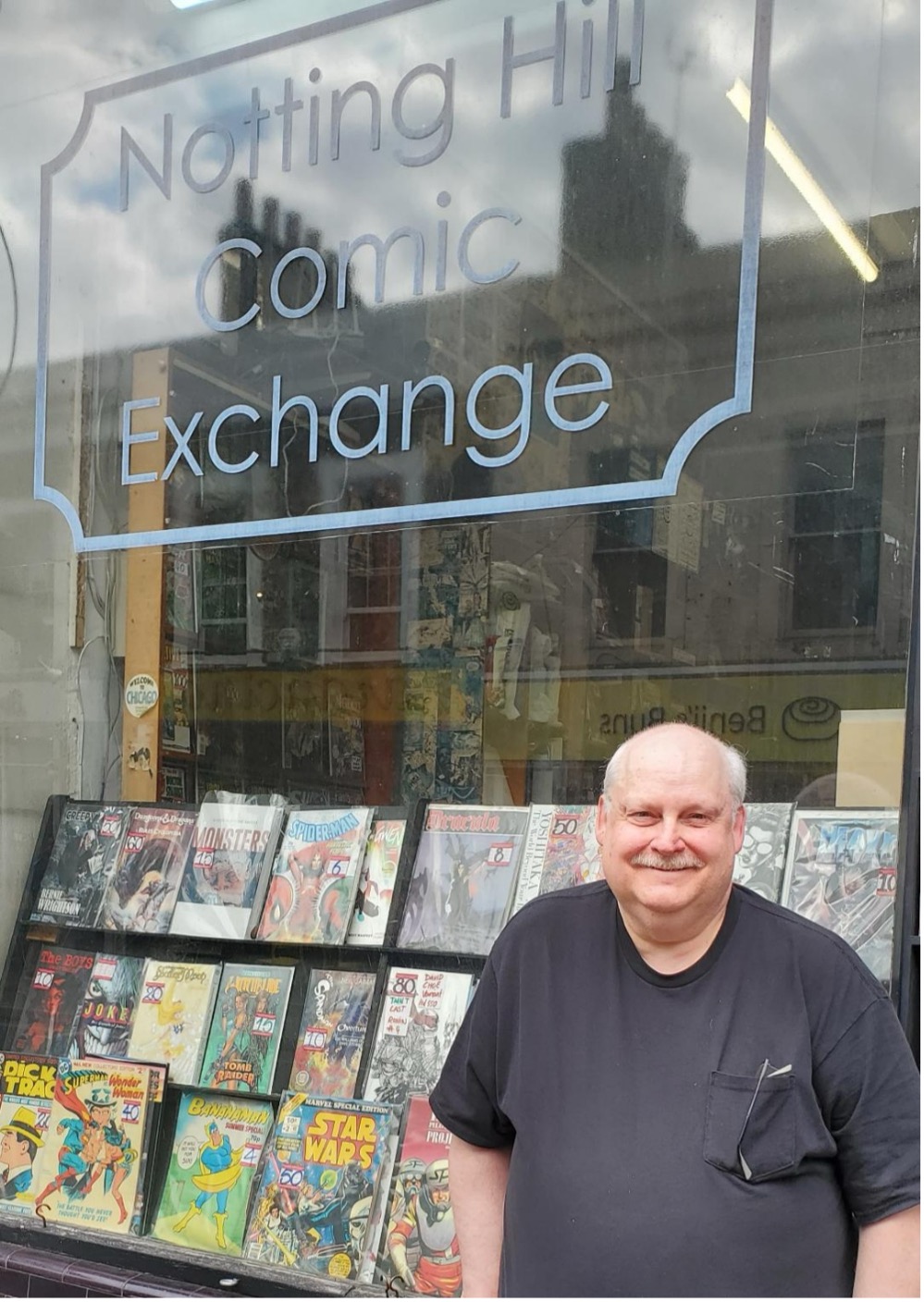
In 2024 when I visited the UK with my wife we visited 6 different comics shops (1 in Bath, 1 in York, and 4 around London) with an eye towards getting UK comics, not reprint versions available in the US. I came back with an entire suitcase full of UK comics (2000AD, Beano, Commando, Eagle, Judge Dredd, Valiant and Lion, etc.), a couple hundred of them!
TRIPWIRE: With a collection of this size are they all catalogued in some way? If you wanted to find a specific comic, would you be able to find it? I am assuming by the law of averages you must have quite a few duplicates.
BOB: I use the CLZ database software (clz.com). It has a web-based interface and an app that is on my phone and stores my collection data in the cloud. I have access to my entire collection in my pocket whenever I’m out at a shop or convention.
Every comic has a location field with the box number it’s stored in so I can find any comic in my collection whenever I want.
As for duplicates, I have very few. When I was working towards getting the initial Guinness record, I did a count of duplicates in my collection and there were a couple of thousand. None were worth that much & I had to do a public event as part of getting the record. During that event I gave away the duplicates to all the people who showed up (over 100 people). Each person walked away with a big bag of free comics. I don’t buy doubles on purpose anymore and my database helps me know what I do and don’t have so I don’t accidentally buy duplicates either.

TRIPWIRE: Your collection must take up a reasonable amount of space. How on earth do you store them all? How many long boxes do you have? Are all your comics bagged and boarded for example?
BOB: About 550 long boxes, 100 short boxes, 60 magazine boxes, 15 CGC boxes. All comics are bagged and boarded; the older/rarer comics are in mylar bags (a more archival storage solution), the more common books worth only a couple of dollars each are in normal polybags.
They take less space than people think they would BUT I do have a 3-car garage that doesn’t have any cars in it 😊
TRIPWIRE: In my research I understand you have some genuine highly sought after (not to mention very valuable) gems in your collection? Can you mention any items you would say are the pride and joy of your collection?
BOB: I completed my collection of Marvel superhero comics from 1961 up to about 2010 when I acquired Hulk #1 in late 2025. I still buy and read 10-20 Marvel comics each month, I just don’t get EVERYTHING they publish any more.
But this means I have those highly sought after Marvel 1st appearances of characters like Spider-Man, Hulk, Iron Man, Thor, etc. (as well as all their subsequent appearances in their main series). I similarly have most of the DC superhero comics from the early 1960s up to that same cutoff around 2010.
I am also very happy about owning a lot of comics that are NOT superheroes. I have an extensive collection of indies from the 1970s through today.
TRIPWIRE: Do you take special precautions to look after the more valuable items in your collection?
BOB: They’re stored in a climate-controlled environment and protected from light & water damage. I have a collectibles insurance policy that covers them. There are other security precautions that I won’t go into here.
TRIPWIRE: This may be a ridiculous question given the numbers we are talking about? But as a percentage, how many of the comics you own have you actually managed to read? For that matter do you have any absolute stand out favourites?
BOB: I’ve got over 155,000 comics and have about 7,000 in my “to read” boxes that I hope I’ll be able to catch up on when I retire in a few years. That means I’ve read about 95% of my collection.
There are so many stand-outs over the years, including:
* the Criminal books by Ed Brubaker & Sean Phillips (I recently read their latest GN The Knives over Christmas)
* Spider-Man by Stan Lee & John Romita, Sr.
* Uncle Scrooge by Carl Barks
* Strangers in Paradise by Terry Moore
* Tomb of Dracula by Marv Wolfman & Gene Colan
* Bone by Jeff Smith
* Prince Valiant by Hal Foster
there are many others, how much time do you have to listen to me listing them? 😊
TRIPWIRE: I understand your passion is not just limited to simply comics, but you own a considerable number of collectibles and merchandising. Can you mention any particular items you are especially proud of?
BOB: I’m a big fan of the Doc Savage pulp novels. I read the Bantam paperback versions of these in the 1970s and have gone on to collect the original pulps from the 1930s & 40s.
I own an Alex Ross original cover painting from one of the Doc Savage comics done by Dynamite in 2014 and was very into collecting original art and sketches in the 1980s thru the early 2000s before the prices got kind of crazy. I have pieces by many of my favourite artists; Gene Colan, Paul Gulacy, Mike Grell, Neal Adams, Kevin Nowlan, Bob Layton, Tony DeZuniga and more.
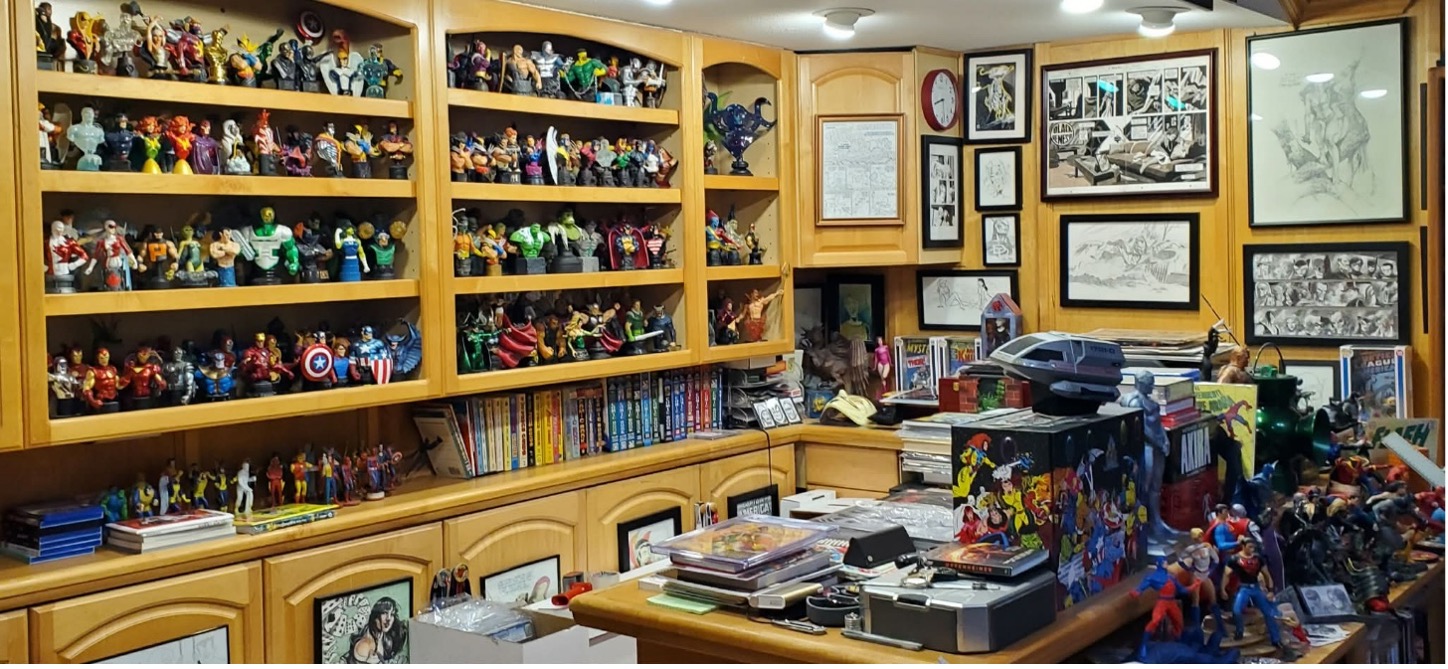
I also have lots of statues of favourite comics characters displayed around my comics room. I used to collect a lot of action figures and toys, but they take up a lot of room, and I’ve been selling off this stuff on eBay, so I have more space for my comics collection.

TRIPWIRE: You mentioned that you still continue to collect and read new comics on a monthly basis? What are your reading habits like these days? During your time collecting have those tastes changed a great deal?
BOB: Yes. I buy 100+ new comics every month. I try to read comics every day, a split between new books and reading back issues I buy. The main thing that has changed over the years of collecting is my % of reading new superhero comics. It goes down every year. In years past (through the early 2000s) I would read pretty much everything from Marvel/DC.
Now instead of reading them all I keep to a smaller set of series that seem fresher and don’t feel like they’re rehashing concepts that have seen done multiple times over the years. I tend to gravitate towards mostly creator-owned non-superhero comics these days, they make up about 70% of my new comics purchases.
TRIPWIRE: You provided some biographical details about yourself that are listed towards the end of our interview. It includes mention of the fact you are part of the nomination committee (since 2012) for the highly prestigious Inkwell Awards. How did that come to happen and how does it work? How many people are in the committee? What are the criteria for awarding such a sought-after award?
Bob: They list the committee members each year. You’ll find me in the lists starting in 2012. I was approached because of my work interviewing creators on my podcast, and I assume because I exuded an air of knowing a lot about comics and how they are made.
More on the Inkwells here:
https://inkwellawards.com/
Nomination committee here:
https://inkwellawards.com/nomcom/
Home – Inkwell Awards.
TRIPWIRE: This is a slightly crass, clumsy and artless question I freely admit but anyone reading our interview will be inevitably curious. I hope you might agree that comics are first and foremost for reading and enjoying, BUT if you absolutely had to put a number on it, in US dollar terms what would you estimate in January 2026 your collection is worth?
BOB: People (especially in the USA) always want to put a $ value on things, my standard answer is that unlike many other collectors I don’t focus on the monetary value of the comics, but instead on the stories, characters, and creators.
I’m not selling my collection and values change all the time on books up and down, my only concern about value is understanding fair market value when buying something so I can get anything I add to my collection at a fair price.
Selling the collection will one day be a task for my kids, but I make sure they understand values and how not to be taken advantage of when selling.
One of key indicators I have for them is treating the books in mylar with more care when selling than those in polybags.
TRIPWIRE: Slabbing comics and publishers releasing titles again with an increasing number of variant covers in recent years has seen the market for collectors evolving. Do you have any thoughts or perspectives on these two trends in the industry?
BOB: I think that collectors are going to collect things that get them excited and both slabs and variants have got a significant number of collectors very excited and spending a lot of money on them. That said, I do have personal opinions on both trends:
I think slabbing is an invaluable resource if I’m buying an expensive comic online and I can’t examine it personally (for me this is usually for vintage key comics). I trust the slabbing companies for identifying restoration, missing pages, and other forms of overt damage. My own motto is “buy the comic, not the slabbed grade” since I’ve seen too much variation in the eye appeal and presence of visible defects in copies given the same grade.
I’m aware that the grade is for the whole book, but once it’s sealed in a slab all you can see are the covers, so I want a copy that’s got the best eye appeal in the grade that I’m buying. I don’t believe that every book assigned the same numeric grade is equal. There are collectors out there who spend a lot of money cleaning, pressing, and slabbing their books, chasing as high a grade as they can get, but I’ve never sent a book in and paid to have it slabbed.

BOB: The proliferation of variants is a bit more nuanced. On one hand they scratch the same “collect what you love” itch. Lots of collectors love them and buy up variant covers like crazy. The increased sales are good for both publishers and comic retailers who right now seem dependent on variant cover sales to buoy up their bottom line. The worry is that this is an artificial sales increase that could result in a repeat of the implosion that happened to the comics industry in the 1990s when the people buying multiple copies of “collectible” comics hoping they’d significantly increase in value pulled out of the hobby.
The loss of those pumped-up sales crashed the industry. History doesn’t necessarily repeat itself, but the pattern of people buying “rare” variant covers because they think they’ll go up in value is very similar. My concern is these collectors abandoning the hobby over time if their collection doesn’t keep climbing in value and what that could mean if enough of these collectors leave the hobby.
TRIPWIRE: I believe you were fortunate enough to meet the great Stan Lee, and I would imagine several other creators. Could you talk about any of these experiences?
BOB: I’ve been going to the San Diego Comic-Con every year since 1990 and have gone to many other conventions over the years as well. I also co-hosted a comic book podcast in the early days of podcasting that created close to 500 hours of content. One of the things I had the pleasure of doing was interviewing creators. The combination of these gave me the opportunity to interact with lots of creators, most of whom your readers who aren’t avid comic book collectors have probably never heard of.
Among those, I have met the “big two” that most people have heard of. I was thrilled to meet Jack Kirby and his wife Roz at the San Diego Comic Con in the early 90s. At that time there were no big crowds, they were sitting at a booth, and I walked right up and had a pleasant conversation with them. I snapped a picture of them that I sent in and was published in the Comics Buyer’s Guide, which was a very popular pre-internet source for weekly comic book news.

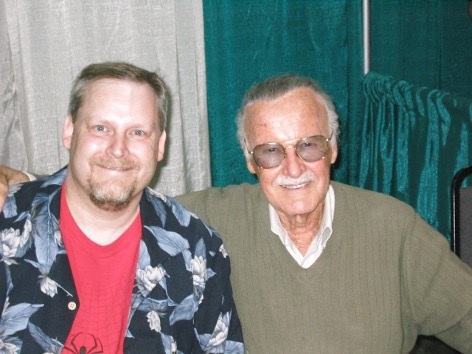
I was pleased to meet Stan Lee 7 times over the years between 1999 and 2014. my most significant interaction with Stan was the 2nd time I met him, in 2004. I knew he was going to be at the Long Beach Comic-Con, and I brought my copy of Amazing Spider-Man #88 (the 1st comic I had ever bought for myself) for his signature.
When I handed it to him for a signature, he looked at the comic, then he looked at me. Instead of just signing it, he picked it up and started flipping through it. He smiled. He chuckled at something he had written in the story. He looked back up at me and said something like “I don’t think I’ve seen this issue since I wrote it, what made you pick this one for me to sign?” When I told him that it was the very first comic book I had bought off the rack for myself, it made me fall in love with comics, and I’ve been buying comics every month since, he asked if I’d like a picture with him.
He told me to come around the table and sit next to him, had me hand my camera to one of the convention volunteers, and put his arm around my shoulder for the picture. This is how I remember Stan Lee. Having made a connection with me as a fan, he took that extra moment with me. I’m sure he did tens of thousands of photos over the years, and I think he realised that every one of them was special for the fan he was taking them with.

Bookending this, the last time I met Stan was in December 2014 at the Taschen store in Beverly Hills. I had been collaborating with Taschen for several years, lending them comics and other ephemera from my collection to photograph for their various DC and Marvel Comics related projects.
The largest project I had worked with them at that point on was the 75 Years of Marvel book. Ultimately, I had provided close to 3 long boxes of comics and numerous other items for them to photograph for the book. When the book debuted, they did a signing with both Stan and Roy Thomas at their store in Beverly Hills, and I was invited to the event. While standing in line before Stan & Roy arrived, the people from Stan’s office went along the line briefing people on interactions with Stan. He was only signing the 75 Years of Marvel book (no comics or other things people may have brought along with them). Keep the line moving. No conversations with Stan. No pictures with Stan.
However, when I got up to Stan & Roy, the Taschen editor/designer, Josh Baker, who I had been interacting with while providing many of the materials for the book stepped forward and introduced me to Stan & Roy, telling them that I had allowed him access to my collection and had provided the bulk of the comics from the Silver Age onward for the book. He also pointed out to them that I held the Guinness World Record for largest comic book collection.
This prompted two things: Getting Stan and Roy to engage me in conversation about my collection for a few minutes AND a tremendously dirty look from one of Stan’s handlers who had laid down the rule of “no conversations with Stan”. It was a treat to once again be able to chat with Stan (and my 1st time talking with Roy) about how much the stories they had written had meant to me. It was also an indication of how willing Stan was to interact with his fans when he was not actively prevented from doing so.
TRIPWIRE: You have mentioned Stan Lee. You have said simply Stan. Were you honestly on a first name basis with Stan Lee?
BOB: Yes. I’m not special in that… he was Stan to his fans.
TRIPWIRE: That is a great answer.
BOB: He always signed his soapbox columns and letters as Stan. It never occurred to me to call him Mr. Lee. I think it’s same with all creators I’ve met. 1st names all around!
NOTE to Tripwire…. a longer version of my interactions with Stan and how much he meant to me can be found in a blog I wrote back in 2018 about a month after Stan passed away:
https://comicspectrumblog.wordpress.com/2018/12/28/stan-lee-is-my-superhero/
TRIPWIRE: As I understand it you featured on the American version of Who Wants To Be A Millionaire and you were given a wonderful comic book based question, that obviously most fans would get correct? Can you share any memories of that moment?
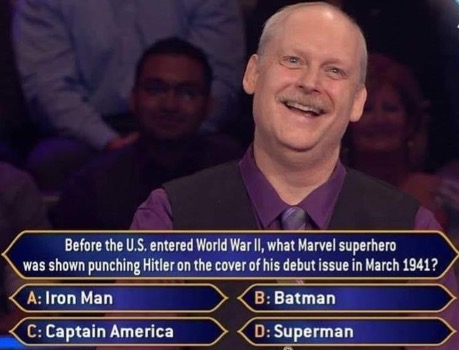
BOB: As far as I’m aware the fact that I got a comic book question as one of the “easy” ones was a total coincidence.
I was on during Guinness Records week, since I ultimately lost, my best memory of the day was that I got to hang around in the Green Room and chat with Ken Jennings (who at that point had the record for most dollars won on a game show for his epic winning streak on Jeopardy… something like that. He is now the Jeopardy host in the US. Do people in the UK know who he is?
I ended up losing money on the trip since I just got $1000 minus taxes as a consolation/appearance fee, and I had to finance my own trip to the East coast (the show was shot in Stamford, Connecticut.) But I did have a nice week’s vacation in New York City where I got to meet up with several friends that I knew from comic book forums online.
TRIPWIRE: So how much did you eventually end up winning?
BOB: Nothing. I got up to $50k and got the answer wrong but they give an appearance fee of $1000 to people who crash & burn. I could have walked away with half, but I got greedy.
I would add that when you’re on stage with an audience & all the lights flashing around, it’s a bit harder to answer questions than when sitting on your couch.
TRIPWIRE: Finally, given your obvious love of the medium, have you ever considered branching out from collecting to creating? Have ever considered writing or illustrating your own comics?
BOB: I have both bachelor’s and master’s degrees in computer science and have written numerous technical documents and technical training courses since the 1980s. I spent over ten years writing comic book reviews and blogs about comics and have edited comics for indie creators I was friends with. That has so far satisfied my creative desires.
I do enjoy being an ambassador for comics whenever I get a chance to do interviews like this. The main thing I like to leave people with is that comic books aren’t just about superheroes. There are comics of every genre. If you don’t care about superheroes you can still go to a local comic bookstore and tell them what kinds of TV shows and movies you like and ask for recommendations for comics that you’d like based on your tastes in those other forms of entertainment.
To finish our interview, Bob shared a handful of photos of meeting some incredible comic creators with his own personal notes.

BOB: Here I am with filmmaker Kevin Smith in 2004… He was writing comics at that time (he wrote runs on Daredevil & Green Arrow in the early 2000s)
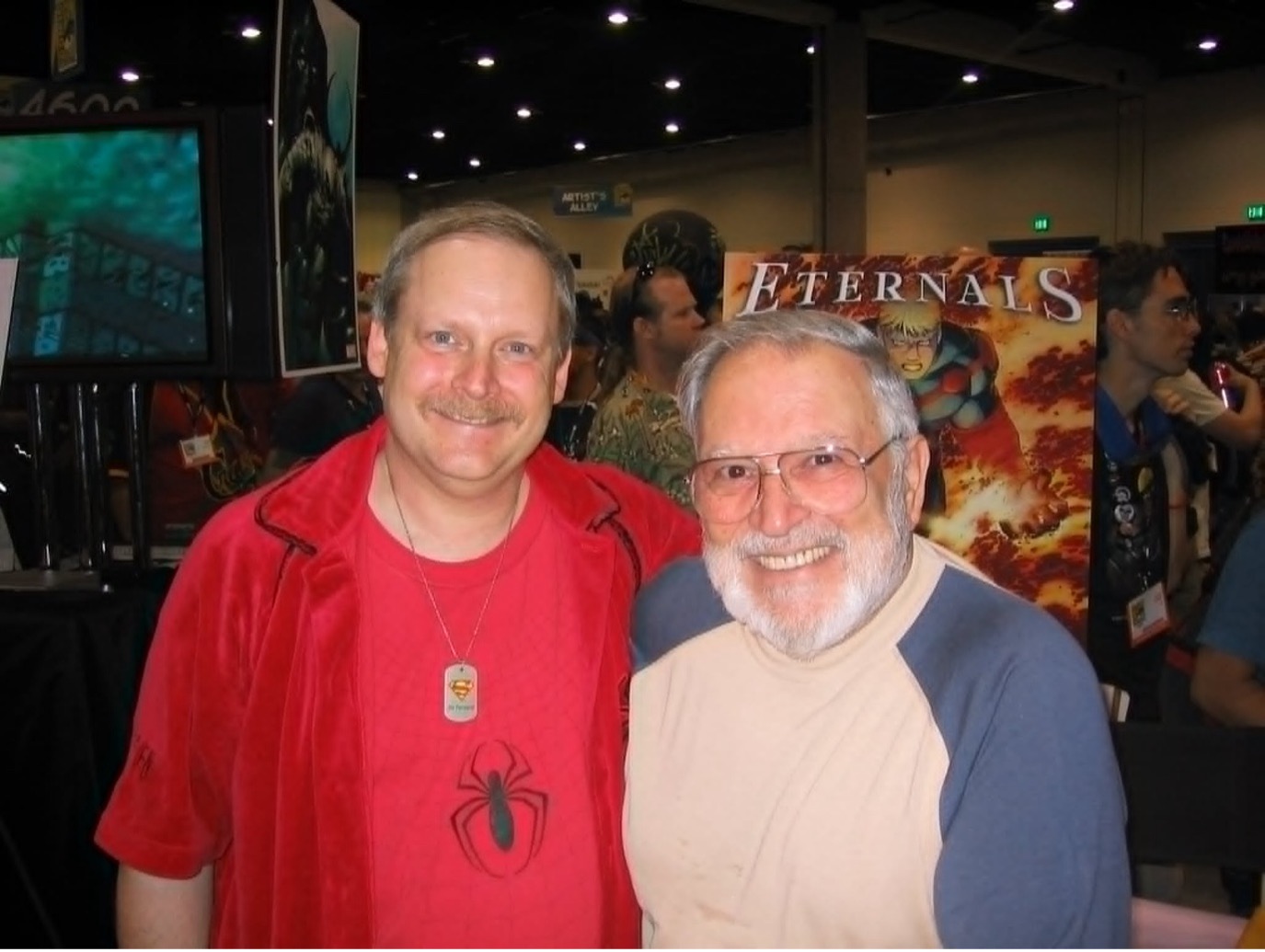
BOB: With John Romita Sr. in 2006…. he drew that first Spider-Man comic I bought for myself (ASM #88) written by Stan.
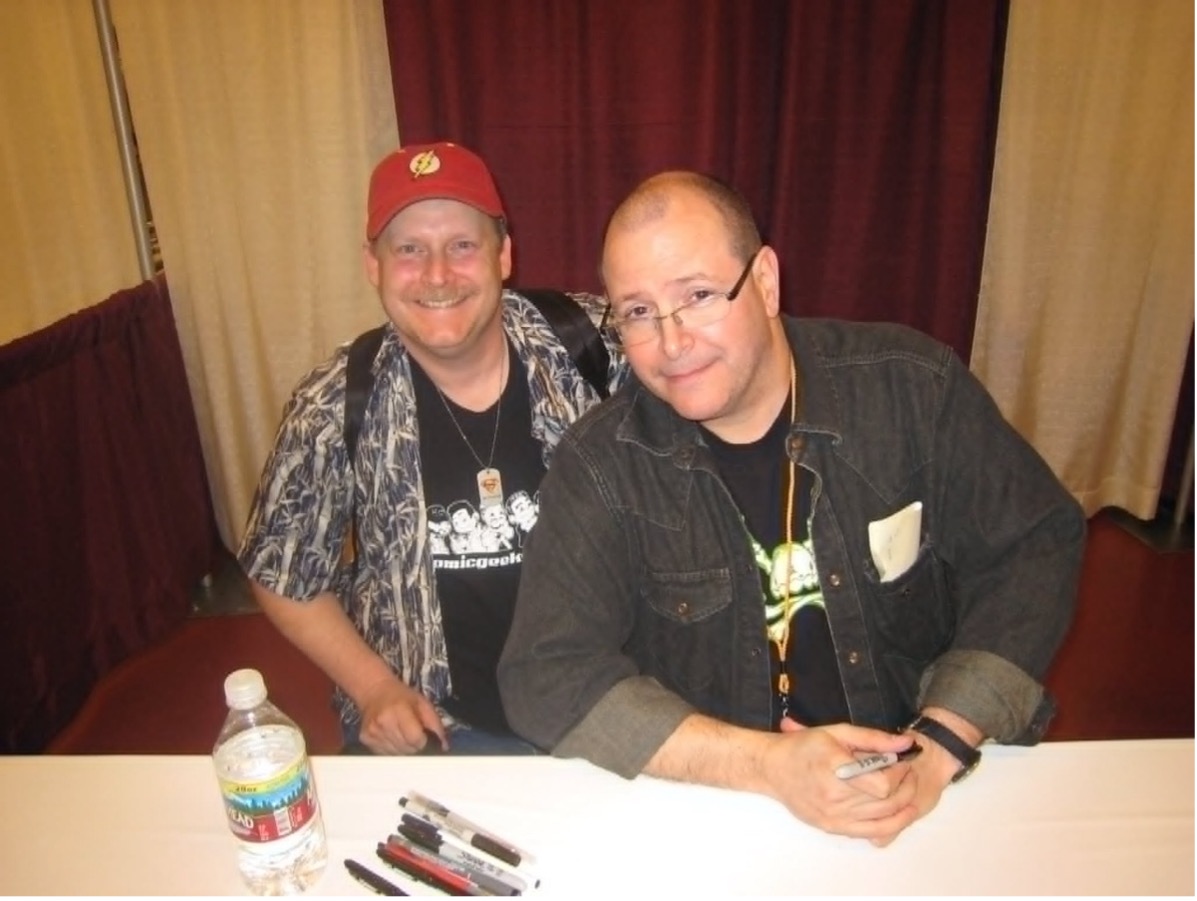
BOB: Mike Mignola, creator of Hellboy.
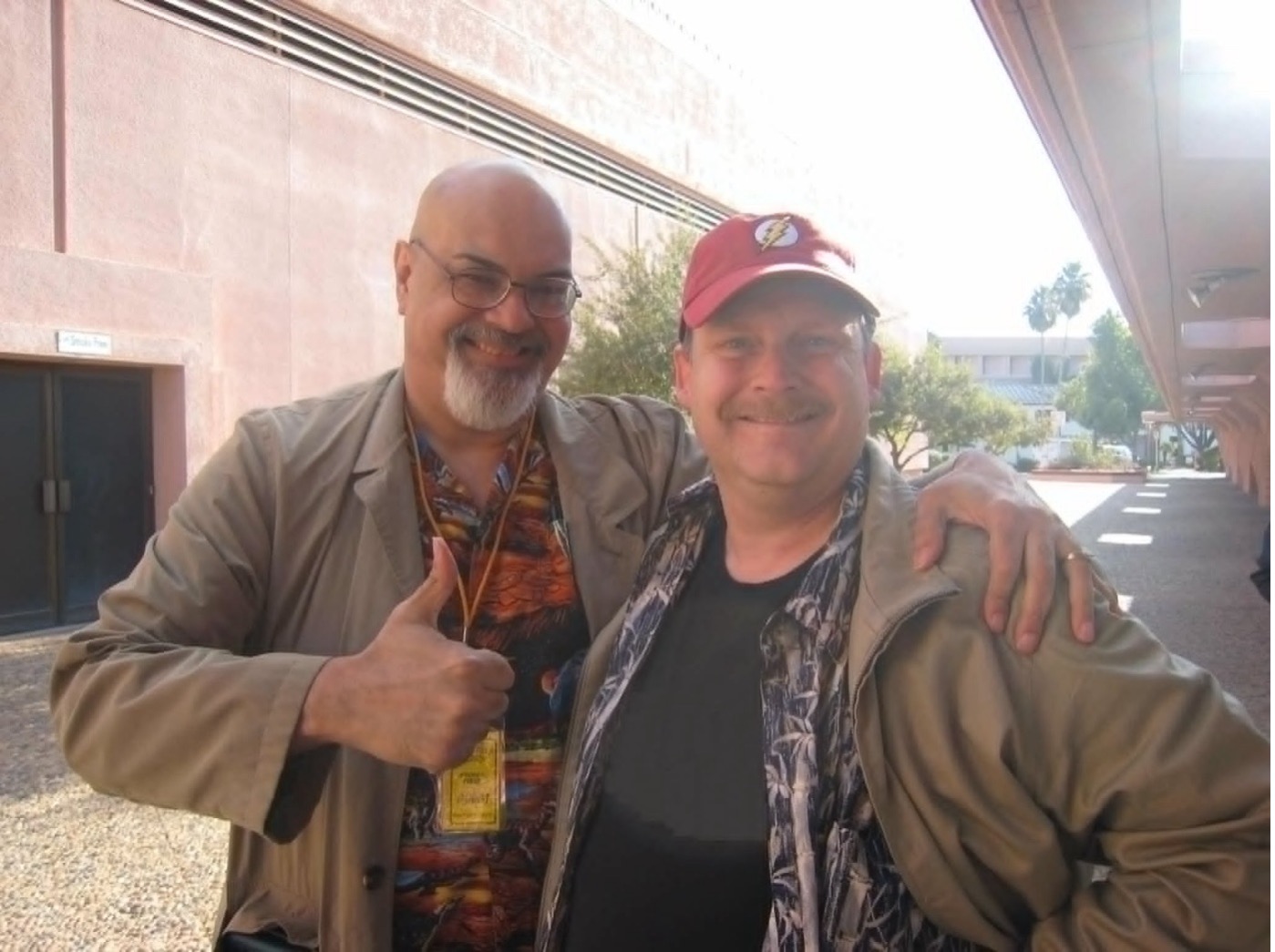
BOB: George Perez, wonderful artist on so many things (Avengers, Justice League) and co-created the New Teen Titans characters Cyborg, Raven & Starfire with writer Marv Wolfman.
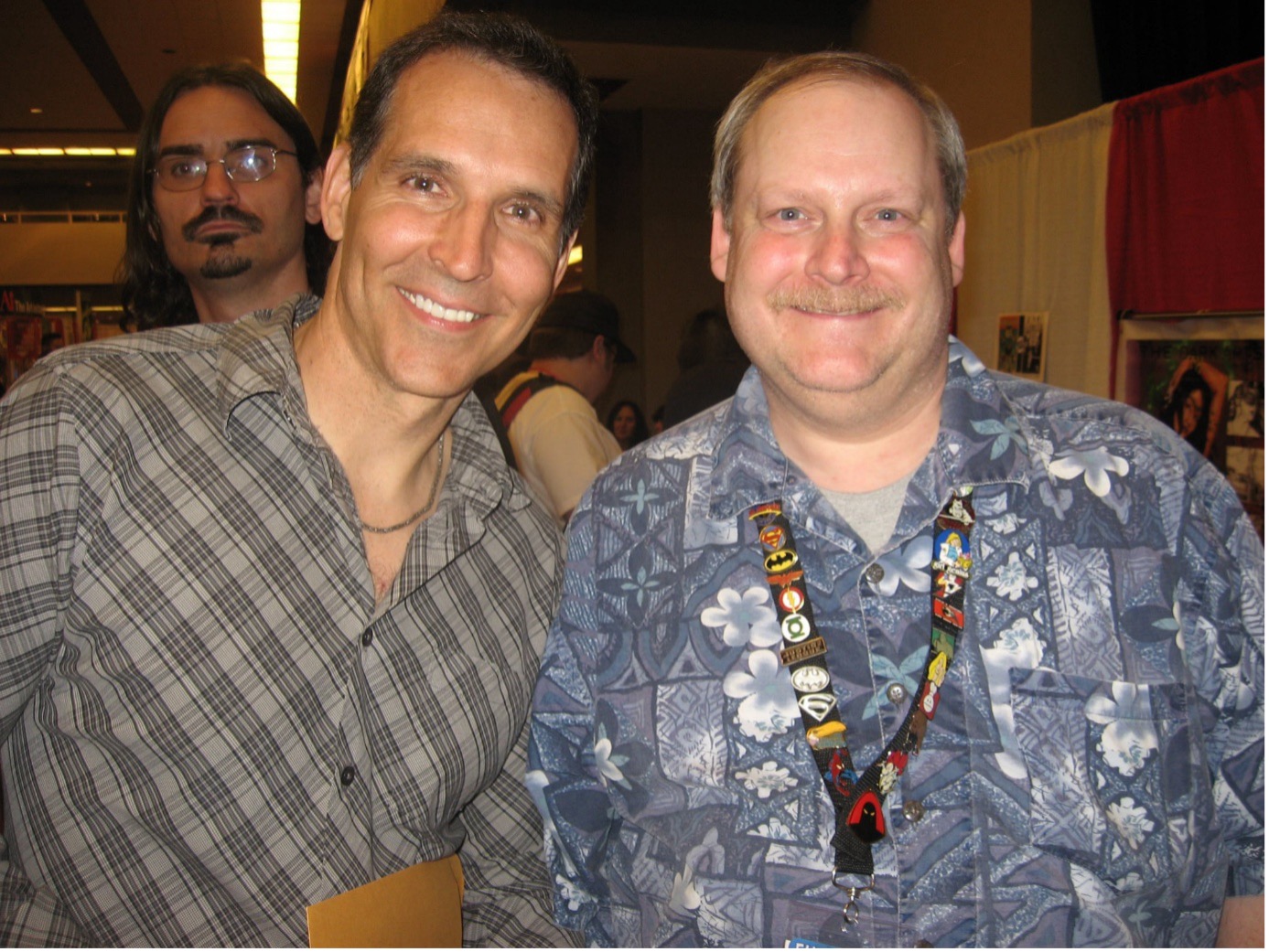
BOB: With Todd McFarlane, creator of Spawn & now a Guinness record holder for most consecutive issues of a creator-owned series…. but probably still better known for doing Spider-Man 🙂
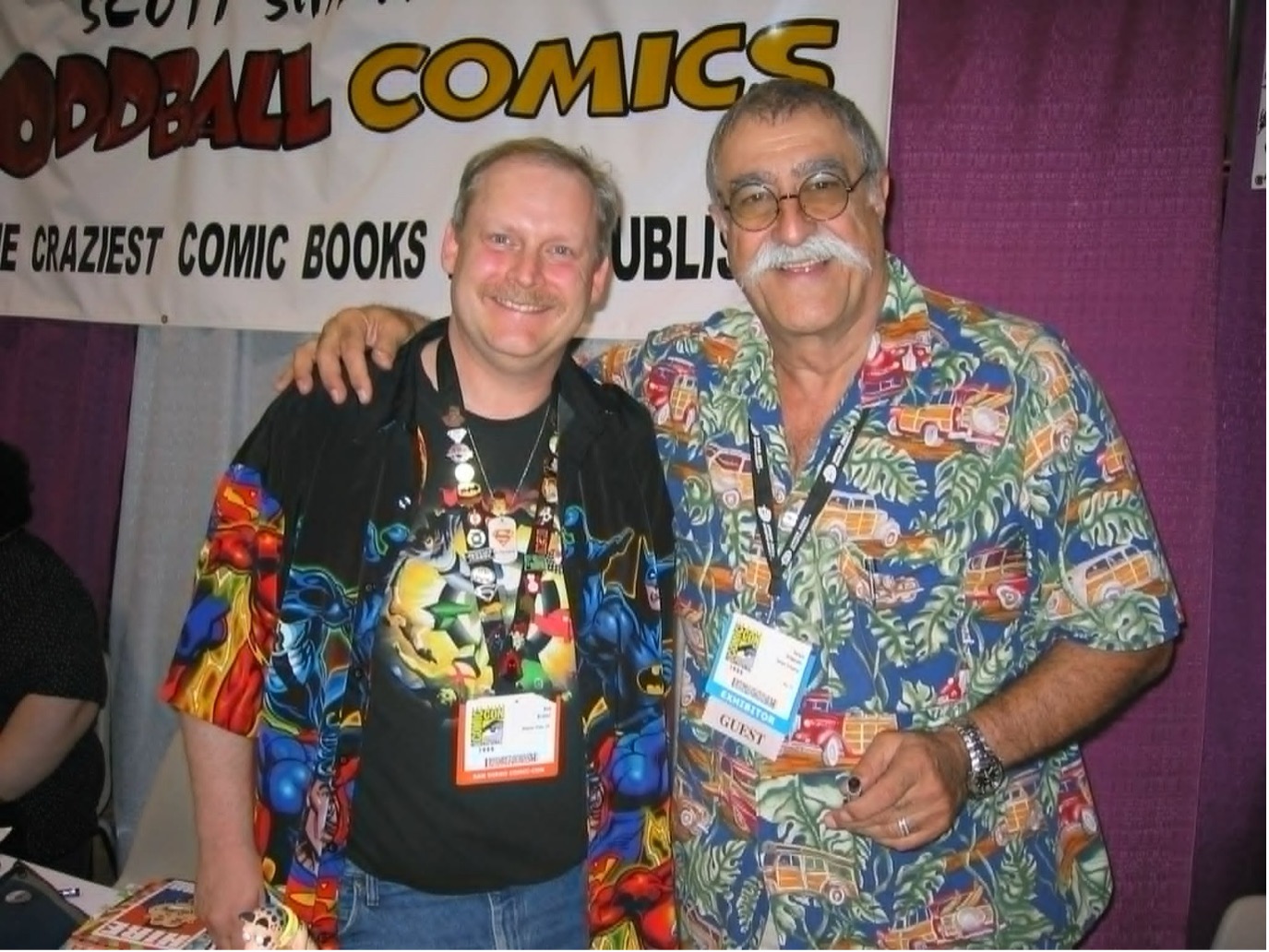
BOB: Here with the wonderful Sergio Aragones, also in 2006. Famously know from Mad Magazine ‘marginals’ cartoons, but also a very long-running comic series called Groo.
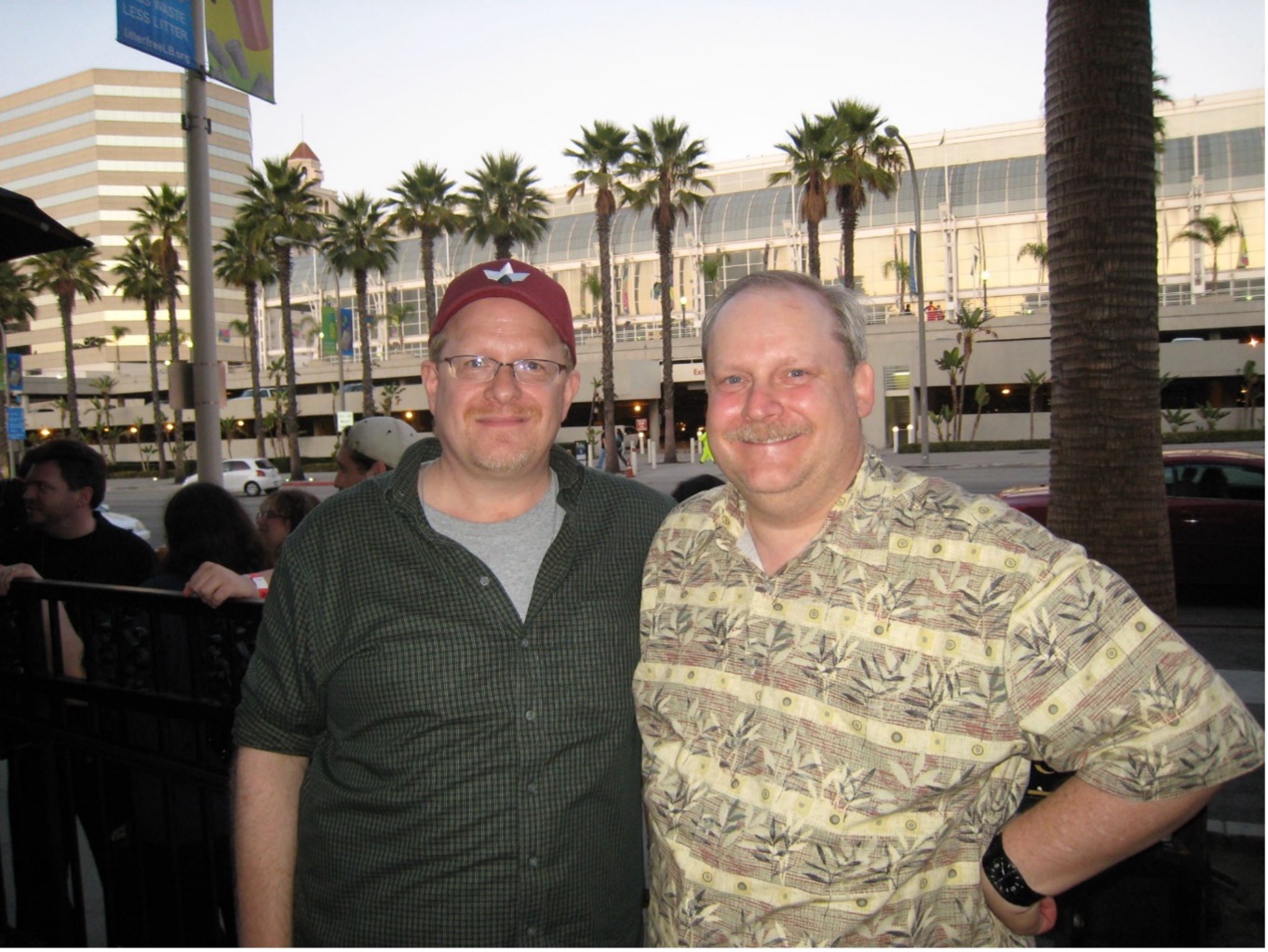
BOB: With writer Mark Waid, who wrote my favourite super-hero story of all time called Kingdom Come (that had art by and was co-written by Alex Ross)

BOB: Me and Howard Chaykin at the Long Beach Comic-Con in 2025. That’s me holding a sketch he did.
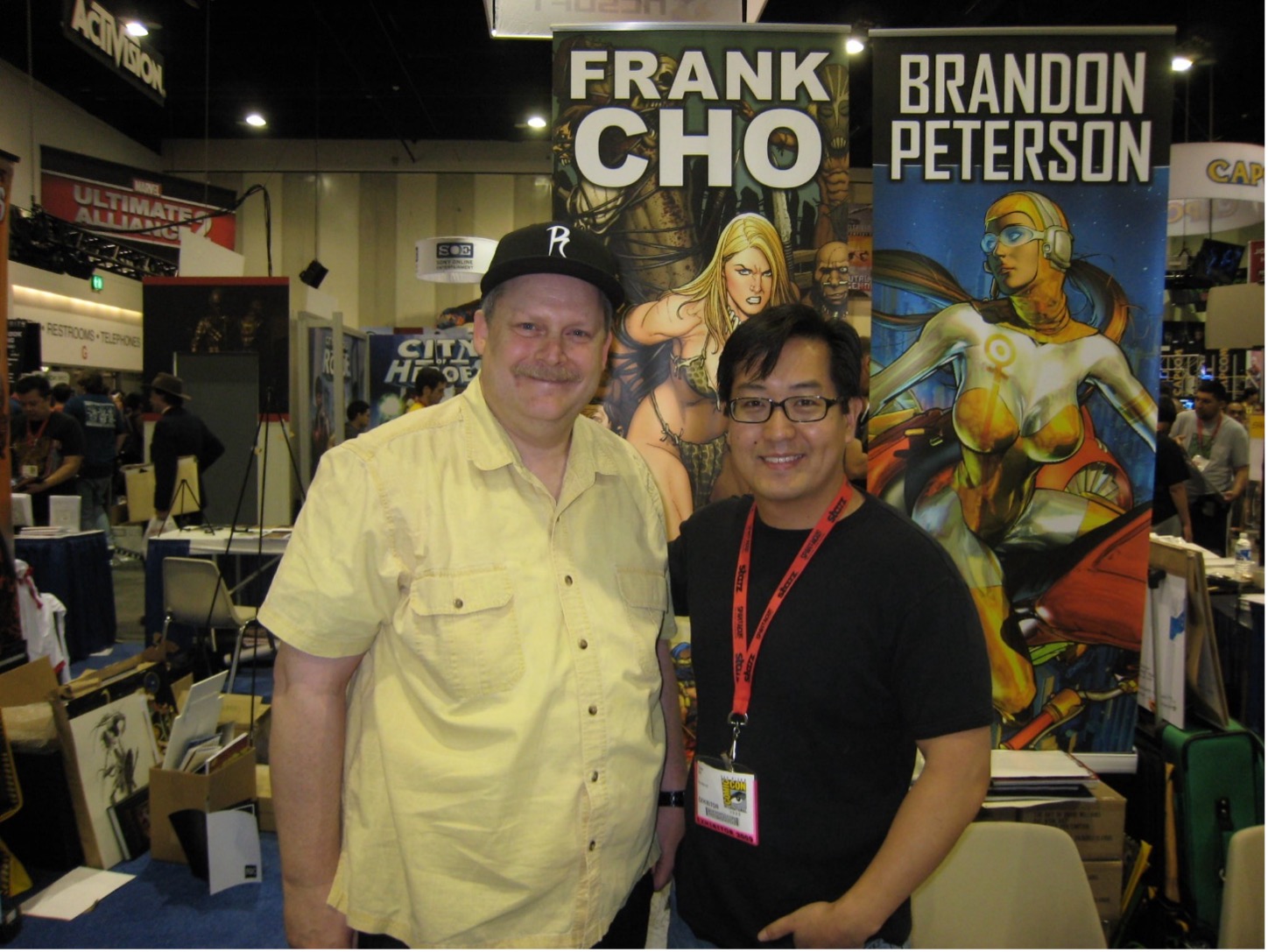
BOB: Frank Cho…another artist now known for cheesecake (it pays the bills VERY well) but back then was doing a creator owned book called Liberty Meadows.








You must be logged in to post a comment.