

Comics News
Tripwire Speaks To British Comic Artist Lee Carter

Get Carter
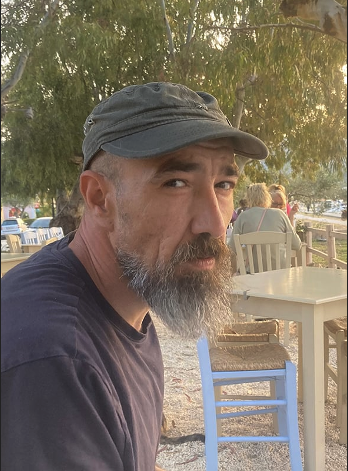
Tripwire’s contributing writer Paul N Neal recently spoke to British comic artist, Lee Carter, with a career that spans 20 years in the industry. After establishing himself as one of Tharg’s most impressive 2000AD artists of the past two decades, and his recent work on the conclusion of Mark Millar’s Jupiter’s Legacy, Lee is releasing a second self-published art book. Tripwire wanted to find out more…
TRIPWIRE: Lee, can you briefly describe what may have been the first comic you recall buying or enjoying? How old might you have been? Did they cost much?
LEE CARTER: I’ve been reading comics since the early 80’s. Me and the other kids in our street used to share each other’s comics. Each week somebody would be in charge of the collection. Eventually the collection stayed with me as the other kids lost interest. For me it was the classics like Beano, Whizzer and Chips, Shiver and Shake, Cor etc. They were the start.
Also, I was lucky and found a newsagents that would have DC comics, so around ‘82 I would pick up comics like Captain Carrot, Jonah Hex and any spooky DC comics I could find. I loved All Star Squadron and Justice League too. Of course, like every kid in the 80’s comic annuals were huge, and I picked up my first Judge Dredd annual in a boxing day sale… 50 pence I think 🙂 That annual changed my comic reading and probably my choice in career.
TW: As an artist would you say you are self-taught, or did you receive a formal education and qualifications?
LC: Hartlepool art collage (Northern school of Art), gave me an unconditional entry to do a 2-year BTEC general art and design course, which meant I didn’t need to do my exams to get in, so I failed with style every exam, except art which I got an A.
After 2 years in Hartlepool, I then went onto to do a 2-year HND in Wrexham, studying illustration. After that I thought my art education was done but then I ended up in Bristol doing a 2-year degree at UWE studying Illustration (Ben Oliver, Warwick Johnson Caldwell and Fred Blunt were classmates at various times 🙂
So, I’ve had an education, but as an ex-student I think we are all pretty much self-taught, the education just gives you time to explore with an occasional guide and helping hand.
TW: You have illustrated some excellent series for 2000AD. Your Dredd just knocks the socks off many fans, but would it be fair to say Indigo Prime must surely have presented some unique challenges?
LC: Part of the joy of Indigo Prime as an artist is where the writer is going send me, it could be anywhere. Dredd is gonna be in the city and Angelic in the Megazine you’re pretty much gonna be in the apocalyptic desert, but Indigo Prime can be anywhere any time. Also, I do enjoy solving a task, so when some of the page descriptions come in it does work the brain and you’re happy when you’ve reached an answer.
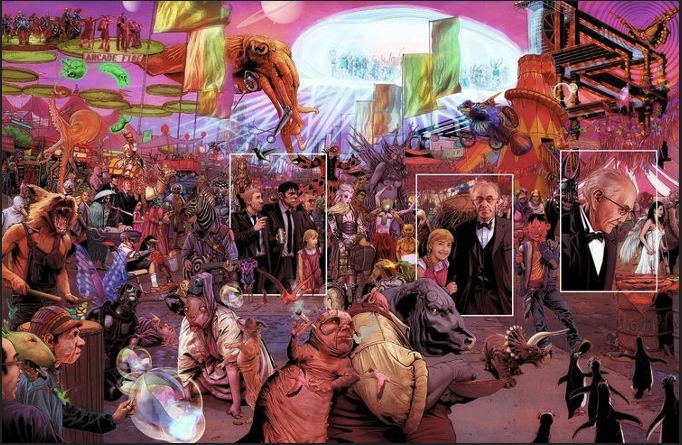
John Smith’s 2 pages of descriptions for the multiverse festival two page spread (above) in ‘Perfect Day’ was a mighty task as well as KeK-W’s limb cyclone and many other head-scratching descriptions.
TW: You have just finished work on Jupiter’s Legacy -Finale with Mark Millar. Now you have an art book out. Can you tell your fans what to expect from it if they decide to pick up a copy?
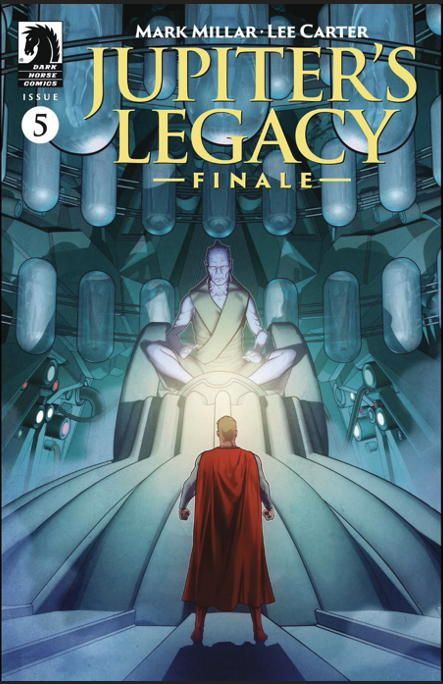
LC: One of the surprising things about freelance work is what pops up in your in-box, I’ve had a message from Guillermo Del Toro wanting to buy a painting and the message from Mark Millar about working on a comic together was another very cool moment. The work for Jupiter’s Legacy was finished late last year and it was great to finally draw some cape action.
So far this year’s been a bit quiet, one of the lesser joys of freelance :). So rather than refresh my inbox hourly waiting for what’s next, I decided to do another Kickstarter.
It’s a bit like a convention art book, the kind that you see at artists tables, so the Kickstarter helps with getting some stock and a wider audience. The book collects up random bits of art, sketches, techniques, concepts, commissions and loads of work in progress images I’ve done. I tend not to use published comic pages as they are out there already and the formats too small to show full pages.
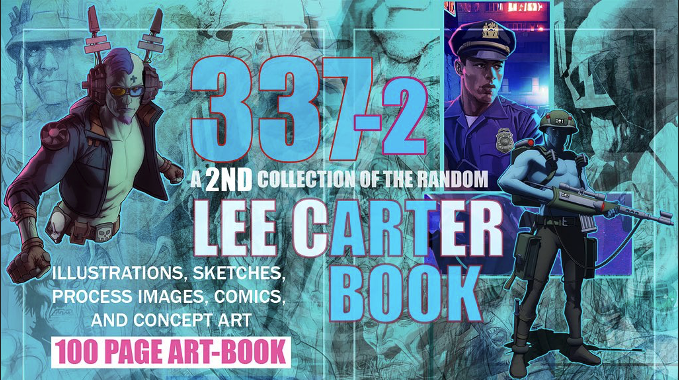
TW: This is be your second art book, isn’t it? Is there a chance of a second printing of the first volume?
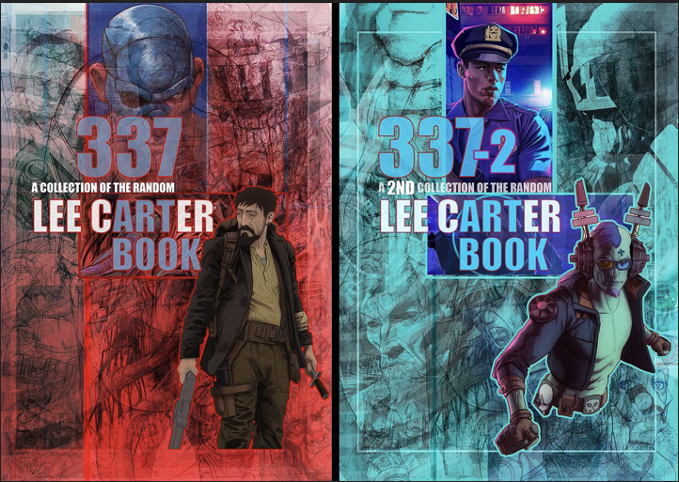
LC: So ‘337-2’ is my 2nd art book, ‘337’ was the first art book Kickstarter I did in early 2022. It was successful and I’ve still got a box full I cart around when I do make convention appearances, so I’ve put up an option on the rewards tier to get both. Also 337 is just Lee upside down, I thought it would be nice to keep them pretty close in design.
TW: I believe a lot of fans enjoy seeing an artist’s process, how a simple idea turns into a masterpiece and the certain stages involved. Is that something that you like showing your fans? Or is all of that a closely guarded secret.
LC: Painting is a strange thing, and it really does have many ugly moments and lost cool bits, but I think if you show people this and you get past the ugly bits, people see persistence works :), except the bits you should have left as is.
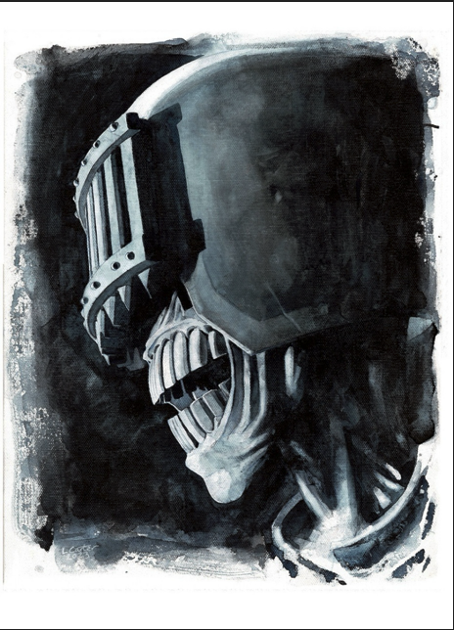
LC: I’m always putting up pictures online showing the start of the painting process through to the end and people do like to see it I think. I like seeing other people artistic steps, so I presume others do too. Having done tutorials for imagineFX and breakdowns of covers for 2000ad uncovered and even a few lectures at universities I’ve always enjoyed showing my digital and traditional techniques, even showing how to stretch paper has become a favourite of mine.
TW: What exactly does stretching paper involve?
LC: Ha, it’s basically a way stop the paper warping when you paint, so if you use water colour paper lots of water can buckle the paper causing valleys. So, you soak your paper then put it on a wooden board, gum strip the paper edges and wait for the paper to dry then you can paint away, and the paper will stay flat. Some people paint on canvas to avoid this, but canvas has a weird texture, so you can stretch most papers. Works well, one of those forgotten tricks that digital doesn’t need.
TW: What does the future hold for Lee Carter? Or in the short term, what does 2025 hold for you? Are there any set in stone convention appearances that your fans can look forward towards?
LC: Unfortunately, I’m not a planner and fly badly by the seat of my pants so I like to keep present, so I’ve no clue really 🙂
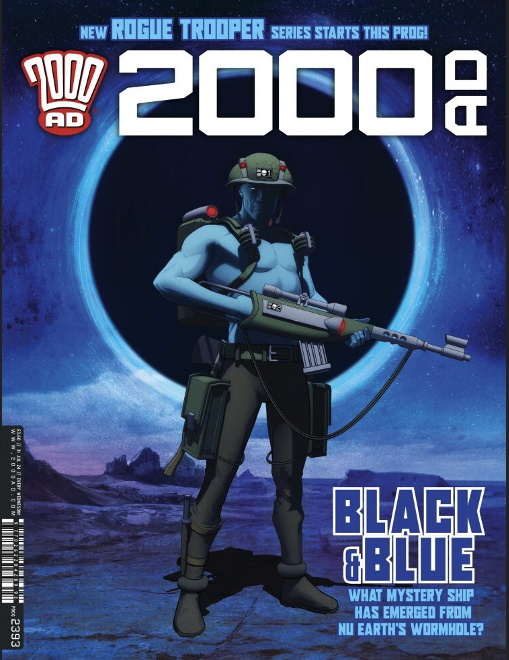
I’m gonna be busy doing sketches from the Kickstarter at the min, got a 2000ad cover out at some point, an imagineFX article to do and I will be at as Sci-Fi Scarborough convention in April so making a trip back up North will be nice.
support Lee Carter’s kickstarter here









You must be logged in to post a comment.