

Graphic Novel Review
Tripwire Reviews The Folio Society’s DC Comics: The Golden Age 1938-1956


Golden Years
Tripwire’s editor-in-chief Joel Meadows takes a look at The Folio Society’s DC: The Golden Age 1938-1956 out now in hardcover…
DC Comics: The Golden Age
Writers/ Artists: Various
Introduction Jenette Kahn
The Folio Society
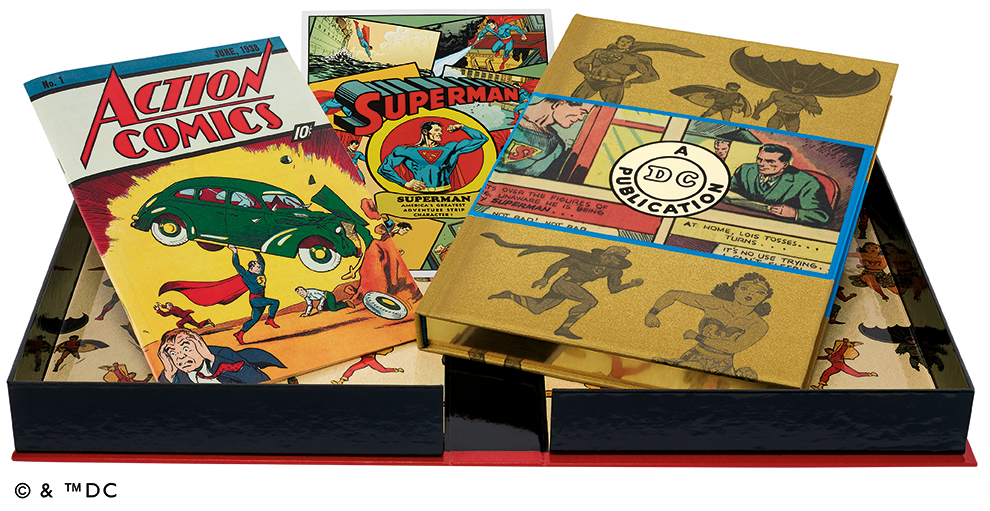
The Folio Society are no stranger to reproducing classic comics material in a durable and elaborate hardcover format. Their line already includes hardcovers featuring the likes of Captain America, Spider-man, Hulk and Doctor Strange. But this 300 page oversized hardcover in a slipcase is another step in terms of its scale and ambition. The book includes a reproduction of DC’s Action Comics 1 in its original comics size and 17 key DC Golden Age tales selected by the company’s former publisher and president Jenette Kahn. Kahn provides the introduction here, putting these pivotal stories into a historical context both for herself and for the reader as well.
The reproduction of Action Comics 1 does a decent job of feeling like you are holding an appropriate facsimile of this key DC book and is a fun extra item contained within the slipcase.
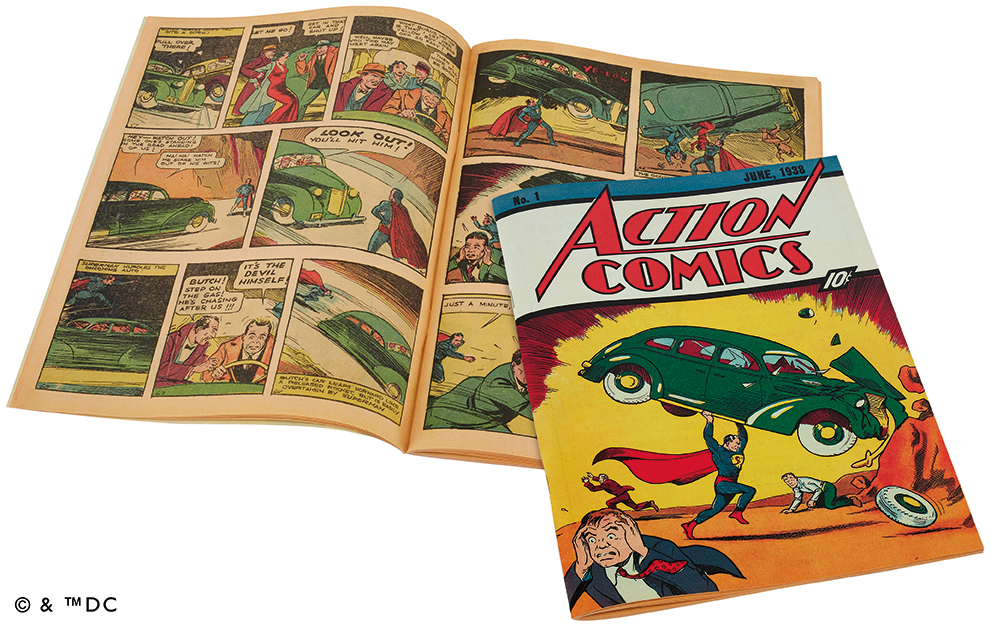

The book runs chronologically and as you make your way through it, what one witnesses is the evolution and increased sophistication that DC’s Golden Age line has to offer.
Detective Comics 27, which gives us the debut of the Dark Knight Detective on the trail of a murderer, owes a great deal to the radio serials of the 1930s in its approach and the story written by Bill Finger feels like a truly embryonic read. The art is fairly primitive to modern eyes but it does move the action along in its six page length.
Superman 3, published just six months after Detective 27, already feels like a more accomplished comic story, offering us the tale of Clark Kent and Lois Lane investigating an orphanage which mistreats its charges and a small back-up strip which displays Superman’s prowess in saving people endangered by a burst dam. It is a simple story but Siegel and Shuster tell it in a way which is endearing and warm.
Flash Comics 1, published in 1940, offers us the origin of DC’s first speedster, Jay Garrick, who is turned into the Flash thanks to being exposed to dangerous chemicals in the college laboratory where he works. Gardner Fox and artist Harry Lampert do a great job of bringing this outlandish story to life with storytelling that is already a giant leap from DC’s output from a year earlier.
Whiz Comics 2, out in February 1940, feels like another creative step up here. Whiz Comics was published by DC rival Fawcett and eventually DC took the publisher to court, accusing them of copyright infringement claiming that Captain Marvel beared too much of a similarity to Superman. DC won the case and so now Captain Marvel and all related characters are owned by DC. The first appearance of Captain Marvel, (who ironically fell foul of his own lawsuit years later when Marvel sued DC and forced the company to call him Shazam!), by writer Bill Parker and artist CC Beck has a visual sophistication to it that the stories up to this point lack. Beck’s work is elegant and aesthetically far more pleasing than the art in DC’s Batman and Superman books up to this point.
Batman 1, featuring the debut of the Dark Knight’s most iconic adversary, by Bob Kane, Bill Finger and artist Jerry Robinson, feels more refined than Detective 27. Even though the Joker’s portrayal here is unfinished, visually he appears pretty much fully formed. Robinson’s art is compellingly gothic, showing that comics didn’t take long to move out from the shadow of newspaper strips into a medium in its own right.
Action Comics 23 gives us the debut of Superman’s most infamous evil counterpart Lex Luthor, and by this point creators Siegel and Shuster had also developed their storytelling abilities. The debut of Luthor has him as a redheaded puppet master rather than a bald criminal mastermind but the seeds of the character are very much in evidence here.
All-American Comics 16 also published in 1940 offers readers the origin of the Golden Age Green Lantern Alan Scott by Bill Finger and Marty Nodell. The art is a little bit basic but there are some worthwhile flourishes.

Police Comics 1 from 1941, originally published by Quality Comics, took Golden Age comics to another level. Written and drawn by Jack Cole, the creator brought a certain surrealism to his work that had never been seen before in comics.

More Fun Comics 73 by Mort Weisinger and Paul Norris saw the debut of Aquaman, in what was a very traditional DC Golden Age tale, but Norris was a decent storyteller.
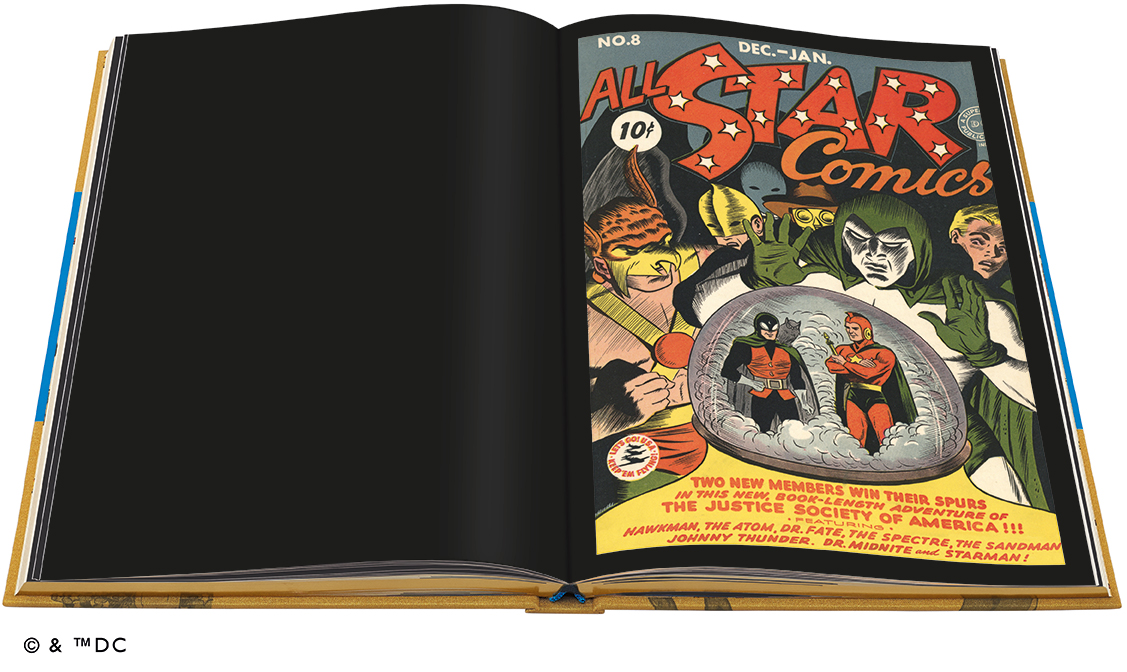
All-Star Comics 8 by William Moulton Marston and HG Peter details the origin of Wonder Woman and is the debut of DC’s other ironic character. Peter’s Art Nouveau-influenced renderings, which admittedly were not to everyone’s taste, made it stand out from other DC Golden Age series and as DC’s first major female superhero, it was a highly significant book.
Sensation Comics 1, published at the same time as All-Star Comics 8, continues the story of Wonder Woman helming her own title. There is an ersatz feel to Peter’s art here which certainly makes it distinctive.
Jumping forward to September 1946, Plastic Man 5 is a short featuring the character but not written or drawn by its creator Jack Cole. Artist John Spranger’s work was a little more conventional than Cole but he still managed to include some of his manic energy.

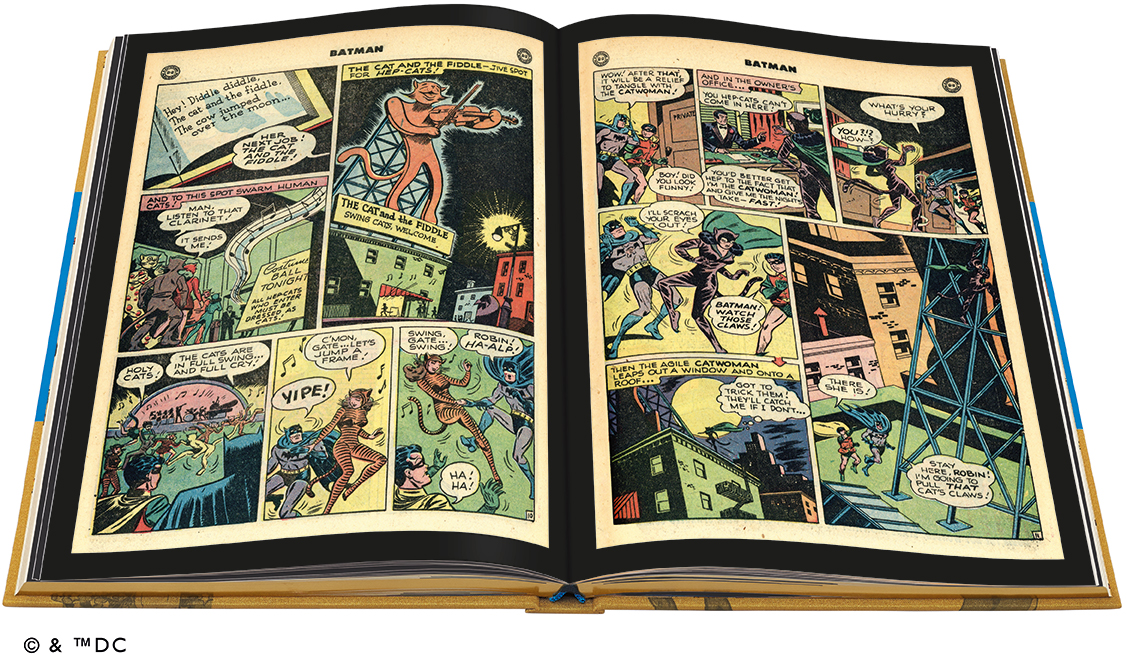
Batman 42 from August 1947 showcases a classic tale of one of Batman’s most important rogue’s gallery member, Catwoman, by Bill Finger and Charles Paris. Paris was a stylish artist who drew in the DC house style but was an accomplished storyteller.
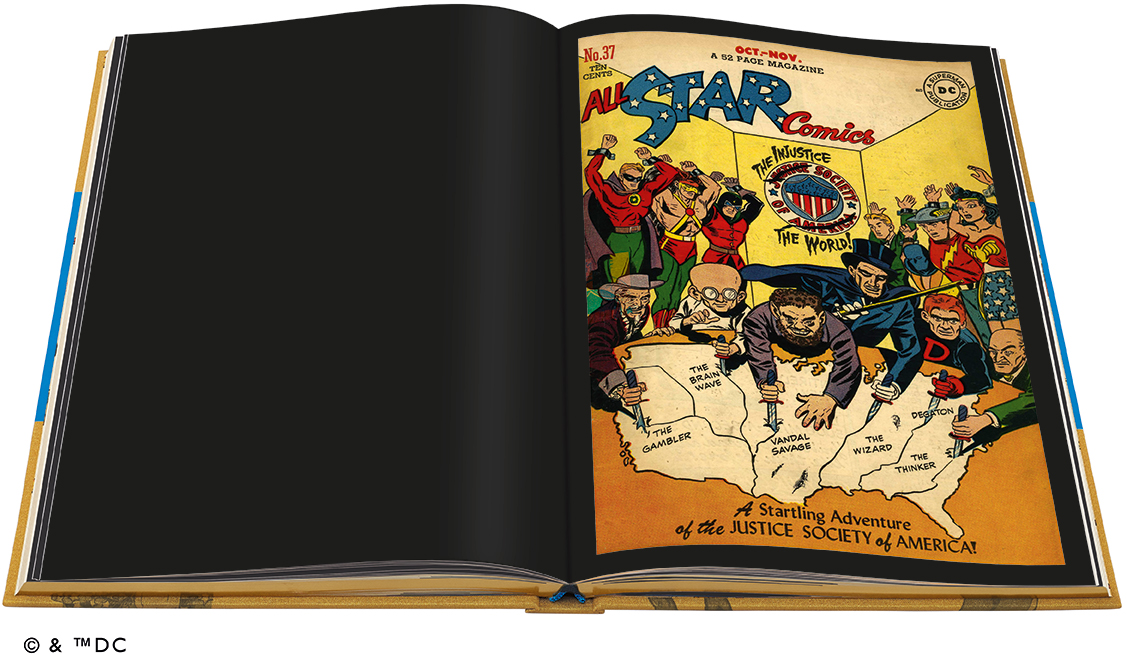
In the same year as Batman 42, All-Star Comics 37 was a milestone for the company as this featured a complex team-up that pitted the Justice Society of America against its foes the Injustice Society. Written by DC mainstay Robert Kanigher with art from Irwin Hasen, future superstar Joe Kubert, Carmine Infantino, Alex Toth, The Injustice Society Of The World was the most ambitious story DC had published up to that point in the Golden Age, as it was broken down into chapters and featured a lot of large ensemble of superheroes. It also felt a lot closer to what we consider a modern comic to be with the approach and tone that we have become familiar with.
Batman 44, drawn by Jim Mooney, saw Batman and Robin pit their wits against The Joker who becomes obsessed with gambling. It featured the visual devices that became Batman’s stock in trade a little later on such as battling giant pinball machines. Mooney was a very talented Batman artist even though his name has become less well-known these days than many of his contemporaries.
Superman 53, written by Bill Finger, and drawn by regular Superman artist Wayne Boring with Stan Kaye, gave readers the origin of the Man of Steel, adding more detail to the canon.
Finally, Sensation Comics 81, from September 1947, written by Joye Hummel and illustrated as ever by HG Peter had Wonder Woman fight against modern-day Nazi Dr Frenzi and his green shirts.
DC Comics: The Golden Age 1938-1956 is a very impressive and lavish celebration of this important era with many of the key issues and prominent creators represented in a format which does the material justice. Kahn’s introduction helps to properly contextualise each story as to its historical significance, and this is a wonderful introduction to the period in comics which set its future foundations. A minor quibble would be the absence of a contents page featuring artist and writer credits for each story, but aside from that, this garners my highest recommendation.
JOEL MEADOWS
Available to order online here







You must be logged in to post a comment.