

Animation
Tripwire Reviews Prime’s Batman: Caped Crusader


More Than Just A Reboot
Tripwire’s contributing writer Laurence Boyce takes a look at Prime’s new Batman animated show, Batman: Caped Crusader…
Batman – Caped Crusader
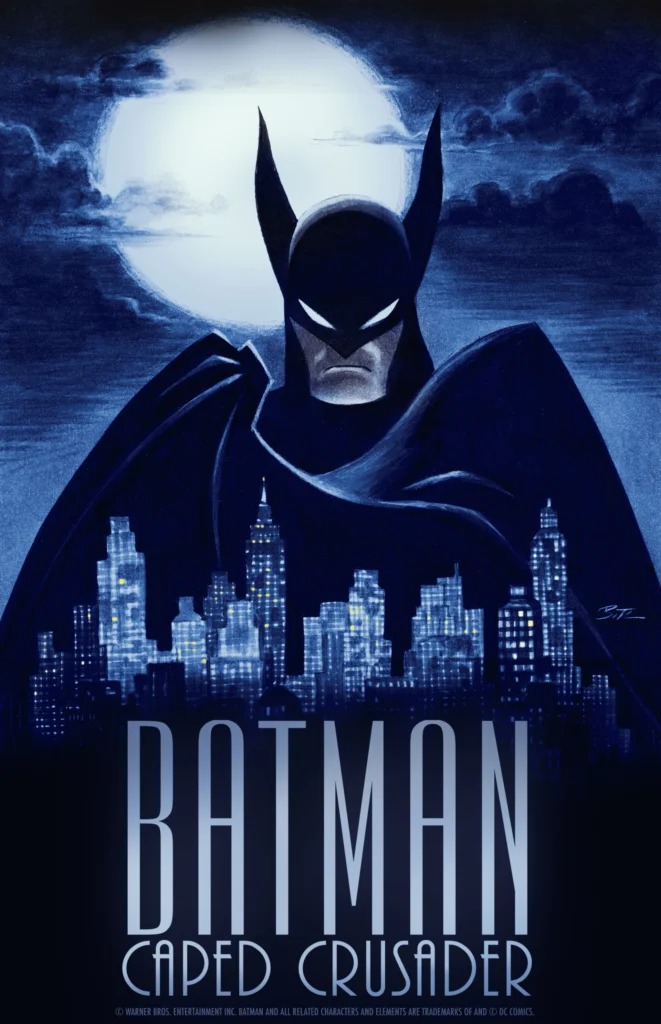
Whilst it has many similarities, Batman Caped Crusader is far more than a simple reboot of the classic Animated Series of the early 90s
Early 90s show ‘Batman – The Animated Series’ remains a high water mark for comic adaptations. Whilst ostensibly a ‘kids cartoon’, there was a sophistication and intelligence at play that was often lacking in its peers. Its noir tinged stylings – heavily influenced by the Tim Burton films – gave it a look like no other show of the time. Almost three decades since it first aired, The Animated Series remains an essential part of the Batman canon giving us many elements that have become central to the mythos of The Dark Knight. These include the introduction of Harley Quinn to Batman canon, many of the films in the ‘DC Animated Universe’ and the performance of the late, lamented Kevin Conroy that has become one of the definitive interpretations of the character. It remains an oft-cited influence on the many, many takes on the Caped Crusader which have followed over the subsequent few decades.
Now, under the auspices of exec producers Bruce Timm (one of the architects of Batman: TAS), JJ Abrams and, The Batman director and co-writer, Matt Reeves, Batman: Caped Crusader promises to hark back to the days of the Animated Series with a similar animation style and grittiness that typified the original show. But whilst its touchstone still remains the classic animation, there’s enough significant differences – many of which revolve around it’s reinterpretation of classic parts of the Batman mythos – to make Batman: Caped Crusader very much a singular piece of work.
Gotham is falling under the weight of its own avarice and greed. Corruption runs rife, evil preys on the city and despite the hard work of a select few – such as Commissioner James Gordon, DA Barbra Gordon and hard-working cop Renee Montoya – it seems hard to keep the dark at bay. But there’s a mysterious new entity – the ‘Batman’ – who is seemingly dealing with the criminals that are enveloping the city. As Gordon and crew decide whether this Batman is a help or as dangerous as those he battles, a series of outlandish villains start to crawl out of the rot-infested wood at the foundations of Gotham. But even the strangest evildoers are outshone by the machinations of ‘ordinary’ organised crime with Boss Thorne seemingly having the entire city under his control. Can Batman – and the likes of Gordon and Harvey Dent – save Gotham from itself?
While the spirit of Batman: TAS looms large in the animation style – the squarish, slightly stylised faces and the noir trappings – there are still a number of marked differences. While TAS went for a ‘timeless’ feeling – a mish-mash of technologies – this is defiantly set in the 40s (even though it’s never explicitly stated). There’s no computers, no cell-phones. It’s all Bakelite style telephones, cabinet TVs and sleek Rolls Royce style cars with not a hint of modernity. The design of Batman himself is straight out of the early issues of Detective Comics, a slightly demon like apparition who is still in his early years of crime-fighting.
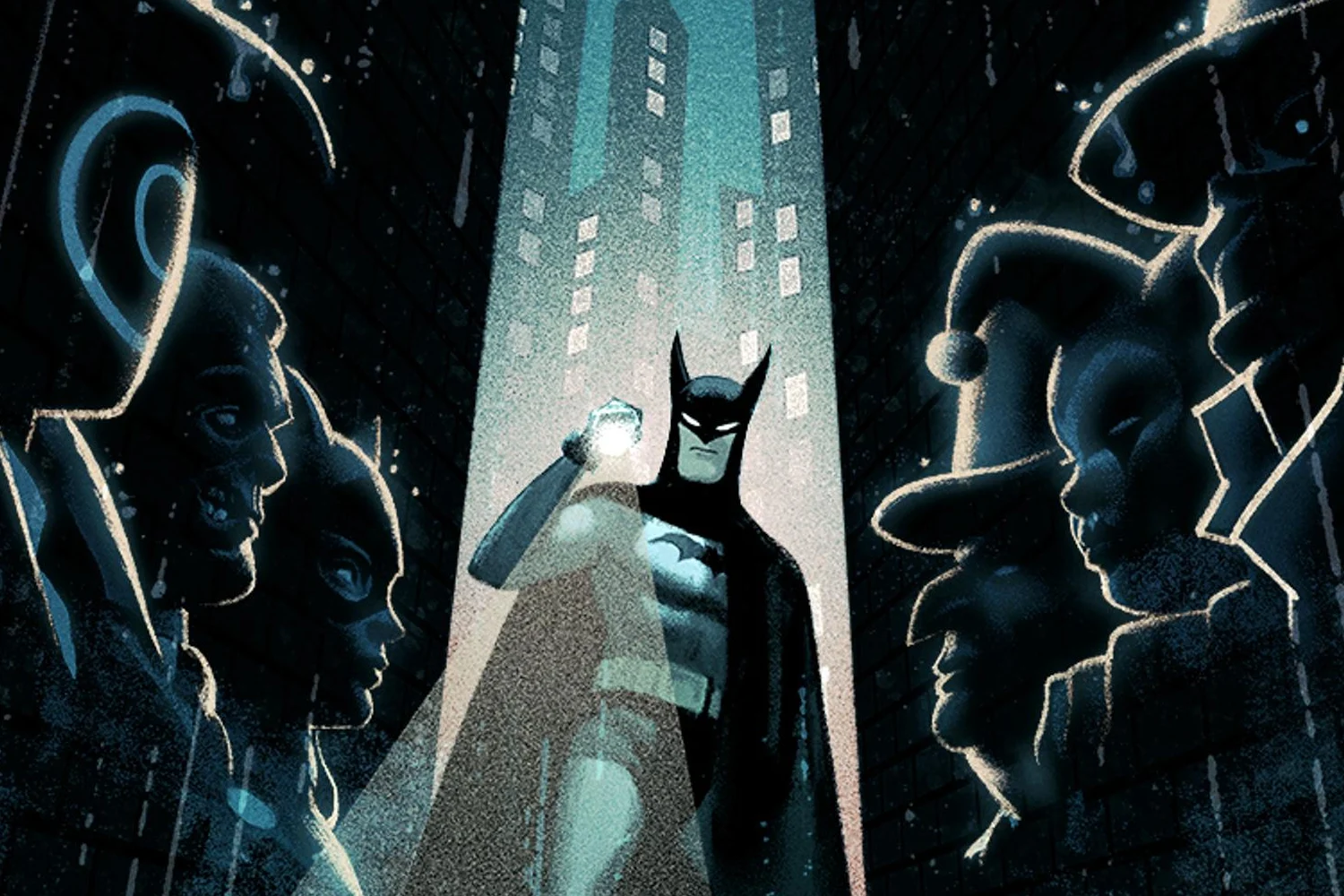
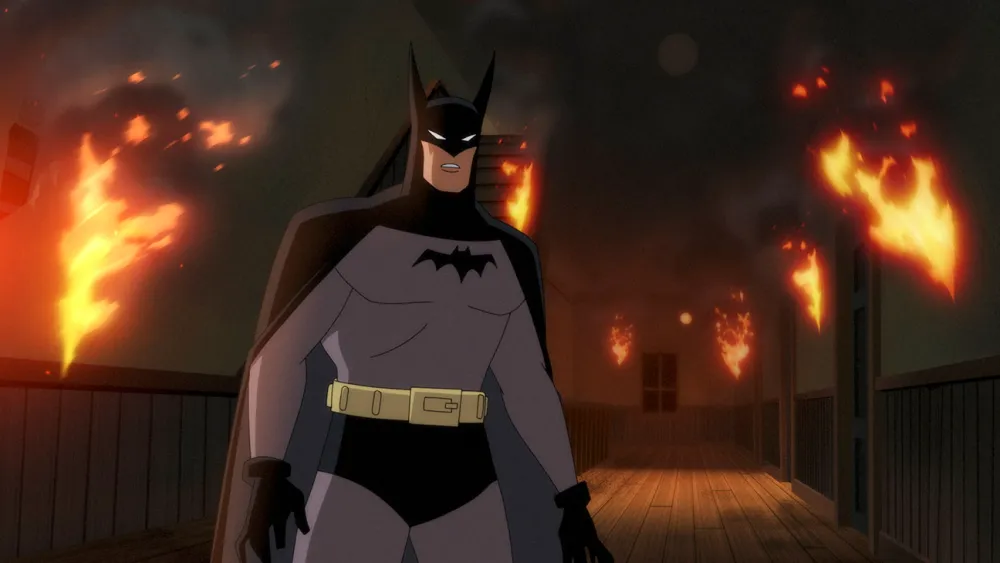
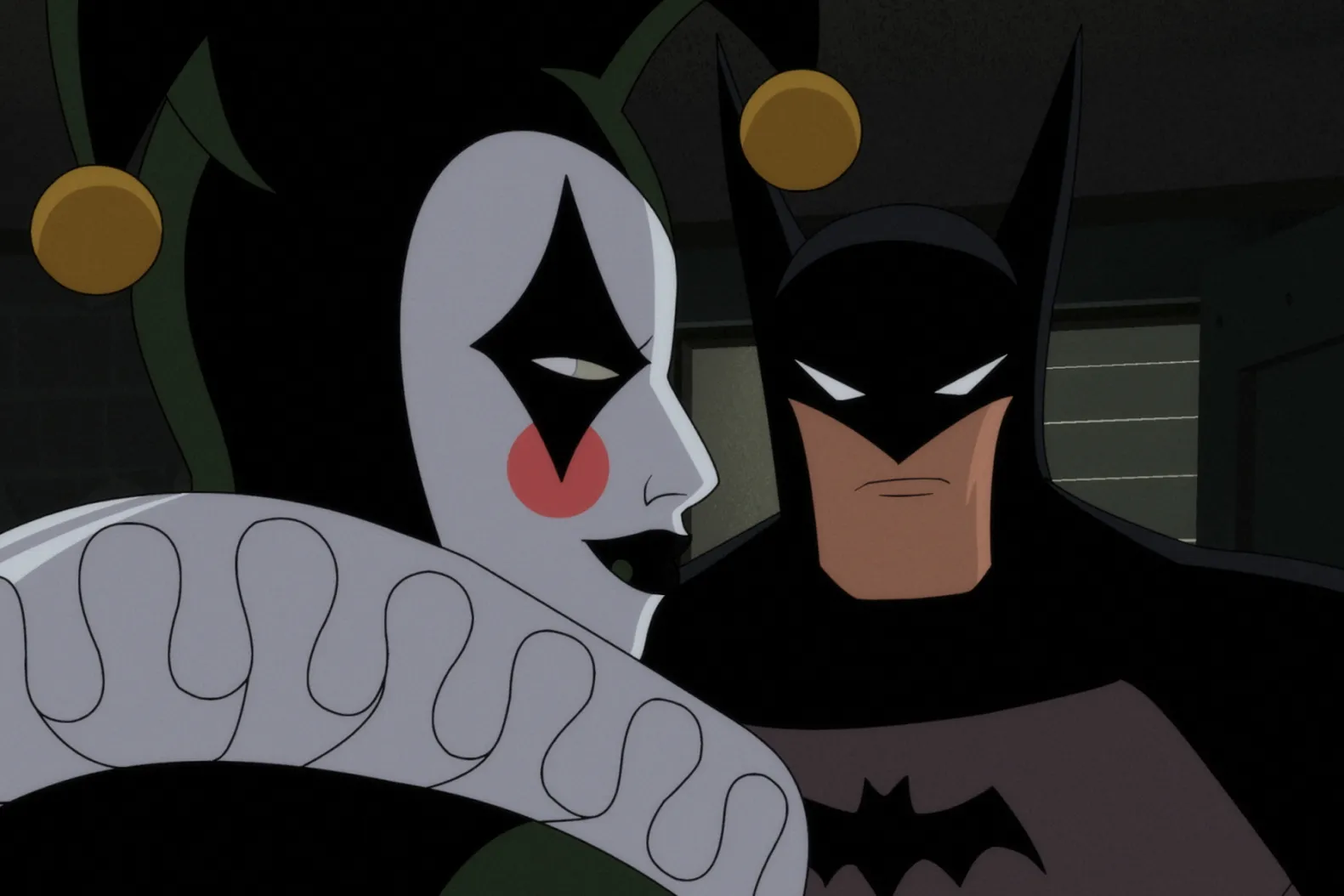
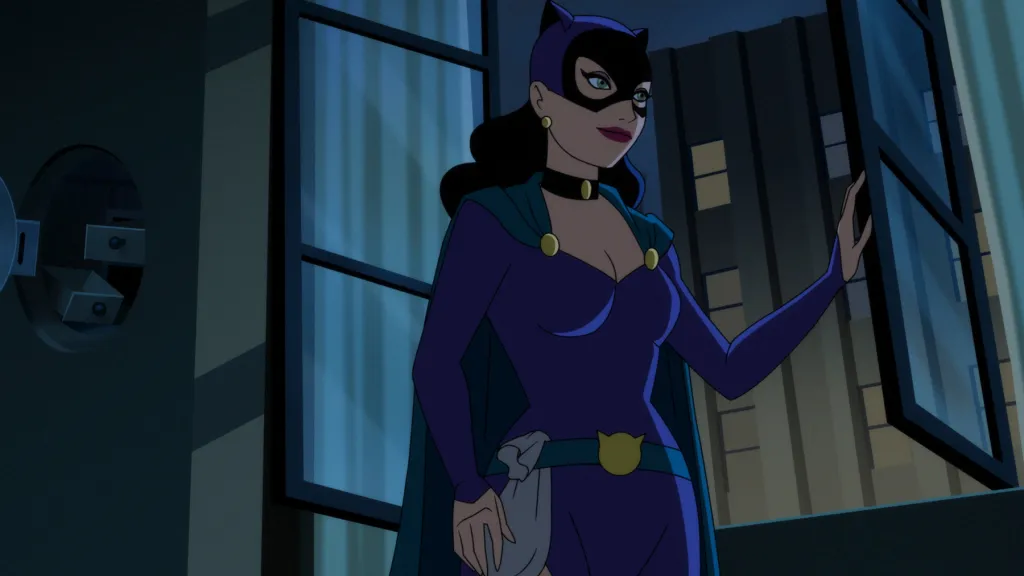
The corruption at the heart of Gotham and the uneasy relationship between Batman and the authorities – much of it influenced by the storyline beats of Batman: Year One – is very much at the heart of the ten episodes that make up Caped Crusader. Whilst each episode broadly works on their own (save for the final two which is explicitly a two-parter) there is underlying storyline and character development that demands the show be watched sequentially. But it gives the show some emotional heft – with a genuinely compelling narrative – whilst still hitting the general ‘action’ beats of a traditional animation show. The show is constantly moving through the modes of grimly realistic and colourfully fantastical, but it never jars and – indeed – seems to be a perfect reflection of the joys of the Batman character. Whilst Batman and his foes are unsurprisingly at the centre of the action, the show is also very much about its supporting characters with their struggles to keep Gotham afloat (or, indeed, to help it drown) a large part of the emotion
Whilst ostensibly OK for a younger audience (though the violence and death is much more explicit here than in TAS) Caped Crusader seems very much aimed at an older audience and assumes that said audience know the history of Batman well. There’s a constant push and pull with the show either reinforcing classic Batman tropes or completely re-inventing them, with the series always trying to prevent the core audience from using its genre savvy to guess everything that is upcoming. The first episode gives a completely new interpretation of a classic Batman villain, and another is given a completely new origin. The likes of Clayface and Catwoman are all given interesting little tweaks to their traditional interpretations. And amongst the old favourites, a couple of new villains turn-up including the Kevin Smith and Phil Hester created Onomatopoeia (will it convince Smith to wrap up the cliffhanger of Widening Gyre? Probably not.) Whilst these mythology tweaks serve to keep things fresh, they also keep the underlying narrative tense. There’s a sense that any of the characters – save maybe for the central one – could die at any moment.
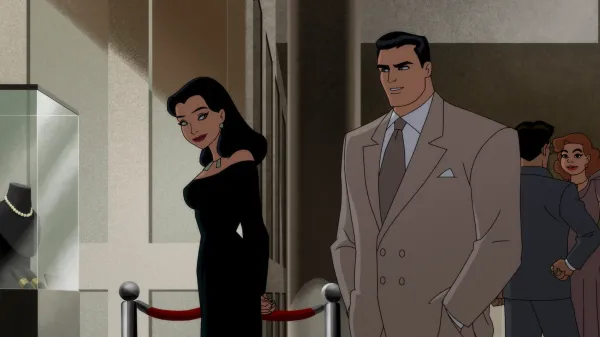
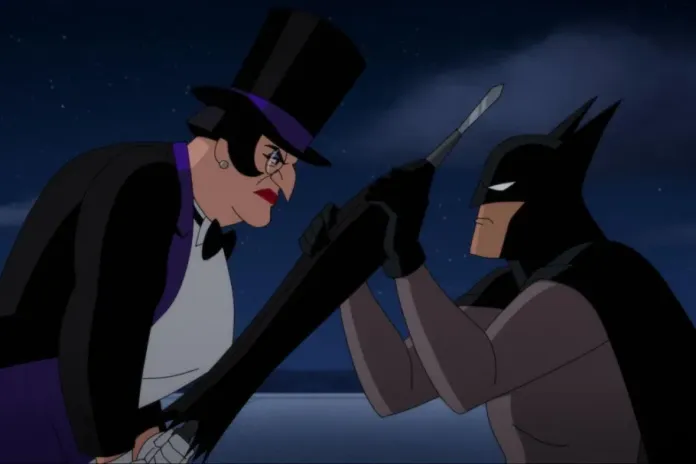

There are unsurprisingly a raft of in-jokes to lap up, from a nest of orphans whose names are all suspiciously familiar, locations such as ‘Dozier Street’ or Alfred reading a book about the ‘Gray Ghost’
Whilst Kevin Conroy can never be replaced, Hamish Linklater does well as our titular character. Cold and taciturn – even by the standards of the character – his Batman is a damaged stoic, only referring to Alfred (a good turn by stalwart British actor Jason Watkins) as ‘Pennyworth’. DC Animated Universe regular Deidrich Bader gives a good Harvey Dent, pitched between idealist and venal glory hound, (and given that Bader has voiced Batman in both The Brave and the Bold and the Harley Quinn animation, there’s a slight meta-joke about the duality at the heart of both Bruce Wayne and Dent) and there’s a gaggle of guest stars popping up behind the villain voices.
With a second season on the way (a teaser at the end of the final episode promising the debut of a familiar character), Batman: Caped Crusader is an extremely compelling piece of work. In a world in which we drown in new interpretations of superheroes and Batman in general (in the past few years, Affleck, Keaton and – SPOILER! – Clooney all appeared in The Flash, there’s been the Pattison version, the aforementioned Harley Quinn show, TV shows Gotham and Pennyworth and let’s not even go down the road of the comic book iterations) Caped Crusader is a tremendously worthwhile addition to canon. Offering a heady hit of nostalgia whilst still managing to provide its own unique take on the Dark Knight legend it shows that there’s life in the old Bat still.
Batman: Caped Crusader comes to Amazon Prime worldwide on August 1st











You must be logged in to post a comment.